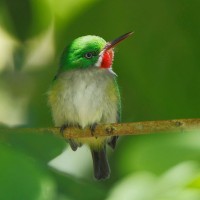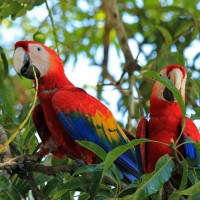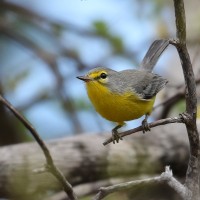
Welcome to an extraordinary birding adventure on the enchanting island of Puerto Rico, where tropical beauty meets exceptional biodiversity. Just a short flight from the U.S., this Caribbean paradise offers a unique blend of accessible travel, vibrant local culture, and outstanding birding opportunities—no passport required. As we explore the island’s rich mosaic of habitats, from coastal mangroves and mountain forests to scenic estuaries and dry scrublands, we encounter an impressive array of species, including numerous endemics such as the Puerto Rican Tody, Elfin-woods Warbler, and the critically endangered Puerto Rican Amazon.

This thoughtfully crafted itinerary combines expert-guided birding with moments of leisure, cultural immersion, and natural wonder—from bioluminescent bays to historic lighthouses. Each day is filled with opportunities to discover this island's fascinating birds and habitats. Comfortable accommodations, delicious local cuisine, and warm hospitality round out this immersive experience. Whether you’re a seasoned birder or simply passionate about nature, this journey offers an unforgettable look at the wild heart of Puerto Rico.

Tour Highlights

  • Enjoy a tropical birding tour, right in your own country!
  • Support Caribbean conservation with your travels
  • Search for Puerto Rico’s 19 endemic bird species
  • Enjoy lodgings at the edge of the ocean; take in a swim, a casual snorkel, and enjoy the views
  • Visit the forest home of Puerto Rican parrots and learn about their recovery project
  • Stand on cliffs by the scenic lighthouse at Cabo Rojo and watch for Humpback Whales
  • Experience some of the Caribbean’s most important wetland sites at Laguna Cartegena NWR
  • Venture out by boat at night to see bioluminescence—extraordinary!
  • Opt to come in early to walk through history at the Fort and on the streets of the Old San Juan

Trip Itinerary

Itineraries are guidelines; variations in itinerary may occur to account for weather, road conditions, closures, etc. and to maximize your experience.

Mon., Nov. 15         Arrivals in San Juan | Explore the Historic City at Leisure | Welcome Dinner

Southeast of Miami (just a thousand miles!) our island birding begins … welcome to Puerto Rico! This is the tropics, and a territory of the USA with no passport required. We find familiar comforts of home alongside fascinating island ecology that includes a number of endemic birds. 

You are met at the airport to take you into historic San Juan, where our hotel is located. If you haven’t opted for the pre-tour extension, there are no activities planned for today other than the welcome dinner tonight. 

Our welcome dinner is in the heart of downtown San Juan at a popular restaurant offering a range of local specialties and other delights. Plan to arrive in time for dinner—it’s a great chance to meet your guide and travel companions and hear about our plans for the week ahead. 
Accommodations in San Juan (D)

Tues, Nov. 16          Explore the Island: Caguas | Bahia de Jobos | La Parguera

We head out early to beat the traffic and enjoy the best time of day for bird activity. We take a packed breakfast and head over to Caguas, an artsy town not far froom San Juan. Here at a local birding hotspot, sightings may include Plain Pigeon, Pearly-eyed Thrasher, and Puerto Rican Spindalis. We then continue on to Bahia de Jobos, a very important marine estuary area along the southern coast, with hopes of seeing both Antillean Crested Hummingbird and Green-throated Carib; these two range-restricted species can only be seen on the eastern side of the island. Lunch is at a popular local restaurant in Bahia de Jobos and we should pick up a few shorebirds and waders while enjoying some fabulous ocean views. 

Our final destination today is the southern coastal town of La Parguera, where we settle into our a hotel with a prime location on the water. We should arrive in time for you to relax and enjoy the amenities of the hotel, including a refreshing dip in the pool. 

Before dusk, we take a stroll down to the best site for observing an endangered species that finds its stronghold here in the mangroves that protect the coastline: Yellow-shouldered Blackbird. At dusk they fly into their roosting sites. If it’s a beautiful evening we can dine outside, a great treat of life here on the islands. 
Accommodations at La Parguera (B,L,D)

Wed., Nov. 17           Maricao State Forest | La Parguera | Boat Trip to a Bioluminescent Bay

After a relaxed sit-down breakfast at our hotel, we head up into the mountains this morning on the Central Road that leads us up to the Maricao Forest, where we look for species of lusher habitats such as the Puerto Rican Tanager and Puerto Rican Oriole. The morning’s birding is followed by a local lunch in Lajas. We make a special effort to see the shy and endangered Elfin-woods Warbler, a species not easy to see and only discovered in 1968, described in 1971. It inhabits moist montane forests where it feeds on insects. We look for other species of this habitat type before heading back. On the way, we stop in scrub and thicket habitat in a reliable spot to look for the colorful Adelaide’s Warbler. Both of these warbler species have relatives on other Caribbean Islands and are a fine example of speciation, a key element of biodiversity. We then make the short drive back to La Parguera for an afternoon break, and for those that wish, a chance to get into the water. 

We finish the day by taking a boat trip out to experience the spectacular and otherworldly bioluminescent bay off Lajas. Unlike the other two bio bays found in Puerto Rico, swimming is allowed in La Parguera, so if you’re feeling adventurous, remember to bring your bathing suit so you can take a dip!
Accommodations at La Parguera (B,L,D)

Thurs., Nov. 18          Coastal Birding | Laguna Cartegena National Wildlife Refuge | Scenic Cabo Rojo Lighthouse | Night Birding

This morning we enjoy a walk around the ponds and wetland habitats at Laguna Cartagena National Wildlife Refuge, admiring expansive views of surrounding mountains as we search out key species such as West Indian Whistling Duck and if we’re lucky, Masked Duck and even Yellow-breasted Crake. The refuge, just over 1000 acres in size, holds vitally important freshwater habitat for both overwintering and resident wetland species. There is an open water lagoon, extensive cattail areas, working cattle and hay fields, and abandoned rice fields, all of which receive most of their water from annual rainfall and runoff. In the dry forest scrub habitat of the Sierra Bermeja hills, the oldest rocks known in the Caribbean, we may find wintering songbird species along with Yellow-faced Grassquit and Caribbean Elaenia. In mangrove areas we look and listen for Mangrove Cuckoo and Smooth-billed Ani. 

The refuge is close to Cabo Rojo National Wildlife Refuge, a 200-foot high coastal headland that houses an historic lighthouse and gives us a great opportunity to scan for Brown Booby, Magnificent Frigatebird, Brown Pelican, and possibly wintering Humpback Whales. Extensive salt flats rim one side of the refuge and form an Important Bird Area, as well as a Western Hemispheric Shorebird Reserve; we take our scopes and see what we can find, with elegant Black-necked Stilt, American Oystercatcher, Wilson’s Plover, and Clapper Rail as potential species. There is an informative visitor center and several trails with interpretive signage to explore. Merlin and Loggerhead Kingbird may be around, as well as Scaly-naped and White-crowned Pigeons. 

We return for an afternoon break and time for a swim for those that wish. In the early evening we venture out for some nearby night birding to look for Puerto Rican Nightjar and Puerto Rican Owl before returning for a later dinner at the hotel.
Accommodations at La Parguera (B,L,D)

Fri., Nov. 19         Rio Abajo State Forest | Calambache State Forest | Hatillo

Our route back makes a loop to the north across the island. This morning, we leave the hotel early with a packed breakfast and hopes of seeing one of the rarest parrots on Earth: the spectacular Puerto Rican Amazon. This particular species can be found in the vast expanse of the Rio Abajo State Forest. Here, The World Parrot Trust (WPT) and the United States Forest Service (USFS) are collaborating to restore and maintain critical habitats critical for the recovery of the Puerto Rican Amazon. Efforts include strategic habitat planning, tree planting, erosion control, invasive species management, artificial nest installation, and continuous monitoring of parrot populations. By involving local communities and implementing sustainable practices, the partnership aims to build a strong foundation for the species' recovery and future habitat stability. 

We often have a lot of activity right on arrival as lush trees rim the parking area and we may find the delightful Puerto Rican Euphonia and Puerto Rican Tody to start our day. Ruddy Quail Dove, a secretive species, may be spotted in this area, as well as Puerto Rican Woodpecker, Black-whiskered Vireo, Lesser Antillean Pewee, wintering warblers such as Hooded, Worm-eating, and Black-throated Green among a good number of other species. We also watch the skies for the endemic subspecies of Broad-winged Hawk. 

After a great morning and a restaurant lunch in Arecibo, we visit Cambalache State Forest on the north coast of the island this afternoon. Here, in lowland forest, we have a chance to improve our views of any key species we haven’t seen well yet, with good chances of finding Puerto Rican Lizard-Cuckoo, Puerto Rican Bullfinch, Puerto Rican Flycatcher, and more. Pearly-eyed Thrasher is likely calling and wintering warblers include Black-and-white, Ovenbird, and Northern Parula. 

We then make our way a bit to the west to settle into our hotel and enjoy dinner in Hatillo, located on the north coast with views of the Atlantic Ocean. This is a quiet dairy farming area and our hotel has a pool for you to enjoy. 
Accommodations at El Buen Café Parador, Hatillo (B,L,D)

Sat., Nov. 20          Hatillo | Coastal and Forest Hotspots | Return to San Juan

Our last day is a group and guide’s choice day—we see what species might need more work as we travel and if we have seen most of them, we can add diversity. After a relaxed breakfast enjoyed at El Buen Cafe, we complete our loop back to San Juan, stopping en route at several birding hotspots that are productive sites for species such as Puerto Rican Mango and other local specialties. We may visit some scenic cliffs to watch one of nature’s most elegant birds, the White-tailed Tropicbird. As time permits, we may also take in cultural and historic sites of interest along the way. 

Lunch is taken in Manati on our way back to San Juan, followed by a fun, farewell dinner in the city. This is our final evening, and as typical for our trips, we tally up our final sightings and share highlight species and moments of this island journey. 
Accommodations in San Juan (B,L,D)

Sun., Nov. 21        Departures

Enjoy a sit down breakfast at the hotel this morning, followed by airport taxi transfers and your journey home. You can depart at your leisure today. (B)

Pre-Tour Extension

Itineraries are guidelines; variations in itinerary may occur to account for weather, road conditions, closures, etc. and to maximize your experience.

We have booked an optional pre-tour package with an extra night at our San Juan hotel, meals, and some guided sightseeing for those who wish to arrive early.

Sun., Nov. 14: Early Arrivals to San Juan | Night at Casa Wilson Inn


We have pre-booked rooms at our lovely hotel for those that opt for our pre-tour package, a cultural offering so you can enjoy historic San Juan. Arrive at your leisure today (you will be met at the airport) and enjoy the amenities of the Casa Wilson Inn, and as your time allows, a wander to admire the architecture and ambiance of your surroundings. Dinner is at your leisure tonight as some may arrive in the early evening. Those arriving in time can walk to one of our favorite restaurants with your guide, or choose from a host of good restaurants nearby as you wish.
Accommodations at the Casa Wilson Inn, San Juan

Mon., Nov. 15: San Juan National Historic Site | Old San Juan Walking Tour | Join the Main Tour


This morning, we gather downstairs for a breakfast in the garden area before heading over to take part in a two-hour walking tour of Old San Juan, where we have the opportunity to soak in the atmosphere and character of this historic and culturally-rich city. We also visit the nearby National Historic Site and bear witness to the imposing and awesome fortress of Castillo San Felipe del Morro, an ancient 16th Century fort perched on a promontory.

We have lunch at a local eatery before returning to the hotel for a break. In the afternoon we venture out for some birding at the University of Puerto Rico Botanical Garden, a 300-acre site that is a great introduction to tropical flora and fauna, with trails and a good number of birds that may include resident Scaly-naped Pigeon, Greater Antillean Grackle, Pearly-eyed Thrasher, and a good mix of overwintering warblers and other species.

This evening we meet up with the main tour, walking to local restaurant for a chance to meet everyone and start our adventure with a memorable Caribbean island evening.
(B,L)

  • Birding Puerto Rico, Bird Watching North America, Tropical Birds, Naturalist Journeys, Wildlife Tour, Wildlife Photography, Ecotourism, Specialty Birds, endemic birds

    Gray Kingbird by Mahlon Hale

  • Birding Puerto Rico, Bird Watching North America, Tropical Birds, Naturalist Journeys, Wildlife Tour, Wildlife Photography, Ecotourism, Specialty Birds, endemic birds

    Puerto Rican Spindalis by Mahlon Hale

  • Birding Puerto Rico, Bird Watching North America, Tropical Birds, Naturalist Journeys, Wildlife Tour, Wildlife Photography, Ecotourism, Specialty Birds, endemic birds

    Hibiscus flower by Peg Abbott

  • Birding Puerto Rico, Bird Watching North America, Tropical Birds, Naturalist Journeys, Wildlife Tour, Wildlife Photography, Ecotourism, Specialty Birds, endemic birds

    El Buen Café Parador, Hatillo

  • Birding Puerto Rico, Bird Watching North America, Tropical Birds, Naturalist Journeys, Wildlife Tour, Wildlife Photography, Ecotourism, Specialty Birds, endemic birds

    Zebra Longwing by Mahlon Hale

Cost of the Journey

Cost of the journey is $TBD (For reference, 2026 pricing was $4990 DBL / $5635 SGL) per person, from San Juan.

This cost includes: all accommodations; meals as specified in the itinerary; professional guide services; other park and program entrance fees; and miscellaneous program expenses. All tips other than your NJ guide (optional) and local guide are included (this includes tips for your driver, lodge and staff, day activities, meals and other services).

The pre-tour package is $TBD (for reference, 2026 pricing was $350 DBL / $465 SGL), per person, based on occupancy.

Tour cost does not include: round-trip transportation from your home city to San Juan; optional activities; or items of a personal nature, such as laundry, telephone charges, or beverages from the bar.

Travel Details

Please plan to make air travel plans only after the minimum group size has been met. We will send you a confirmation email as soon as the trip has been confirmed.

Arrival and Departure Airport: Luis Muñoz Marín International (SJU) in San Juan

Arrival Details: Plan to arrive November 15, 2027, by 5:00 PM in order to join the group for dinner

Departure Details: Plan flights to depart November 21, 2027, at your leisure

Travel Tips: If you arrive early, we can book you an early night at our first night hotel in San Juan. 

Entry Requirements: See "Essential Information" section under the "Know Before You Go” tab.

Browse below for trip reports and species lists from past versions of this and other tours from this destination.

Puerto Rico

Map for Puerto Rico Birding & Nature

Essential Information +

This information is important for being prepared for your journey; we want you to have Read more

This information is important for being prepared for your journey; we want you to have the best experience possible. If you only read one section, this one is key!

Ahead of Your Tour

  • U.S. citizens must have a valid US state Real ID drivers license or ID card.  A U.S. Passport is not required, but is recommended. See the "Passport, Visas and Documentation" section below for details. If you are from another country, please contact your embassy’s website for guidelines.
  • No visas are required for U.S. citizens to enter Puerto Rico. If you are not a U.S. citizen, contact your embassy for travel documentation guidance.
  • Please check current CDC recommendations for travel to Puerto Rico and consult with your doctor about general travel vaccinations you should have as precaution for travel. See the “General Health and Inoculations” section below.
  • Travel insurance in case of serious medical emergency is strongly recommended. Full health coverage and repatriation is available through Allianz Travel Insurance.
  • Soft sided luggage/duffel bags are easiest for packing the vans. Pack essential medications in your carry-on luggage, as well as one day of clothing and optics in case of luggage delay.

Passports, Visas & Documents

Guidelines and regulations can change. It is always advisable to double-check documentation requirements for your trip 60-90 days ahead of traveling.

Photo ID: To enter Puerto Rico, you will need a valid, U.S. government-issued photo Real ID to board your flight.  A driver's license or state-issued ID card is typically sufficient. Check if your driver's license has a star marking, which indicates it is REAL ID-compliant.

Passport: U.S. citizens do not need a passport to travel to Puerto Rico, as it is a U.S. territory. That said, carrying your passport is always a good idea when leaving the states in case of unforeseen circumstances.  Your passport must be in good condition and valid from date of entry into until exit from Puerto Rico. However, we highly suggest at least 3 months validity beyond the end of the tour to allow for unexpected delays in return travel.  If you are from another country, please contact the tour destination’s embassy website for guidelines.

Visas: A tourist visa is not required for US citizens to enter Puerto Rico.

Additional: You will need proof of a return ticket. We also advise that you bring your contact list of hotels in case that information is needed.

*As a precaution for lost or misplaced documents you carry on your person during travel, we highly recommend you keep hard and digital backup copies on your phone (either photo or PDF scan), as well as a hard copy left with your emergency contact at home. The recommended important documents to copy include, but are not limited to; your passport ID page, travel visa, the front and back of your credit card(s), the airline barcode on your luggage. This will greatly expedite getting new ones if necessary – we hope everyone will always keep travel documents close so that losing them will not be an issue.

General Health & Inoculations Be Prepared!

Health requirements for entry to any country can change. It is always advisable to double-check the health requirements and recommendations for your tour destination 60-90 days ahead of traveling. A helpful website for planning is the CDC recommendations for travel to Puerto Rico or you may contact them by phone, (800) CDC-INFO or (800) 232-4636. 

We will share your health information with your guide. This information will be kept confidential but is very important as we want to be best prepared in case of medical emergency. 

Vaccinations: Bring your up-to-date vaccination records with you. If you are traveling from a country with yellow fever risk, proof of a yellow fever vaccination will most likely be required. Otherwise, at the time of writing there were no other required vaccinations to enter Puerto Rico, but the CDC recommends that all travelers be up to date with routine vaccinations and basic travel vaccines (such as Hepatitis A and Typhoid) before traveling to any destination. Please check with your doctor for recommendations at least 4-6 weeks before departing on your trip in case there are any that require follow-up inoculations or time to become effective before your departure. 

Prescriptions: It is a good idea to pack any meds you take regularly in your carry-on luggage.  Bring an extra pair of your prescription glasses or contact lenses. Bring an adequate supply of any prescription medications you use, a copy of the prescription and a list of generic names of your medicines as “back-up” in case it is necessary to purchase drugs while abroad. Your doctor may also recommend some prescription medications to bring with you to treat possible illnesses that might occur, depending on your destination, such as an anti-malarial medication or an antibiotic. You’ll want to keep all medications in their original, labeled containers.

Allergies: To be prepared for environmental triggers to allergies or breathing difficulties, please bring your allergy and/or asthma medication(s).  If you have severe allergies talk to your doctor about carrying an EPI pen and notify your guides. It is also recommended to carry with you an up-to-date record of known allergies, chronic medical problems and Medic Alerts so that, if necessary, emergency treatment can be carried out without endangering your health.

Common Ailments: We recommend that you bring a travel-sized first aid kit and a supply of standard over-the-counter medications for prevention or treatment of common ailments (such as diarrhea, constipation, stomach upset, cough, congestion, head or body aches, motion sickness, insect bites and sunburn); as well as ointments, moisturizer, sunscreen, oral rehydration salts, band-aids, moleskin for blisters, cotton swabs, nail clippers, and tweezers, etc.

Weather & Climate

January in Puerto Rico is during the dry season, offering pleasant, warm temperatures and minimal rainfall. Expect average temps around 66°F with plenty of sunshine and low humidity, especially in the mornings and evenings. The sea temperature in January is aroung 79°F, making it comfortable for swimming.

You may want to check your favorite weather information website for forecasts and predictions closer to your date of travel. 

Annoyances & Hazards

Always listen carefully to any advice given by your local guide regarding pests and other biting insects or reptiles you may encounter, especially those that may be poisonous, though this may be rare.

Mosquito and tick-borne illness: Puerto Rico has a significant mosquito problem, with frequent outbreaks of mosquito-borne diseases like Dengue fever, Zika, and Chikungunya. The island is actively working to control mosquito populations and prevent the spread of diseases. Travelers should reduce their risk of mosquito and/or tick-borne diseases by protecting themselves from bites using protective clothing, insect repellant (containing DEET, Picaridin, OLE, etc.) and prophylactics where applicable. Check the CDC and with your doctor to see whether you should consider anti-malarial medication. For repellent permeated clothing, see Packing List for our recommendations. See the “CDC Yellow Book: Health Information for International Travel” website for more information: https://wwwnc.cdc.gov/travel/page/yellowbook-home.

At grassland or farm locations you may encounter chiggers; if so, spray your shoes with repellent, and tuck your pants into your socks. When back for the day, be sure to shower and air out your clothing. Chiggers are a part of lowland and mid-elevation habitats throughout Central and South America. Your guide should have a good read on if it has been wet enough that they are active.

Remember the sun is strong and be prepared with proper protection.

Food & Drinks

Menus at lodges and restaurants are varied, sustainably based on the wonderful local ingredients available, and delightfully prepared in a sanitary environment. As with any case when traveling we urge you to consider what your body is used to before you eat something. Trust your common sense when consuming food and beverages. This is the best way to avoid any unwanted problems. Ask for recommendations from your hotel or refer to a guidebook such as Frommers. 

One of the many ways we strive to do our part for the environment is by intentionally reducing our consumption of plastics, so purified drinking water will be made available to refill your reusable water bottle. However, bottled water will be available for field trips where refilling your water bottle is not an option. 

There are some great refillable water filtering bottles on the market today that are great for travels abroad. We encourage you to invest in one (such as Lifestraw or GRAYL Ultrapress or SteriPen). A little research will be well worth the effort to reduce the reliance on single-use plastics when purified water refills are not readily available.

Packing, Clothing & Laundry

Please pack light! We are serious about this – we move around a lot; you just do not need much to cope with tropical life! Please do not bring anything more than you must. 

Pack using soft-sided luggage, if at all possible, with ID tags inside and out. Please reconfirm your airline’s baggage weight and size restrictions about a week or so before departure.

TRAVEL TIP: Imagine NOT getting your suitcase. Wear your most important shoes for the field and have one day’s clothing change (including a change of underwear!). And please, DO NOT pack any essential medications or vital optics (i.e. glasses, binoculars) in your checked luggage!

Dress is comfortable and informal throughout the trip. While some people will change for dinner, it is usually just to a drier or cleaner version of what they wore during the day. Dressing in layers is the best way to be comfortable. Choose clothing you don’t mind getting dirty or muddy and things that are comfortable and easy to launder and dry out.

Laundry services can be arranged at some of our hotels, those where you have multiple nights. But be prepared to hand launder if you need to.

See “Packing List” tab for detailed information regarding this tour and further recommendations.

Spending Money

Puerto Rico uses the US dollar (USD) as their only currency.

We advise you carry a mix of different types of payments, such as cash, an ATM card, and more than one type of credit card. 

If using the ATM to withdrawal cash, if not already familiar with how to use your ATM card and PIN number, educate yourself ahead of the journey.

We suggest you have more than one card available, if possible. You may want to bring more than one brand of card (VISA and Mastercard are commonly accepted; Amex and Discover are less common). Don't expect that every shop will accept a credit card. Some smaller shops and restaurants, or taxis require cash, so it is always a good idea to ask before making a purchase. Also, we recommend that you advise your bank or credit card company that you will be traveling abroad to avoid questions, card freezes, or charges. 

Traveler’s checks are not widely accepted. They can be difficult to exchange. We do not advise you use them.

Gratuities

All tips for all services of your tour are now included in your tour price, with the exception of your main guides. The local guide is your main guide, if there is more than one, they will share your gratuity. The recommended rate is $10.00 - $15.00 per day per guest. You may also wish to tip your naturalist journeys guide/host if you have one on your tour; this should be done separately and the same suggested rate applies. We suggest you bring two envelopes or cards to make it easy to share your gratuity at the end of the tour. If you are on an extension, that may be a different local guide for those days.

Cell Phones & Internet Service

Your guide is well connected and can help if any urgent communication need arises. However, it is highly recommended that you travel with a cell phone, if only as a precaution for the unfortunate occurrence of a medical emergency during an outing and needing swift accessibility to critical personal or medical contacts. 

Major US carriers like Verizon, T-Mobile, and AT&T offer seamless coverage in Puerto Rico, similar to using your phone in any other US state, meaning your regular domestic plan will work without roaming charges. 

Putting your phone in airplane mode if you mainly use it for photos will help save battery. 

Our hotel and lodges provide Wi-Fi at least in their common areas unless stated otherwise. Although it is generally a reliable service, it can be affected by adverse weather conditions if you are in a remote location.

Please refrain from taking or making cell phone calls in the vehicles when traveling with other passengers, unless it appears to be an emergency. This disrupts other guests; plan on cell phone call use on your own time.

Electricity

In Puerto Rico, the standard power outlets are Type A and Type B, which are the same as in the United States. This means that most US plugs will fit directly into the outlets without needing an adapter. If you bring electronics that have power cords with 3-prongs, you may want to bring a 2-3 prong adapter(s) just in case a Type B (3-prong) receptacle is not near where you need it.

Time

Puerto Rico uses Atlantic Standard Time throughout the year, with no Daylight Saving Time, due to how close it is to the Equator.  Check  https://www.timeanddate.com/worldclock/puerto-rico before leaving home for your conversion.

Questions?

Please contact Naturalist Journeys by email at clientservices@naturalistjourneys.com or telephone at our office: (520) 558-1146 or toll free: (866) 900-1146 if you have any questions. Many thanks for traveling with us and we hope you enjoy your journey!


Pace & Protocols +

Pace of the Tour & What to Expect You will receive a Schedule-at-a-Glance and list of Read more

Pace of the Tour & What to Expect

You will receive a Schedule-at-a-Glance and list of hotels (our eContact List) a few weeks before your departure. This will serve as an outline for each day and alert you to any recent changes made in the schedule or to our hotels, if needed.

Our journeys are set up to follow the rhythm of nature. Our focus is on birding and nature; we offer full, well-planned field days and often get up early for that magical time around dawn. We generally follow the published itinerary, but we stay flexible to the weather, wildlife opportunities and the interests of the group. Your guide will keep you apprised of the next day’s schedule at each evening meal, noting what to bring and what to prepare for. Questions and/or concerns are welcome.

The pace of our Naturalist Journeys tours is moderate; to fully participate you should be able to get in and out of vehicles several times a day, and walk 1-3 miles over uneven terrain. It is important to participate with a flexible attitude as adjustments may be made in our schedule to make the most of our time in the field or for other purposes at your guide's discretion. We are not a “listing” bird company that drills down on target species, but at times we do wait for those special species unique to the places we visit. During the day, we take time to stop for photos and for educational opportunities to learn about conservation projects, landscapes, and geology. We appreciate other taxa as well as birds, with mammals often the biggest draw but plants and butterflies are also very popular. Our clients often lend their own expertise to the mix.

We like to make meals a fun and memorable part of the experience, too. Breakfasts are often at hotels, and we carry snacks, fruit, and water in the vans each day. Lunches are a mix of picnics in the field (weather dependent) and a chance to dine with locals at small cafes and restaurants. For dinner, we pride ourselves in our homework to keep up with the best choices for dining, choosing restaurants with atmosphere that specialize in local foods. On occasion we keep dinner simple to go back out in the field for sunset wildlife viewing or night walks. In some remote locations, our choices are limited. If you are tired, room service for dinner may be an option you can choose.

Naturalist Journeys International Trips: Guide Role

Naturalist Journeys supports ecotourism and the development of excellent local guides. Once we know our international partners and guides well, we can send out small groups working directly with these trusted partners, adding a Naturalist Journeys guide to assist the local expert when we have a group of 6-7 or more. This helps us keep your costs down while retaining tour quality. The local guide is your main guide. You can expect your Naturalist Journeys guide to be well-researched and often they are experienced in the destination, but their role is not to be primary, it is to help to organize logistics, help you find birds, mammals, and interesting other species in the field, keep reports, help facilitate group interactions, and to keep the trip within Naturalist Journeys' style. Local guides live in the countries we travel to, know the destinations intimately, and are often the strongest force for conservation in their countries. They open many doors for us to have a rich experience.

Smoking

Smoking is not permitted in any vehicle or in any situation where the group is participating in an activity together, such as a vehicle excursion or a guided walk. Please respect all designated smoking areas at hotels and restaurants.

Transportation

As a courtesy to each other, we ask that all travelers please rotate seating. On international trips we may all be in one small bus, on some trips we are in vans, particularly the roomy Sprinter Vans when available. Some areas require us to be in smaller 4-wheel drive or safari vehicles. Rotation allows you to sit with different drivers and alternate front and back seating.

Photo Release & Sharing

We take many group photos and will share photos with the group. And after your tour, we will organize a chance to share photos via Dropbox or Google Photos. Please note that this is our policy and if you prefer to be excluded, we need to know ahead of your tour.

By registering for this tour, you agree to grant to Naturalist Journeys and its authorized representatives’ permission to record on photography film and/or video, pictures of my participation in the tour. You further agree that any or all of the material photographed may be used, in any form, as part of any future publications, brochure, or other printed materials used to promote Naturalist Journeys, and further that such use shall be without payment of fees, royalties, special credit or other compensation.

Travel Insurance

You are traveling in remote areas. Naturalist Journeys strongly recommends you have full medical and evacuation insurance from a company such as Allianz, for all international travel. If you do not have medical coverage or evacuation coverage on your existing travel insurance policy or for some reason elected not to take that out, we advise getting an evacuation plan with Global RescueWorld Nomads, Medjet, Allianz (they can do evacuation only) or a similar company. These plans are typically $300-$400 for a year for multiple destinations. This coverage may be a part of a larger Travel Insurance policy but can also be purchased on its own.

Questions?

Please contact Naturalist Journeys by email at clientservices@naturalistjourneys.com or telephone our office: (520) 558-1146 or toll free: (866) 900-1146 if you have any questions. Many thanks for traveling with us and we hope you enjoy your journey.


Packing List +

Please Pack Light! Soft luggage is much easier for us to pack than a more rigid Read more

Please Pack Light!

Soft luggage is much easier for us to pack than a more rigid hard sided piece, so if you have the choice, please use your soft luggage. Be sure to have your name and address on the inside of the bag, as well as on the luggage tag on the handle. It is our hope that you can pack in one checked bag that does not exceed 45 pounds. Please reconfirm your airline’s baggage weight and size restrictions about a week or so before departure.

TRAVEL TIP:  Imagine NOT getting your checked luggage upon arrival. Travel wearing your most important shoes for the field and have one day’s clothing change (including a change of underwear!). And please, DO NOT pack any essential medications, vital optics (binoculars, camera, eye-glasses), or essential travel documents in your checked luggage! Pack these and other essential items in your carry-on bag and on your person (i.e. under-garment pouch). You will want a day pack for field trips, so this makes an ideal carry-on. 

Pack clothing that is appropriate for the anticipated temperatures and conditions.  See the "Weather & Climate" section under "Essential Information" for general seasonal climate info for the date of this tour. In addition, you may check your preferred weather app closer to departure to get a better idea of the weather to expect.

Dress is comfortable and informal throughout the trip. Dressing in layers is the best way to be comfortable as temperatures vary during the days and nights. Lightweight long sleeve shirts and long pants make ideal field clothing as they are more protective from sun, vegetation and pests. But by all means bring some shorts if you prefer to include them in your layering. Quick-dry fabrics are ideal. Also, choose clothing you don’t mind getting dirty or muddy and things that are loose-fitting, comfortable, and easy to layer and launder. A lightweight and waterproof outer layer is essential as well as comfortable hiking footwear. It is important to have a warm jacket if the tour includes higher elevations.

Treating your clothing to better protect you from insects: It is possible to purchase Permethrin spray (online or from REI) to treat your field clothing and socks before your departure. Another approach is to purchase field clothing permeated with insect repellent such as the Craghoppers Insect Shield collection.

Note on clothing colors: We recommend muted colors of tan, brown, khaki, grey or green, as they are spotted less easily than white or bright colors, though camouflage clothing is not recommended.

WE DO NOT RECOMMEND TRAVELING WITH PRECIOUS OR VALUABLE JEWELRY – don’t tempt anyone and don’t bring things you’d regret losing - your mind will be at ease!

Clothing & Gear

  • Lightweight long pants, 2 pair
  • Lightweight long-sleeved shirts – 2 or 3
  • Shorts (optional)
  • T-shirts or equivalent (1 per every other day recommended – remember that you may be buying some there anyway!)
  • Personal underclothing
  • Socks – long enough to tuck your pants into – lightweight and easy to wash and dry
  • Comfortable walking/hiking shoes such as tennis shoes
  • Lightweight hiking boots. Please note that forest trails will be on uneven terrain and may be muddy – good tread and support are essential!
  • Sandals for evenings and travel days (optional, TEVA style are great)
  • Lightweight raincoat or poncho (or lightweight, water-resistant shell jacket)
  • Lightweight jacket or lightweight sweater, fleece fabric is ideal
  • Comfortable clothes for evening (a cleaner version of your field clothes or a skirt, sundress, etc.)
  • Bathing suit (optional)
  • Hat with broad brim
  • Bandana (optional, great for cooling off when you are hot and sweaty. They even make them with a gel inside for several hours of cooling)
  • Field vest (optional), a great source is Big Pockets

Equipment & Miscellaneous

  • Photo identification - Real ID 
  • Airline tickets or E-ticket verification
  • Travel insurance info
  • Money & credit cards
  • A secure pouch to carry the items above on your person at all times (such as a secure, under-clothing document pouch)
  • As a backup: copies of all the above (phone and/or paper) packed in a separate location than on your person, plus a set given to your emergency contact at home as a backup. For passport, copy of the  ID and entry stamp pages.
  • Small daypack or fanny pack for carrying your field gear
  • Binoculars
  • Cell phone and charger
  • Camera and charger/extra batteries, memory cards/film, lens cleaning supplies and instruction manual (optional)
  • Spotting scope and tripod (optional – guide will have them) 
  • Tablet/laptop for personal use and/or transferring photos, USB stick, USB cord and charger (optional).
  • Rechargeable power bank (optional)
  • 2-to-3 prong adapter if needed
  • Umbrella – compact and not brightly colored (optional)
  • Walking stick – we find that many travelers appreciate a walking stick on trails - sporting goods stores carry collapsible models that pack easily in your suitcase (optional)
  • Headlamp or small flashlight with fresh batteries
  • Alarm clock, or use your cell phone
  • Sunscreen (waterproof)/lip balm with SPF
  • Sunglasses with neck strap
  • Insect repellent (something containing DEET, and sulphur powder or other for chiggers if you can find it)
  • Toiletry articles
  • Water bottle (or plan to refill one bought on location)
  • Notebook or journal and pen (optional)
  • Field guides (optional)
  • Laundry soap if you plan to do hand washing (consider laundry soap "sheets" that pack flat, and are lightweight and environmentally friendly)
  • Earplugs (optional)
  • Snorkeling gear if at a beach lodge (available on sight as a rental, additional cost. If a regular snorkeler, you will want to bring your own mask and snorkel, perhaps rent fins)
  • A collapsible airplane footrest (such as an inflatable, foldable, or hammock type) may help make longer flights more comfortable. Some airlines may have restrictions, so confirm with your airline which types are allowed and where they may be not allowed, i.e. bulkhead or exit rows (optional)

Medical & First Aid

  • Heath insurance and vaccination information (kept in personal pouch with other travel documents)
  • Motion sickness preventatives if likely to be needed on bus, van, drives, etc.
    Personal medication
  • Personal first aid kit and medications for general ailments (Imodium or Lomotil, antihistamine cream or tablets,eye drops, etc.)
  • Copy of eyeglass prescription, copy of medical prescriptions, and any medical alerts
  • Extra pair of eyeglasses or contacts
  • Band-aids, moleskin to protect against blisters
  • Antibacterial hand sanitizer, small vial


Suggested Reading List +

There are many titles of interest; the following are a few that we have enjoyed Read more

There are many titles of interest; the following are a few that we have enjoyed that can get you started.

Top Picks

Birds of the West Indies

Merlin App – Caribbean Pack. A phone-based birding app from Cornell University Laboratory of Ornithology. Before departing the U.S., download the app for free, then from within the app, download the “pack” for Caribbean.

Fodor's Puerto Rico (Full-color Travel Guide 2025)

Field Guides

Birds of Puerto Rico - Field Guide & Logbook

Wildlife of the Caribbean

Puerto Rico & Virgin Islands Wildlife Viewing Guide

Natural History

Where Dwarfs Reign: A Tropical Rain Forest in Puerto Rico

The New Neotropical Companion

Tropical Nature: Life and Death in the Rain Forests of Central and South America

History & Culture

Earth and Spirit: Medicinal Plants and Healing Lore from Puerto Rico

Puerto Rico, A Unique Culture: History, People and Traditions

Eating Puerto Rico: A History of Food, Culture and Identity

Empire’s Crossroads: A History of the Caribbean from Columbus to the Present Day

The Republic of Pirates: Being the True and Surprising Story of the Caribbean Pirates and the Man Who Brought Them Down

There is a good selection of books available for sale at visitors’ centers, and your guide will also have a selection of reference books and materials for participants to share. As an Amazon Associate, Naturalist Journeys earns from qualifying purchases, and may get commissions for purchases made through links on this page at no added cost to you.


Useful Links +

Learn more about your destination at these external websites, carefully researched for you. Read more

General

San Juan

Caguas

La Parguera

Hatillo

Nature, Wildlife & Biology

Dinoflagellate Bioluminescence of the bays of Puerto Rico explained

Puerto Rican Amazon - eBird

eBird Hotspot - Puerto Rico

Puerto Rico Bird Checklist - Avibase

Endemic Birds of Puerto Rico - World Atlas

Endemic Animals of Puerto Rico

Celebrate Urban Birds - Puerto Rico

Wildlife in Puerto Rico - A-Z Animals

Endangered Marine Life of Puerto Rico

Endangered Birds of Puerto Rico

Conservation, Parks & Reserves

Maricao State Forest

Laguna Cartegena National Wildlife Refuge

Cabo Rojo National Wildlife Refuge

Western Hemispheric Shorebird Reserve

Cambalache State Forest

Río Abajo State Forest

World Parrot Trust (WPT)

Geology & Geography

Geology of Puerto Rico

Geography of Puerto Rico

History & Culture

History of Puerto Rico

A Cultural Overview

Cuisine of Puerto Rico

Cabo Rojo Lighthouse

Helpful Travel Websites

Homeland Security Real ID Act

Transportation Security Administration (TSA)

Centers for Disease Control and Protection (CDC) – Puerto Rico

ATM Locator

Electricity and Plugs – Puerto Rico

Date, Time, and Holidays - Puerto Rico


Photo credits: Banners: Puerto Rican Tody, White-tailed Tropicbird, Puerto Rico Scenic, Group Birding Thumbnails: Puerto Rican Tody, Brown Booby, Antillean Crested Hummingbird, Puerto Rican Lizard-Cuckoo, Puerto Rican Woodpecker, Humpback Whale, Yellow-shouldered Blackbird, White-tailed Tropicbird

×

Like what we do?

Sign up for our weekly eNews to stay up to date!

Get to know our favorite destinations each week. We promise no spam.

No Thanks