


- Overview
- Full Itinerary
- Extensions
- Photo Gallery
- Costing
- Travel Details
- Trip Reports
- Guide
- Map
- Know Before You Go
- Other Trips You May Like
Join Naturalist Journeys for this exciting spring Argentina nature tour. This year, we've upgraded a few of our hotels based on client comments, including adding a lovely 4-star hotel in Buenos Aires just blocks from the famed Costanera Sur reserve, making a for a soft landing on your arrival into Argentina.
Famous for its varied and dramatic landscapes, northwestern Argentina spans across an ever-changing scenery: snow-capped Andean peaks towering over golden puna grasslands and saline lakes, Monte desert clad in columnar cacti, luxuriant Yungas cloud forests cloaked in mosses and bromeliads, and thorny semi-arid Chaco filled with wildlife.
Due to this variety of habitats, there is an extraordinarily rich and diverse avifauna — many of which are some of the least known species in South America. It is in this region where you may see Black-legged Seriema running through thorny thickets, Rufous-throated Dipper bobbing about on rushing mountain rivers, James’s and Andean Flamingos dancing on high altiplano lakes, Red-tailed Comet glimmering as they feed on flowers, and Burrowing Parakeet chattering as they visit their cliff nest sites. Vicuñas and Guanacos still roam wilder areas.
In addition to our exploration of the natural history of the region on this Argentina birding tour, we also have opportunities to sample its many wines, as well as learn about its Incan and Spanish colonial past. Join us on this tour to northwestern Argentina and enjoy a splendid palette of birds set among landscapes that grip the imagination with an awesome sense of geologic time and place, many of which are World Heritage Sites.
This is an extraordinary birding trip with strong appeal to our serious birders that love exploring and are interested in geology and fascinating landscapes. This Argentina birding tour offers a great range of scenery and habitat with lots and lots of good birds. For even more birds with an unbeatable view, stay on for our extension to UNESCO World Heritage Iguazu Falls, whose storied birding trails happen to be in one of the most spectacular places in the world.


Tour Highlights
- Search for unusual and spectacular hummingbirds such as Giant Hummingbird, Slender-tailed Woodstar, Andean Hillstar and the exquisite Red-tailed Comet among high Andean flowers
- Explore the poorly known dry Chaco for lanky Black-legged Seriema, stoic Spot-backed Puffbird, melodic Many-colored Chaco Finch and more — a habitat well known for its rich and diverse dawn chorus
- Marvel at the fiery sandstone cliffs of Humahuaca Canyon, naturally painted in various of shades of orange and red
- Enjoy and learn about the rich wine making tradition of the area, particularly Malbecs and Torrontes
- Watch for three species of flamingo in the high altiplano, among a special variety of waterfowl and shorebirds such as Andean Goose, Silvery Grebe, Andean Avocet, Giant Coot, and Puna Plover. Perhaps even spot a small heard of Vicuña!
- Stay on for the post-tour extension to Iguazu Falls National Park, whose storied birding along the Macuco Trail and 101 Road will compete for your attention with the largest waterfall system in the world!


Trip Itinerary
Itineraries are guidelines; variations in itinerary may occur to account for weather, road conditions, closures, etc. and to maximize your experience.
Wed., Mar. 3 Arrivals in Buenos Aires | Costanera Sur Nature Reserve
Flights to Argentina are typically overnight; be sure to book in time to reach Buenos Aires by midday. In the afternoon, we explore Costanera Sur Nature Reserve where we find many species of the Rio de la Plata estuary of Argentina, a region not visited on other parts of our tour. Over 300 species have been recorded at this reserve near the heart of bustling Buenos Aires! Although we do not hope to see anywhere near that many on a brief visit, we do hope to see some of the following iconic species: Black-necked Swan, Southern Screamer, Giant Wood-Rail, Many-colored Rush Tyrant, Spectacled Tyrant, and Glittering-bellied Emerald, just to name a few. We enjoy dinner at a local restaurant tonight where we have the chance to get to know each other.
Accommodations at the Cyan Americas Towers (D)
Thurs., Mar. 4 Selva Montana Lodge
We have an early breakfast before transferring to the local airport for our two-hour flight to Salta. After arriving in Salta, we drive to Selva Montana Lodge near San Lorenzo in the Cordillera Oriental. Selva Montana, our lodge for the next two nights, averages 50 inches of rain per year (locally, up to 118 inches!). Mist swathes the forests and wreathes the cliffs most of the day during the summer wet season. We should find evergreen trees such as orco molle (a local giant that can reach 130 feet high) and a colossal species of laurel with trunks over six feet in diameter. The trees in this forest are festooned with epiphytes, including mosses, ferns, bromeliads, orchids, and begonias. Under the tall trees, there is a stratum of low trees and a dense understory of shrubs and grasses.
Welcome to the Yungas Cloud Forest ecoregion, the southernmost tract of Andean Cloud Forest! The cast of characters in these forests include the endearing Brown-capped Redstart, clownish Plush-crested Jay, impressive Cream-backed Woodpecker, and iridescent Fawn-breasted Tanager. This afternoon, we visit a small lagoon in a nearby private ranch for a good introduction to the local waterbirds including Coscoroba Swan, Rosy-billed Pochard, and Whistling Heron. We might spot a Red-legged Seriema or two patrolling the surrounding grasslands, while songbirds might include Golden-billed Saltator, Ultramarine and Black-backed Grosbeaks, and several species of warbling-finches. Enjoy cozy surroundings and dinner tonight at a typical peña where musicians play folk songs while we learn about delicious local food.
Accommodations at Hostal Selva Montana or similar (B,L,D)
Fri., Mar. 5 Huaico Reserve | Salta City
In the early morning, we explore the Huaico Reserve, which protects part of the Yungas forest that carpets the San Lorenzo Mountain Ridge. The plant life here is something to behold! Here, we quietly explore the trails in search of an extensive variety of birds, including White-barred Piculet, Rusty-browed Warbling Finch, Fulvous-headed Brushfinch, and the incomparably beautiful Red-tailed Comet (arguably, one of the most beautiful of the world’s hummingbirds). The humid forests of this part of Argentina share an important connection with the Gran Chaco, and we should see several species that both ecoregions share, such as Scaly-headed Parrot, Great Rufous Woodcreeper, and Golden-winged Cacique. In the afternoon we visit colonial Salta city and the Archeological Museum of High Andes, where three perfectly preserved mummies of Inca children are on display. Many fine textiles, dolls, and feather decorations can also be seen. In the evening, we plan to visit the Huaico Reserve again to look for the localized Montane Forest Screech-Owl and cryptic Scissor-tailed Nightjar.
Accommodations at Hostal Selva Montana or similar (B,L,D)
Sat., Mar. 6 Santa Laura Mountain Pass | Yala River | Humahuaca
This morning, we drive northward along the ancient road crossing the Santa Laura forest where we have further chances for Red-legged Seriema and the very localized Huayco Tinamou. We reach the border with Jujuy and descend to Yala River where we hope to find Rufous-throated Dipper on the rocks and Torrent Duck in the rapids amid the fast-flowing water. This protected site is home to many other specialties of northwest Argentina and southern Bolivia, including Red-faced Guan, Brown-capped Tit-Spinetail, and Spot-breasted Thornbird. Huge cordilleras create deep valleys in this area, a favored habitat for large raptors such as Andean Condor and Black- chested Buzzard-Eagle. We may also see the endemic Rothschild’s Swift and the endangered Black-and-chestnut Eagle soaring on top of vertical ridges. Afterwards, we continue north to enter the Quebrada de Humahuaca, which follows the line of a major cultural route, the Camino Inca, along the spectacular valley of the Rio Grande. The valley was a major trade route over the past 10,000 years. It features visible traces of prehistoric hunter-gatherer communities of the Inca Empire (15th to 16th Centuries), and we visit some of the spectacular places such as the Sietecolores Mount in Purmamarca, the Painter's Pallet slope, and Uquia old church. This colorful ravine was recently declared a World Heritage Site due to the brilliant red and orange tones of the rocks among other special features. Late in the afternoon, we arrive at the village of Humahuaca, where we stay for three
nights at a comfortable hotel within walking distance of good restaurants offering homemade Andean cuisine.
Accommodations at the Felipa Pastor Hotel (B,L,D)
Sun., Mar. 7 Humahuaca Canyon | Hornocal Mount
This morning we drive for about one hour to the impressive Hornocal Mount where the ancient inhabitants cultivated sacred maize in stonewall terraces that are still there! The birds here are quite special, too. Here, we search for the huge Giant Hummingbird, lovely Andean Hillstar, striking Andean Negrito, bizarre White-tipped Plantcutter, and many more. Dry ravines host some highly specialized ovenbirds such as Puna and Rufous- banded Miners, Rock and Straight-billed Earthcreepers, and Cream-winged and White-winged Cinclodes. Attractive songsters include Bright-rumped Yellow-Finch, Puna Yellow-Finch, and Black Siskin. Later, we drive down back into the canyon where expected species include Creamy-breasted Canastero, Yellow-billed Tit-Tyrant, Black-hooded Sierra Finch among many others.
Accommodations at Felipa Pastor Hotel (B,L,D)
Mon., Mar. 8 Abra Pampa | Lake Pozuelos National Monument
We rise early today on an unforgettable journey into the Puna and High Andes, a semi-arid grassland and shrubland ecosystem. High-altitude lakes dot this region, each with varying levels of salinity and aquatic vegetation, which determine the abundance of waterfowl, waders, and flamingos. Many of these high elevation species are highly charismatic, especially the three species of South American flamingos — Chilean, Andean, and James’s — immortalized in documentary films by their synchronized, communal trots across these lakes as part of their courtship ritual. From Humahuaca, we drive north and westwards until reaching Lake Pozuelos, located high in a mountain-ringed basin with shallow brackish water at the northern corner of the altiplano on the border with Bolivia. Ornate Tinamou can be spotted crossing this solitary dirt track, sometimes with Andean Red Fox following it! We plan to reach Pozuelos by mid-morning and spend the rest of the day exploring this magnificent natural monument where we hope to find some of the most attractive Andean avifauna including Lesser Rhea, Mountain Caracara, Puna Plover, and a host of migratory shorebirds from North America. Mammals are also a feature here: Vicuña, the most elegant of the four South American camelids, can be seen running in small herds across the plains. At some point in the afternoon, we reluctantly leave the mountains and drive back to our hotel in Humahuaca.
Accommodations at Felipa Pastor Hotel (B,L,D)
Tues., Mar. 9 Humahuaca to Moldes
Today, we retrace our steps from Humahuaca Canyon to Salta, making several birding stops at different altitudes along the way. We will be looking for those species we might still be missing or want to get better views. These may include Gray-breasted Seedsnipe, Andean Hillstar, Variable Hawk, and many others. Dry ravines provide our best chances for Buff-breasted (Plain-breasted) Earthcreeper and White-winged Cinclodes, while shrubby slopes and gullies may yield sightings of Black-hooded Sierra Finch and d'Orbigny's Chat-Tyrant. Everywhere we turn today, the fantastic landscape of Humahuaca Canyon and the Yacoraite geological formation keeps us busy taking photographs and enjoying the grandeur of this land. We arrive in the early afternoon to our Hosteria in Moldes where we spend two nights.
Accommodations at Hosteria Cabra Corral in Moldes or similar (B,L,D)
Wed., Mar. 10 Chaco Forest of Juramento Canyon
After an early morning departure, we explore the dry Chaco ecoregion of northwestern Argentina, a hot and semi-arid area known for its rich variety and abundance of wildlife. The dawn chorus in this habitat should be memorable! The raucous calls of Chaco Chachalaca should contrast with the songs of Black-crested Finch and Many-colored Chaco Finch. We start birding right outside the town of Moldes, checking several sites for the elusive and lanky Black-legged Seriema. The Cabra Corral Reservoir should have various waterfowl familiar to us from Costanera Sur in Buenos Aires, such as Great Grebe and Rosy-billed Pochard. We soon reach the entrance of Juramento Canyon, where spectacular geological formations support seasonally wet transitional forests. In the drier brushland, we hope to see Brushland Tinamou, Crested Gallito, Ringed Warbling Finch, Stripe-backed Antbird, Greater Wagtail-Tyrant, Ultramarine Grosbeak, and many more. We drive slowly along the road, making several stops for short, exploratory walks into the habitat. In the afternoon, we retrace our steps back to the town of Moldes for a sumptuous dinner and a good rest.
Accommodations at Hosteria Cabra Corral or similar (B,L,D)
Thurs., Mar. 11 Los Cardones National Park
After an early breakfast, we depart for a full-day excursion into Los Cardones National Park. The winding road eventually crosses a river and climbs up the Escoipe Canyon to about 10,000 feet, where Elegant Crested-Tinamou and Tawny-throated Dotterel occur. Short walks along vegetated gullies allow us to observe many of the smaller avian inhabitants, such as Gray-hooded Parakeet, Rock Earthcreeper, Maquis Canastero, and Rufous-bellied Mountain Tanager. Flowering tobacco bushes attract the amazing Red-tailed Comet and Sparkling Violetear. Later, we search for the scarce endemic Tucuman Mountain Finch as we walk along the trails in the dramatic scenery of the Enchanted Valley. As we near Nevado de Cachi, we drive along parts of an ancient Inca road with views of spectacular slopes of cardon grande cactus and towering peaks of the Andean ranges southwest of Salta. The park itself preserves a transitional area of the Argentine Monte ecoregion, dominated by thorn scrub and desert dotted by oases with Puna habitat. Andean Condor often soar over the ridges or just below us along deep valleys, while herds of Guanaco, the tallest South American camelid, wander across the landscape. We arrive to Cachi adobe village nestled on the border of the Calchaqui River where we take accommodation at a nice hotel for two nights, at the edge of the park.
Accommodations at Hotel Cachi or similar (B,L,D)
Fri., Mar. 12 Calchaqui Valley | Los Cardones National Park
We devote the morning to birding the Monte scrub and agricultural areas surrounding the oasis of Payogasta, in the shadow of the imposing snow-capped Mount Cachi. Large flocks of noisy Burrowing Parakeet raid the crop fields, while pairs of White-fronted Woodpecker stand guard at the tops of cardon grande cactus. The long list of possibilities to see today include Cliff Flycatcher, Long-tailed Meadowlark, White-tipped Plantcutter, and many more. We aim to make several good stops where we may see three remarkable endemics: White-throated Cacholote, Sandy Gallito, and Steinbach’s Canastero. As morning turns to afternoon, we might revisit the high puna steppe of Los Cardones National Park where there is always a good chance of seeing the scarce Tawny- throated Dotterel running along in the short grass or the cryptic Gray-breasted Seedsnipe crouching quietly on patches of bare earth.
Accommodations at Hotel Cachi or similar (B,L,D)
Sat., Mar. 13 Las Flechas Canyon | Cafayate
This morning we plan to explore the surroundings of Seclantas, where there is an important tradition of creating ponchos, starting with the shearing of llamas and sheep, adding unique colors to the wool by boiling it with vegetables and minerals, and then fine artisanal weaving in wood telares. They sell ponchos, carpets, and other goods in their simple houses with the children joining in. We keep on heading south along the Calchaqui Valley in search of Sandy Gallito and White-throated Cacholote if views were not satisfying elsewhere. Other species we may see for the first time (or see again for better views or photos!) include Burrowing Parakeet, White-tipped Plantcutter, and the endemic Monte Yellow-Finch. Much of this area lies in a rain shadow, leading to a semi-desert habitat much like the area around Los Cardones National Park. This scenic road passes by historic places of colonial times such as Molinos, where we stop for a visit. It also crosses a remarkably photogenic place known as Quebrada de Las Flechas, where geological formations have created large mountain ridges shaped like arrow- points in different colors. In the afternoon, we reach the beautiful and peaceful town of Cafayate, the capital of the wine region in the northwest. The history of wine in the province of Salta in Argentina goes back to early colonial times when the first vines were brought by the Jesuits from the Canary Islands in the mid-seventeenth century. Today, the vineyards stretch along the provinces of Salta and Tucuman for over 3,500 hectares. In Cafayate, the “Torrontes” variety of grape produces a white wine with an intense aroma and fruity flavor. This variety, brought from Spain, has achieved a unique expression in Salta’s soil, becoming the flagship white grape of Argentina. We have fun and sample local foods and wines after our day afield.
Accommodations at Altalaluna Wine Hotel (B,L,D)
Sun., Mar. 14 Quilmes | Cafayate
The Quilmes Indians were a strong group of the Diaguita nation who resisted the Inca domination protected by the escarpments to the west of the Santa Maria Valley. They also fought the Spanish conquistadors for many years and built up an amazing citadel of rocks at the base of the mountains. This fortress is still there — in Tucuman province — and protected by descendants of those brave ancestors. We plan to spend a couple of hours walking in the Quilmes ruins before heading south and up in elevation to yet another beautiful corner in Tucuman province, the slopes of Aconquija Mount. Our hotel maintains an organic garden to supply the kitchen with fresh vegetables, as well as several false tobacco trees, which attract Gilded Hummingbird and Glittering-bellied Emerald. The cuisine at our lodging is regional, ranging from famous Salta empanadas to Argentine steaks grilled to perfection. After dinner, there is an optional night outing in search of the enigmatic Chaco Owl.
Accommodations at Altalaluna Wine Hotel (B,L,D)
Mon., Mar. 15 Las Conchas Canyon | San Lorenzo
Today we drive northward along the spectacular Las Conchas Canyon. We plan to stop at several different rock formations, with names like the Castles, Devil’s Throat, the Amphitheater, the Frog, and the Obelisk. We also plan to take short walks exploring both dry Chaco and Monte semi-desert within the Calchaqui Valley — and this gives us a second chance at the hard-to-spot Black-legged Seriema! As we make our way along this scenic drive, we take opportunistic stops for birds such as tinamous, earthcreepers, or chachalacas. We arrive to San Lorenzo in time for the check-in at the Selva Montana lodge, have a drink and leave for a good farewell dinner at a nearby restaurant.
Accommodations at Hostal Selva Montana or similar (B,L,D)
Tues., Mar. 16 Salta | Flight to Buenos Aires for Departure or to Iguazu for the Falls Extension
Depending on our flight time, we enjoy some time this morning to explore the city or just relax at the hotel before heading to the airport. (B)
Iguazu Falls Post-Tour Extension
Itineraries are guidelines; variations in itinerary may occur to account for weather, road conditions, closures, etc. and to maximize your experience.
Birding Iguazu Falls, Largest Waterfall System in the World
UNESCO World Heritage Iguazu Falls is one of the most spectacularly beautiful places in the world. Some 270 falls in all decorate a 1.7 mile stretch of Argentina’s northeast border with Brazil, enfolded in special national parks on either side. The park’s extensive train system takes us to many photo-friendly vantage points of the falls and to its storied birding trails, like the Macuco Trail and 101 Road, which pass through precious primary Atlantic Forest.

Tues., Mar. 16: Salta | Flight to Buenos Aires or Directly to Iguazu for the Falls Extension
Those opting for the extension travel on to one of the most beautiful places in the world, Iguazu Falls. Depending on airline schedules, we fly directly from Salta or through Buenos Aires.
Near the end of our flight, we may get our first glimpse of the falls from the plane! We certainly see extensive forests that beckon us to explore. After arriving at Iguazu, our local guide meets us at the airport, and we transfer to our accommodations at one of the hotels inside the Yriapu Reserve, right at the edge of Iguazu National Park. This afternoon we visit a private hummingbird garden, where at feeders we get close-up views of up to seven different species, including Black Jacobin, Planalto Hermit, Violet-capped Woodnymph, and more.
Accommodations for three nights at La Cantera Hotel or Selva de Laurel Lodge or similar, Iguazu (L,D)
Wed., Mar. 17: Birding at Iguazu Falls
We spend the morning birding the famous Macuco Trail of Iguazu National Park, in search of typical Atlantic Forest species such as Surucua Trogon, Rufous-capped Motmot, White-eyed Foliage-gleaner, and Spot-backed Antshrike, among many others — all among a list that easily exceeds 50 specialties! We enjoy a picnic lunch with a view of the falls, then explore in detail the Argentinean side of Iguazu, an international treasure shared with Brazil. We use the park’s train system, stopping at various viewpoints until we reach the most spectacular one: the Devil’s Throat. We walk the last section on a footbridge across the delta of the Iguazu River. During the walk, it is possible to spot White-winged Swallow flying over the river, Yellow-billed Cardinal singing from the reeds, wild Muscovy Duck, Anhinga, kingfishers, herons — and from the balcony at the Devil´s Throat, you can watch hundreds of Great Dusky Swift doing their acrobatic flight through the curtains of the falls to roost on the rocks behind the water. We walk both the upper and lower trails to immerse ourselves in this wonder.
Accommodations for three nights at La Cantera Hotel or Selva de Laurel Lodge or similar, Iguazu (B,L,D)
Thurs., Mar. 18: Birding at Iguazu Falls
This area gives us a chance to experience the rainforest and birds of the Atlantic region, shared with Brazil and home to many spectacular species such as Magpie Tanager, Maroon-bellied Parakeet, Greater Ani, and Rusty-breasted Nunlet. There are many sites to visit, and we explore more of the national park today, including the 101 Road, in search of many species like Tufted Antshrike, Ochre-collared Piculet, Southern Antpipit, Chestnut-bellied Euphonia, Green-headed Tanager, and others. We return to our hotel for a break and go back out as bird activity increases in the afternoon. Photographers may want more time just to be fascinated by the falls!
Accommodations for three nights at La Cantera Hotel or Selva de Laurel Lodge or similar, Iguazu (B,L,D)
Fri., Mar. 19: Departures
There might be time for an early morning walk with some avian surprises right around the hotel grounds. Afterwards, we transfer from our hotel to the local airport in time to fly to Buenos Aires and connect with international flights home. (B)
-

Andean Flamingo
-

Quebrada de Humahuaca Mountains
-

-

Giant Cactus Bloom
-

Costanera Sur Ecological Park walk
-

Mountain Caracara
-

Giant Cacti in Los Cardones
-

Costanera Sur Ecological Park
Cost of the Journey
The cost of the 14-day main tour is per person, based on occupancy: $6190 DBL / $7065 SGL.
Tour price includes 13 nights’ accomodations, all meals as noted in the itinerary, transportation during the journey, professional guide services, park and other entrance fees, and miscellaneous program expenses. All tips other than your NJ guide (optional) and local guide are included (this includes tips for your driver, lodge and staff, day activities, meals and other services).
Cost of the Iguazu Falls extension is $1690 DBL / $1890 SGL per person.
Tour cost does not include: airfare to or from Buenos Aires, or personal expenses such as laundry or drinks from the bar. The main tour cost does not include internal flights (two). The extension cost does not include internal flights (two). Internal flight expenses will be added to your invoice. These flights are estimated at $800 per person for the main tour and $400 per person for the extension, $1,200 total per person for the main tour and extension. These estimates are subject to change.
Travel Details
Please plan to make air travel plans only after the minimum group size has been met. We will send you a confirmation email as soon as the trip has been confirmed.
Arrival and Departure Airport: Ministro Pistarini International Airport (EZE) in Buenos Aires
Arrival Details: Plan flights to arrive March 3, 2027 at your leisure. There is an optional afternoon birding outing with our guide on the afternoon of March 3.
Departure Details: Plan flight departures on March 16, 2027 after 9:00 PM.
Extension Departure Details: Plan flight departures on March 19, 2027, after 9:00 PM.
Travel Tips: If you arrive early to rest up from your travels, we can book an early night for you at our first night tour hotel, the Cyan Americas Tower Hotel. The transfer to the hotel for those arriving early is around $90 for up to 3 people. If you want to explore Buenos Aires, there are several interesting things to see near the hotel. The world renown National Museum of Fine Arts (Museo Nacional de Bellas Artes) has over 12,000 pieces of artwork from both Argentinian and international artists. There are also several popular plazas, parks, and monuments in this area and it’s great for walking around if you want to stretch your legs after a long flight. This area is about a mile from the hotel and an easy 5 minute taxi ride or 30 minute walk.
If you prefer to depart Buenos Aires the morning after the last day of the tour, we recommend the Posada de las Aguilas. The hotel is located 5 minutes from the Ministro Pistarini International Airport (EZE) and they provide a free airport shuttle.
Entry Requirements: See "Essential Information" section under the "Know Before You Go” tab.
Browse below for trip reports and species lists from past versions of this and other tours from this destination.
Argentina
- October 2017
- October 2023 (Ultimate Patagonia)
- March 2024
- October 2024 (Ultimate Patagonia)
- November 2024 (Ultimate Patagonia)
- March 2025 (Northwest Argentina)
- November 2025 (Ultimate Patagonia )
- March 2026 (Northwest Argentina)
-
Robert Petty
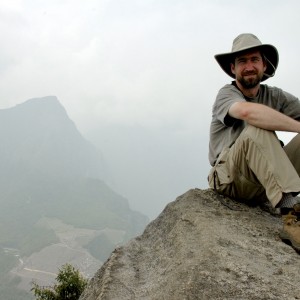
Robert has dedicated his life to conservation, natural history, education, and the arts. Over the course of his career, he worked to protect wildlife and preserve vital habitats, with much of his later work focused on the Greater Yellowstone Ecosystem. As U.S. Program Director for the Yellowstone to Yukon Conservation Initiative, Robert led efforts in large-landscape conservation, with a particular emphasis on safeguarding habitat for grizzly bears. He also served as Vice President of Education for Yellowstone Forever, the official nonprofit partner of Yellowstone National Park, where he helped expand public understanding of the park’s ecology.
Before his time in the Yellowstone region, Robert spent nearly two decades with the National Audubon Society. There, he held national leadership roles including Director of Bird-Friendly Communities and Director of Field Support for the Western United States. His conservation career began with The Nature Conservancy, where he led education programs in Montana’s Crown of the Continent ecosystem along the Front Range of the Rockies. In addition to his conservation work, Robert has a strong foundation in the arts. He earned a BFA from Washington University in St. Louis and an MFA in painting from the University of Montana. Early in his career, he worked as a scientific illustrator in the University of Montana’s Division of Biological Sciences, contributing to numerous books and scientific publications. In 2010, he was honored as the featured artist for International Migratory Bird Day.
Robert is a co-founder of the Montana Natural History Center in Missoula and has served on the boards of several conservation and education organizations, including the Montana Environmental Education Association, Friends of the Lee Metcalf National Wildlife Refuge, and the Northern Rockies Heritage Center. An experienced naturalist guide, Robert has led tours across the U.S., Mexico, and South America, with destinations including coastal Oaxaca, Machu Picchu, and the Galápagos Islands. He now lives in the Bitterroot Valley of western Montana, where he enjoys woodworking, canoeing, hiking, birdwatching, and restoring his land with native plants.Other trips with Robert Petty
-
 Western Panama: Tranquilo Bay Full! See our New Year tour.November 1 - 8, 2026, w/Mt. Totumas extension
 -
 South Texas Birding & NatureJanuary 20 - 28, 2027
 -
 Guyana: Unspoiled WildernessFebruary 11 - 22, 2027
 -
 Yellowstone: Birds, Bears & WildlifeJune 10 - 16, 2027
 -
 Brazil’s Pantanal: Jaguars! And More… FULL - Look for our 2028 departures!October 11 - 21, 2027, w/Amazônia extension
-

Essential Information +
Pace & Protocols +
Packing List +
Suggested Reading List +
Useful Links +
-
 Bountiful Bolivia: Birding & Nature in the High Andes FULL - See our Ecuador tour in November!October 6 - 19, 2026, w/La Paz/Lake Titicaca extension
 -
 Jewels of Brazil's Atlantic ForestOctober 17 - 28, 2026
 -
 Amazon Riverboat Cruise FULL - Check out Guyana: Unspoiled Wilderness in November!November 22 - 28, 2026, w/Machu Picchu extension
Photo credits: Banner Photos: Assorted Flamingos by Peg Abbott; Plush-crested Jay by Peg Abbott; Guanaco by Peg Abbott; Burrowing Parrots by Peg Abbott; Cardones National Park by Peg Abbott; Blond-crested Woodpecker by Peg Abbott; Andean Flicker by Peg Abbott; Birding Puna Habitat by Peg Abbott; Vicunas by Peg Abbott; Iguazu Falls by Bud Ferguson; Guira Cuckoos by Greg Smith; Rosy Pochard by Peg Abbott.