Trip Itinerary
Itineraries are guidelines; variations in itinerary may occur to account for weather, road conditions, closures, etc. and to maximize your experience.
Fri., Oct. 9 Arrival in Veracruz
Welcome to Veracruz, Mexico, right on the Gulf of Mexico! One of the most inviting and culturally unique areas in Mexico, let the warmth of the people greet you along with the warm tropical air.
Arrive today at Veracruz International Airport. You can arrive at your leisure; a representative from our local operator transfers you from the airport to our hotel. Dinner tonight is at your leisure, but please feel free to get acquainted with others on the tour through an informal dinner.
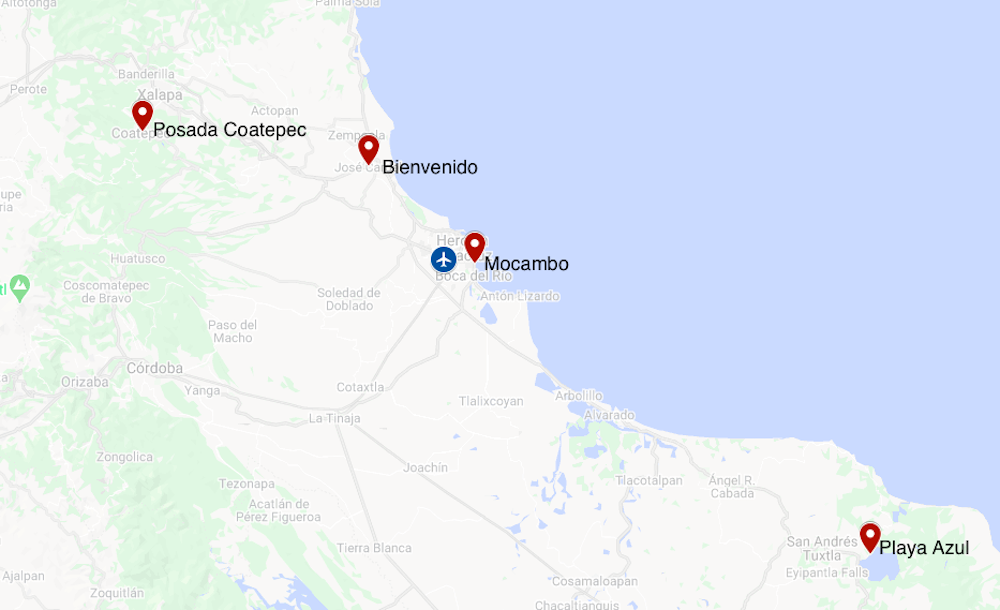
Accommodations at Hotel Mocambo, Veracruz
Sat., Oct. 10 Morning Birding | Cempoala Archeological Site
We gather this morning for our first formal group meal. For those interested, we can enjoy an early morning bird walk on the hotel grounds before our sumptuous breakfast. We may find Ferruginous Pygmy-Owl, gulls, terns, seabirds, and songbirds along the beach and in the hotel gardens.
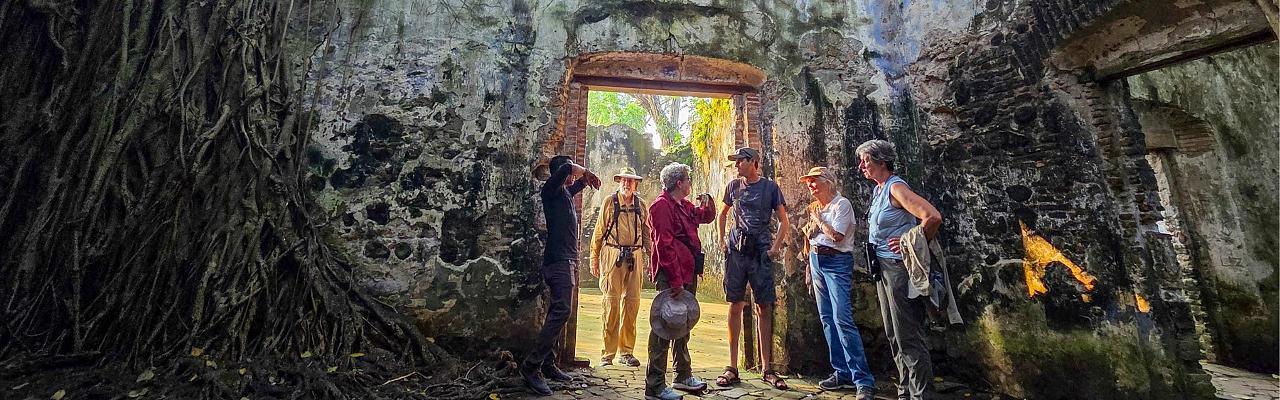
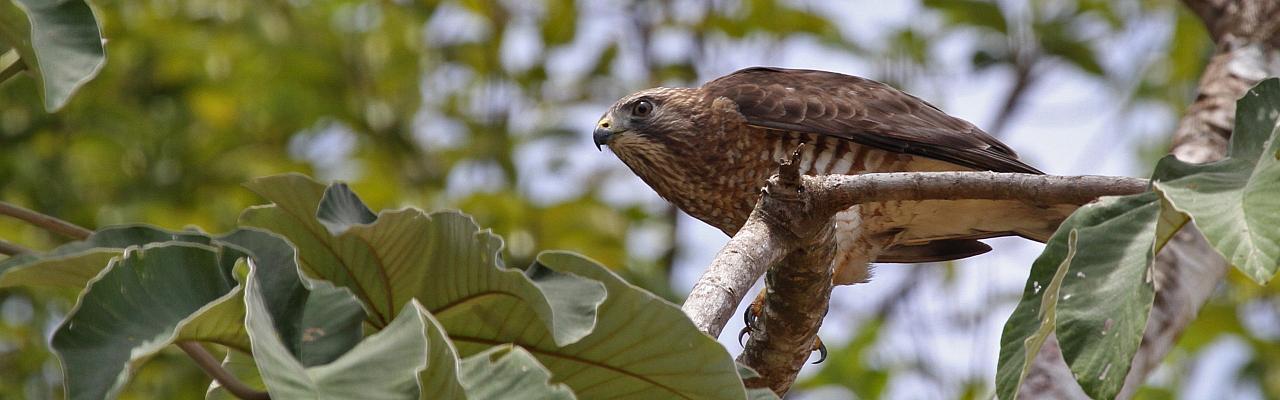
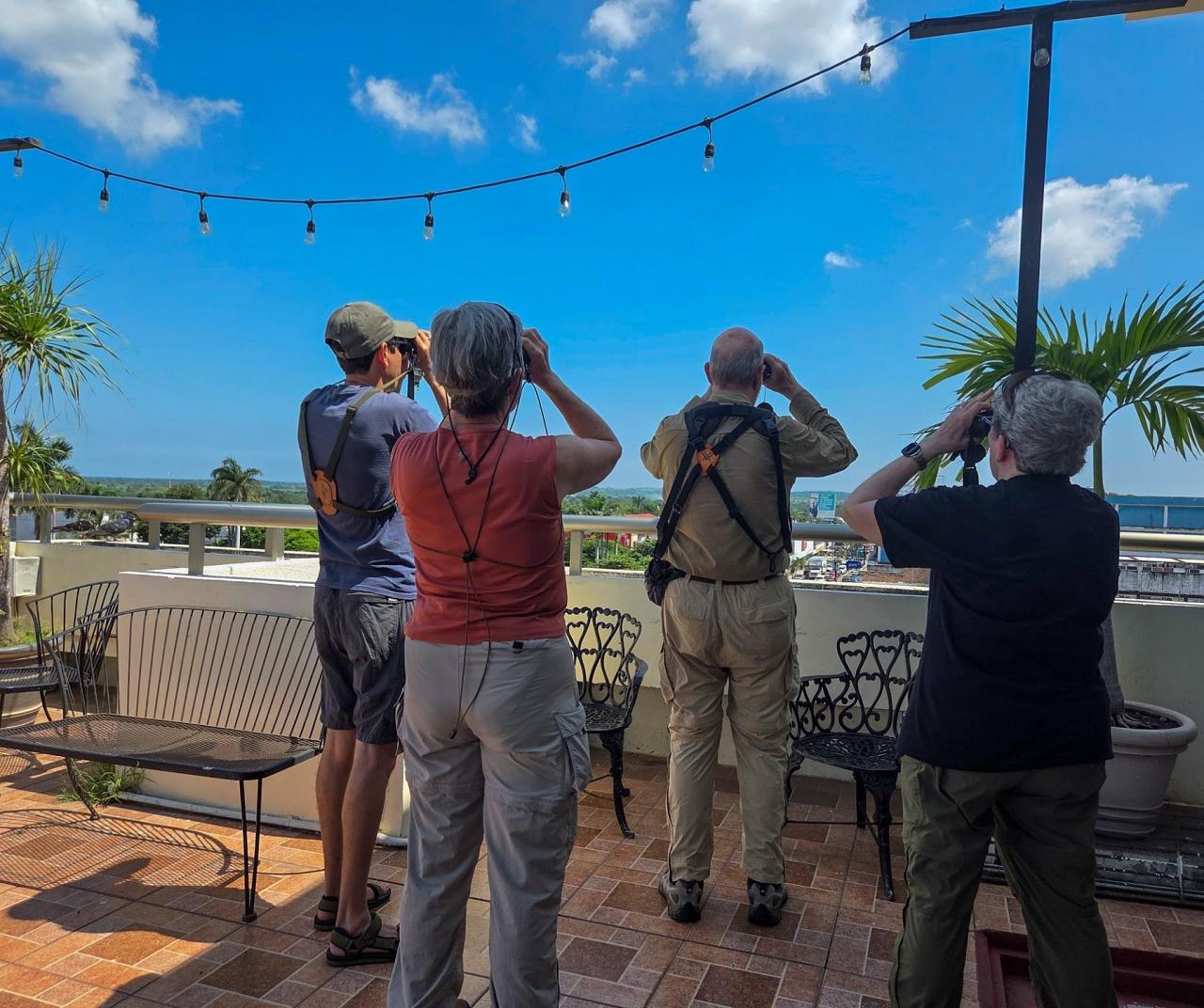
After breakfast, we travel to the town of Cardel, where we visit the archeological site of Cempoala, an important pre-Columbian Totonac site. This region of Mexico is unbelievably rich in historical significance. We receive a tour of the site and its small museum from a local guide to learn about this important coastal Mexican culture. We often see birds at the site, too, including impressive Lineated Woodpecker, Red-lored Amazon, Common Squirrel Cuckoo, Ferruginous Pygmy-Owl, perhaps some migrating raptors like Broad-winged Hawk and even Mississippi Kite. We return to Cardel for lunch, our base for the next few days. This is our first chance at seeing the River of Raptors in action. Our hotel in Cardel is one of two migration counting sites here in Veracruz. Just a few floors up from our rooms is primarily where Pronatura counts migrating birds. After lunch, you can stay on the roof and take in the spectacle, or enjoy a little time in your room or around the grounds before our next outing. This afternoon, we concentrate on the raptor migration, either from the roof of our hotel in Cardel or we may venture out to the alternate hawk-watching site at Chichicaxtle. The steering winds dictate where the raptors’ movements are happening, so we keep our movements, fluid just like the birds.
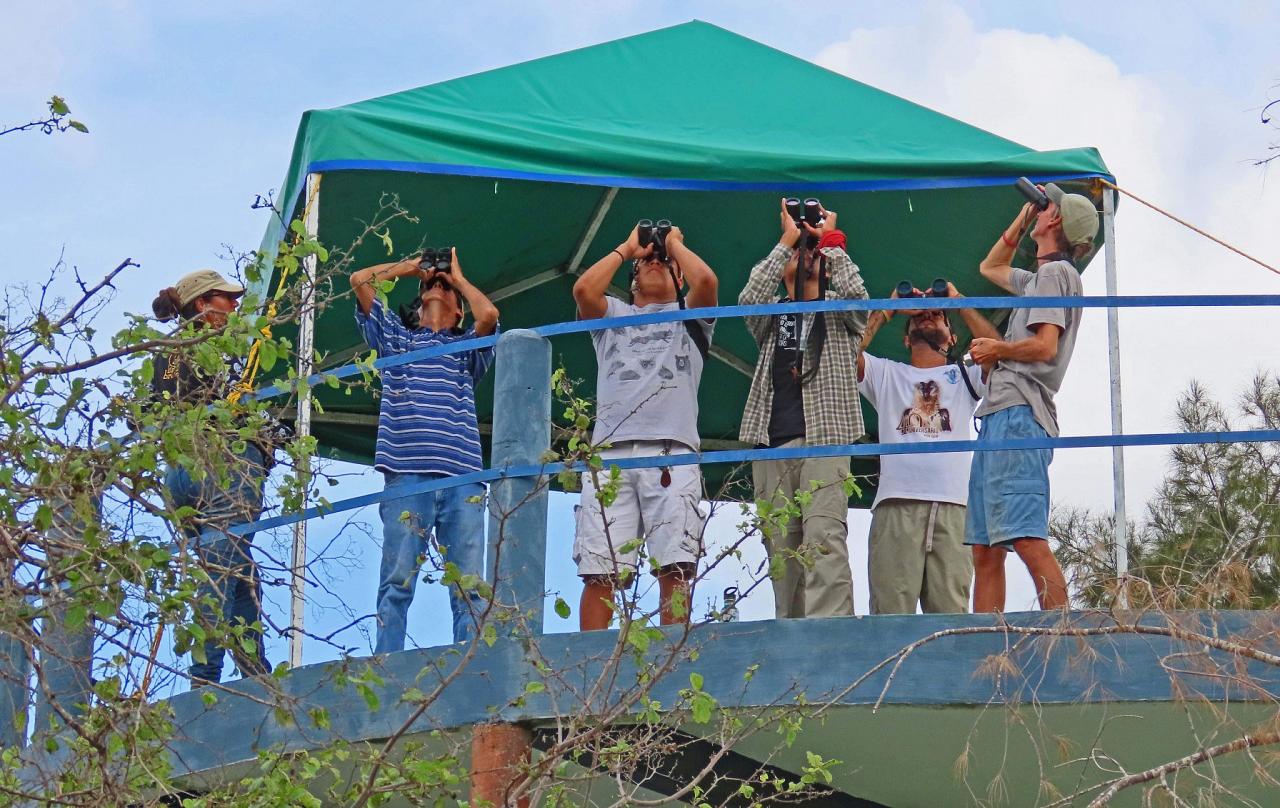
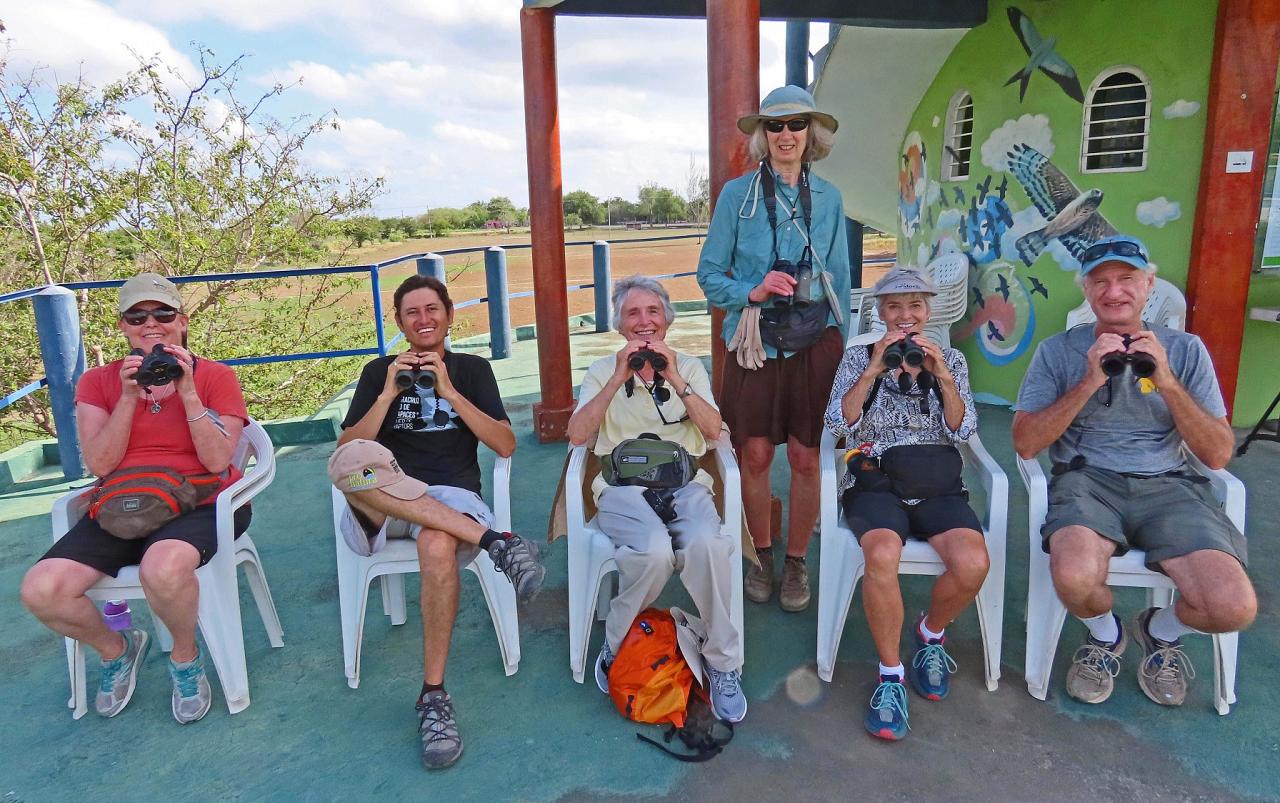
The tower at Chichicaxtle is a purpose-built building that Pronatura dreamed up themselves. Located in town, this hawk-monitoring site is more than just a place to count migrating birds twice a year—Pronatura has connected with the entire community here. This tower is a classroom for the local children once a week, as well as a place for children to gather in the evenings after school. We can make time to visit the gift shop downstairs before heading up to sit on the sprawling deck, in the shade, with our eyes to the sky watching raptors. We may even be joined by some enthusiastic school kids once classes let out. We hope to see large numbers of Broad-winged Hawk, accompanied by Mississippi Kite, Turkey Vulture, and Swainson’s Hawk. Also present in migration can be numerous Anhinga, American White Pelican, Wood Stork, kingbirds, and swallows.
Dinner tonight is in a local restaurant, followed by an evening program on the Rio de Rapaces project, which includes an introduction to the migrating raptors.
Accommodations at Hotel Bienvenido, Cardel (B,L,D)
Sun., Oct. 11 Coastal Birding | Afternoon Hawk Watching
We enjoy an early breakfast at the hotel this morning. As with all of our migration tours, the specific agenda for today may vary, particularly depending on the magnitude of the raptor migration as the day develops. In the morning we visit the Villa Rica area, exploring the local wetlands and the mouth of the lagoon. The wetlands may host Bare-throated Tiger-Heron, Black-crowned Night-Heron, Muscovy Duck, Northern Jacana, and Ruddy Crake. The nearby trees along the dunes are often filled with an array of migratory songbirds while hordes of swallows fly overhead. After this great start, we head a bit further north to visit the archeological site of Quiahuiztlan (a beautiful Totonac burial site overlooking the coast). We stand in the shadow of a volcanic-formed spire looking out over the gulf; this site was built over 500 years ago. It’s impressive to be immersed in such history, all while Great Black Hawk and more soar overhead.
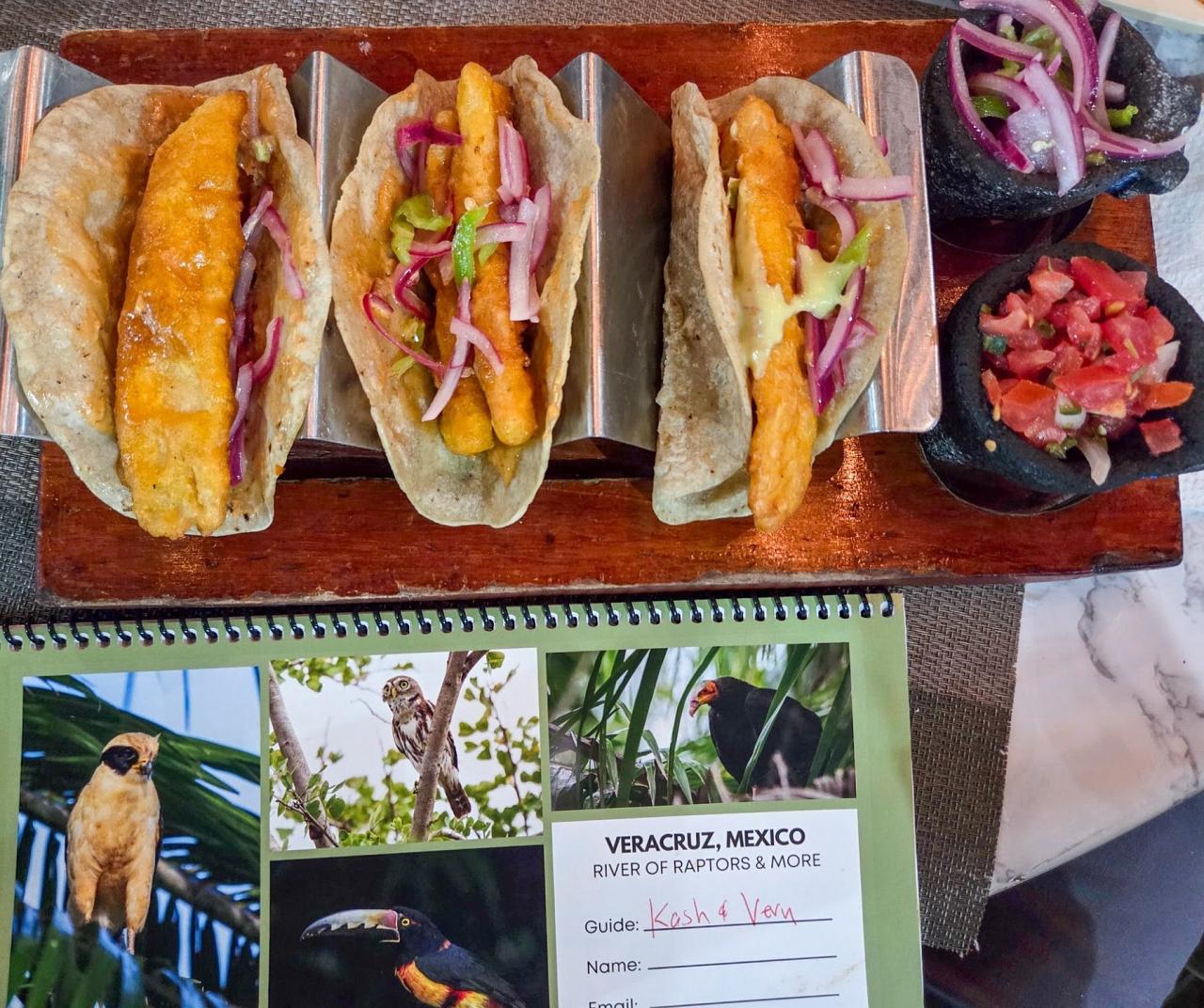
We return to Cardel for lunch. After lunch, we visit Hernan Cortez’ house in the village of La Antigua; here we also see the first church in the Americas and take a delightful river boat trip on La Antigua River, down and back to its mouth at the Gulf of Mexico, ending at sunset. The river is teeming with herons, egrets, and possibly our first look at Aplomado Falcon. Dinner tonight is at an open-air restaurant in La Antigua. Tonight, and at many of our other restaurant stops on the trip, we have the chance to enjoy excellent local seafood from the Gulf of Mexico, deliciously flavored Mexican-style, and quite different from what you may expect from your local Mexican restaurant in the US!
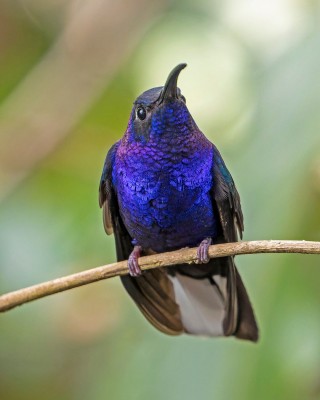
After dinner we go over our list for the day. Birding highlights may include many of the local raptor species such as Gray Hawk, Roadside Hawk, Hook-billed Kite, Great and Common Black Hawks, and Aplomado and Laughing Falcons. Additionally, other local species provide a great introduction to tropical birding with species that include Altamira Oriole, the very local Veracruz Wren, Black-headed Trogon, Rose-throated Becard, Black-headed Saltator, all five kingfisher species, Montezuma Oropendola, Olive-throated parakeet (Aztec Parakeet), and Masked Tityra. At each of the sites, we also hope for a spectacular passerine and water bird migration. The butterfly and dragonfly migration can be spectacular as well.
Accommodations at Hotel Bienvenido, Cardel (B,L,D)
Mon., Oct. 12 Veracruz Wren and Sheartail | Afternoon Hawk Watching
After an early breakfast at the hotel, we travel out to the town of El Crucero. This open farmland has some of the last good habitat for Mexican Sheartail in the region. The cattle farmers here, in conjunction with Pronatura, have left plants to grow freely in the fields, which are vital to this endemic hummingbird's survival. This gives us a chance to find and see a variety of species from the deciduous forest here too. Laughing Falcon patrol the area as we bird. Also mixed into these fields, we have our first chance at the odd shorebird known as the Double-striped Thick-knee. There is a heavy amount of citrus grown here, with miles of fenceline and brush piles. Another very regionally-specific endemic that loves this type of roadside habitat is the very large, and striking, Veracruz Wren. Often found in family groups, these charismatic birds are always up for a photo session.
We return to Cardel for lunch and then head out to where the hawk migration is best, either in Cardel or at the Bird Observatory at Chichicaxtle. In addition to the (hopefully) abundant Broad-winged and Swainson’s Hawks and Turkey Vulture, we may see Mississippi Kite, Zone-tailed Hawk, Osprey, and even Peregrine Falcon. The bird observatory also has a small gift shop, a great way for us to directly support the conservation effort. Today is our last day in the heart of the River of Raptors. We enjoy one more evening with the overhead river and the truly special people that spend months monitoring the migration in the region. This is the most important raptor corridor in the world, and the work Pronatura is doing is extremely important to conservation efforts. At the end of the day, we return to Cardel for dinner and a review of the bird list.
Accommodations at Hotel Bienvenido, Cardel (B,L,D)
Tues., Oct. 13 Shade-Coffee Plantation, Xalapa
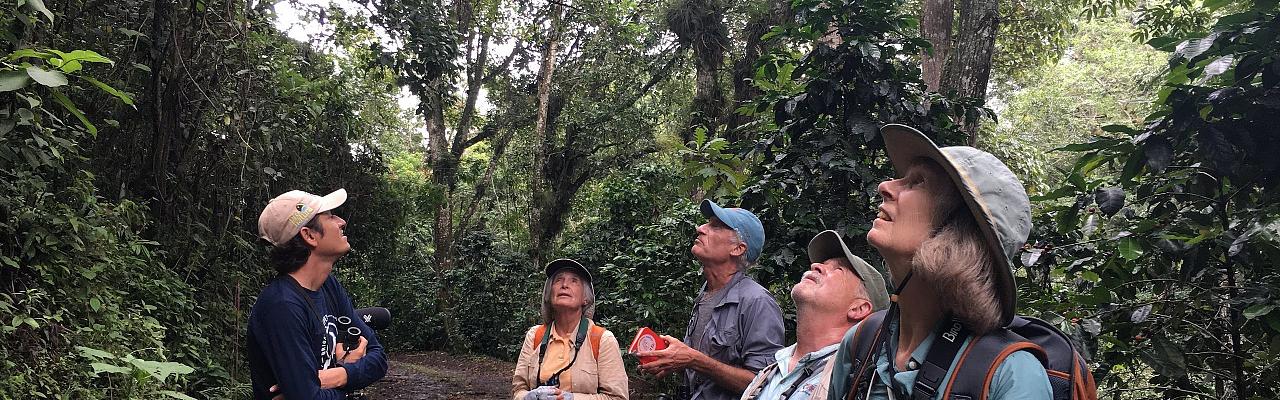
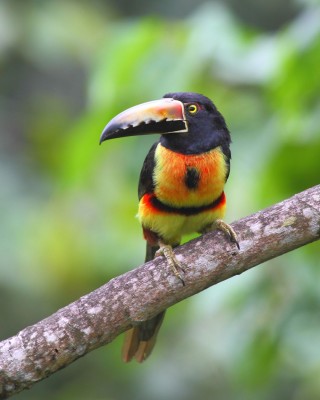
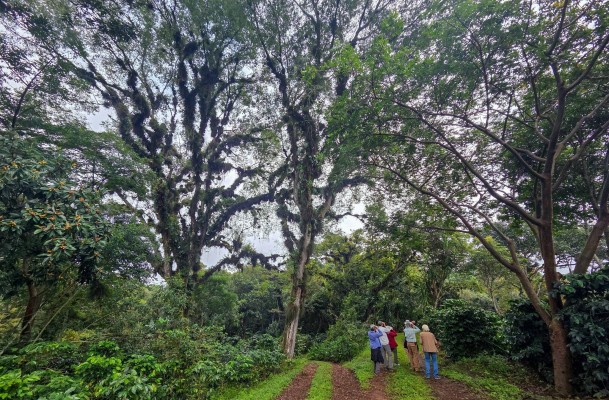
After breakfast in Cardel we say goodbye to our hotel hosts, and head inland to visit the historic Rancho El Mirador certified shade-coffee hacienda for some delightful birding followed by a traditional Mexican lunch. The birding is fabulous here and, in fact, it is hard to even leave the parking lot! Many forest and second-growth specialties like Blue-capped Motmot, Black-headed Saltator, Collared Aracari, Montezuma Oropendola, Azure-crowned Hummingbird, Ivory-billed Woodcreeper, Tropical Parula, Gartered Trogon, and more are possible. The visit includes a short drive through the coffee plantations, where we also learn from the owner a bit of the insider's perspective on coffee growing and consumption. After birding, we return to the hacienda for a fabulous, home-cooked Mexican lunch with tamales, barbacoa, and more. Those interested have the opportunity to take home some of the genuine shade-grown coffee grown here. For most, this is the highlight of the trip. Like everyone we meet along our journey through Veracruz, the family that owns Rancho El Mirador is wonderful. We come for the birds, but their kindness, the work they do, and their hospitality are the stars of the show. Who doesn’t want to sit in the middle of a coffee plantation, drinking freshly brewed coffee, all while trogons call from above?
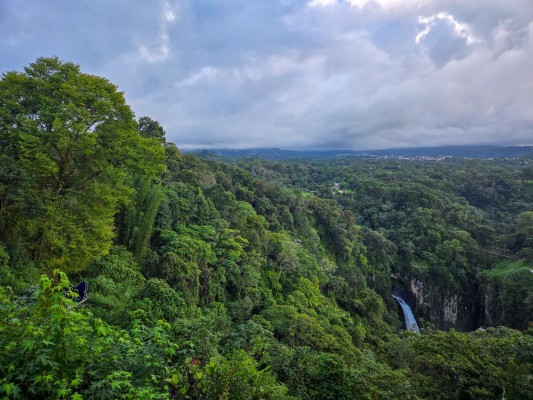
We then head to the higher elevations of Xalapa, the capital city of Veracruz, and its smaller neighbor, Coatepec. We stay for two nights here, just a short ride up the mountains from Cardel. This colonial city is quite lovely, with beautiful architecture, a pleasant climate, and very fine Mexican cuisine, quite different from the coast. Here we visit several sites in the surrounding cloud forest and pine-oak forest, including taking the time to explore around a beautiful waterfall and witness a spectacular 2000-foot canyon. The habitat of the higher elevations here supports many endemic species as well as migrants and other residents, especially of mixed-species flocks. We are joined at dinner tonight by staff of Pronatura Veracruz, as this conservation organization is headquartered in nearby Coatepec, to informally discuss the opportunities and challenges of doing conservation in the region.
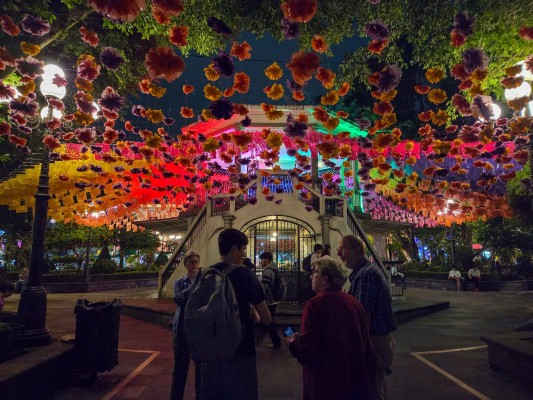
After dinner, we set aside some time to take a stroll through the vibrant town. This time of year, the town plaza is bursting with color. Día de los Muertos is at the end of the month, and many of the towns go all-out with decorating. Orange Marigolds are a very common symbol for the holiday, and we see them almost everywhere we go. Many small towns and villages have them adorning the shops as we pass, and Coatepec is no different. We are also near the dairy region and, for those chocolate lovers, there are some fabulous shops in Coatepec.
Accommodations at Casabella Hotel (B,L,D)
Wed., Oct. 14 High Elevation Birding | Xico
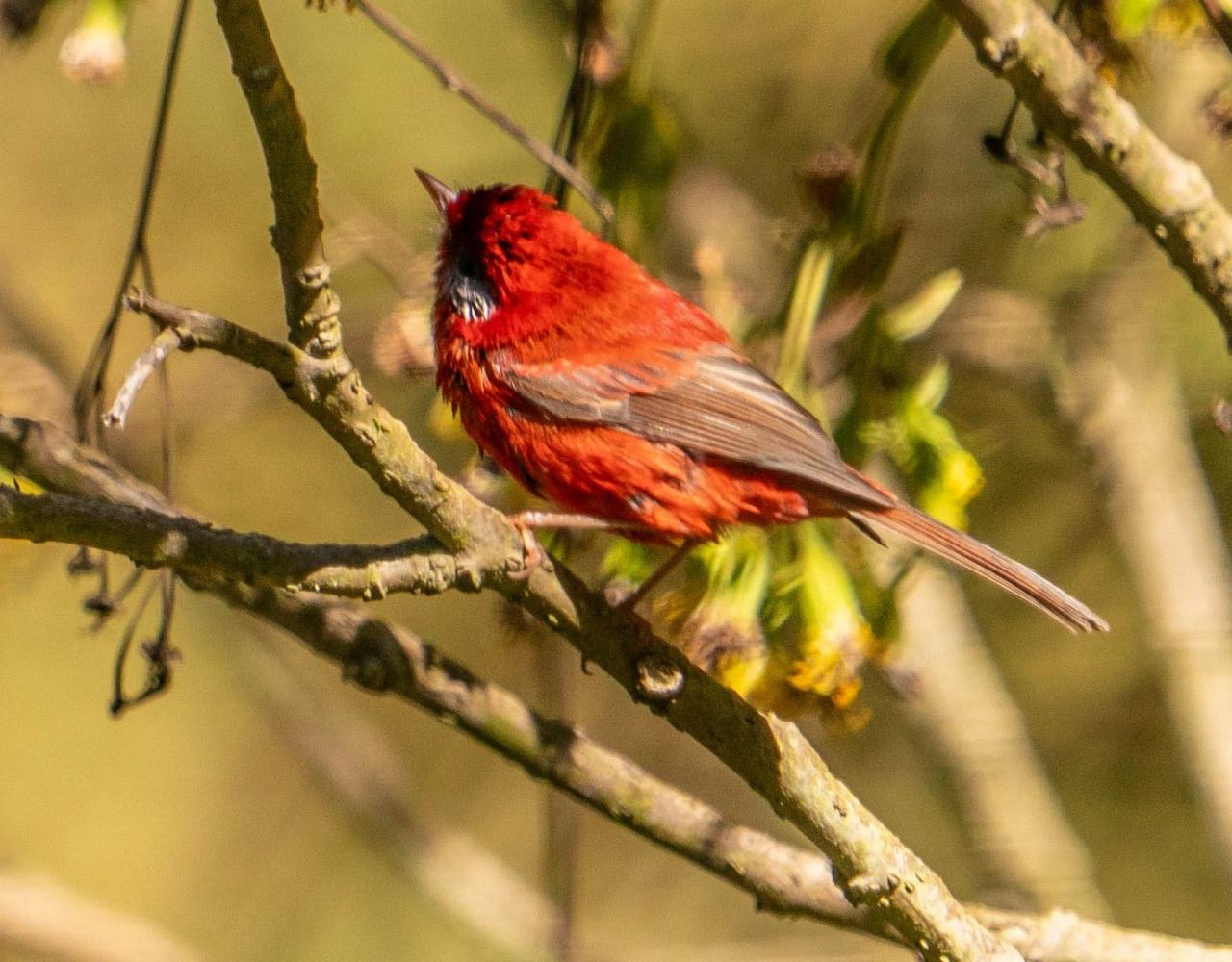
Today is devoted to exploring the higher elevation forests and other habitats above Xalapa, mostly on the slopes of the Cofre de Perote volcano. After an early breakfast, we head up the highway to the small community of La Joya (at about 7100 ft). We pass many dairy farms as we make our way up the mountain. There is a strong dairy community here in the mountains and we see many dairy cow statues along the way. We only travel about 30 minutes from Coatepec, but are already treated to another unique community with its own fun identity. The area around this community is largely dominated by Mexican weeping pine (Pinus patula) with oaks and other hardwoods mixed in. This is a new habitat for our tour and we hope to see many montane forest species including Brown-backed Solitaire; Golden-browed, Crescent-chested, Hermit, and Townsend’s Warbler; Blue-throated and Amethyst-throated Mountain-Gem. We then continue up in elevation, to the area known as Las Minas (about 7750 ft), to look for the star of the show, the stunning and endemic Red Warbler. We are on a raptor tour, but we take any chance we can get to find this blazing red endemic of the high elevation mountains of Mexico. We also explore the region to the north of Perote, known for its block-making, the Black-headed Siskin, and Striped Sparrow.
After lunch at a restaurant, we drive to the historic town of Xico (famous for its mole) and the nearby Cascada (waterfall) de Texolo from the Finca Santa Rosa site where we have our dinner. Generally, in this open-air restaurant, we share dinner with Band-backed Wren and Plain Chachalaca. It's not just us enjoying the views of the waterfall, as Turkey Vulture cruise by; striking White-naped Brushfinch may also pop up from the bush it's been skulking in for a view as well.
Accommodations at Hotel Casabella (B,L,D)
Thurs., Oct. 15 Xalapa | Anthropology Museum
After breakfast, we make a short drive through Xalapa to the Parque Ecológico Macuiltépetl, a park consisting of an extinct volcanic cone in the middle of the city. We slowly walk and wind our way up to the crater at the top, birding along the way. With luck, on a clear day, we also have a chance to see Orizaba, the highest point in Mexico. Pico de Orizaba is a volcano that stands at 18,491 feet. There is something very unique about standing on an extinct volcano and looking off into the distance at the largest active volcano in the country. The birding here can be fabulous. This park is splendidly maintained, and energetic locals offer a friendly “bueno” as they pass by, sometimes stopping to enjoy in the excitement of you finding an endemic Blue-capped Motmot. There are many stone benches along the meandering trail to the top to stop and take a rest on. It’s completely commonplace to be enjoying a sit in the gardens and be greeted by a buzzing Wedge-tailed Saberwing while an Audubon’s Oriole sings in the background.
We then head over to the Museo de Antropología de Xalapa (MAX) for a guided tour with a local guide. The MAX is the second-best anthropology museum in Mexico and has a fabulous collection of artifacts and information on Mexican anthropology and archeology, with an emphasis on the cultures that arose along the southeast Mexican coast of the Gulf of Mexico. This museum has the largest collection of Olmec colossal heads in the world. These massive stone heads are worth the visit alone; but this tiered museum offers so much more. Each tier you travel down, you are transported into a different time in Mexico’s history. It’s the perfect tie-in to the Totonac sites we visited earlier in the trip, now getting to see the statues they crafted as well.
After lunch we head back down into the lowlands to Tlacotalpan, our home for the next two nights.
Accommodations in Tlacotalpan (B,L,D)
Fri., Oct. 16 Tlacotalpan | Mangroves
Today is a full day in the Venice of Mexico, Tlacotalpan, a town that dates back to 1550. In 1998, Tlacotalpan became a UNESCO World Heritage Site. This town sits along the Papaloanpan River, but was originally an island within the river. The region is dubbed the Venice of Mexico not only because of the water all around, but also the pastel colored houses adorning the town center. We have now been transported to yet another one of the many truly unique regions in Veracruz, with its own traditions and food. But the kindness of the people never changes, and Pronatura’s work never ends. We visit some of the restoration sites of Pronatura on a boat trip along the diverse channels of the area, looking for American Pygmy Kingfisher, Sungrebe, Black-collared Hawk, Snail Kite, and Morelet’s Seedeater. Pronatura teaches us about their work protecting mangroves, replanting efforts, and how they connect with the local community through international efforts. This is also the realm of egrets and storks, which gather by the thousands in the area.
Depending on the timing of our boat trip, we have time either before or after to explore a little more of the surrounding area and the banks of the river. In the afternoon, we explore the town of Tlacotalpan, where hand-made dresses and furniture are still being made, one of the long-standing businesses in the town. These businesses, along with the many fisheries and cattle farms, are still the lifeblood of the community here. Even in town we have chances to see Lesser Yellow-headed Vulture flying over, or even a Mangrove Swift.
Accommodations in Tlacotalpan (B,L,D)
Sat., Oct. 17 Las Barrancas | Boca del Rio
Today we bid farewell to the lovely Tlacotalpan and make our way back to Veracruz City. But before we do, we have a very important area to explore. Las Barrancas is a vast grassland area that extends inland, from the coast, for miles. Dispersed throughout are cattle ranches, wetlands, and scrub habitat. This makes for a very diverse day in the field. Las Barrancas is our best chance at finding the very elusive Pinnated Bittern, sometimes mixed in tall grass in the marsh fields. As we scan, we may be treated to Fork-tailed Flycatcher working the tall grass stalks as they pass by. Mixed in amongst the many cattle grazing the fields, Western Cattle Egret work the ground at their feet; if we’re lucky, there may even be a few Double-striped Thick-knee. Aplomado Falcon also thrive in this habitat, often seen hunting in flocks here.
Where the grass meets the scrub trees, we look for the Common Tody-Flycatcher. This feisty bird is always on the move, catching insects in the scrub. We spend the entire morning here, scanning the fields, peering into the sky, and watching the fence lines; there is never a shortage of activity. Plain-breasted Ground-Dove and Groove-billed Ani may be perched on the fences, or Northern Jacana may be working a small pool of water in a cattle field. It’s hard to pull ourselves away from this unique spot.
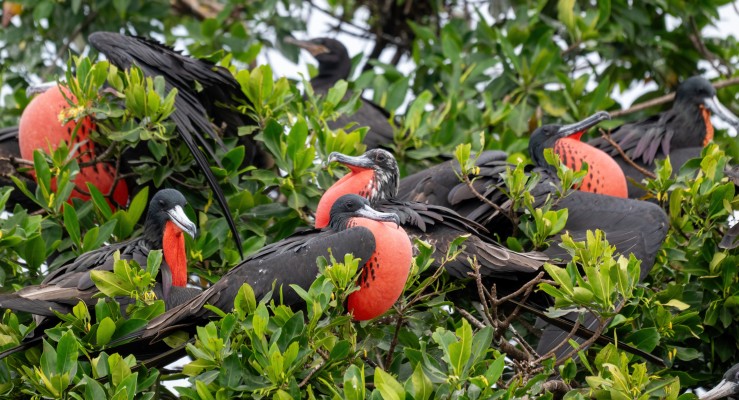
As we head further south, we stop in town along the Mandinga Lagoon. Here, we have one last boat ride to a magnificent island planned before our trip ends. Before the boat ride, though, we enjoy a delicious lunch in town at the edge of the lagoon. More fresh fish and cold agua fresca are served. A Sandwich Tern may join us on the dock as a Belted Kingfisher flies by. After lunch, we load up in the boat and make our way out into the lagoon. As we clear the channel, in the distance, we start to see our destination: an impressive Magnificent Frigatebird colony. We make our way closer so we can enjoy these massive bat-like birds filling the sky above us. Males perch in the mangroves on the island, with their bright red gular pouches blown up in full breeding display. If you didn’t know better, you would think someone tied red balloons all over the island. This lagoon is seldom used, so we tend to have the island and the birds to ourselves. A quick pass by a neighboring island lets us look for fascinating Boat-billed Heron, before we must tear ourselves away to make our final drive back to the city.
We setting in for our final evening together where we started, Hotel Mocambo, right on the beach. We should be back in time for one more Mexico sunset. Our celebratory farewell dinner lets us all share our favorite moments of the trip and look back on how wonderful the people, food, and nature was in Veracruz.
Accommodation in Hotel Mocambo (B,L,D)
Sun., Oct. 18 Departures
You can depart at your leisure this morning. (B)
Essential Information +
This information is important for being prepared for your journey; we want you to have Read more
This information is important for being prepared for your journey; we want you to have the best experience possible. If you only read one section, this one is key!
Ahead of Your Tour
- At the time of writing, U.S. citizens must have a passport that is in good condition and at minimum is valid at the time of entry through your scheduled return to the U.S. We suggest at least 3 months validity beyond the end of the tour to allow for unexpected delays in return travel.
- U.S. citizens carrying a tourist passport do not need a visa to enter Mexico. We advise having at least one blank passport page per entry stamp.
- Please check current CDC recommendations for travel to Mexico and consult with your doctor about general travel vaccinations you should have as precaution for travel. See the “General Health and Inoculations” section below.
- Travel insurance in case of serious medical emergency is strongly recommended. Full health coverage and repatriation is available through Allianz Travel Insurance.
- Soft sided luggage/duffel bags are easiest for packing the vans. Pack essential medications in your carry-on luggage, as well as one day of clothing and optics in case of luggage delay.
Passports, Visas & Documents
Guidelines and regulations can change. It is always advisable to double-check the country’s documentation requirements 60-90 days ahead of traveling. Information for U.S. citizens can be found at travel.state.gov for Mexico. If you are from another country, please contact the Embassy of Mexico website for guidelines.
Passport: At the time of writing, U.S. citizens must have a passport that is in good condition and at minimum is valid at the time of entry through your scheduled return to the U.S. However, we suggest at least 3 months validity beyond the end of the tour to allow for unexpected delays in return travel. Please check that expiration date! Your passport should have at least one blank page per entry stamp. The blank pages need to say “Visas” at the top. Pages marked “Amendments and Endorsements” will not be accepted.
Visa: At the time of writing, a tourist visa is not required for stays of this tour's duration. You will need proof of a return ticket. The necessary documents will be distributed by your airline while in flight or provided for you upon arrival. We advise that you bring your eContact list of hotels for use at immigration as well.
As a precaution for lost or misplaced documents you carry on your person during travel, we highly recommend you keep hard and digital backup copies on your phone (either photo or PDF scan), as well as a hard copy left with your emergency contact at home. The recommended important documents to copy include, but are not limited to; your passport ID page, travel visa, the front and back of your credit card(s), the airline barcode on your luggage. This will greatly expedite getting new ones if necessary – we hope everyone will always keep travel documents close so that losing them will not be an issue.
General Health & Inoculations Information - Be Prepared!
Health requirements for entry to any country can change. It is always advisable to double-check the country’s health requirements and recommendations 60-90 days ahead of traveling. A helpful website for planning is the Centers for Disease Control and Prevention (CDC) website for Mexico or by phone (800) CDC-INFO or (800) 232-4636.
Vaccinations: Bring copies of your up-to-date vaccination records with you. The CDC recommends that all travelers be up to date with routine vaccinations (such as measles-mumps-rubella (MMR), diphtheria-tetanus-pertussis, varicella (chickenpox), polio and your yearly flu shot) and basic travel vaccines (such as Hepatitis A and Typhoid) before traveling to any destination. Please check with your doctor for recommendations at least 4-6 weeks before departing on your trip.
Prescriptions: It is a good idea to pack any meds you take regularly in your carry-on luggage. Bring an extra pair of glasses or contact lenses. Bring an adequate supply of any prescription medications you use, a copy of the prescription and a list of generic names of your medicines as “back-up” in case it is necessary to purchase drugs while abroad. You’ll want to keep medications in their original, labeled containers.
Allergies: To be prepared for environmental triggers to allergies or breathing difficulties, please bring your allergy and/or asthma medication(s). If you have severe allergies talk to your doctor about carrying an EPI pen and notify your guides. It is also recommended to carry with you an up-to-date record of known allergies, chronic medical problems and Medic Alerts so that, if necessary, emergency treatment can be carried out without endangering your health.
Common Ailments: We recommend that you bring a travel-sized first aid kit and a supply of standard over-the-counter medications for prevention or treatment of common ailments (such as diarrhea, constipation, stomach upset, cough, congestion, head or body aches, insect bites and sunburn); as well as ointments, moisturizer, sunscreen, oral rehydration salts, band-aids, moleskin for blisters, cotton swabs, nail clippers, and tweezers, etc.
Weather & Climate
October in Veracruz is warm to hot and muggy. Temperatures in Veracruz generally range from 72°-87°F, but nights can get as low as 66°F or days as high as 92.5°F. Even though there is less rainfall than in summer, precipitation can be ~6" over 11 days, so we have rain gear on the list just in case. Temperatures will vary depending on topography.
Annoyances & Hazards
The tropical climate and abundant water sources in Veracruz, Mexico create ideal conditions for mosquitoes to thrive, posing a risk to public health. The primary mosquito species found in the region include Aedes aegypti, known for transmitting diseases such as dengue fever, Zika virus, and chikungunya. Although at the time of writing there is no known risk for malarial transmission (anti-malarial drugs are not required by CDC for any area that you visit on this tour), travelers should still reduce their risk of mosquito and/or tick born diseases (including yellow fever, malaria, dengue fever, zika, Japanese encephalitis, etc.) by protecting themselves from bites using protective clothing, insect repellant (containing DEET, Picaridin, OLE, etc.) and prophylactics where applicable. For repellent permeated clothing, see "Packing List" under the "Know Before You Go" tab for our recommendations. See the “CDC Yellow Book: Health Information for International Travel” website for more information: https://wwwnc.cdc.gov/travel/page/yellowbook-home.
Chiggers are a part of lowland and mid-elevation habitats. You may encounter them at grassland or farm locations. Your guide should have a good read on chiggers if it has been wet enough that they are active. Spray your shoes with repellent, and tuck your pants into your socks . When back, be sure to shower and air out your clothing. Do listen carefully to any advice given by your local guide regarding pests and other biting insects or reptiles you may encounter. And remember the sun is strong and be prepared with proper protection.
Food & Drinks
Menus at the lodges are varied, delicious and are sustainably based on the wonderful local ingredients available. Meals reflect the contributions of American, European, Spanish, and local cuisines. As with any case when traveling in another country, trust your common sense when consuming food and beverages. We urge you to consider what your body is used to before you eat something. This is the best way to avoid any unwanted problems. Ask for recommendations from your hotel or consult a guidebook such as Frommers if you are eating out on your own.
Generally, sanitation and cleanliness have improved significantly in Mexico. That said, we urge you to use purified bottled water for drinking and brushing your teeth. If unsure, your guide will be able to tell you when purified water is preferred. Purified water will be available everywhere you go, as well as purified ice. There will be a cooler full of drinks that your guide will keep stocked during the trip. Bring a refillable water bottle that you can refill from larger bottles of purified water as needed; this helps enormously to cut down on the use of plastics. A number of restaurants and hotels will use purified water, but you may want to ask first to be sure.
Packing, Clothing & Laundry
Dress is very informal. Some people will change for dinner; it is usually just to a drier or cleaner version of what they wore during the day. Again, the climate is warm to hot, so you will be comfortable in lightweight clothing.
Please, pack light. We are serious about this – we move around a lot; you just do not need much to cope with tropical life! Please do not bring anything more than you must. Lay out your hopeful things to take and then do a serious paring down.
TRAVEL TIP: Imagine NOT getting your suitcase. Wear your most important shoes for the field and have one day’s clothing change (including a change of underwear!). And please DO NOT pack any essential medications, or your vital optics, in your checked luggage!
Laundry services can be arranged at some of our hotels, those where you have multiple nights. But it is most convenient if you are content with hand laundry.
Spending Money
The official currency in Mexico is the Mexican Peso. We advise you carry a mix of different types of payments, such as cash, an ATM card, and a credit card. For the current exchange rate, please refer to an online converter tool like www.xe.com, or your bank. U.S. dollars in good condition (no rips or tears) are taken as a form of payment but shopping for smaller handicrafts may necessitate using local currency.
When using the ATM to withdrawal cash, keep in mind it might only accept cards from local banks or not allow cash advances on credit cards. Many U.S. banks charge a fee of $1 - $5 each time you use a foreign ATM. Others may charge you a percentage of the amount you withdraw. Check with your bank before departure. You must become familiar with how to use your ATM card and PIN number ahead of the journey. If you plan to exchange cash in country, bring large U.S. bill ($50 or $100) in good condition - that will give you the better rate when exchanging to local currency.
We suggest you have more than one card available, if possible. You may want to bring more than one brand of card (VISA and Mastercard are commonly accepted; American Express is less common). You can use credit cards at lodges to pay your bar and gift tabs. Not every shop will accept every card. Some smaller shops, restaurants, and/or taxis require cash, so it is always a good idea to ask before making a purchase. Also, we recommend that you advise your bank or credit card company that you will be traveling abroad to avoid questions, card freezes, or charges. If you have a choice of cards, bring one with no foreign exchange fees.
Traveler’s checks are not widely accepted. They can be difficult to exchange. We do not advise you use them.
Gratuities
All tips for all services of your tour are now included in your tour price, with the exception of your main guides. The local guide is your main guide, if there is more than one, they will share your gratuity. The recommended rate is $10.00 - $15.00 per day per guest. You may also wish to tip your Naturalist Journeys guide/host if you have one on your tour; this should be done separately and the same suggested rate applies. We suggest you bring two envelopes or cards to make it easy to share your gratuity at the end of the tour. If you are on an extension, that may be a different local guide for those days.
Tipping to your guide(s) to show your appreciation is entirely at your discretion and should reflect your level of satisfaction of the service provided. If you wish to offer a tip, know that they appreciate anything you care to give. Of course, you are welcome to give more in recognition of exceptional service.
Please note recommended tips are quoted in U.S. dollars. Tips should be converted and paid in local currency.
Donations to Locals
You may wish to bring small gifts for local people that you meet and enjoy (this is totally optional!). T-shirts, school supplies like pens and small notebooks, inexpensive watches and baseball caps are always popular. Your guides can pass along school supplies to a local school if you bring them. They also love any nature books/coloring books.
Cell Phones & Internet Service
Your guide is well connected and can help if any urgent communication need arises. However, it is highly recommended that you travel with a cell phone, if only as a precaution for the unfortunate occurrence of a medical emergency during an outing and needing swift accessibility to critical personal or medical contacts.
Please check with your wireless provider to see if your phone and service will work in your destination country. Options include activating international roaming, purchasing a local SIM card at the airport (newer phones may not accept SIM cards), or simply turning off cellular service and relying on Wi-Fi to make calls and access the internet. If your phone can connect to Wi-Fi, you may be able to make voice and video calls free of charge. Another option if you have access to Wi-Fi is to use smartphone apps like Skype, WhatsApp, or Viber to send text messages, and make voice calls, or video calls. Many smartphones, tablets, or laptops come with one of these apps pre-installed or you can download for free.
Your hotels and most local restaurants provide Wi-Fi at least in their common areas. Although it is generally a reliable service, it can be affected by adverse weather conditions due to the remote location.
Make sure if you do NOT want to use your cell phone that you turn off your cellular data. You could incur huge charges if you are not on Wi-Fi. Putting your phone in airplane mode if you mainly use it for photos will save the battery as well.
Please refrain from taking or making cell phone calls in the vehicles when traveling with other passengers, unless it appears to be an emergency. This disrupts other guests, plan on cell phone call use on your own time.
Electricity
Mexico voltage is 127V, slightly higher than in the United States (120V), with a frequency of 60 Hz. Electrical sockets (outlets) are primarily "Type A" and "Type B".
You may need to bring a power plug adapter, and a voltage converter to use appliances or devices from the U.S. that do not automatically detect and convert voltages. Mexico's wall outlets aren't always polarized so you may need an adapter if you have a polarized plug. To be sure, check the label on your appliance. More information is available at https://www.power-plugs-sockets.com/us/mexico/.
Time
Your Mexican adventure will be in the Central Daylight Time zone (CDT). A great website if you want to tell someone to check the time in Veracruz ahead of calling you is https://www.timeanddate.com/time/zone/mexico/veracruz-state.
Smoking
Smoking is not permitted in any vehicle or in any situation where the group is participating in an activity together, such as a vehicle excursion or a guided walk. Please respect all designated smoking areas at hotels and restaurants.
Transportation
We ask that all travelers please rotate vans, so you sit with different drivers and alternate in front and back seating.
Photo Release & Sharing
We take many group photos and share photos with the group. Please note that this is our policy, if you have an exception to it, we need to know ahead of your tour. And at the end of your tour, we will organize a chance to share photos via Dropbox or Google Photos.
By registering for this tour, you agree to grant to Naturalist Journeys and its authorized representatives permission to record on photography film and/or video, pictures of your participation in the tour. I further agree that any or all of the material photographed may be used, in any form, as part of any future publications, brochure, or other printed materials used to promote Naturalist Journeys, and further that such use shall be without payment of fees, royalties, special credit or other compensation.
Questions?
Please contact Naturalist Journeys by email at clientservices@naturalistjourneys or telephone at our office: (520) 558-1146 or toll free: (866) 900-1146 if you have any questions. Many thanks for traveling with us and we hope you enjoy your journey!
Pace & Protocols +
Pace of the Tour & What to Expect
You will receive a Schedule-at-a-Glance and list of Read more
Pace of the Tour & What to Expect
You will receive a Schedule-at-a-Glance and list of hotels (our eContact List) a few weeks before your departure. This will serve as an outline for each day and alert you to any recent changes made in the schedule or to our hotels, if needed.
Our journeys are set up to follow the rhythm of nature. Our focus is on birding and nature; we offer full, well-planned field days and often get up early for that magical time around dawn. We generally follow the published itinerary, but we stay flexible to the weather, wildlife opportunities and the interests of the group. Your guide will keep you apprised of the next day’s schedule at each evening meal, noting what to bring and what to prepare for. Questions and/or concerns are welcome.
The pace of our Naturalist Journeys tours is moderate; to fully participate you should be able to get in and out of vehicles several times a day, and walk 1-3 miles over uneven terrain. It is important to participate with a flexible attitude as adjustments may be made in our schedule to make the most of our time in the field or for other purposes at your guide's discretion. We are not a “listing” bird company that drills down on target species, but at times we do wait for those special species unique to the places we visit. During the day, we take time to stop for photos and for educational opportunities to learn about conservation projects, landscapes, and geology. We appreciate other taxa as well as birds, with mammals often the biggest draw but plants and butterflies are also very popular. Our clients often lend their own expertise to the mix.
We like to make meals a fun and memorable part of the experience, too. Breakfasts are often at hotels, and we carry snacks, fruit, and water in the vans each day. Lunches are a mix of picnics in the field (weather dependent) and a chance to dine with locals at small cafes and restaurants. For dinner, we pride ourselves in our homework to keep up with the best choices for dining, choosing restaurants with atmosphere that specialize in local foods. On occasion we keep dinner simple to go back out in the field for sunset wildlife viewing or night walks. In some remote locations, our choices are limited. If you are tired, room service for dinner may be an option you can choose.
Naturalist Journeys International Trips: Guide Role
Naturalist Journeys supports ecotourism and the development of excellent local guides. Once we know our international partners and guides well, we can send out small groups working directly with these trusted partners, adding a Naturalist Journeys guide to assist the local expert when we have a group of 6-7 or more. This helps us keep your costs down while retaining tour quality. The local guide is your main guide. You can expect your Naturalist Journeys guide to be well-researched and often they are experienced in the destination, but their role is not to be primary, it is to help to organize logistics, help you find birds, mammals, and interesting other species in the field, keep reports, help facilitate group interactions, and to keep the trip within Naturalist Journeys' style. Local guides live in the countries we travel to, know the destinations intimately, and are often the strongest force for conservation in their countries. They open many doors for us to have a rich experience.
Smoking
Smoking is not permitted in any vehicle or in any situation where the group is participating in an activity together, such as a vehicle excursion or a guided walk. Please respect all designated smoking areas at hotels and restaurants.
Transportation
As a courtesy to each other, we ask that all travelers please rotate seating. On international trips we may all be in one small bus, on some trips we are in vans, particularly the roomy Sprinter Vans when available. Some areas require us to be in smaller 4-wheel drive or safari vehicles. Rotation allows you to sit with different drivers and alternate front and back seating.
Photo Release & Sharing
We take many group photos and will share photos with the group. And after your tour, we will organize a chance to share photos via Dropbox or Google Photos. Please note that this is our policy and if you prefer to be excluded, we need to know ahead of your tour.
By registering for this tour, you agree to grant to Naturalist Journeys and its authorized representatives’ permission to record on photography film and/or video, pictures of my participation in the tour. You further agree that any or all of the material photographed may be used, in any form, as part of any future publications, brochure, or other printed materials used to promote Naturalist Journeys, and further that such use shall be without payment of fees, royalties, special credit or other compensation.
Travel Insurance
You are traveling in remote areas. Naturalist Journeys strongly recommends you have full medical and evacuation insurance from a company such as Allianz, for all international travel. If you do not have medical coverage or evacuation coverage on your existing travel insurance policy or for some reason elected not to take that out, we advise getting an evacuation plan with Global Rescue, World Nomads, Medjet, Allianz (they can do evacuation only) or a similar company. These plans are typically $300-$400 for a year for multiple destinations. This coverage may be a part of a larger Travel Insurance policy but can also be purchased on its own.
Questions?
Please contact Naturalist Journeys by email at clientservices@naturalistjourneys.com or telephone our office: (520) 558-1146 or toll free: (866) 900-1146 if you have any questions. Many thanks for traveling with us and we hope you enjoy your journey.
Packing List +
Please pack light!
Soft luggage is much easier for us to pack than a more rigid Read more
Please pack light!
Soft luggage is much easier for us to pack than a more rigid hard sided piece, so if you have the choice, please use your soft luggage. Be sure to have your name and address on the inside of the bag, as well as on the luggage tag on the handle. It is our hope that you can pack in one checked suitcase that does not exceed 45 pounds. Be sure to pack your personal medication, airline tickets, passport, binoculars, camera, and other essential items in your carry-on bag. You will want a day pack for field trips, so this is an ideal carry-on. Please reconfirm your airline’s baggage weight and size restrictions about a week or so before departure.
October in Veracruz is warm to hot and muggy. Temperatures in Veracruz generally range from 72°-87°F, but nights can get as low as 66°F or days as high as 92.5°F. Even though there is less rainfall than in summer, precipitation can be ~6" over 11 days, so we have rain gear on the list just in case. Temperatures will vary depending on topography.
Dress is comfortable and informal throughout the trip. Dressing in layers is the best way to be comfortable. Lightweight long sleeve shirts and long pants make ideal field clothing as they are more protective from sun and vegetation. But if you like to wear them, by all means bring some shorts. Also, choose clothing you don’t mind getting dirty or muddy and things that are comfortable and easy. You may wish to pack clothing that is easy to hand wash and fast drying for washing in your room.
Note on clothing colors and insect repellent: We recommend muted colors of tan, brown, khaki, grey or green, as they are spotted less easily than white or bright colors, though camouflage clothing is not recommended. It is possible to purchase field clothing permeated with insect repellent such as the Craghoppers Insect Shield collection. Another approach is to purchase Permethrin spray (online or from REI) to treat your field clothing and socks before your departure.
Clothing & Gear
- Lightweight or convertible hiking pants, 1-2 pair
- Lightweight long-sleeved shirts, 2-3
- Shorts (optional, not generally recommended)
- T-shirts, sleeveless and short-sleeved or equivalent, 2-3
- Comfortable clothes for evening (a cleaner version of your field clothes)
- Personal underclothing (consider what dries quickly if you plan to do laundry)
- Socks – lightweight, easy to wash and dry
- Comfortable walking shoes (such as tennis shoes)
- Lightweight hiking boots - bring shoes with good support and firm grip tread
- Sandals for evenings, travel days (optional)
- Lightweight jacket: fleece fabric is ideal, or a pullover/sweater
- Lightweight hooded raincoat (can double as a windbreaker)
- Hat with broad brim
- Bandana (optional, great for cooling off when hot and sweaty)
- Bathing suit (optional)
- Field vest (optional), a great source is Big Pockets
Equipment & Miscellaneous
- E-ticket confirmation
- Passport, visa (if required), travel insurance info, money & credit cards.
- A secure pouch to carry the items above on your person (such as a secure, under-clothing document pouch)
- As a backup: copies of all the above (phone and/or paper) packed in a separate location than on your person, plus a set given to your emergency contact at home as a backup. For passport, copy of the ID and entry stamp pages.
- Small daypack to carry gear while hiking
- Cell phone and charger
- Camera and extra batteries and charger, memory cards/film, lens cleaning supplies, instruction manual (optional).
- Tablet or laptop for personal use and/or transferring photos, USB cord and charger (optional)
- Binoculars (a hotel shower cap is great to cover these when it is raining)
- Spotting scope and tripod (optional – guide will have them)
- Rechargeable power bank (optional)
- 3 to 2 prong outlet adaptor if needed
- Umbrella - compact, not brightly colored! (optional)
- Walking sticks (optional, but recommended if you usually use them when hiking)
- Flashlight or headlamp with fresh batteries.
- Alarm clock, or use your cell phone
- Sunscreen and lip balm with SPF
- Sunglasses with neck strap
- Insect repellent (containing at least 20% DEET)
- Toiletry articles
- Laundry soap (consider laundry soap "sheets" that pack flat, and are lightweight and environmentally friendly.
- Earplugs (if hotel noise or roommates snoring may bother you; these are optional)
- Water bottle (can easily be bought in the airport and refilled daily)
- Notebook or journal and pen (optional)
- Field guides (optional)
- Spanish phrase dictionary (optional)
- A collapsible airplane footrest (such as an inflatable, foldable, or hammock type) may help make longer flights more comfortable. Some airlines may have restrictions, so confirm with your airline which types are allowed and where they may be not allowed, i.e. bulkhead or exit rows (optional)
WE DO NOT RECOMMEND TRAVELING WITH PRECIOUS OR VALUABLE JEWELRY – don’t tempt anyone and don’t bring things you’d regret losing - your mind will be at ease!
Medical & First Aid Items
- Personal medication (and copy of vital prescriptions, including glasses)
- Personal first aid kit including medications for general and stomach ailments (Imodium or Lomotil, antihistamine cream or tablets, eye drops, etc.)
- Motion sickness preventatives if likely to be needed on van, etc.
- Heath insurance and vaccination information (kept in personal pouch with other travel documents)
- Extra pair of eyeglasses or contacts
- Band-Aids, moleskin to protect against blisters
- Hand Sanitizer
Suggested Reading List +
These books choices are, of course, optional, but recommended to help you get the most Read more
These books choices are, of course, optional, but recommended to help you get the most out of your trip. Also, feel free to get online and check other book listings for the area. If you find a particularly good site or book, please share it!
Top Picks
A Guide to the Birds of Mexico and Northern Central America - by Steve N.G. Howell and Sophie Webb - One of the best field guides for Mexico; large and heavy but an essential resource.
Merlin App – Mexico: Oaxaca and Chiapas Pack. A phone-based birding app from Cornell University Laboratory of Ornithology. Before departing the U.S., download the app for free, then from within the app, download the “pack” for Mexico: Oaxaca and Chiapas.
Mexico - Culture Smart! The Essential Guide to Customs & Culture - by Russell Maddicks, Culture Smart!
Field Guides
Birds of Mexico and Central America - by Ber van Perlo - A very useful field guides with all species occurring in Mexico, but in a light and compact format.
The Sibley Guide to Birds, 2nd Edition - by David Allen Sibley - Always a useful reference, as many species to be seen are migrants from North America; particularly helpful for confusing fall warblers!
Site Guide to the Birds of Veracruz - by Robert Straub - A very useful guide to almost all sites to be visited on this tour: where they are, what they are like, and what birds are to be found. Might be unavailable.
A Bird-Finding Guide to Mexico - by Steve N.G. Howell - Excellent, though a bit dated, bird-finding guide to Mexico, including some of the sites to be visited on this tour.
Raptors of Mexico and Central America - by William S. Clark and N. John Schmitt - Includes all 69 species of raptors found in Mexico and Central America.
Hawks at a Distance: Identification of Migrant Raptors - by Jerry Liguori - Identifies 29 species of raptors in several lighting and setting situations.
Birdlife of the Gulf of Mexico - by Joanna Burger - Illustrated with over 900 photos, charts, and maps.
A Swift Guide to Butterflies of Mexico and Central America - by Jeffrey Glassberg - Complete guide to Mexican butterflies.
Flowering Plants of the Neotropics - by Nathan Smith - Covers 250 families found between the tropics of Cancer and Capricorn, 300 color illustrations, 250 botanical line drawings and very detailed text.
Birds of Mexico: MP3 Sound Collection (CD) - by Peter Boesman - 6 hours playing time
General Reading: Nature
Naturalist’s Mexico - by Roland H. Wauer - Overview of Mexico’s avifauna and the rest of its natural environment.
Wildlife Ecology and Management in Mexico - by Raul Valdez and Dr. Jose Alfonso Ortega-Santos - Offers information on ecological relationships and habitat requirements for the most important game of birds and mammals of Mexico.
General Reading: Culture & History
Mexico - Culture Smart!: The Essential Guide to Customs & Culture, Second Edition - by Russell Maddicks - A concise, no-nonsense guide to local customs, etiquette and culture with a short overview of the land and people along with practical travel advice.
A Concise History of Mexico - by Brian R. Hamnett - A summary of Mexican history exploring politics, economics, and culture.
Veracruz, Veracruz Mexico: Including its History, Plaza da las Armas, The Municipal Palace, The Carranza Lighthouse, and More - by Sandra Wilkins - Read all about Veracruz Mexico with content from a large community of contributors.
Conquistador: Hernan Cortes, King Montezuma, and the Last Stand of the Aztecs - by Buddy Levy - Hernan Cortes’ arrival to the shores of Mexico and his determination to expand the Spanish empire.
Distant Neighbors: A Portrait of the Mexicans - by Alan Riding
The Oxford History of Mexico - by William Beezley and Michael Meyer
Defending the Land of the Jaguar: A History of Conservation in Mexico - by Lane Simonian
The Mexico Reader: History Culture, Politics (The Latin American Readers) - by Gilbert M. Joseph and Timothy J. Henderson
The Conquest of New Spain - by Bernal Diaz del Castillo - Hernan Cortes’ overthrowing of Montezuma’s Aztec Empire.
Museum of Anthropology of Xalapa - by Universidad Veracruzana
A Guided Tour: Xalapa Museum of Anthropology - by Ruben Morante Lopez
Travel Like a Local - Map of Veracruz: The Most Essential Veracruz (Mexico) Travel Map for Every Adventure - by Maxwell Fox - Organized in sections for you to better find your way around.
Easy Spanish Phase Book: Over 700 Phrases for Everyday Use - by Dr. Pablo García Loaeza - Quick reference for English to Spanish phrases.
Suggested sources include your local library, local bookstores, www.amazon.com (linked above for your convenience), or www.buteobooks.com. There is a good selection of books available for sale at visitors’ centers, and your guide will also have a selection of reference books and materials for participants to share.
Useful Links +
Learn more about your destination at these external websites, carefully researched for you. Read more
General
Veracruz
Cardel
La Antigua
Xalapa
Xico
Alvarado
Tlacotalpan (UNESCO)
Catemaco
Catemaco
Nature, Wildlife & Biology
Birding Veracruz, Mexico – fatbirder.com
eBird Veracruz
Avibase Bird Checklist
Flora and Fauna of Veracruz - iNaturalist
Mexican butterflies
Las Barrancas grasslands
Conservation, Parks & Reserves
River of Raptors (25min. raptor conservation project film by Eréndira Hernández)
Pronatura Veracruz (local conservation organization in Coatepec)
Cempoala Archeological Site
Quiahuiztlan (a beautiful Totonac burial site overlooking the coast)
Ecological Benefits of Shade-grown Coffee – Smithsonian’s National Zoo and Conservation Biology Institute
Anthropology Museum of Xalapa (Museo de Antropología de Xalapa, or MAX)
Macuiltépetl Ecological Park
Alvarado Lagoon System (a wetland complex designated a Ramsar site 2004)
Los Tuxtlas Conservation Efforts – Tropical Biosphere Reserve
Geology & Geography
Tectonic Map
Veracruz: one of Mexico’s most diverse states
Cofre de Perote – an inactive volcano
History & Culture
Brief History – Veracruz and Mexico
Pre-Columbian Mexico
Mexico Culture
Adolfo Ruiz Cortines (namesake for the pueblo of Ruiz Cortinez)
History of Villa Rica
Hernan Cortez Biography
Hernan Cortez House
Helpful Travel Websites
National Passport Information Center
Homeland Security Real ID Act
U.S. Department of State, Mexico International Travel Information - Mexico
Homeland Security Real ID Act
U.S. Customs and Border Protection (CBP)
Transportation Security Administration (TSA)
Centers for Disease Control and Prevention (CDC) - Mexico
Canada Travel Advise and Advisories - Mexico
Travel Health Pro (UK) – Mexico
Foreign Exchange Rates
ATM Locator
Electricity and Plugs - Mexico
Date, Time, and Holidays – Mexico