


- Overview
- Full Itinerary
- Photo Gallery
- Costing
- Travel Details
- Guide
- Know Before You Go
- Other Trips You May Like
This NEW! adventure for Naturalist Journeys visits some of Eastern Australia’s most scenic and best wildlife destinations in New South Wales, Victoria and Southeast Queensland. This is the classic Eastern Australia route, and we are pleased to add it to our collection of journeys.
Beginning in Sydney, we select some of the best habitats in parks and reserves located within driving range—south to the sandstone-based Illawarra heathlands for a chance at secretive Ground Parrot and Eastern Bristlebird, north and east to tall eucalypt forests of the Blue Mountains for Superb Lyrebird and Gang-gang Cockatoo, and further inland to the scenic sandstone cliffs of Capertee Valley for Turquoise Parrot, Spotted Quail-thrush and the range-restricted Rock Warbler. Mammals include Enchida, Koala, Platypus, possums, wallabies, gliders, kangaroos and more.
From New South Wales, we fly south to Melbourne, to explore the spectacular Great Ocean Road and coastal wetlands, where we look for Rufous Bristlebird, Hooded Plover and a range of resident and migratory waders. We also travel north into central Victoria state in an area of mallee (eucalyptus) woodland that is home to a suite of birds more common in the remote northwest of the state, including Crested Bellbird, Gilbert’s Whistler, Purple-gaped Honeyeater and Shy Heathwren, as well as a number of species of marsupials, including kangaroos and wallabies, Koalas and more.
Returning to Melbourne, we fly to Brisbane to spend a several days in the remnant Gondwanan rainforest of Lamington Plateau, based in a stunning ecolodge located in the middle of Lamington National Park, where we search for the stunning Regent Bowerbird, Satin Bowerbird, Paradise Riflebird and Albert’s Lyrebird among ancient Antarctic Beech. The park is home to 77 different mammals, including Dingo, a number of different flying foxes, classic Australian marsupials, and more.
This tour offers a wide diversity of fauna and we can expect to see a good selection of Australia's unique kangaroos, wallabies and possums. We might also encounter some of Australia’s more engaging and charismatic reptiles including Land Mullet, Eastern Water Dragon, Lace Monitor and Carpet Python.


Tour Highlights
- Delight in native parrots, including rosellas, King-parrot, and Ground Parrot along with Sulphur-crested, Gang-gang, Yellow-tailed Black, and Glossy Black Cockatoos
- Wonder at the sandstone formations of the scenic Blue Mountains while searching for Australian Hobby and Rockwarbler
- See classic Australian mammals, including different species of kangaroo, wallaby, gliders and flying foxes, as well as Koala, Wombat, Echidna and more
- Visit the stunning Capertee Valley for dry country and coastal forest species—cuckoos, thrush, finches, warblers and babblers
- Scan for coastal birds along the shore and swamps of Port Phillip Bay, west of Melbourne, featuring Red-necked Stint, Pied Oystercatcher, Curlew Sandpiper, Australasian Grebe, and Crested, Fairy, Little, Whiskered and White-winged Terns
- Travel the famous Great Ocean Road south of Melbourne in search of stunning vistas, shorebirds and pelagic species
- Explore several of Australia's 18 eucalypt forest bioregions – vital to the country's landscape and ecology – and the birds adapted to them
- Amaze at the sight of lyre-birds, bowerbirds and Marble Frogmouth amongst the lush rainforests, ancient trees, spectacular views and overall natural beauty of Lamington National Park, a Gondwana Rainforests of Australia World Heritage Area
- Experience Australia's amazing marsupials, found nowhere else in the world, seeking Koala, iconic Eastern Grey Kangaroo, Common Wallaroo, Wallaby, Sugar Gliders and Bare-nosed Wombat, along with other unique mammals including Platypus
Trip Itinerary
Itineraries are guidelines; variations in itinerary may occur to account for weather, road conditions, closures, etc. and to maximize your experience.
Thurs, Feb. 4 Arrive Sydney
Welcome to Australia! Arrive in Sydney and check into your accommodation today. We meet for the first time with fellow travelers and our guide for dinner at the hotel to get to know each other and discuss the plans for the upcoming tour. (We can make suggestions if you choose to arrive early to explore the culture, food, architecture and other tourist attractions of this exciting city.)
Accommodations in Sydney (D)
Fri., Feb. 5 Sydney to Lithgow
After breakfast we make our way east towards the eucalypt forests and steeply dissected sandstone formations of the scenic Blue Mountains. The name of the ranges derives from the blue tinge taken on when viewed from a distance. Birding en route we hope to find Bell Miner, Sulphur-crested Cockatoo, Grey Butcherbird and Australian Hobby. In the afternoon we concentrate our efforts on finding Rockwarbler, a species restricted to the sandstone outcrops of central New South Wales. Other birds in the montane forests include Red-browed Treecreeper, Eastern Whipbird, Rose Robin, Common Koel and White-browed Scrubwren. If the sun is shining, we may find reptiles like Diamond Python (a colorful local subspecies of Carpet Python) or Jacky Dragon basking on the rocks. In the late afternoon, we make our way to our base on the western edge of the Blue Mountains where we stay for two nights.
Accommodations in Lithgow/Wallerawang (B,L,D)
Sat., Feb. 6 Capertee Valley
We head north to the beautiful Capertee Valley today. We’re up early so we have plenty of time take in this biological hotspot. This canyon, carved by the Capertee River, is the widest in the world, exceeding the Grand Canyon. Surrounded by granitic hills and sedimentary plateau, the region’s avifauna is a melting pot of dry woodland and coastal forest species. We look for Little Eagle, Shining Bronze-cuckoo, Channel-billed Cuckoo, Scarlet Robin, Spotted Quail-thrush, Double-barred Finch, Buff-rumped Thornbill, Wonga Pigeon, Turquoise Parrot, Little Lorikeet, Rufous Songlark, Speckled Warbler, White-browed Babbler, Southern Whiteface, and Black-chinned Honeyeater, to name just a few! We have another chance of Rockwarbler here on cliff faces and among the sandstone boulders. Mammals in the valley include Red-necked Wallaby, Common Wallaroo and Yellow-footed Antechinus, and we could find reptiles such as Lace Monitor or Striped Skink.
Accommodations in Lithgow/Wallerawang (B,L,D)
Sun., Feb. 7 Lithgow to Jamberoo
We drive east back toward Sydney and then turn south to the Illawarra region. This region is named from the Aboriginal word alowrie, meaning “high pleasant place by the sea.” We witness the richness and beauty of the area on our drive to Jamberoo, a lush green farming hamlet and our home for the next two nights. Eastern and Crimson Rosellas, Australian King-parrot, Dusky Woodswallow and Red Wattlebird occur here and there is also a chance for Superb Lyrebird near our accommodation.
Accommodations in Jamberoo (B,L,D)
Mon., Feb. 8 Jamberoo
Rising early this morning, we make our way to Barren Grounds Nature Reserve, a protected nature park in the Southern Highlands, where we commence our search for a few of the skulkers of the area, focusing on Eastern Bristlebird and Ground Parrot. Despite its name, Barren Grounds is rich in both flora and fauna. We are on the extensive Illawarra escarpment, the fold-created cliffs and plateau-eroded outcrop range south of Sydney, where tall woodland and adjacent sandstone heathlands are home to Southern Emu-wren, Pilotbird, Gang-gang Cockatoo, Yellow-throated Scrubwren, White-naped Honeyeater and Yellow-tailed Black-Cockatoo. Mammals here include Eastern Grey Kangaroo and Swamp Wallaby. After lunch, we head to the coast near Kiama. Along with stunning ocean views, rocky shores and lovely beaches, look for Sooty Oystercatcher, Australian Pelican, Crested Tern, Australasian Figbird and Little Wattlebird. Possible reptiles include Eastern Water Skink, Water Dragon and Red-bellied Black Snake. In the evening and if energy levels allow, we can go out for a bit of nocturnal spotlighting from our lodging, with the chance of Sooty Owl, Southern Boobook and Tawny Frogmouth, as well as mammals like Greater Glider, Sugar Glider and Common Ringtail Possum.
Accommodations in Jamberoo (B,L,D)
Tues., Feb. 9 Jamberoo to Sydney | Fly to Melbourne
Today is a travel day. We make our way back to Sydney to catch a flight to Melbourne for the start of our travels in Victoria. Located on the north and east coastlines of Port Philip Bay, Melbourne is the capital of the Australian state of Victoria. Home for over 40,000 years to Aboriginal populations, the city today is culturally diverse, known for its music, theater and arts scenes and a sporting capital; it is the origin of Australian rules football, home to the Australian (tennis) Open, and site of a 100,000-seat cricket ground.
Accommodations in Melbourne (B,L,D)
Wed., Feb. 10 Melbourne to Lorne
This morning we head south-west of Melbourne and meander along the shorelines and through the swamps of western Port Phillip Bay, where we aim to see an array of coastal birds. These Ramsar-listed wetlands encompass shallow marine waters, estuaries, freshwater lakes, seasonal swamps, intertidal mudflats and seagrass beds. They support large numbers of resident and migratory waders and waterbirds, among them Red-necked Stint, Red-kneed and Black-fronted Dotterel, Red-capped Plover, Pied Oystercatcher, Sharp-tailed, Curlew and Marsh Sandpipers, Pacific Gull, Hoary-headed and Australasian Grebe, Pied, Little Pied, Great and Little Black Cormorant, Crested, Fairy, Little, Whiskered and White-winged Tern, Cape Barren Goose, Australian Shelduck, Chestnut and Grey Teals, Pink-eared and Blue-billed Ducks, Hardhead, Australasian Shoveler, Buff-banded and Lewin’s Rail, Red-necked Avocet, Banded and Pied Stilt, Royal and Yellow-billed Spoonbill, and Brolga. Grassland and shoreline are home to White-fronted Chat, Golden-headed Cisticola, Zebra Finch, Swamp Harrier, Wedge-tailed Eagle, White-bellied Sea-Eagle and Black, Brown and Peregrine Falcon. We hope to see the unusual Musk Duck, a large species characterized by a leathery lobe dangling from underneath its bill. Then we cut across the Bellarine Peninsula to the coastal heathlands, ocean beaches and narrow inlets along the southern coast.
Accommodations in Lorne (B,L,D)
Thurs., Feb. 11 Lorne to Geelong | Great Ocean Road
We explore the Great Ocean Road today. This stunningly scenic National Heritage road winds along the Bass Strait coast with beautiful surf beaches and sea stacks on one side and rich heathland and wooded hills on the other. The strait separates the island state of Tasmania from the Australian mainland. Constructed by returned servicemen during the Interwar period, it was built mostly by hand and opened in stages between 1922 and 1932. We make our way along it with plenty of stops for birding and to admire the views. Birds to be found throughout this area include Rufous Bristlebird, Hooded Plover, Southern Emu-wren, Brush Bronzewing, Satin Flycatcher, Yellow-tailed Black-Cockatoo, Gang-gang Cockatoo, Australian King-Parrot, Blue-winged Parrot, Forest Raven, Olive Whistler, Grey Goshawk (spectacular white phase), Beautiful Firetail, Red-browed Finch, and a range of honeyeaters including Crescent, Singing and Spiny-cheeked Honeyeater and Eastern Spinebill. Scanning the sea, we might spot Black-browed and Shy (White-capped) Albatross, Fluttering and Short-tailed Shearwater, Australasian Gannet and Black-faced Cormorant. Mammals here include Koala, Eastern Grey Kangaroo and Swamp Wallaby. In late afternoon, we visit the Bellarine Peninsula, a popular coastal area known for quaint seaside towns, wineries, and mix of bay and surf beaches. Here we look for waterbirds, including Freckled, Blue-billed and Pink-eared Duck.
Accommodations in Geelong (B,L,D)
Fri., Feb. 12 Geelong to Bendigo
Moving north today, we make our way inland towards the drier woodlands of central Victoria. Along the way there are chances of Spotted Quail-thrush. Our destination for today is the city of Bendigo, approximately halfway between the coast and the Murray River. The flora and fauna of the area is distinctly different from the biota closer to the coast. Founded during the goldrush of the 19th Century, Bendigo’s wealth and importance during the era are reflected in the grand stone buildings in the center of town. We stay in Bendigo for two nights.
Accommodations in Bendigo (B,L,D)
Sat., Feb. 13 Bendigo
The Greater Bendigo region is an excellent area for birding. The mallee (eucalyptus) heath community close to town offers a number of species that are usually found in the mallee regions in the remote north-west of the state, and box-ironbark woodlands here are also of great importance for eucalypt-dependent birds. Species we look for here include Crested Bellbird, Gilbert’s Whistler, Shy Heathwren, Purple-backed Fairywren, Rainbow Bee-eater, Long-billed Corella, Red-rumped Parrot, Eastern Rosella, Purple-crowned, Little and Musk Lorikeets, Black-eared and Pallid Cuckoo, Horsfield’s Bronze-cuckoo, White-browed Babbler, and a large variety of honeyeaters including Yellow-plumed, Tawny-crowned, Purple-gaped, Blue-faced, Singing, Yellow-tufted, Fuscous, Black-chinned, White-plumed, White-eared and White-fronted Honeyeater. Wedge-tailed Eagle is also possible, along with White-winged Chough, one of Australia’s two communal mud-nesting species in the endemic family corcoracidae.
Accommodations in Bendigo (B,L,D)
Sun., Feb. 14 Bendigo to Melbourne | Fly to Brisbane
Time to head to Queensland! Today is a travel day. We make our way back to Melbourne for our flight to Brisbane. Australia's most biodiverse and greenest city, Brisbane is a popular tourist destination.
Accommodations in Brisbane (B,L,D)
Mon., Feb. 15 Brisbane to Lamington Plateau
This morning we make our way out of Brisbane and head to Lamington National Park in the ranges south-west of the city. This area contains the largest tract of subtropical rainforest in Australia, including large stands of magnificent Antarctic Beech Nothofagus, remnants of the ancient Gondwana Rainforests. This 82-square mile UNESCO World Heritage site is extremely biologically diverse, with a rich assemblage of birds and mammals, and over 60 reptile and 30 amphibian species. Our home for the next three days is one of the first ecolodges in Australia – an exceptional 100-year-old award-winning retreat taking pride in "green" experiences and surrounded by Lamington National Park. We spend the rest of the day walking around trails close to our accommodation and at the feeders. Specialties include both Regent and Satin Bowerbird, Green Catbird, Australian Logrunner, the amazing Paradise Riflebird, Lewin’s Honeyeater, Bassian Thrush, Large-billed Scrubwren and Wonga Pigeon. We take a break in the late afternoon to watch Red-legged Pademelon, Red-necked Pademelon and Whiptail Wallaby feeding on the lawns before an early dinner. After dark, we head out into the surrounding forest looking for nocturnal mammals, including Short-eared Brushtail Possum (Bobuck), Common Ringtail Possum, Sugar Glider, Central Greater Glider, Brown Antechinus and Fawn-footed Melomys.
Accommodations in O’Reilly’s Rainforest Retreat (B,L,D)
Tues., Feb. 16 & Wed., Feb. 17 Lamington Plateau
We take two full days to explore areas in the park further from the lodge, with chances of birds like the rare Albert’s Lyrebird (the second of Australia’s two species of lyrebirds), White-eared and Black-faced Monarchs, Yellow-throated Scrubwren, Russet-tailed Thrush, Topknot and White-headed Pigeons, Wompoo Fruit-Dove, Rose, Pale-yellow and Eastern Yellow Robins and the stunning Noisy Pitta. In ridge-top woodland nearby we hopefully connect with Glossy Black-Cockatoo, Variegated Fairywren, Pacific Baza, Red-browed Treecreeper and Buff-rumped Thornbill as well as hopefully the shorter-furred, northern form of Koala. After an early dinner one night we spotlight for owls like Sooty Owl and Australian Boobook, and have a good chance at finding the vulnerable canopy-roosting, and cryptic Marbled Frogmouth. The population here is isolated from the species’ main distribution on Cape York Peninsula and in New Guinea, more than 2,000 kilometers away.
Accommodations in O’Reilly’s Rainforest Retreat (B,L,D)
Thurs., Feb. 18 Lamington Plateau to Brisbane
We start the day with a last walk around the rainforest. After breakfast, we make our way back to Brisbane at a leisurely pace, exploring some of the birding spots closer to the city.
Accommodations in Brisbane (B,L,D)
Fri., Feb. 19 Depart Brisbane
We depart Brisbane today after breakfast. For those wishing to stay later, we can make recommendations. (B)
-

Australasian Figbird by Clifford Drowley
-

Wombat by Steve Prorak
-

Sulphur-crested Cockatoo by Clifford Drowley
-

Little Corella by Steve Prorak
-

Swift Parrot by Phil Weinrich
-

Blue Faced Honeyeater by Steve Prorak
-

Galah by Steve Prorak
-

Pademelon by Steve Prorak
-

Pied Oystercatcher by Steve Prorak
Cost of the Journey
The cost of the journey is per person, based on occupancy: $9590 DBL / $10,980 SGL, from Sydney, departing Brisbane. The cost includes all specialist guiding and transport for day and night tours as outlined above, all meals as outlined in the itinerary, activities outlined in the itinerary, National Park entry fees, and other miscellaneous costs.
The cost does not include international or domestic Australian airfares, the airport transfer on day 1, alcoholic and non-alcoholic beverages and expenses of a personal nature (snacks, travel insurance, internet, laundry, etc). Please note, unlike our other international tours, this tour price does not include tips, which are not typically part of Australian culture. If you feel like you would like to tip (though not expected), please bring along some local currency.
The cost of the internal flights is estimated to be around $700 - $1,000 USD pp, subject to change. We will book these internal flights for you so that the group stays together; we will add the final flight price to your invoice.
Price is based on exchange rate from March 26, 2026. Subject to change if there is more than a 5% increase, see Terms & Conditions for details.
Entry Requirements: See "Essential Information" section under the "Know Before You Go" tab.
Travel Details
Please plan to make air travel plans only after the minimum group size has been met. We will send you a confirmation email as soon as the trip has been confirmed.
Arrival Airport: Sydney Kingsford Smith Airport (SYD)
Arrival Details: Plan flights to arrive February 4, 2027, in time for dinner with the group
Departure Airport: Brisbane Airport (BNE)
Departure Details: Plan flights to depart February 19, 2027, at your leisure
Travel Tips: If you plan to arrive early to rest up or avoid potential winter weather delays in the U.S., you can book an early night at our first night tour hotel, the Sydney Airport Travelodge Hotel. It's easy to book online and very close to the airport. There are also many things to see in Sydney if you are up for exploring. The famed Sydney Opera House, stunning Bondi Beach, or the Royal Botanic Gardens are just a few of the sights you can easily visit.
-
Richard White — Australia Expert
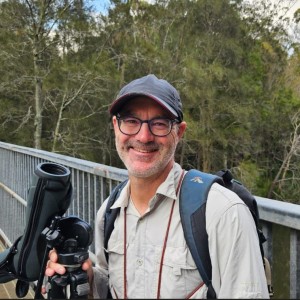
Richard’s passion for birds was fired in the bird-rich environments of South Africa where he worked as a game ranger in the 1990’s. From here he made a move to Ecuador where he worked as a nature and bird guide and enjoyed birding the amazingly diverse habitats of the Amazon, cloud forests and the Andes. With his enthusiasm for birds now incurable, Richard embarked on an international bird-guiding career that saw him travel and bird across Africa and further afield. Richard’s favourite destinations include Namibia, Cameroon, Tanzania, Bhutan, Antarctica, and of course Australia.
Richard’s tenure with our local operator in Tasmania began in 2013 where he worked as a guide and in operations for three years before he returned to university and obtained on Honours degree in Science. Richard has also worked as an ecologist where he deepened his understanding of the natural world and indulged in his keen interest in botany. Richard is a passionate and knowledgeable guide who loves sharing his enthusiasm for birds and nature.Other trips with Richard White — Australia Expert
Essential Information +
Pace & Protocols +
Packing List +
Suggested Reading List +
Useful Links +
-
 Birds & Nature of New Zealand FULL - Check out Papua New Guinea & Australia's Wet Tropics in July!January 12 - 28, 2027
 -
 Grand Australia FULL - Check out Papua New Guinea & Australia's Wet Tropics in July!September 18 - October 10, 2027, w/Darwin Birding Day Trip extension
Photo credits: Sulphur-crested Cockatoo (Clifford Drowley), Blue Faced Honeyeater by Steve Prorak