


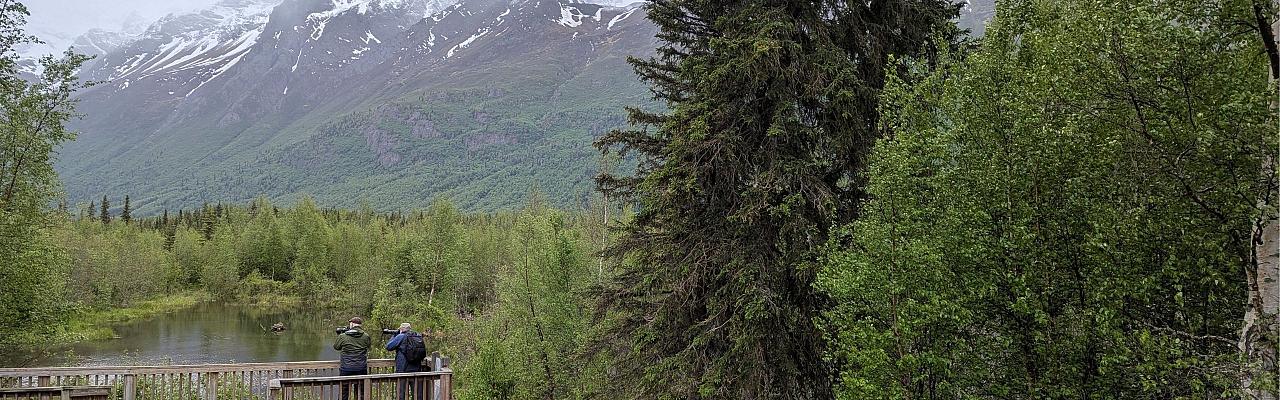
- Overview
- Full Itinerary
- Photo Gallery
- Costing
- Travel Details
- Trip Reports
- Guides
- Map
- Know Before You Go
- Other Trips You May Like
In a world where the treasures of wildlife and wild places dwindle, Alaska remains a wilderness jewel. More than any place in North America, it retains its wild character and ecological integrity, making a visit here simply a “must do” experience.
On this Alaska nature tour, we visit in August: a time for ripe berries, mammals in their prime, and birds. It is also a time of frenzied feeding before fall migration, while the tundra offers its first hints of color from Dwarf Willow and other ground-hugging plants.
This Alaska wildlife tour normally explores Denali National Park but a major road construction project has closed the magnificent drive into the park. But do no fear, we have another WOW location lined up for you. This year we feature Homer in our mix, with a bear-viewing day-flight possible from here to see Alaskan Brown Bear fishing for salmon. This is a photographer’s dream and something incredibly memorable. In addition to bears we see Bald Eagle, whales, Dall Sheep, Boreal birds, shorebirds, and waterfowl. Around postcard-perfect ponds, massive bull Moose polish their antlers ahead of the rut and Merlin may come charging out of the trees. Cruise Kenai Fjords National Park from the docks in scenic Seward to spot seabirds: puffins, murrelets, cormorants, murres, and auklets. At Northwestern Fjord, experience tidewater glaciers calving dramatically in a quiet cove where Harbor Seal rest on floating ice, seeking safe haven from Orca. Stay in rooms at the edge of the ocean at Land’s End in Homer. Listen as Sandhill Crane migrate overhead, watch Black-legged Kittiwake and Red-faced Cormorant on Gull Rock in Kachemak Bay, and opt to watch Brown Bear up close as they fish.
This is our classic Alaska Sampler trip: birds and wildlife, plus a uniquely Alaskan cultural and historical experience. Enjoy three nights in Anchorage, three nights in Homer, and two nights in Seward on scenic Resurrection Bay.


- "An amazing trip to coastal Alaska emphasizing wildlife, especially birds and mammals, and scenery. Our first trip to Alaska, and despite considerable rain and fog in the first several days, we enjoyed it greatly. Our guides were outstanding. Birding involved easy hikes and mostly birding near the vehicles, also a day-long boat trip in the Bay of Alaska (Kenai Fjords NP). Great views of the Bering Sea (Nome) and constantly-changing Arctic Ocean (Utqiagvik). Truly the land of the midnight sun!” — Ken & Jennie Rose, 2023 Travelers
- “It was a great trip. I enjoyed the walk in Anchorage at Eagle River - flowers, views, birds, but the highlight was the three close by moose! Velvet on antlers! Exciting! The all day boat trip in Kenai Fjords N.P. in Seward was wonderful. Loved the birds - saw several "life" birds, glaciers and waterfalls - what a place!” — Marie Young, 2023 Traveler
Tour Highlights
- Explore Anchorage and its excellent museum, great birding hotspots, views of the dramatic Chugach Mountains and way too many good restaurants.
- Cruise from Seward to watch nesting seabirds on the Chiswell Islands, see an actively calving glacier, and spot plenty of puffins, auklets, Humpback Whales, and other marine mammals
- Enjoy prime time for berries, mammal watching, Dall Sheep, Moose and bear-sightings, along with a great mix of boreal birds
- Opt for a bear-viewing day-trip to see Alaskan Brown Bears fish for salmon on a short flight that lands in the wilderness from Homer


Trip Itinerary
Itineraries are guidelines; variations in itinerary may occur to account for weather, road conditions, closures, etc. and to maximize your experience.
Mon., Aug. 10 Arrive in Anchorage
As you arrive in Anchorage, Alaska, flying in over Cook Inlet, watch for a pod of Beluga Whale — that is, if you can take your eyes off the snow-covered peaks on the west side of the bay, or the verdant Chugach Mountains that lend a dramatic background to Anchorage, Alaska’s vibrant and most-populous city.
We’ve chosen a delightful small hotel right in the center of downtown Anchorage so that you can explore the city a bit at your leisure; flights arrive throughout the day and into the evening. Just a few blocks away there is a walking trail along Cook Inlet with good birding. On mudflats you may see gulls, cranes, and shorebirds feeding, and in marshy areas you may find migrating Sandhill Crane. In the evening we enjoy dinner at one of our favorite local restaurants to get acquainted with our guides traveling companions.
Accommodations at the Copper Whale, Anchorage (D)
Tues., Aug. 11 Potter’s Marsh | Chugach State Park | Seward
This is a great day for photography, birding, and sightseeing. From the boardwalk trail at Potter’s Marsh, we hope to see spawning salmon, as well as Bald Eagle, and a number of waterfowl and waders. We follow the edge of Cooke Inlet, scanning the rugged slopes for signs of Dall Sheep and the bay waters for Beluga.
Along the way, we look for birds of the temperate rainforest, a habitat that extends up from Southeast Alaska to rim the more easterly situated Prince William Sound. Birds here include Steller’s Jay, Chestnut-backed Chickadee, Red-breasted Nuthatch, and Townsend’s Warbler.
On arrival, we settle into our accommodations across the street from Resurrection Bay in Seward.
We visit the Alaska SeaLife Center, built as part of the mitigation of the Exxon-Valdez oil spill. This modern, interactive museum has live puffins, other seabirds and sea mammals (photographers, take your cameras!), and informative exhibits. Afterwards, enjoy fresh seafood or steaks at Ray’s, located on the waterfront — our favorite restaurant in Alaska, and a great place to enjoy the view.
It’s fun to wander after dinner, watch the halibut harvest come in, marvel at the many boats, and look for Sea Otter often just off the docks!
Accommodations at the Harbor 360, Seward (B,L,D)
Wed., Aug. 12 Chiswell Islands | Northwestern Fjord Cruise | Seward
Today we embark on an all-day boat trip into Kenai Fjords National Park. This marvelous day is spent cruising among glaciers and seabird nesting islands of the Gulf of Alaska. As we leave the dock, we look for Northern Sea Otter, Marbled Murrelet, Pigeon Guillemot, Double-crested and Pelagic Cormorants, Bald Eagle, and Glaucous-winged Gull.
Scenery is on a massive scale and we should find several feeding Humpback Whale that spend their summers in these rich ocean waters. We may also find pods of Orca or Dall’s Porpoise, and on glacial ice chunks near Northwestern Fjord, we’re sure to find Harbor Seal. The Chiswell Islands are prime seabird nesting areas, and here we find numerous Tufted and Horned Puffins, often quite close to the boat. Common Murre are incredibly common and our captain knows where to find the more local Thick-billed Murre on very steep-sided seamounts. Black-legged Kittiwake are abundant and vocal.
As we enter the narrow channel to Northwestern Fjord, we look for Rhinoceros Auklet, Horned Puffin, possibly Ancient Murrelet, and, by small freshwater inlet streams, the rare Kittlitz Murrelet. The boat must navigate floating ice, recently calved from Northwest Glacier; our captain pulls up quite close to this glacier, turns off the engine, and lets us float among the sights and sounds of this actively calving glacier — extraordinary! We then venture into deeper water where we look for Sooty and Short-tailed Shearwaters, more common at this time of year. As we reenter Resurrection Bay, we hope to get a glimpse of the rare Red-faced Cormorant, and hope to find Black Oystercatcher in a rocky bay.
After a very full day, dinner is at your leisure — choose from several great options close to our hotel.
Accommodations at the Harbor 360, Seward (B,L)
Thurs., Aug. 13 Seward Birding Hotspots | Tern Lake | Soldotna | Homer
Our birders can be out early for some optional birding at a couple of hotspots and a local feeder in Seward. Mid-morning we depart, following the shoreline of Turnagain Arm while we enjoy views of snow-capped mountains. We finish the day in Homer, our home for the next three nights.
Accommodations at the Lands End Hotel, Homer (B,L,D)
Fri. Aug. 14 Wildlife in Homer | Bear-Viewing Flight Options
As July and August are prime time for witnessing Brown Bear feeding at salmon streams, we highly recommend that you opt for a bear-viewing flight out to an active salmon stream, with a guide, to view the amazing spectacle of bears fishing in a stunning wilderness setting. Be sure to signup for this as you book the trip — we go over options and get it set up!
We also offer activities in Homer for those that do not wish to go bear-viewing, including transportation up to walk at the local nature center, and a drive east along the bay, looking for Sandhill Crane feeding in the meadows and agricultural areas. The excellent local museum showcases history, nature, and art and there are nice coffee shops and lunch places.
Dinner tonight is at a local favorite.
Accommodations at Land’s End, Homer (B,L,D)
Sat., Aug. 15 Homer Seabirds | Gull Rock | The Saltry
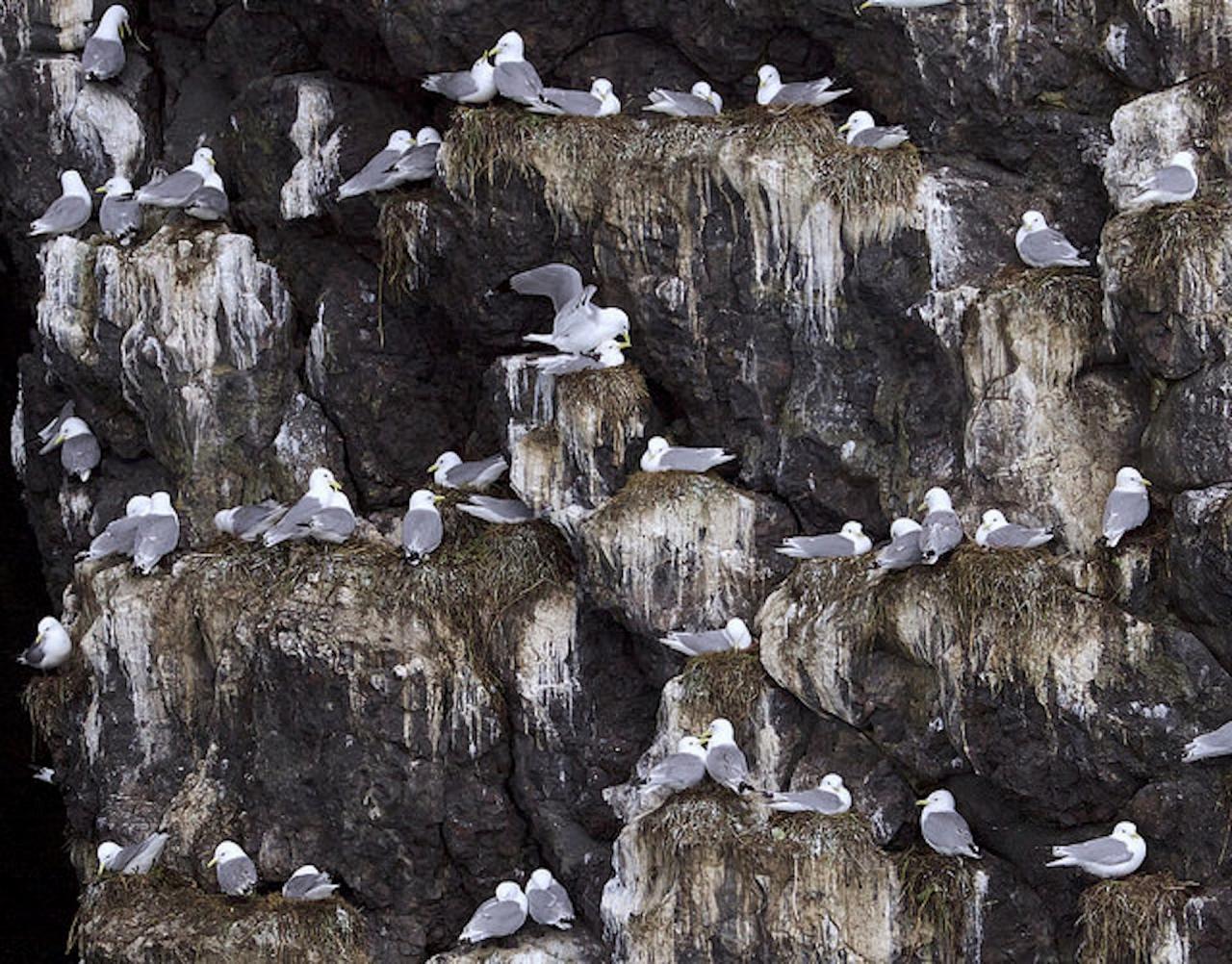
We have the full day to enjoy this small and charming Alaska town on the edge of the sea. Right outside our windows we should see Fork-tailed Storm Petrel feeding daintily and with luck, a Sea Otter floating by. Today we take the Danny J ferry out to an artist’s cove — eventually dining at the cozy Saltry Restaurant. This excellent and small restaurant hosts two seatings, with time to walk between artist’s studios when not your time to dine. En route though, we get great views at seabirds on a small islet that serves as a rookery for Black-legged Kittiwake, Red-faced Cormorant, Common Murre, and more.
Back in Homer we meet up at a very picturesque watering hole for a local brew, then go to dinner — fresh Halibut anyone?
Accommodations at Land’s End, Homer (B,L,D)
Sun., Aug. 16 Return to Anchorage
We break up the five-hour drive back to Anchorage, making a day of it with stops for birding, learning highligts of local ecology, geology, and more. Behind Potter’s Marsh we wind up into the hills to check for possible Boreal Chickadee or Black-backed Woodpecker. We check some ponds for Pacific and Common Loons, and scan the berry-rich hillsides for bears, Mountain Goat, and Dall Sheep.
Our accommodations are out by the airport, near the hike and bike trail that is often frequented by Moose as well as humans. Visit Earthquake Park for a wonderful Cook Inlet View. We dine at a favorite local restaurant in Anchorage.
Accommodations at the Lakefront Anchorage near the airport in Anchorage (B,L,D)
Mon., Aug. 17 Anchorage: Nature & Culture
We visit Westchester Lagoon today. Here we may find Red-necked Grebe (often with half-grown young), Hudsonian Godwit, and Short-billed Dowitcher, as Mew Gull circle overhead. We look for Boreal Chickadee, Alder Flycatcher, Blackpoll Warbler, and other songbirds in wooded areas in the hills above the tidal mudflats. We want to network with local friends and guides for tips on recent sightings. We may go to the local Arctic botanic garden, or head up into the hills or north to Eagle Creek, based on finding species we’d still like to see.
In the afternoon we focus on culture, seeing the city and the excellent local Anchorage Museum with cultural, historical, and scientific exhibits. Enjoy some free time to shop, explore downtown, and then a grand finale at Simon and Seaforts – just an amazing restaurant with a view. If you prefer to walk this afternoon, the coastal trail can be accessed right outside your door and extends for many miles.
Accommodations at the Lakefront Anchorage near the airport in Anchorage (B,L,D)
Tues., Aug. 18 Departures
We say goodbye today; make flights out at your convenience. The airport return is a complimentary shuttle from the hotel. (B)



Cost of the Journey
Cost of the tour is per person, based on occupancy: $6590 DBL / $7570 SGL, from Anchorage, Alaska.
Tour cost includes accommodations for 8 nights, most meals as specified in the itinerary (B=breakfast, L=lunch, D=dinner), park entrance and other activity fees for activities for nine days, as described in the itinerary, the all-day boat tour in Kenai Fjords National Park, professional guide services, pre-departure materials and miscellaneous program expenses.
Cost does not include round-trip airfare to and from Anchorage, Alaska or your airport transfers. The cost does not include items of a personal nature such as laundry, telephone, drinks from the bar; or gratuities for luggage handling or personal services. Optional bear viewing (currently estimated at $1,400 pp) should be booked with registration. You should be fit enough to walk at least two miles over uneven terrain. Rubber boots or hip waders are supplied. Times are based on bears, weather and tides, but the trips run 5-7 hours, typically a one hour to one and a half hour scenic flight each way and 3 hours on the beach/streams with bears. This is an outing with professional guides that we book for you.
Travel Details
Please plan to make air travel plans only after the minimum group size has been met. We will send you a confirmation email as soon as the trip has been confirmed.
Arrival and Departure Airport: Ted Stevens Anchorage International Airport (ANC)
Arrival Details: Plan flights to arrive August 10, 2026 no later than 5:00 PM if you want to join the group for dinner.
Departure Details: Plan flights to depart August 18, 2026 at your leisure.
Travel Tips: If you arrive early to rest up from your travels, we suggest booking an early night at our first night tour hotel, the Copper Whale Inn. You can book online and send us the confirmation number, with the goal being you won’t have to switch rooms. The Copper Whale fills very fast so you will want to book this as soon as possible. The Hilton Anchorage is another option near the Copper Whale if it does not have vacancy. Also the Lakefront Anchroage (our final night hotel) is a good early night option as well, its very close to the airport.
If you want to do some sight-seeing around Anchorage, there are plenty of things to do! The hotel is situated in the downtown area, which is great for dining and shopping. It’s also close to the Coastal Trail, which is a paved trail along the Cook Inlet that is great for walking, biking, and wildlife viewing. It’s not uncommon to see eagles or moose from the trail. If you want to learn more about art, history, science, and culture in Alaska, then plan a visit to the Anchorage Museum. It’s located in the downtown area and has many fascinating exhibits. Transportation around Anchorage is easy with Uber and taxis.
Browse below for trip reports and species lists from past versions of this and other tours from this destination.
Alaska
- May 2011
- June 2012
- July 2012
- May 2013
- May 2014
- June 2015
- June 2016
- August 2016 (Southeast)
- August 2016 (Sampler)
- June 2017
- August 2017 (Southeast Alaska)
- August 2017 (Alaska Sampler)
- June 2018
- August 2018
- June 2019
- August 2019 (Alaska Sampler)
- June 2021
- August 2021
- June 2022
- July 2022 (Southeast Alaska Cruise)
- August 2022
- June 2023
- July 2023 (Southeast Alaska Cruise)
- August 2023
- June 2024
- July 2024 (Southeast Alaska Cruise)
- August 2024
- June 2025
- July 2025 (Southeast Alaska Cruise)
- August 2025 (Sampler)
- May 2026 (Nome Sweet Nome)
- June 2026 (Nome Sweet Nome & Classic Alaska Trips)
- June 2026 (Aleutian Islands Cruise)
Southeast Alaska Cruise
- June 2021
- July 2022
- July 2023
- June 2024
- July 2025
-
Bryan Calk
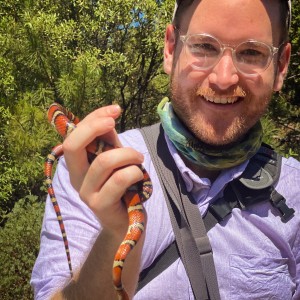
Bryan started birding at Fort Clark Springs in southwest Texas when he was 10 years old and never stopped. He got his first taste of guiding while leading trips for the Rio Brazos Audubon Society during college. After graduating from Texas A&M in 2015 with a degree in genetics, Bryan worked as an avian field biologist on several projects across Texas and New Mexico. Currently residing in Albuquerque as a professional birding tour guide, he leads field tours, workshops, and youth birding programs across the US. In his free time, Bryan enjoys butterflies, searching for herps, photography, art, cooking, and gardening.
Other trips with Bryan Calk
-
 Yellowstone in The Fall FULL - Claim the last room on our first departure!September 26 - October 2, 2026
 -
 Southeast Arizona: Sky Island Fall Sampler FULL - Check out Arizona: New Year’s Birding Blitz!November 1 - 8, 2026
 -
 New Mexico Nature & CultureDecember 5 - 12, 2026
 -
 Costa Rica Birding & Nature Full! See our Monteverde departure.January 4 - 11, 2027, w/Pacific Coast extension
 -
 Minnesota: Winter Owling TourJanuary 23 - 28, 2027
 -
 Minnesota: Winter Owling TourJanuary 30 - February 4, 2027
 -
 Belize: Three Great LodgesMarch 9 - 19, 2027
 -
 Texas Hill CountryApril 23 - 28, 2027
 -
 Yellowstone: Birds, Bears & WildlifeMay 27 - June 2, 2027
 -
 Brazil’s Pantanal: Jaguars! And More… FULL - Look for our 2028 departures!June 24 - July 4, 2027, w/Amazônia extension
 -
 Alaska SamplerAugust 9 - 17, 2027
 -
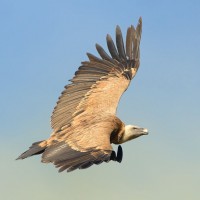 Spain in Fall: Birding & NatureSeptember 1 - 13, 2027
 -
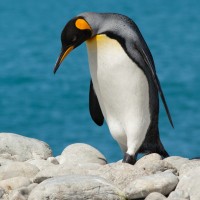 The Falkland Islands, South Georgia & AntarcticaNovember 22 - December 10, 2027, w/Tierra del Fuego extension
-
-
Mollee Brown
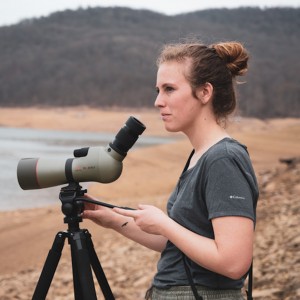
Mollee is a lifelong lover of birds and nature based in West Virginia. She’s the owner of Nighthawk Agency, which creates custom projects with conservation and ecotourism organizations. Mollee has guided tours throughout the world for the past decade and loves to immerse in the wildlife, flora, and culture of each place she visits. She’s passionate about education as a means to conservation and serves on the boards of organizations including Frontiers in Ornithology and The Birding Co-op. She’s also the producer of Life List: A Birding Podcast and writes for a variety of bird and nature publications.
Mollee has loved photography since she started borrowing her grandma’s camera as a child, and usually has a camera in hand while birding, hiking, camping, and exploring the world. She’s most at home among mountains and hilly terrains.Other trips with Mollee Brown
-
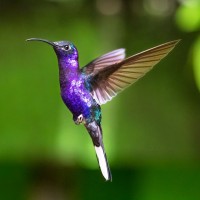 Costa Rica's Caribbean Side FULL - See our Tranquilo Bay tour!October 8 - 18, 2026
 -
 Vibrant Vietnam: Birding & Nature from North to South One room left!November 22 - December 5, 2026
 -
 Belize: Three Great Lodges FULL - See our February departure!January 9 - 19, 2027
 -
Texas Hill CountryApril 23 - 28, 2027
-
 Alaska’s Northern Passages & Glacier BayJuly 10 - 17, 2027
 -
 Alaska SamplerAugust 12 - 20, 2027
-

Essential Information +
Packing List +
Suggested Reading List +
Useful Links +
-
 Classic Alaska: Birding & Wildlife: Anchorage, Nome, Seward & Kenai Fjords FULL - Check out our 2027 Alaska trips.June 2 - 11, 2026
 -
 Into the Heart of Canada's Wild Rockies FULL - See our Vancouver Island tour!June 18 - 26, 2026
 -
 Alaska’s Northern Passages & Glacier Bay FULL - See our 2027 departure!July 11 - 18, 2026
Photo credits: Banners: Scenic by Cindy Bartos; Harbor Seal by Greg Smith; Breaching Orca by Peg Abbott; Moose by Sandy Sorkin; Denali by Peg Abbott; Grizzlies by Greg Smith; Tufted Puffins by Peg Abbott; Red Fox by Bud Ferguson; Arctic Terns; Orca by Greg Smith; Willow Ptarmigan by Peg Abbott; Caribou by Peg Abbott; Dall Sheep by Greg Smith; Tundra Flower Photos by Greg Smith; Black-legged Kittiwakes by Greg Smith; Horned Puffins by Greg Smith; Red Fox by Greg Smith; Steller's Sea Lions by Peg Abbott; Grizzly Bear by Greg Smith; Train from Denali by Peg Abbott.