

- Overview
- Full Itinerary
- Photo Gallery
- Costing
- Travel Details
- Trip Reports
- Guide
- Map
- Know Before You Go
Naturalist Journeys’ exciting Northern Ecuador Chocó Cloud Forest Tour covers an outstanding mix of birding and wildlife sites found northwest of the capital city of Quito. This area is part of the Chocó bioregion that hosts a great number of endemic and regional specialty birds that are only shared with neighboring areas of Colombia to the north. Best of all, prime birding locations are in close proximity, meaning less driving and more time immersed in nature. We are based in thee of our favorite lodges close to first-class birding locations like the Tandayapa and Mindo Valleys, Amaguza and Mashpi Wuasi reserves, the Manduriacu River, and the lower-elevation Silanche area, affording us a wide spectrum of habitats to be explored. Birding in these reserves also gives us the opportunity to support local conservation projects for long-term habitat protection. We visit a number of private hummingbird gardens, too, great for viewing and photography.
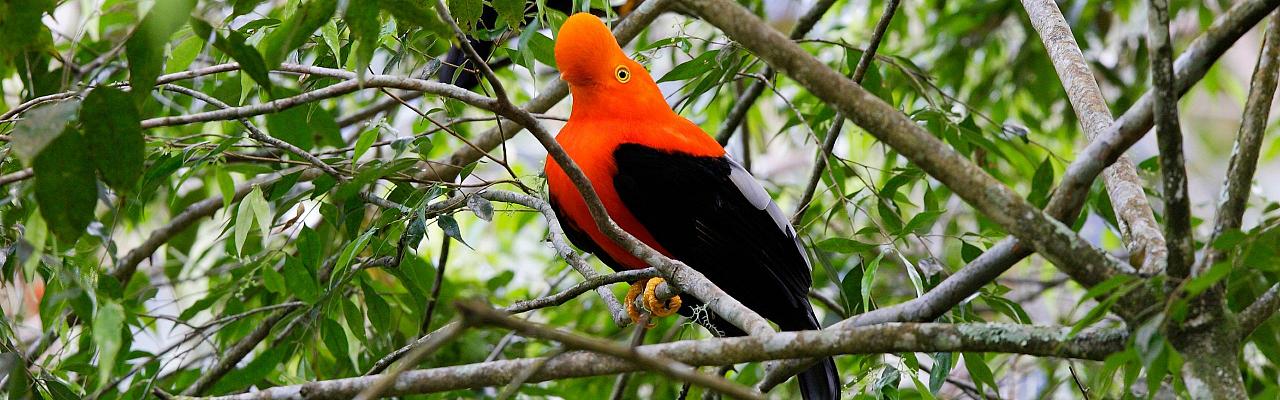
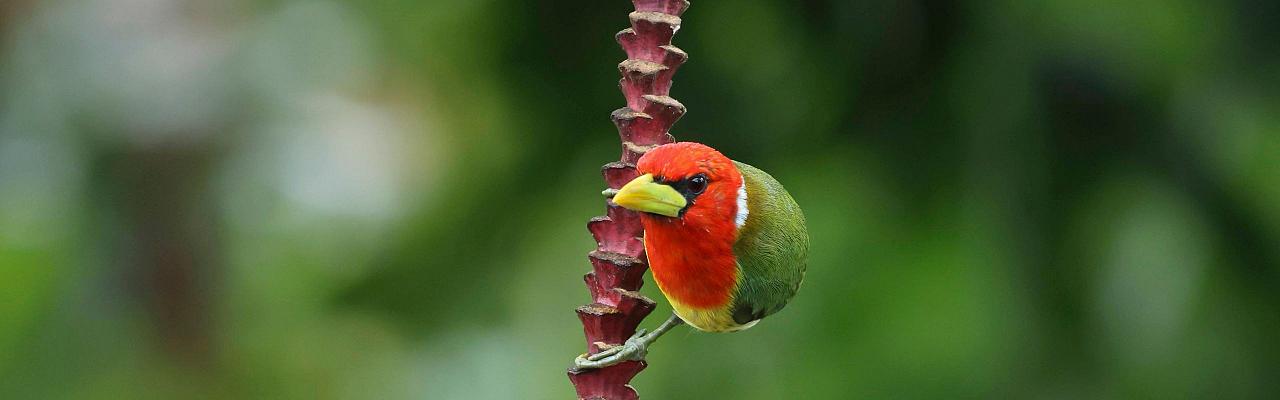
Starting with the mystical elfin forest of the Andes, followed by bird-rich subtropical cloud forests, we also venture deeper into tropical foothill forests to reach the mega-diverse lowlands. Iconic species include Andean Cock-of-the-rock, Giant Antpitta, Plate-billed Mountain and Chocó Toucans, Toucan Barbet, Club-winged Manakin, Glistening-green Tanager, Orange-breasted and Scaled Fruiteaters, Velvet-purple Coronet, Long-wattled Umbrellabird, and many more. We search for rarities like Black Solitaire and Indigo Flowerpiercer, too.
A great network of birding reserves, together with excellent lodges, mind-blowing scenery, and friendly people make Northwest Ecuador one of the planet’s most delightful birding destinations. Join us!


Tour Highlights
- Seek out the region’s 350+ bird species, including Andean Cock-of-the-rock, Long-wattled Umbrellabird, Golden-headed Quetzal, up to five species of antpittas, 45 species of hummingbirds, and tanagers galore.
- Add plenty of Choco-endemic species to your life list.
- Explore from three of our favorite lodges, with three night’s each at two of them—a great recipe for a true birding vacation.
- Walk quiet roads and trails where trees are festooned with orchids, bromeliads, and other life – so much to see at every turn!
- From the patio of Guaycapi Lodge, soak in superlative scenery of the Andes while watching a frenzy of hummingbirds.
- Visit the famous Angel Paz Reserve, where multi-generations of this dynamic family pioneered techniques for feeding secretive antpittas and who also maintain primary forest with an active lek of Andean Cock-of-the-rock.
- Visit Mashpi Chocolate Farm, a small and innovative farm with bird-friendly reforestation efforts.
- Enter a secretive Oilbird Cave (with a local guardian) to see these huge and unusual nocturnal fruit-eating birds.
- Support the Ecominga Foundation by visiting the Manduriacu Reserve (a river and nearby reservoir by the chocolate farm); catch the buzz of enthusiasm for conservation from the local Mindo residents.
- Climb an observation tower at Silanche Reserve for a bird’s eye view of the canopy.


Trip Itinerary
Itineraries are guidelines; variations in itinerary may occur to account for weather, road conditions, closures, etc. and to maximize your experience.
Tues., Apr. 6 Arrivals in Quito
Welcome to Quito! Arrivals today are at your leisure, though you may find that many flights arrive in the late evening. Therefore, we strongly advise that you arrive a night early if you are able, so that you have plenty of time to rest or explore the city of Quito before our tour begins. One of South America’s most attractive colonial capitals, Quito is nestled at the foot of the Pichincha Volcano.
If you wish to explore around Quito, there is plenty to do! We have chosen a modern city hotel so you can do so. A visit to El Panecillo, a small volcanic hill located on the south side of Old Town, is worth it for the views of Quito and nearby volcanos on a clear day. Calle La Ronda, a cobbled pedestrian street in Old Town, is lined with galleries, traditional shops, and cafes. The Basilica del Voto Nacional is the largest neo-Gothic basilica in the Americas and one of many churches in Quito with stunning architecture. These sites and many others are a short taxi ride from the downtown area or walkable from the Old Town area. The vibrant city enjoys bright sunshine during this time of the year and, on a clear day, stunning views of towering Andean peaks. Quito means ‘Eternal Spring’ in the ancient language of Quechua, and we enjoy the comfortable climate here. Dinner tonight is at your leisure, so take time to settle and relax before our adventure begins tomorrow morning!
Accommodations at the Mercure Hotel, Quito
Wed., Apr. 7 Reserva Zuro Loma | Tandayapa & Alambi Valleys
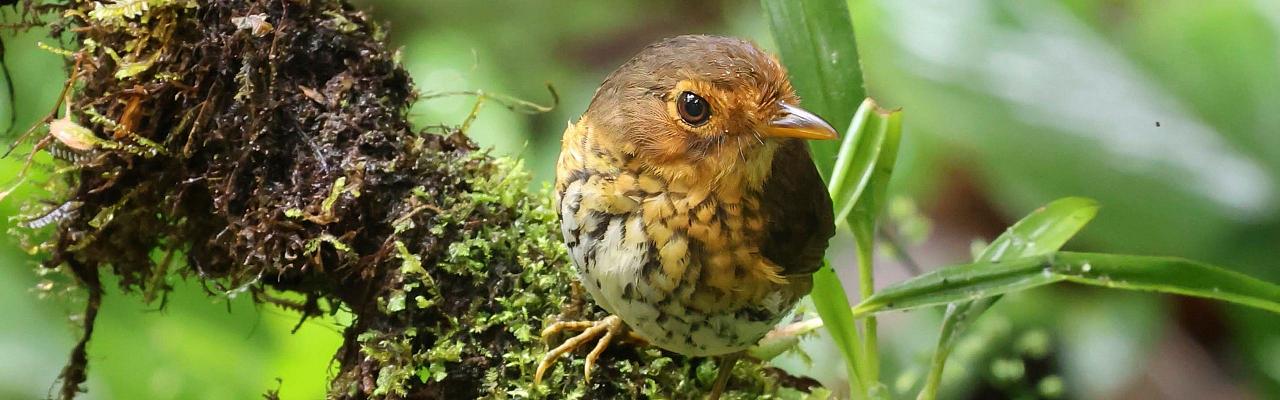
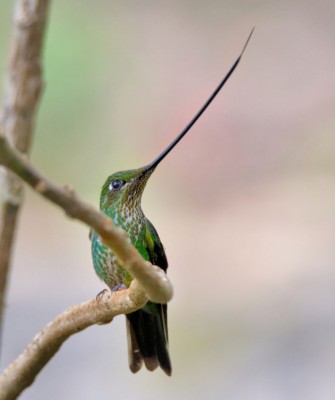
We have an early start this morning, leaving the city behind to head to Zuro Loma, a small-scale independent reserve located high on the slopes of the Pichincha Volcano. Situated in a temperate cloud forest, this reserve offers great opportunities to see the stunning Chestnut-naped Antpitta and the beautiful chestnut-brown Equatorial Antpitta. While antpittas are known for their secretiveness, this is one of the best spots for these two species. We also have the chance to see the chunky looking Barred Fruiteater, myriad colorful tanagers, and a host of hummingbird species, including the spectacular Sword-billed Hummingbird, which has the longest bill compared to body size of any bird in the world.
Later, we bird the famous Tandayapa Valley, located at a lower elevation, and have lunch at Mirador Guaycapi where we enjoy delicious local cuisine with the birds. Tanagers abound, and one year our group had their first sighting of Golden-headed Quetzal here! The valley is mystical and lush. Trees are festooned with bromeliads and orchids, and each tree we pass holds a world of its own. The life blooming in this famous valley gives a sense of vibrancy and color all around.
After lunch and birding, we drive to our ridgetop lodge with time to settle into our spacious accommodations at gorgeous Guaycapi Lodge, known for its unparalleled views of the Andes and great birding just outside your door. Enjoy watching feeders this afternoon, then our first group dinner of the trip; we enjoy incredibly delicious Ecuadorian cuisine during our stay here.
Accommodations at Guaycapi Lodge (B,L,D)
Thurs., Apr. 8 Angel Paz Family Farm & Reserve | Cock-of-the-rock Lek
We are up early to visit to the famous Refugio Pas de las Aves. Once a farm, the owners have switched the land use to conservation and birding and it’s a great spot to see several species of elusive antpittas including Yellow-breasted, Giant, Moustached, Ochre-breasted, and Chesnut-crowned, as well as Andean Cock-of-the-rock. While we’re here we also look for Toucan Barbet, Golden-headed Quetzal, and Scaled Fruiteater, along with many colorful tanagers and hummingbirds. Meet this amazing family, walk the trails, and learn the story of how they started in conservation and make close acquaintances with these species—this visit is always a highlight of the tour.
In the afternoon, we look for birds at one of the many local hummingbird gardens. There are several, and each has its own mix of species. There are many opportunities to bird in the surrounding areas and our guide picks the best options.
Accommodations at Guaycapi Lodge (B,L,D)
Fri., Apr. 9 Upper Mashpi Road | Amagusa Reserve
Today is a very special day as we enjoy our first exploration of the upper part of Mashpi Road and visit the incredible Amagusa-Mashpi Reserve. The reserve is owned by a local couple, Sergio and Doris, and they have put tremendous effort into making this a top-notch birding destination. It’s known for its incredible number of birds and 22 of the endemic Chocó species can be found here. It’s also a good place to find elusive species at a moth trap, and with luck, we may have a chance to see Mountain Coatimundi.
After a wonderful morning at the reserve, we continue to explore on the nearby Mashpi Road, an unpaved twisting road that winds its way up to the Chocó cloud forest. We make birding stops along the way and look for the rare Indigo Flowerpiercer, the brilliantly colored Glistening-green Tanager, and numerous hummingbirds, including the beautiful Purple-bibbed Whitetip, the dazzling Velvet-purple Coronet, and many others. The nectar and plantain feeders in the Amagusa Reserve attract a wide range of species and we may see the unmistakable Flame-faced Tanager, Rose-cheeked Parrot, and Cinnamon Becard. If we’re very lucky, we may even see Tamandua Anteater or Three-toed Sloth!
We enjoy lunch at Mashpi Wuasi, a private reserve established by the owner of our partner company in Ecuador, while we watch the hummingbirds at the feeders. In the afternoon, we can return to relax at the lodge, or we may go enjoy another of the local hummingbird gardens, where Violet-tailed Sylph and other gems await.
Accommodations at Guaycapi Lodge (B,L,D)
Sat., Apr. 10 Guaycapi Trails | Bella Vista Reserve | Sendero Fruitti Reserve | Cielo Verde Lodge
This morning we enjoy watching Flame-faced Tanager and other beauties at our lodge. After breakfast, we drive up to Bellavista Cloud Forest Reserve, a private 1,000-acre nature reserve that encompasses a mix of primary and secondary forest. The botanical wonder here is something to behold! One of the top birding locations in Ecuador, the reserve is known for its diverse hummingbird species (at feeders for close-ups), as well as a colorful array of toucans and tanagers. At 5,000–7,000 feet we encounter spectacular cloud forest on the steep slopes above us. Here we may find a number of bird species with limited range, including the Tanager Finch. Plate-billed Mountain Toucan and Powerful Woodpecker, Red-billed Parrot, Montane Woodcreeper, and both Spillman’s and Ocellated Tapaculos are hopeful sightings as we walk the quiet roads and trails in this area.
With a simple picnic lunch, we head out in the afternoon to a newly transformed farm with a great viewing deck and feeder setup. We may find Golden-olive Woodpecker, Common Squirrel Cuckoo, and new for our hummingbird list, Long-billed Starthroat and White-whiskered Hermit. We may find Laughing Falcon, Great Antshrike, Cinnamon Becard, colorful tanagers and euphonias, and more.
We arrive for a gorgeous sunset view from our new lodge, Cielo Verde, and take time to catch up our bird list and enjoy some wonderful, home-cooked local cuisine. Our lodge is nestled amongst the forest with comfortable, modern accommodations and great birding on site. The lodge has a pool; if it’s warm enough, perhaps take a dip before dinner! Meals here are fresh and locally sourced.
Accommodations at Cielo Verde Lodge (B,L,D)
Sun., Apr. 11 Mashpi River | Chocolate Farm | Oilbird Cave
We spend the full morning exploring around the Mashpi River and the Mashpi Artisanal Chocolate Farm, a conservation project owned and operated by a local ornithologist. We learn about the process to make organic chocolate bars with a walk through the cocoa plantation. We end our tour in the best way, with a chocolate tasting. In this lowland forest habitat we look for Chocó Toucan, Chocó Warbler, Orange-fronted Barbet, and the bright Blue-whiskered Tanager.
After a superb morning of birding and chocolate, we have another nearby highlight, the chance for a visit to see enigmatic Oilbirds, at a local cave, hosted by the cave guardian. Then, it’s back to our comfortable lodge where we enjoy another excellent local meal, fresh and locally sourced. Our bird list rounds out the night and then we’re off to bed to be refreshed for tomorrow’s activities.
Accommodations at Cielo Verde Lodge (B,L,D)
Mon., Apr. 12 Mindo: Guide’s Choice
Mindo is one of the most popular areas in all of Ecuador for nature enthusiasts. It’s a mountain town, and our lodge offers great bird and butterfly watching, as well as wonderful meals, and a cozy fireplace to gather around in the evenings. It is nestled in the valley of the Rio Mindo, a remarkable locale, home to over 360 species of birds. The ridges, slopes, and steep ravines to the north, west, and east of the village are cloaked in pre-montane cloud forest with a dense understory that includes Guadua bamboo. Much of the land around the village has been cleared for pasture, but small patches of secondary growth remain.
Mindo is notable for its enthusiastic embrace of birding and conservation! Our guide is well-connected to the community and sets the pace today to visit local birding hotspots and scenic areas.
The forest and gardens are draped with orchids and bromeliads, and butterflies abound. Some of the most beautiful birds of the forest include the Plate-billed Mountain Toucan, Toucan Barbet, Golden Tanager, and Flame-faced Tanager.
Accommodations at Cielo Verde Lodge Lodge (B,L,D)
Tues., Apr. 13 Possible (seasonal) Long-wattled Umbrellabird | Sachatamia Lodge
Today, if there has been recent activity, we may visit one of the best locations in the area to see the incredible male Long-wattled Umbrellabird. This unique bird, which can be difficult to find, puts on a spectacular display that is fascinating to watch. Other birds in this area that we search for include Choco Trogon and Club-winged Manakin.
Later in the afternoon, we head to the renowned Sachatamia Lodge. We settle into our comfortable rooms and enjoy a delicious dinner at the lodge. Keep an eye out for Violet-tailed Sylph, Empress Brilliant, Tawny-bellied Hermit, Green-fronted Lancebill, Purple-throated Woodstar, White-bellied Woodstar, Green-crowned Woodnymph, Brown and White-collared Incas, Western Emerald, and more at feeders surrounding the dining area.
A hint to be most comfortable here: Bring easy-to-slip-off shoes, as you go in and out of the lodge in search of birds. (Ecuadorian custom is to remove shoes to protect their beautiful wooden floors!)
Accommodations at Sachatamia Lodge (B,L,D)
Wed., Apr. 14 Rio Silanche & Canopy Tower
Today we visit the Rio Silanche Bird Sanctuary, which is in a lowland Chocó rainforest around 1,100 feet in elevation. This is a great area for birding as the wide trails offer easy walking and there is a 50-foot-tall canopy tower that allows us to look for foraging flocks high in the trees. We spend the full day here looking for species such as the beautiful Scarlet-breasted Dacnis and the striking Scarlet-thighed Dacnis. We also keep our eyes peeled for a variety of tanagers including Blue-whiskered, Rufous-winged, Golden-hooded, and Scarlet-browed. The Chocó endemic Dusky Pigeon is a regular here as is Pale-mandible Araçari, Chocó and Yellow-throated Toucans, and White-tailed and Blue-tailed Trogons. We enjoy a picnic lunch in the field to maximize our time with these wonderful birds.
On past trips we’ve had great luck finding mixed flocks of tanagers that include Glistening-green, Rufous-throated, Golden-hooded, Moss-backed, and Ochre-breasted members of this colorful clan. The organization and behavior of members of the mixed flock has attracted a great deal of research in the Neotropics, which we discuss.
Accommodations at Sachatamia Lodge (B,L,D)
Thurs., Apr. 15 Local Birding | Departures
This morning, awaken to the sound of birds in this beautiful forest surrounding the lodge. Before breakfast, we witness a frenzy of secretive birds feeding on the lodge grounds at a moth light site—amazing!
As we pack up to eventually get to the airport in the late-afternoon in time to check in for evening flights (the most common timing from Quito) we pick an easy birding site today to savor more hummingbirds such as White-booted Racket-tail, Velvet-purple Coronet, Collared Inca, Sparkling Violetear, and more.
We head back to the lodge for lunch and then return to Quito for our flights home. (B,L)
-

Plate-billed Mountain-Toucan
-

Violet-tailed Sylph
-

Piripe Wellness Lodge Accommodations
-

Piripe Wellness Lodge
-

Tit-like Dacnis
-

Toucan Barbet
-

Blue-headed Parrots on clay lick
-

Andean Cock-of-the-Rock
-

Squirrel Monkey
-

Green Kingfisher
-

Piripe Wellness Lodge
-

Piripe Wellness Lodge
-

Piripe Wellness Lodge Lookout
-

Piripe Wellness Lodge Grounds
-
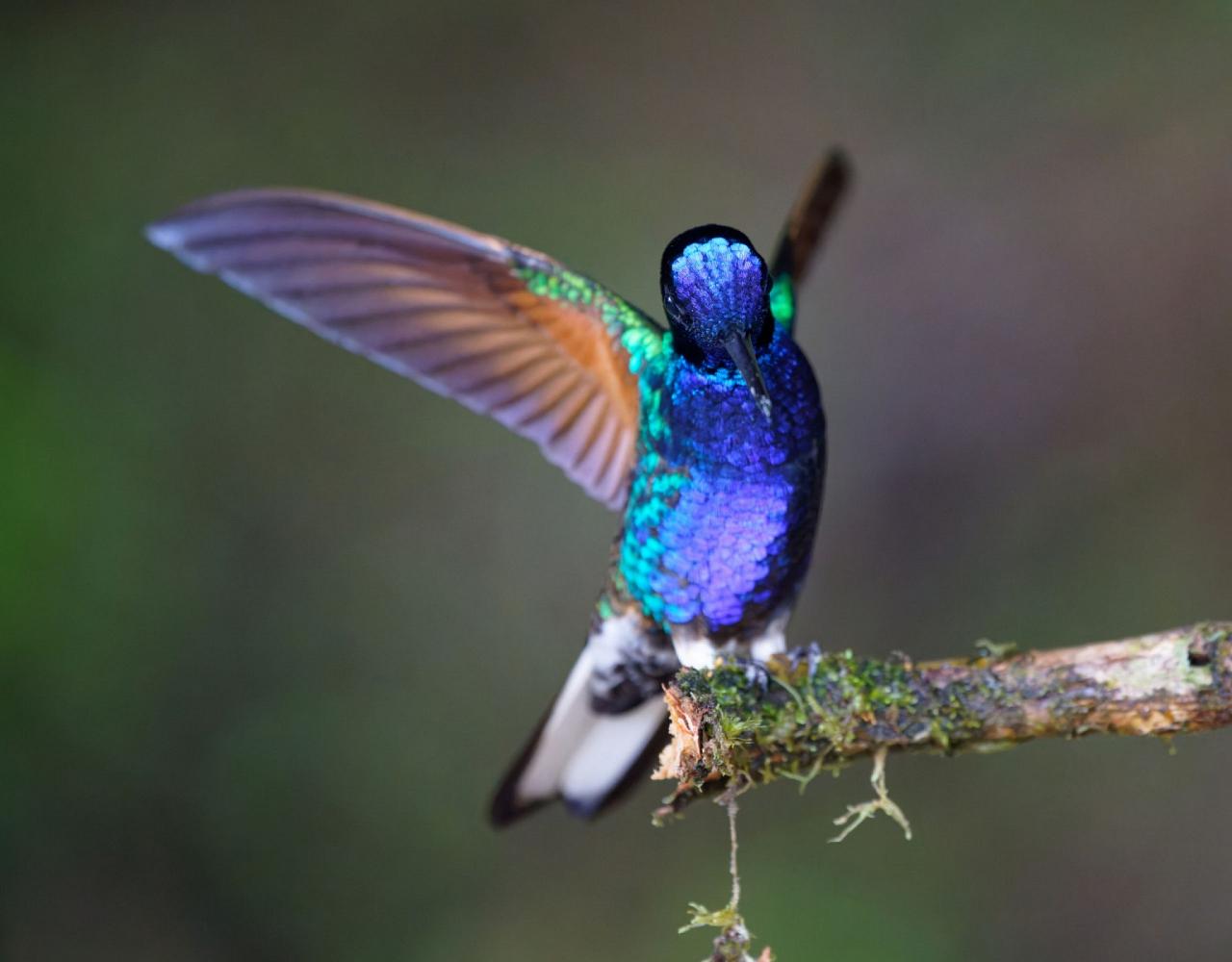
Velvet-purple Coronet
-

Giant Antpitta
-

Purple bibbed white-tip & Brown Violet-ear courtesy of Neblina Forest
-

Golden-breasted Grosbeak by Ruth Guillemette
-

Common Potoo
Cost of the Journey
Cost of the tour, from Quito, Ecuador, is per person based on occupancy: $6290 DBL / $6740 SGL. Tour price includes 9 nights accommodations, professional guide services, land transportation within Ecuador, park and reserve entrance fees, pre-departure information and services, miscellaneous program expenses, accommodation and meals at all lodges, private transport, and private bilingual bird/naturalist guide. All tips other than your NJ guide (optional) and local guide are included (this includes tips for your driver, lodge and staff, day activities, meals and other services).
Cost of the tour does not include your international flights to Quito, items of a personal nature such as beverages from the bar, laundry, phone calls, or gift items.
Travel Details
Please plan to make air travel plans only after the minimum group size has been met. We will send you a confirmation email as soon as the trip has been confirmed.
Arrival and Departure Airport: Mariscal Sucre International Airport (UIO), Quito Ecuador
Arrival Details: You may arrive on April 6, 2027 at your leisure, however, please be advised that many USA flights arrive in the late evening, and we strongly recommend that you plan to arrive one night early so that you have plenty of time to rest or enjoy the city if you wish.
Departure Details: Plan flights to depart April 15, 2027 after 8:00 PM
After lunch at the lodge, we have a 2 hour drive to the Mariscal Sucre International Airport (UIO) in Quito. Most flights leave Quito around midnight so please check the flight dates carefully.
Travel Tip: If you would like to arrive early, you can book an early night at our first night hotel, the Mercure Hotel Quito. If you wish to explore around Quito, there is plenty to do! A visit to El Panecillo, a small volcanic hill located on the south side of Old Town, is worth it for the views of Quito and nearby volcanos on a clear day. Calle La Ronda, a cobbled pedestrian street in Old Town, is lined with galleries, traditional shops, and cafes. The Basilica del Voto Nacional is the largest neo-Gothic basilica in the Americas and one of many churches in Quito with stunning architecture. These sites and many others are a short taxi ride from the downtown area or walkable from the Old Town area.
Entry Requirements: See "Essential Information" section under the "Know Before You Go" tab.
Browse below for trip reports and species lists from past versions of this and other tours from this destination.
Ecuador
- November 2017
- November 2018
- November 2019
- November 2022
- January 2023
- November 2023 (Birds & Mammals)
- December 2023 (Christmas Tour)
- March 2024
- November 2024 (Birds & Mammals)
- December 2024 (Christmas Tour)
- March 2025
- October 2025 (Choco Galore)
- November 2025 (Birds & Mammals)
- March 2026 (Birds & Mammals)
- August 2026 (Hummingbird)
-
Greg Butcher
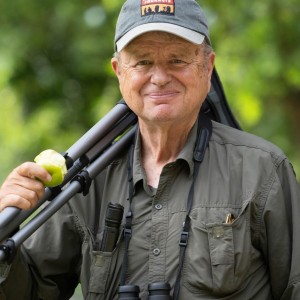
Greg recently retired as the Migratory Species Coordinator for U.S. Forest Service International Programs, working throughout the Western Hemisphere, and as Vice President for Audubon Society of Northern Virginia, serving on the Conservation and Citizen Science committees. He is currently a Board Member for BirdsCaribbean. For his Ph.D. in Zoology at University of Washington, he studied the coloration and behavior of Bullock’s Orioles. Greg studied ecology in Costa Rica with the Organization for Tropical Studies and has worked internationally for the past 20 years. Greg previously worked for the National Audubon Society, American Birding Association, Birder’s World magazine (sadly, now defunct), Partners in Flight, and Cornell Lab of Ornithology. He is a Fellow of the American Ornithological Society (AOS). He has been a birder since he was 11 and has birded in all 50 states and 47 countries.
Other trips with Greg Butcher
-
 Birds & Nature of New Zealand FULL - Check out Papua New Guinea & Australia's Wet Tropics in July!January 12 - 28, 2027
 -
 Thailand Birding & Nature FULL - Check out Sri Lanka!February 17 - March 7, 2027
 -
 China’s Sichuan Basin & Tibetan PlateauJune 11 - 27, 2027
 -
 Alaska SamplerAugust 9 - 17, 2027
 -
 Guyana: Unspoiled WildernessNovember 4 - 15, 2027
-

Essential Information +
Pace & Protocols +
Packing List +
Suggested Reading List +
Useful Links +
Photo credits: Banners: Quito Scenic (NJ Stock), Crimson-rumped Toucanet (NJ Stock), Spectacled Bear (NJ Stock), Hoatzin (NJ Stock), Blue-and-gray Tanager (NJ Stock), Culpeo (NJ Stock), Andean Cock-of-the-rock (NJ Stock) Thumbnails: White-faced Capuchin Monkey (NJ Stock), Buff-breasted Mountain Tanager (NJ Stock), Violet-tailed Sylph (NJ Stock), Masked Trogon (NJ Stock), Andean Cock-of-the-rock (NJ Stock), Sword-billed Hummingbird (NJ Stock), Giant Anteater (NJ Stock), Plate-billed Mountain Toucan (NJ Stock)