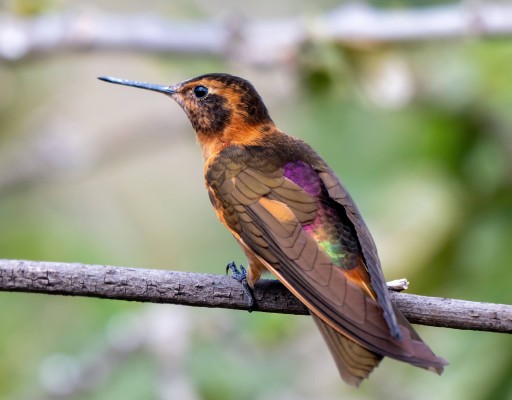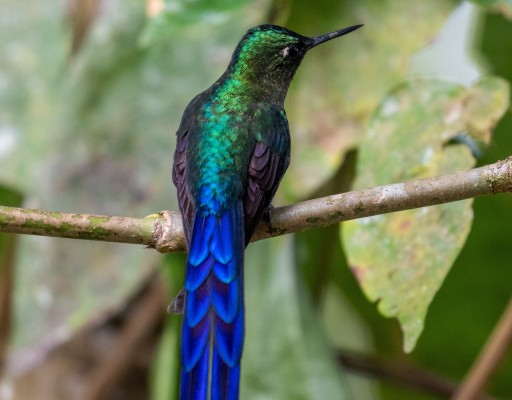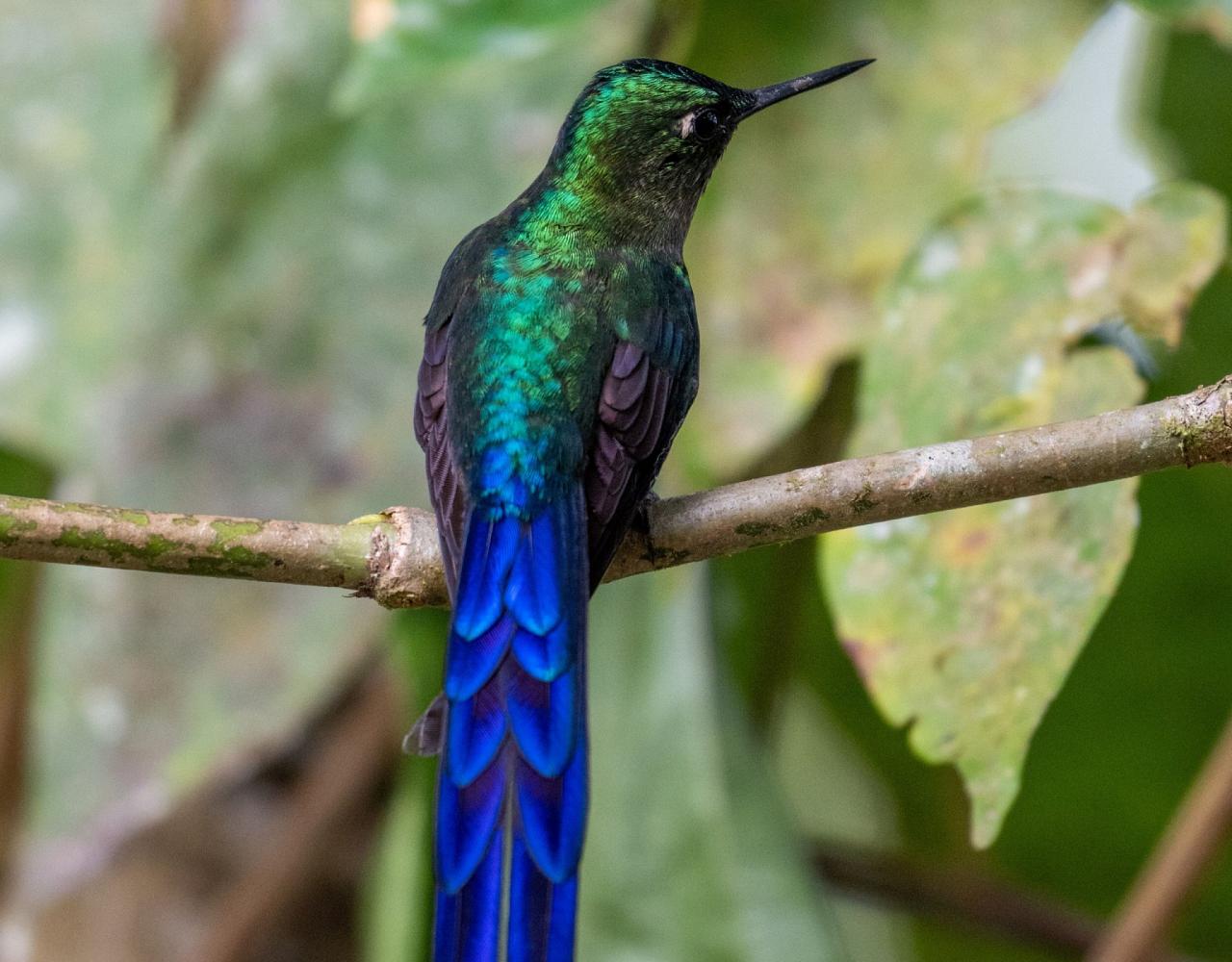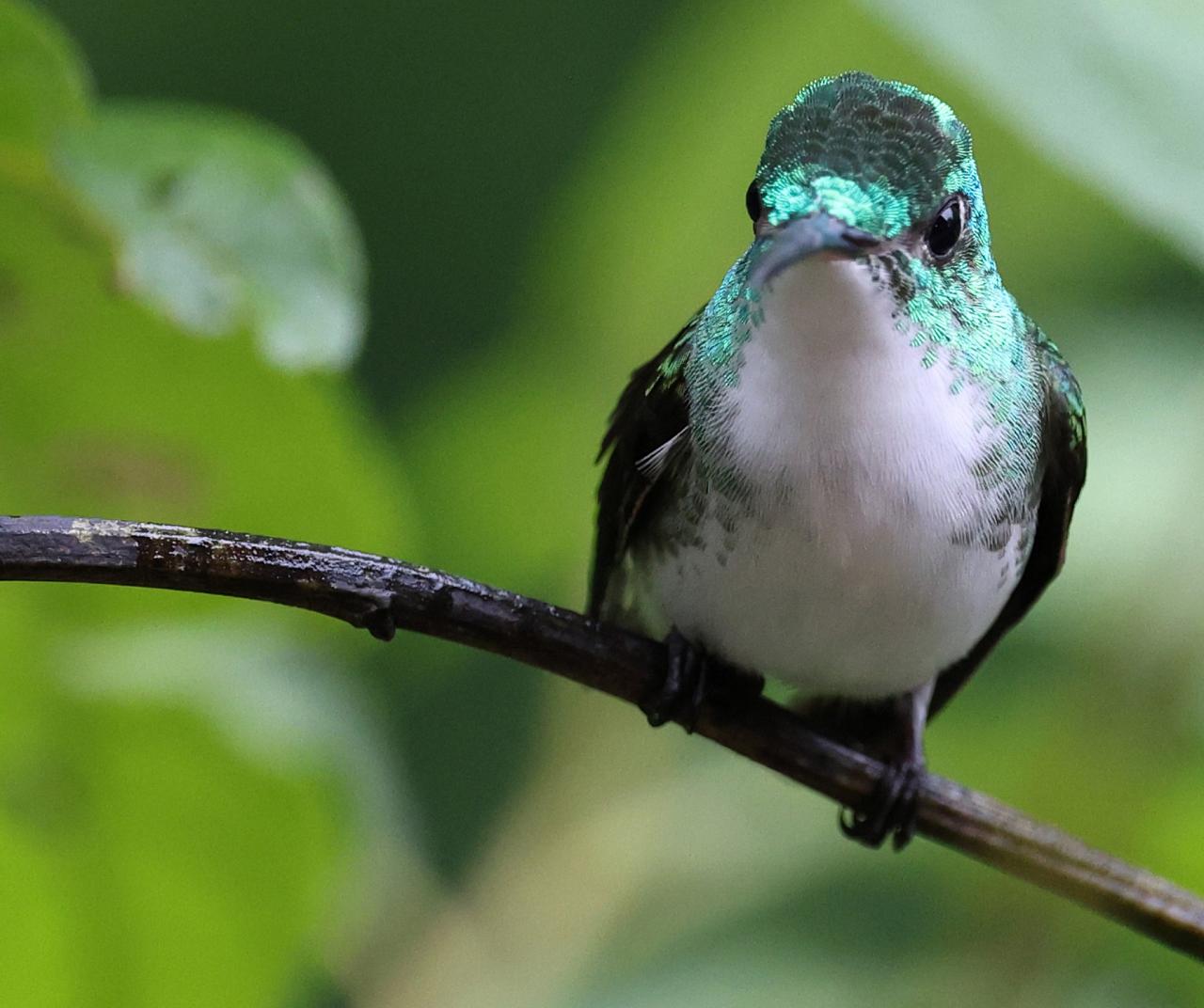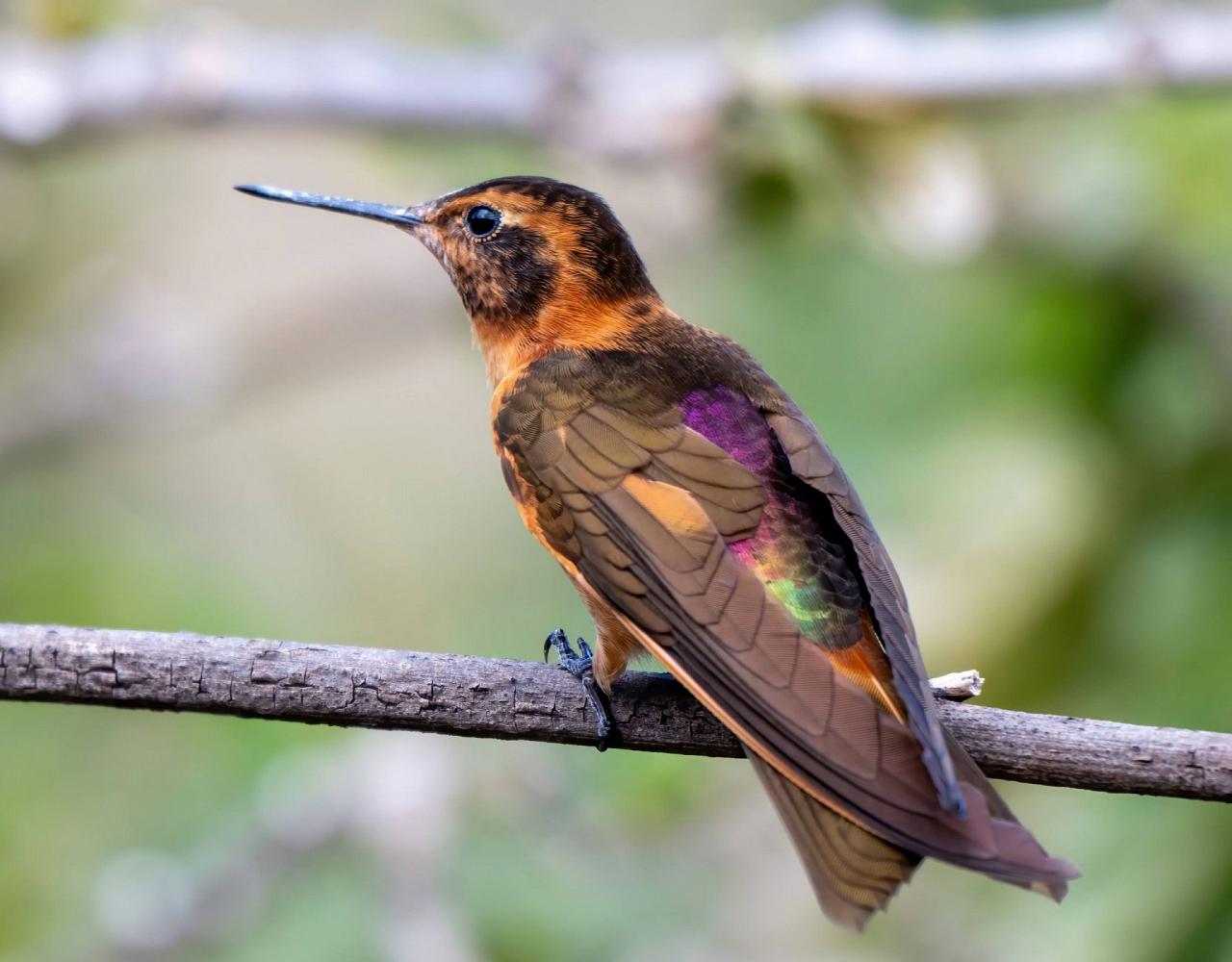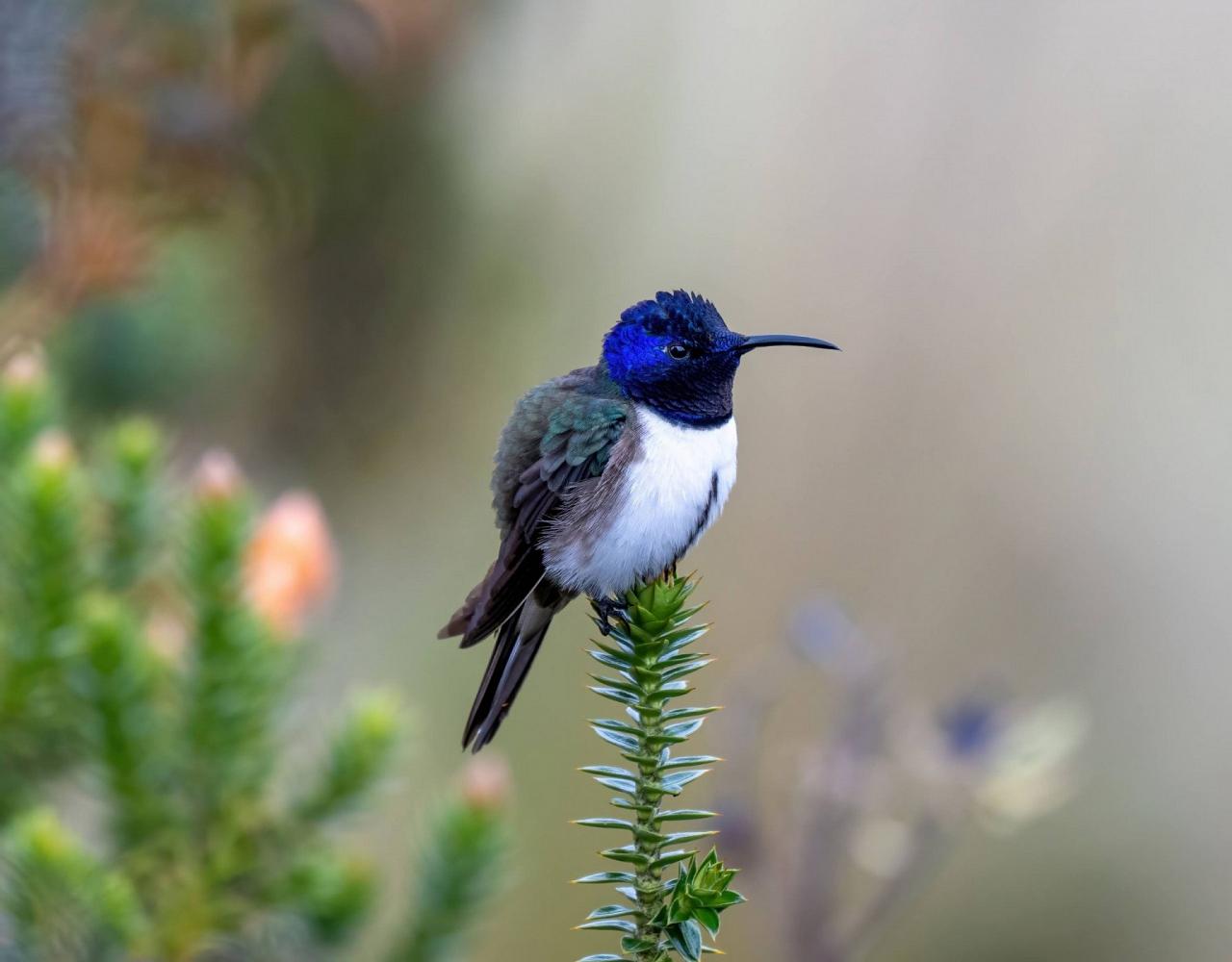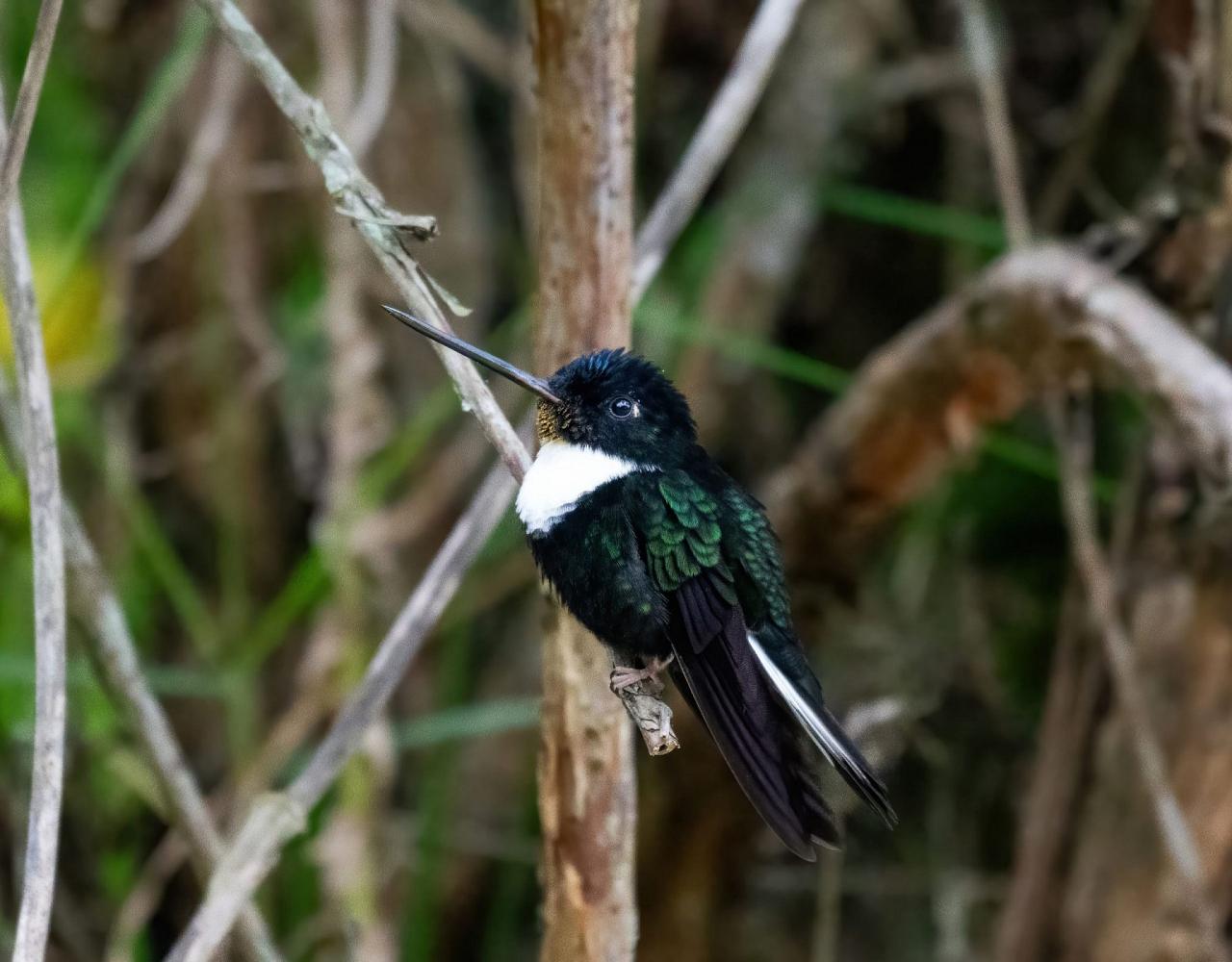
Ecuador is located on the most diverse land mass in the World, South America, which is known as the “Bird Continent,” by virtue of its bird list of nearly 3500 species—more than 30% percent of the world’s birds. Some bird groups are very conspicuous here, and very well represented, with perhaps none more so than the hummingbirds! Forty percent of the world’s hummingbirds, no less than 135 species can be found here! This NEW! journey strategically combines hummingbird-rich areas on both sides of the Andes at different elevations. The different altitudinal locations are dramatic and this allows us to easily find different species all over the country—from highlands at high altitude paramo downward to the tropics on both slopes of the Andes.

Ecuador is a small country, akin to the size of Colorado with a good road network, and a wonderful system of birding lodges; we’ve chosen some of our favorites for this hummingbird tour. Of course where there are hummingbirds there are myriad other species. In short, hummingbirds are our magnet species, they are extremely accessible in Ecuador and seeing 50-60 species of these winged gems is entirely possible!

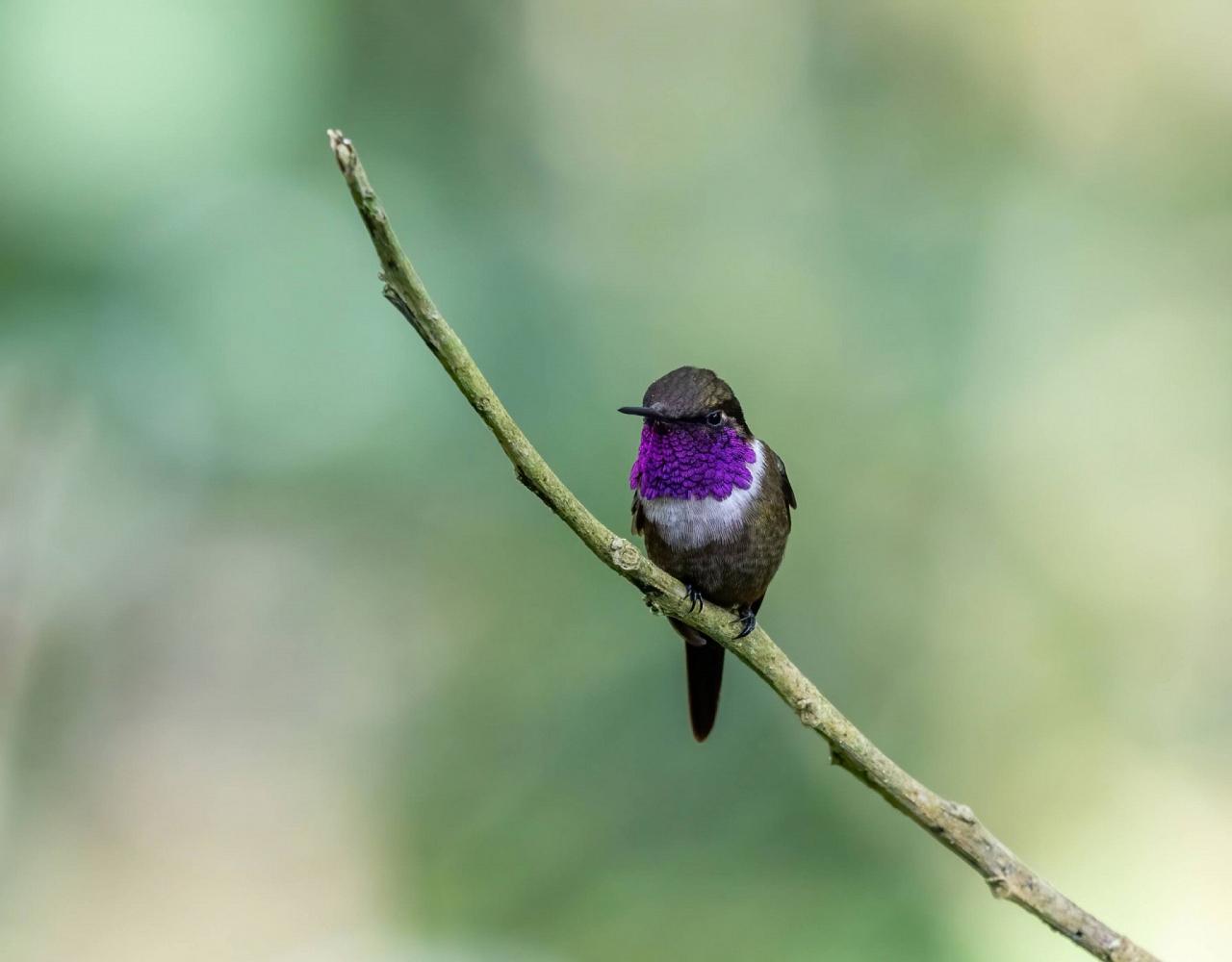
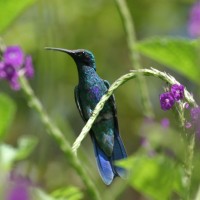
We start with a focus on the Northwest slope of the Andes, and the Choco bioregion of Ecuador’s west slope. Some of the impressive hummingbird species on offer in the west include Sword-billed Hummingbird and White-booted Racket-tail, and Choco specialties such as spectacular Velvet-purple Coronet, Violet-tailed Sylph, Gorgeted Sunangel, and Purple-bibbed Whitetip, Green Thorntail and many others. We then return to Quito, go up and over the Andes, and on the final leg of the tour we focus on the Eastern slopes and foothills where we find Peruvian Racket-tail, Tourmaline Sunangel, Black-thoated Brilliant, Napo Sabrewing, Wire-crested Thorntail, Gould’s Jewelfront, Gorgeted Woodstar and more.

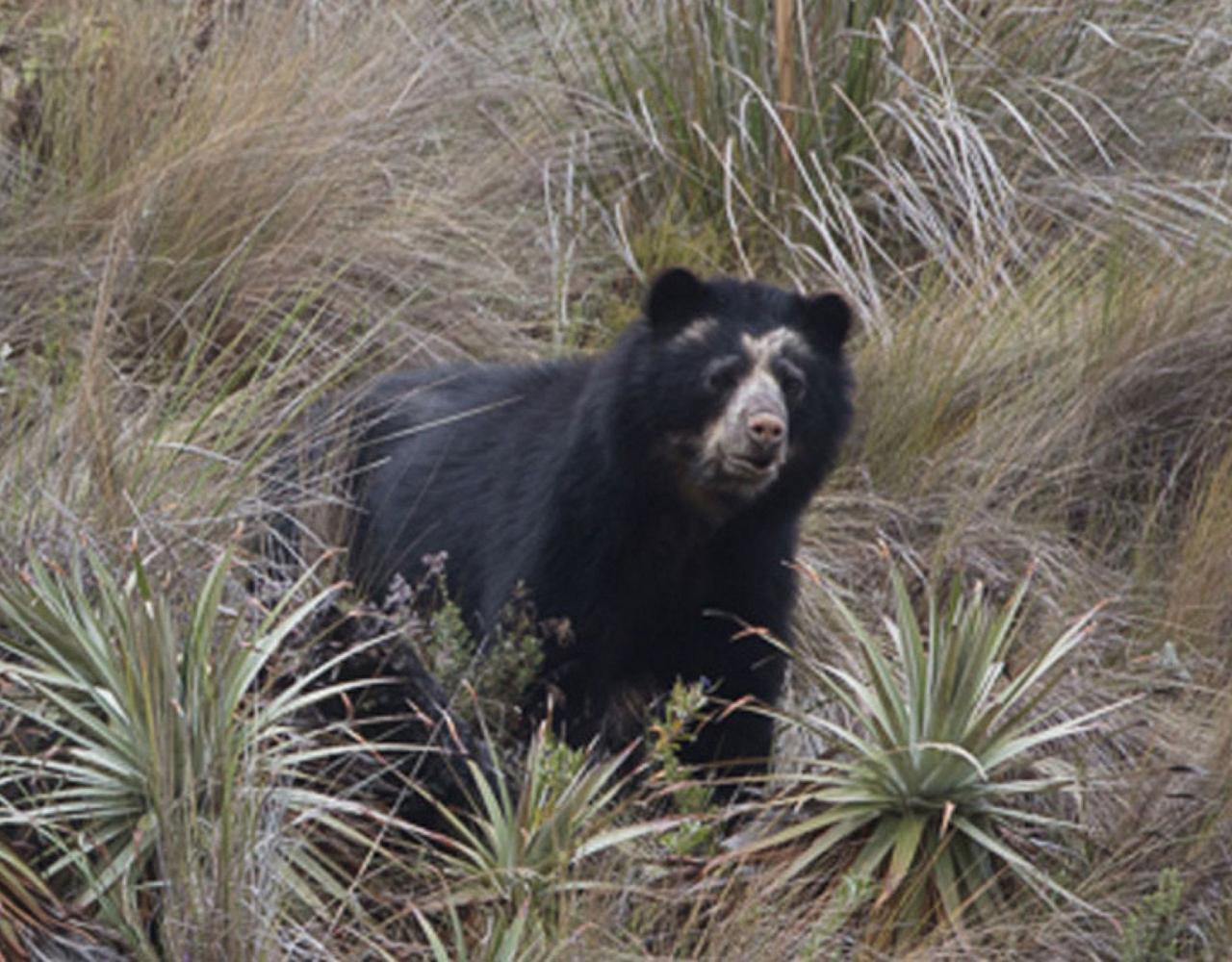
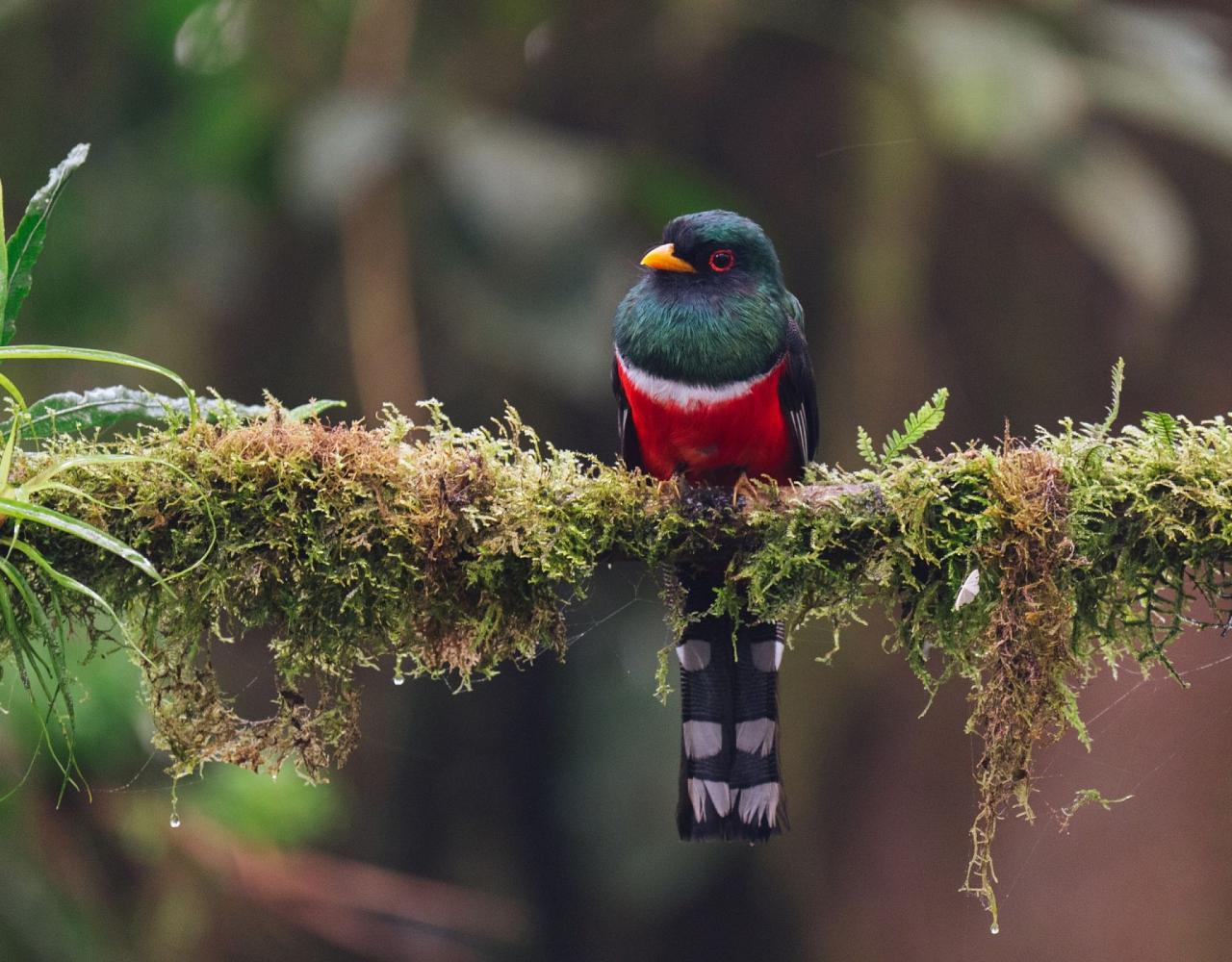
The hummingbirds are the star of this tour, as we find and learn about a large number of them, including some rare and local ones. We also see plentiful other birds in this remarkably diverse tropical country. Other colorful and charismatic species we are likely to see are cock-of-the-rocks, toucans, motmots, woodpeckers, a profusion of parrots, and potentially more than 40 tanager species. We may also find several species of monkeys, agouti, and even Spectacled Bear.

This tour has a strong conservation element, empowering local reserves and ecotourism as a part of rural economies. Join us to visit private reserves and national parks that reinforce conservation of bird species and habitats, another great value of this tour.
Tour Highlights

  • Find 50-60 species of hummingbirds and take time to learn, admire and if you wish, photograph them
  • Visit some of the finest birding gardens in Ecuador, where species are close and easy to see
  • Sample Ecuadorian food, from luscious Sancocho soup to avocado dishes, roasted meats, llapingachos (potato pancakes), Bolon de Verde (plantain dumplings) and to robust, organic chocolates
  • Stay at two very different hotels in Quito, a vibrant modern city hotel and a century-old hacienda
  • Cross a high pass of the Andes and witness odd looking plants and possible Spectacled Bear
  • Discover species richness visiting east and west sides of the Andes from highlands to foothills
  • At your final stop, soak in a natural hot spring before that final species checklist tally
Trip Itinerary

Itineraries are guidelines; variations in itinerary may occur to account for weather, road conditions, closures, etc. and to maximize your experience.

Wed., Aug. 5     Welcome to Quito!

Arrive in Quito, Ecuador’s vibrant capital city. A representative from our local company meets you at the airport and takes you into the city, where we kick off this tour at a fun, modern, and well-situated hotel. The GO Quito is a top quality hotel with Ecuadorian art and furnishings and great food, as well as an unbeatable view of the city. Some may wish to arrive early to explore this historic city. Our first event is the welcome dinner tonight. Meet your guides and fellow traveling companions and toast to a grand adventure.
Accommodations at GO Quito Hotel (D)

Thurs., Aug. 6    Zuro Loma Reserve | Mirador Guaycapi | Alambi Reserve

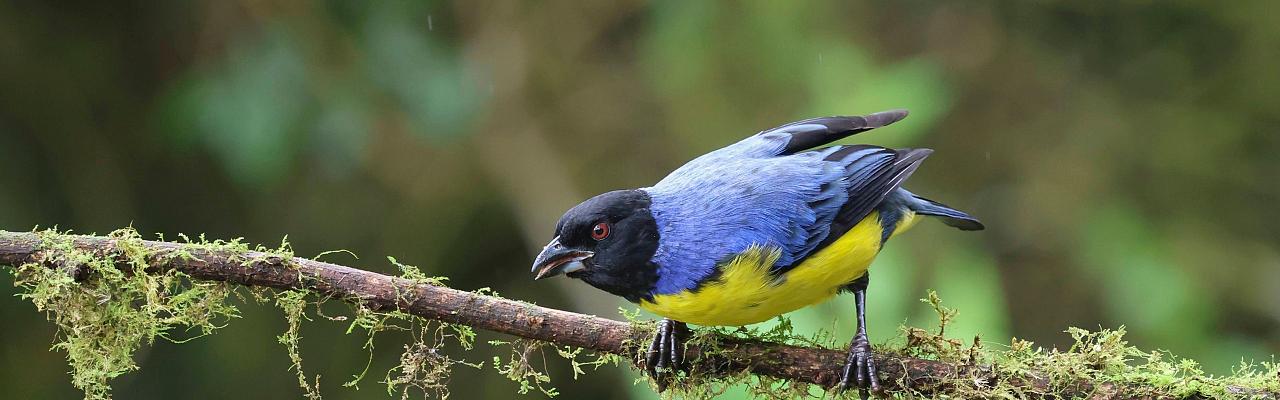
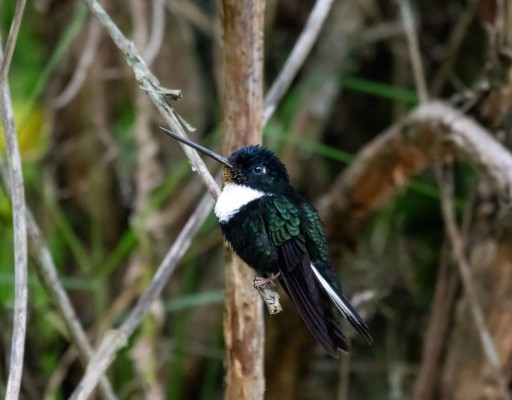
We have an early breakfast and depart in time to avoid traffic, driving to Northwest Andean forest, where at a stunning pass at 10,000 feet we reach Zuro Loma, a private reserve in the perfect location on the side of Pinchicha Volcano to host numerous species. Friendly staff greet us with hot coffee or hot chocolate but we are quickly distracted by activity at well-distributed feeders at several levels. This is a great spot to see the amazing Sword-billed Hummingbird with a bill longer than its body! At this readily accessible highland location we also find Collared Inca, Sapphire-vented Puffleg, Mountain Velvetbreast, Shining Sunbeam, Buff-winged Starfrontlet, among others; here we do have a chance to observe Chestnut-naped Antpitta, Chestnut-crowned Antpitta and Ecuadorian Antpitta at secretive feeding stations, and to see Hooded Mountain Tanager and other tanagers as well. What a way to kickstart our adventures!

We then drive from the Nona area downwards towards Tandayapa in the foothills and cloud forest with views of lush landscapes kept wild by an encouraging number of protected areas. We enjoy a nice lunch at Mirador Guaycapi with more distractions—they have a long line of feeders off a deck that attract hummingbirds such as Purple-throated Woodstar, Fawn-breasted Brillant, Andean Emerald, and a few tanagers like Black-capped and Golden-naped, Metallic Green and Bay-headed. Lunch is hearty as we sample a favorite Ecuadorian soup ahead of our entrée. One of our previous groups here were thrilled when a pair of Golden-headed Quetzal came through!

After lunch we spend time at another amazing hummingbird garden with feeders at Alambi Reserve. This is a private property dedicated to conservation and we know we’ll have to pry you away … it has such a warm welcome as well as terrific species. We are at lower elevation now, in cloud forest and we may find White-necked Jacobin, Brown Violetear, White-booted Racket-tail, Crowned Woodnymph and more.

At the end of the afternoon we reach our spectacularly-located lodge and are warmly greeted. Watch the clouds move through the peaks and valleys of the Andes from the veranda here; beautiful vistas change by the minute with amazing photo opportunities. Guaycapi Lodge has the best view of the cloud forest in the western Andes. Small and family-run, we look forward to meals here each day.  
Accommodations at Guaycapi Lodge (B,L,D)

Fri., Aug. 7       Choco Region: Hummingbirds & More!

Open your doors to sounds of the Andes—we are immersed in nature with wonders close at hand. Enjoy coffee and breakfast, where we’re dazzled by the view of the valley and clouds and mountains from the veranda of the lodge. Soak in a visual sense of the meaning of cloud forest, and have your cameras ready, the feeders should be abuzz with Golden Tanager, Blue- winged Mountain Tanager, and hummingbirds like White-booted Racket-tail, White-bellied Woodstar and more. After breakfast, stretch your legs with a walk on the property, then continue with a great day of birding by vehicle as we visit other areas like Bellavista Lodge and local feeders and gardens. We look for Gorgeted Sunangel, Velvet-purple Coronet and more. Nothing is far away, yet numerous species, including Plate-billed Mountain-Toucan abound. We return for lunch and a break, then continue to enjoy birding hotspots nearby.

Each evening we traditionally do a species check list together (optional). If we have a clear night, the stars here are amazing.
Accommodations at Guaycapi Lodge (B,L,D)

Sat., Aug. 8                 Refugio Angel Paz de los Aves | Mindo Area Hummingbird Gardens

This morning we push out early to visit one of the most iconic places on the route, a place loved by birders around the globe. Angel Paz and his brother pioneered the techniques of inviting secretive antpittas in through daily feeding. They were the first farmers to embrace birding tourism two decades ago. The refuge has been secured financially, expanded and it only gets better, now with a small restaurant and gift shop as well as several trails and viewing areas.  During this visit we are able to look for Giant, Yellow–bellied and Ochre-breasted Antpittas, real skulkers that the Paz family knows as individuals across several antpitta generations. Approaching the blind and hearing the calls of Andean Cock-of-the-rock on the lek, then watching the males "dance" for a female is an unforgettable experience. And what a treat it is to watch Angel and his brother Rodrigo put out meal worms and call for the antpittas by name—"Venga Maria" (Come, Maria!), "Venga, Wilhemina!"

 Our guides strategically choose what order we see the specialties in based on current activity. A nice breakfast is served with scrumptious empanadas and very good local coffee (or hot chocolate, Ecuador makes this beverage oh so well!).

The Mindo area is a hub for conservation, and you see this in local signage, murals and street names—people are embracing birds and healthy bird environments everywhere! Each garden has a slightly different mix so we choose by what we need to see, taking in the beauty of Violet-tailed Sylph with perhaps a dozen or more at a time. We also find Brown Inca, Brown Violetear and so many others.  

At the end of the day we return to the lodge for a rest, enjoy the view from the veranda, attend to our growing checklist and have another delicious dinner.
Accommodations at Guaycapi Lodge (B,L,D)

Sun., Aug. 9       Mashpi Amaguza Reserve | Hummingbird Gardens

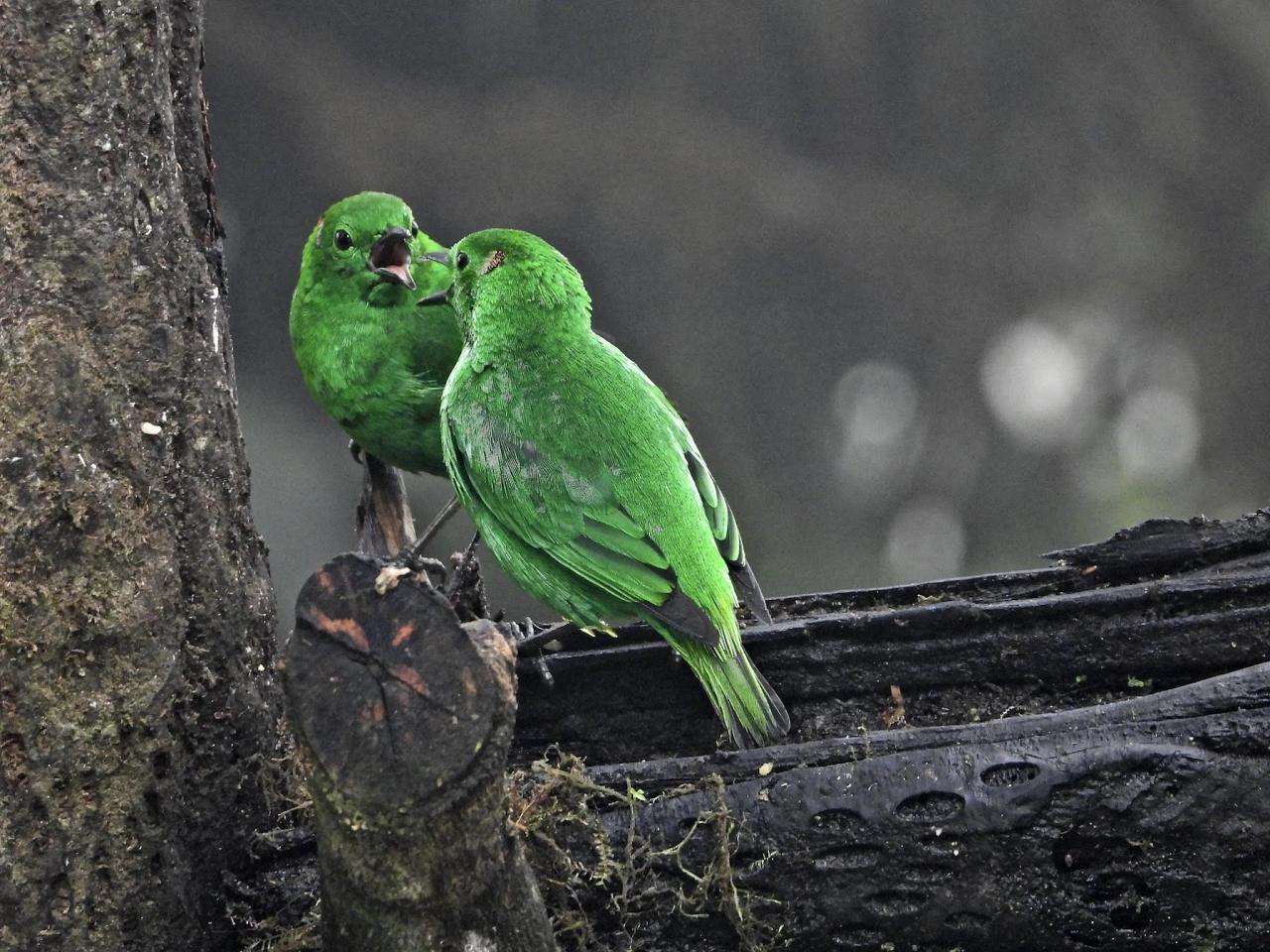
After breakfast we drive into Mashpi Amaguza, birding the entry road to a location deep in western forests of the Choco region. This location is fantastic because local people have developed amazing feeders and blinds for some special birds like Velvet-purple Coronet, Tooth- billed Hummingbird, White-tipped Sicklebill and many other lovely birds. We love adding new hummingbirds, but it is impossible not to admire Choco endemics such as Moss-backed Tanager, Glistening-green Tanager, Black-chinned Mountain Tanager, Choco Viero, Black Solitaire and many other species. It can feel like an overdose of birds, what a joy! Guests on past trips have been treated to having a cluster of flowers placed in their hands so that hummers swarm to feed right in front of you!

We have lunch with a fine view at Mashpi Wuasi, the private reserve of the owner of our Ecuadorian partner company, a nice place to relax and see some other birds like Golden–naped Tanager, and possible Tayra, a secretive mammal. 

In the afternoon we can visit the Andean Cock-of-the-rock lek at Santa Elena again in case we were not lucky with our first try, and watch for more hummingbirds in a hedgerow of vervain. We then return to Guaycapi Lodge for a restful evening.
Accommodations at Guaycapi Lodge (B,L,D)

Mon., Aug. 10    Frutti Tour | Mindo Chocolate | Return to Quito

After breakfast we drive to lower elevation, stopping at a place known as Frutti Tour. This property has a young forest, having been recently converted to fruit trees and for some of the acreage, in the process of returning to a wild landscape. This is a small location with feeders, at an altitude of about 2,700 feet, putting it in a different birding zone. In Ecuador just a few hundred feet lower or higher makes a big difference in the plant and bird life! Here we hope to see Purple-crowned Fairy, White-whiskered Hermit, Black-throated Mango, Green-crowned Brilliant and Bronzy Hermit, some of the iconic hummingbirds at this elevation, and the star-attraction, the Long-billed Starthroat. Well-stocked banana feeders attract other species such as Black-cheeked Woodpecker, Yellow-rumped Cacique, Golden-olive Woodpecker and many others. With luck, a Squirrel Cuckoo may fly through. We have quite a few choices for our remaining time today near Mindo where we can see some amazing birds and if we have time we can enjoy local chocolate, learning how it is made at a delightful garden.

This afternoon we return to Quito to overnight at the rural, colonial-style San Jose de Puembo, a nice rural hotel with lovely gardens where we may find Green-tailed Trainbearer and other species. Dinner is a treat in the courtyard of this historic hacienda.
Accommodations at the San Jose de Puembo Hotel, Quito (B,L,D)

Tues., Aug. 11     Antisana Volcano National Park | Papallacta Pass | San Isidro

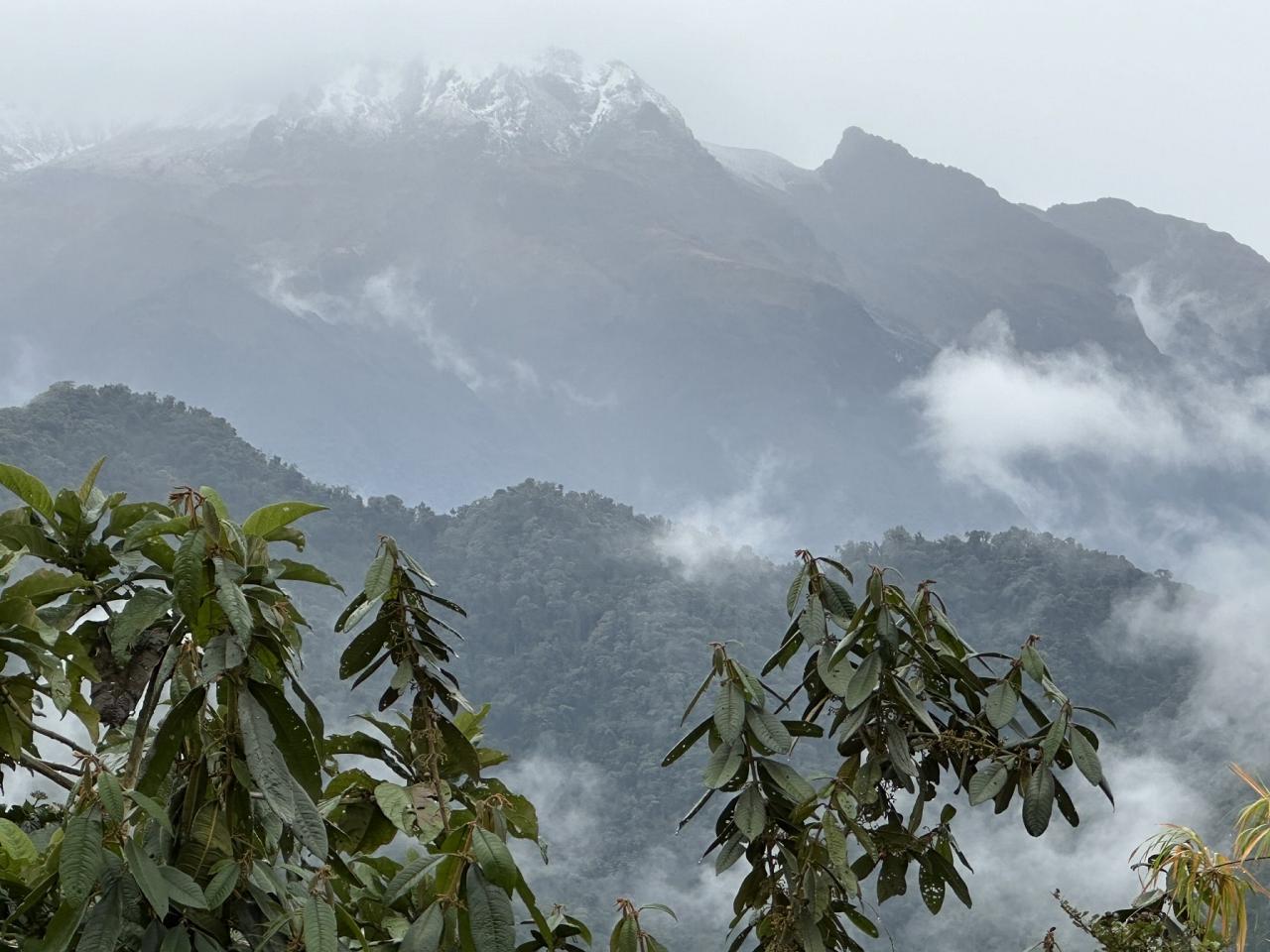
We enjoy an early breakfast at the hacienda, again we want to avoid traffic going out of the city.  We head east this time, driving up the dramatic grade of the East Slope of the Andes, up and over Papallacta Pass, which offers a different suite of birds, including a number of different hummingbirds. This route, and tomorrow’s, are likely to provide the scenic highlights of the tour, with spectacular vistas on clear days that consists active, snow-capped volcanos in view. En route we bird some High Andes sites between 11,480-14,000 feet (only a very short time is spent at the latter elevation).

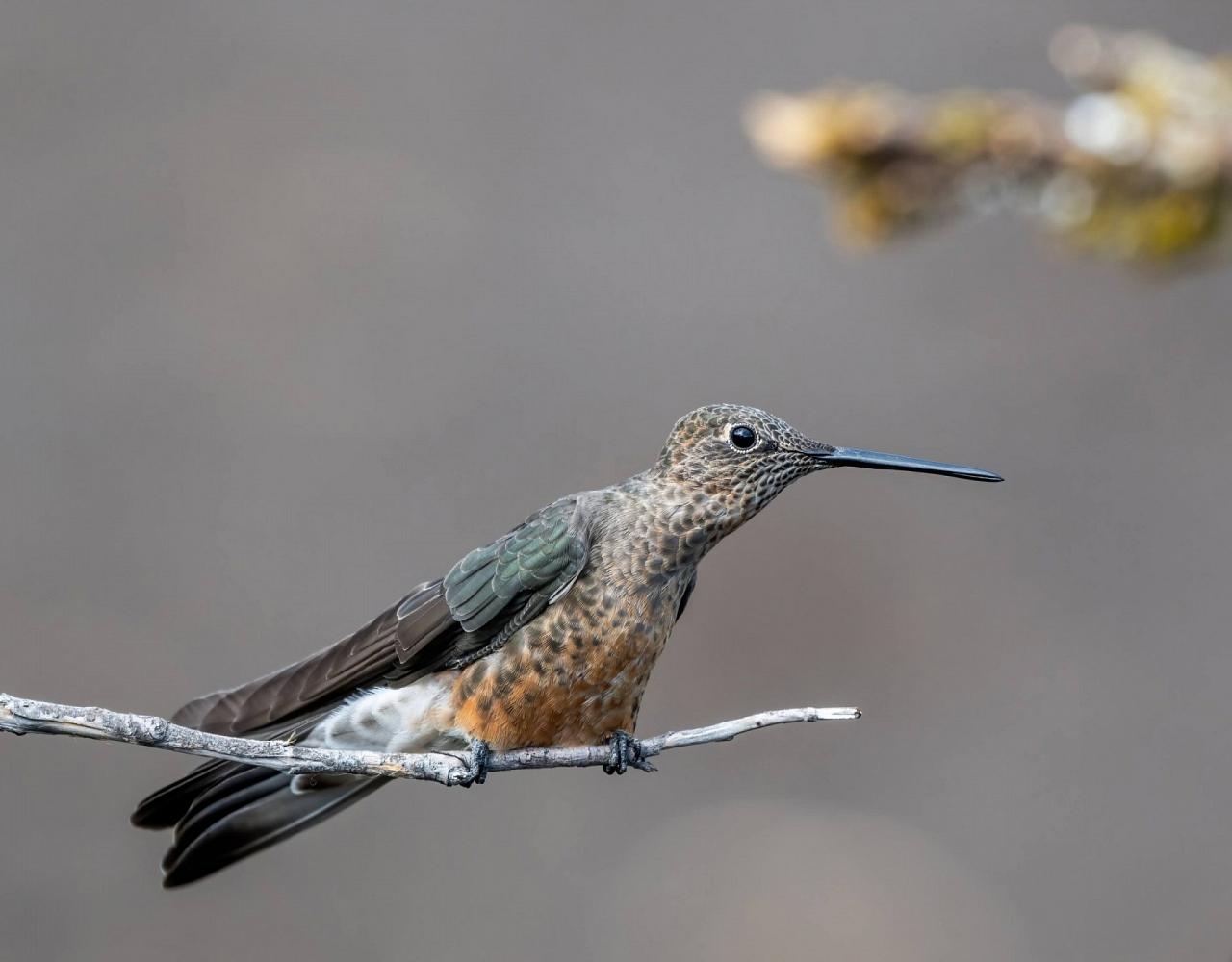
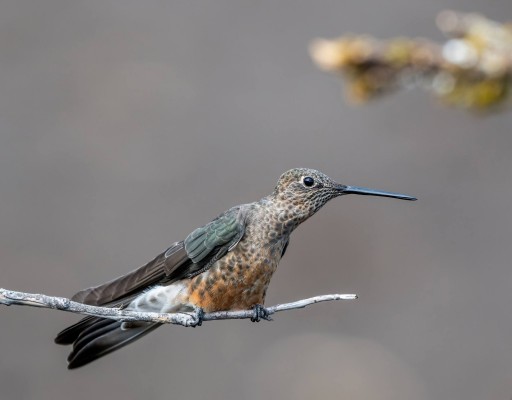
Even at these lofty altitudes, there are hummingbirds eking out a living, and some of these are spectacular indeed. We survey burnt-orange Chuquiragua flowers, known as the “flowers of the Andes” or the “national flower of mountain climbers,” for one of the star high elevation hummingbirds, the Ecuadorian Hillstar. While at a local café we enjoy the feeders that often attract another celebrity hummingbird, the largest of them all—the Giant Hummingbird! We stay vigilant. Other hummingbirds occur here as well, including Shining Sunbeam and Sparkling Violetear.

The morning is spent in the shadow of Antisana Volcano, standing at an impressive, snow topped mountain that is 18,874 feet high! Here, we may also see massive Andean Condor gliding on 12-fot wide wings, or Andean Ibis foraging with Carunculated Caracaras and Andean Gull in high alpine meadows in the paramo grasslands. After a morning near Antisana, we head further east, taking the main highway that links Quito with the Amazon, and crossing Papallacta Pass, the highest point, then drive towards San Isidro Lodge our next lovely and cozy location.
Accommodations at San Isidro Lodge (B,L,D)

Wed., Aug. 12    Exploring San Isidro Lodge and Surrounds

San Isidro is a very bird-rich lodge to wake up to … listen to the chorus as you awaken. Having spent the best part of two days in the High Andes and the cool temperate cloud forest, we drive partway downhill into the considerably warmer, and more humid Andean foothills. We pass here again tomorrow, but stops abound so we spread them out. There are some good new hummingbirds to search for along the route. At our first site, La Brisa, we are on the lookout for Bronzy Inca, Violet-fronted Brilliant, Gorgeted Woodstar, Green-backed Hillstar and Peruvian Racket-tail. Other stops may yield Black-throated Mango or Glittering-throated Emerald, and we may pick up a burnt-red Cliff Flycatcher along the way too. Scenery is grand, and we may encounter mixed flocks, trogons, tanagers and jays.

At the end of the day we return to our cozy and fantastic birding lodge, with more new hummingbirds right on the doorstep. We enjoy lodge birding time here on the grounds ahead of nightfall.
Accommodations at San Isidro Lodge (B,L,D)

Thurs., Aug. 13 & Fri., Aug. 14        Exploring at Wild Sumaco Lodge

We pack up from San Isidro, and having made stops yesterday, we head down to the foothills. It is a notable change to feel the heat and humidity of the Andean foothills of the eastern slope, which brings a swathe of new hummingbirds and others in this rich birding area. We arrive in time for lunch, settle in and then spend the afternoon and all of tomorrow around our wonderful lodge, of course focusing on the new hummingbirds on offer, as well as a visit to an antpitta feeding station. We also keep an eye out for mixed flocks as a vivid variety of brightly colored tanagers occur here.

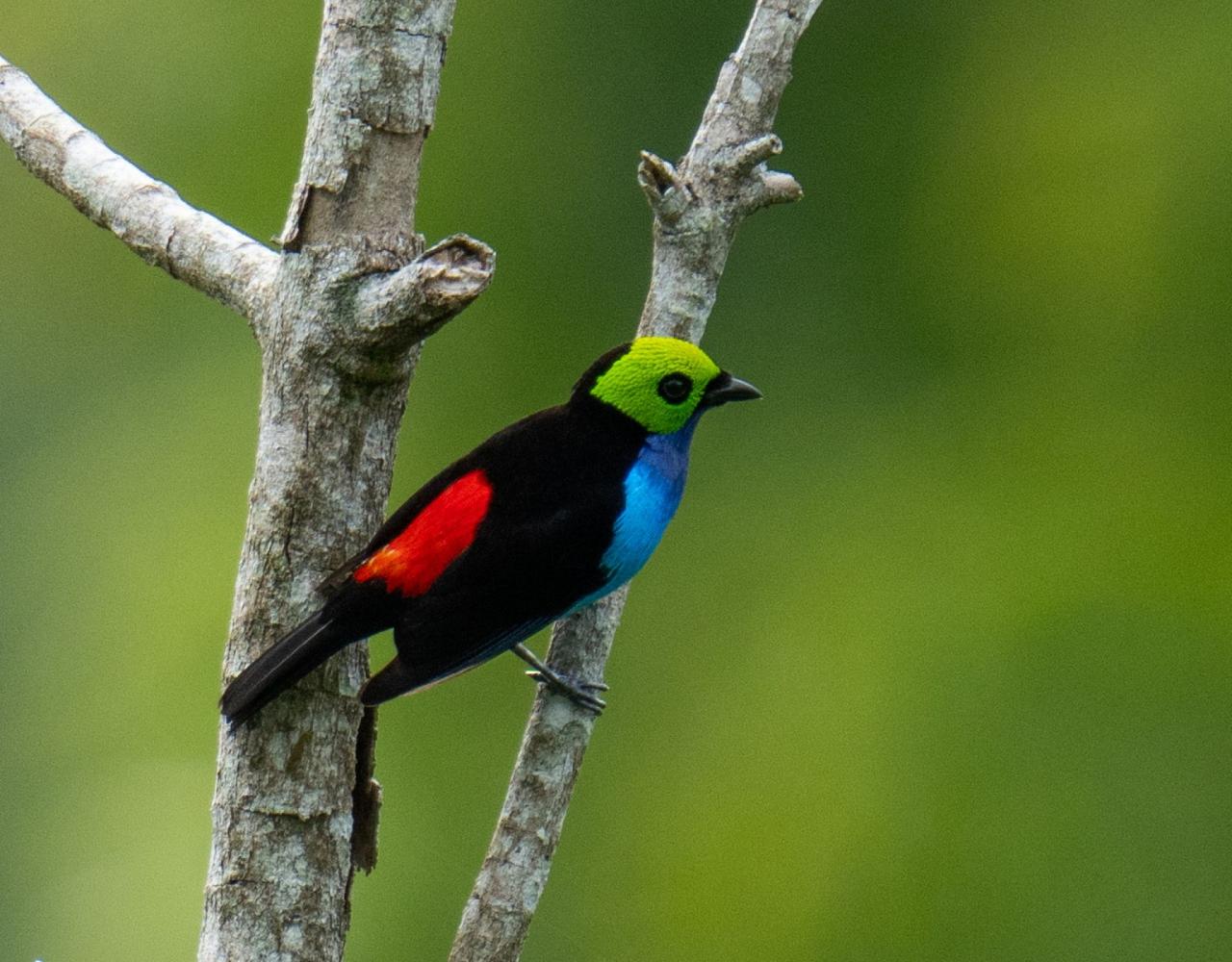
In terms of hummingbirds, the verbena stands in the lodge garden are convenient places to look for Violet-headed Hummingbird and punky Wire-crested Thorntail, while the feeders play host to plenty of new species for us, like Golden-tailed Sapphire, Napo Sabrewing, Black-throated Brilliant, Many-spotted Hummingbird and Green Hermit. We need to work the forest nearby for the scarcer Blue-fronted Lancebill and Ecuadorian Piedtail, which are regular though far from guaranteed! There are plenty of other species, including plentiful tanagers, the prize perhaps the smashing Paradise Tanager and an array of toucans, barbets, antbirds and antpittas. A feeding station may yield Plain-backed or Ochre-breasted Antpitta, and night time forays may produce Band-bellied or Tropical Screech Owls.

Wild Sumaco is a charming and pleasant lodge located at 3,000 feet, and we enjoy the warmth and sunshine. This lodge was built with birders in mind and we love the cozy fireplace, volcano views, scenery and dining.
Accommodations for two nights at Wild Sumaco Lodge (B,L,D)

Sat., Aug. 15     Wild Sumaco Lodge | Papallacta Pass | Hot Springs!

After breakfast we pack up, drive the scenic route back up the Andean slope, and return to a great place, Termas de Papallacta, a cozy spa lodge with natural hot springs. On the way we can make a few stops, perhaps zeroing in on a few last hummingbirds or other specialties we may not have seen such as Torrent Duck or Coppery-chested Jacamar. We plan on lunch at Termas with time to relax with an afternoon at leisure for those who wish, or for our super enthusiasts, a short walk at the edge of the Cayambe Coca Reserve to try to tally some birds there.

This is the time to pack and organize for your flights home tomorrow. We also celebrate the highlights of our trip as we do the final checklist and enjoy our farewell dinner.
Accommodations at Termas de Pappallacta (B,L,D)

Sun., Aug. 16     Morning Birding | Return to Quito

At this elevation, close to 11,000 feet, even on a final morning we can get some hummingbirds that can be new and not easy like Purple-backed Thornbill, Rainbow-bearded Thornbill and Shining Sunbeam and tanagers like Buff-breasted Mountain Tanager, Plain-breasted Hawk, Andean Condor, Andean Pygmy Owl and others. We have lunch at the lodge, and then start our way back to the Quito Airport and to connect with international flights home. Many flights go out near midnight, but the Quito Airport has expanded and has a number of restaurants for dinner tonight after your late-afternoon drop-off. If you fly out tomorrow morning, we can recommend a hotel right at the airport.

It's time for our flock to disperse, but oh what a great trip with jewels of Ecuador! (B,L)

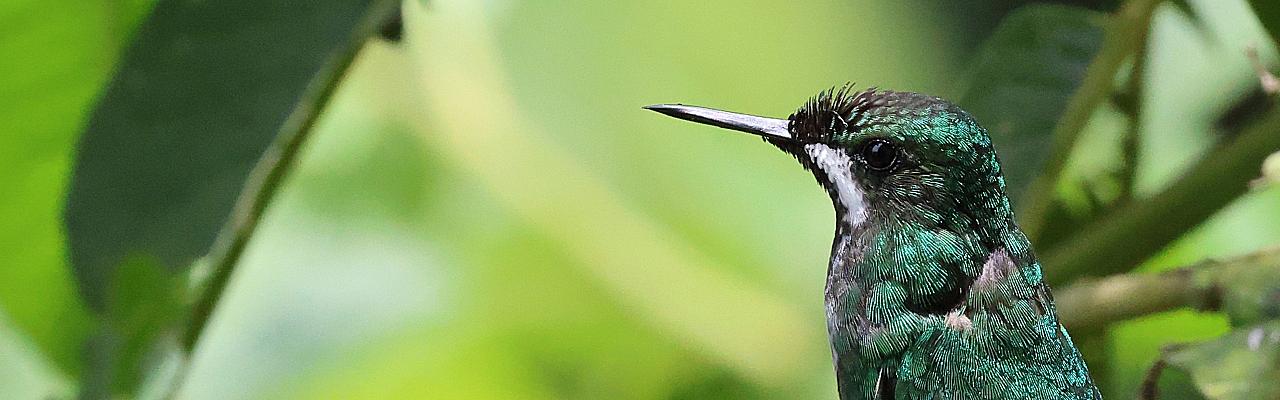
  • Green Thorntail, Ecuador, Ecuador Birding Tour, Ecuador Nature Tour, Cuenca, Quito, Naturalist Journeys

    Green Thorntail, courtesy Neblina Forest

  • Andean Emerald, Ecuador, Ecuador Birding Tour, Quito, Ecuador Hummingbird Tour, Ecuador Nature Tour, Naturalist Journeys

    Andean Emerald by Jim Adamthwaite

  • San Isidro Lodge, Ecuador, Ecuador Birding Tour, Ecuador Nature Tour, Ecuador Hummingbird Tour, Quito, Naturalist Journeys

    San Isidro Lodge, courtesy sanisidrolodge.com

  • White-necked Jacobin, Ecuador, Ecuador Birding Tour, Ecuador Hummingbird Tour, Ecuador Nature Tour, Quito, Naturalist Journeys

    White-necked Jacobin by Jim Adamthwaite

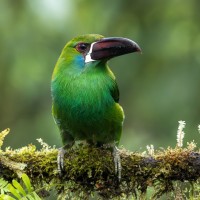
  • Glistening-green Tanager, Ecuador, Ecuador Birding Tour, Ecuador Nature Tour, Cuenca, Quito, Naturalist Journeys

    Glistening-green Tanager by Ruth Guillemette

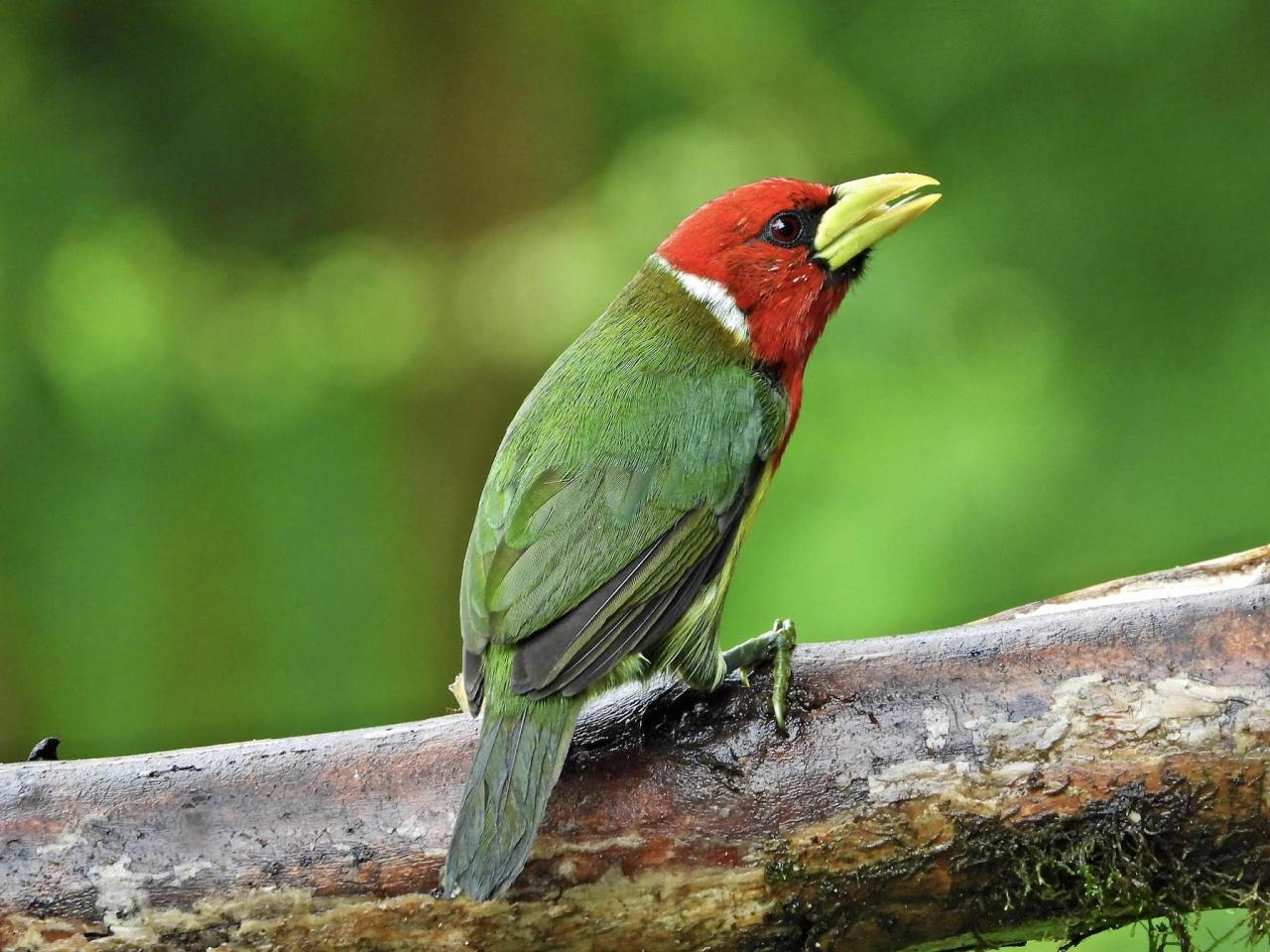
  • Red-headed Barbet, Ecuador, Ecuador Birding Tour, Ecuador Nature Tour, Cuenca, Quito, Naturalist Journeys

    Red-headed Barbet by Ruth Guillemette

  • Ecuador, Ecuador Birding Tour, Ecuador Nature Tour, Ecuador Hummingbird Tour, Quito, Naturalist Journeys

    Andes Scenic by Janine Alice

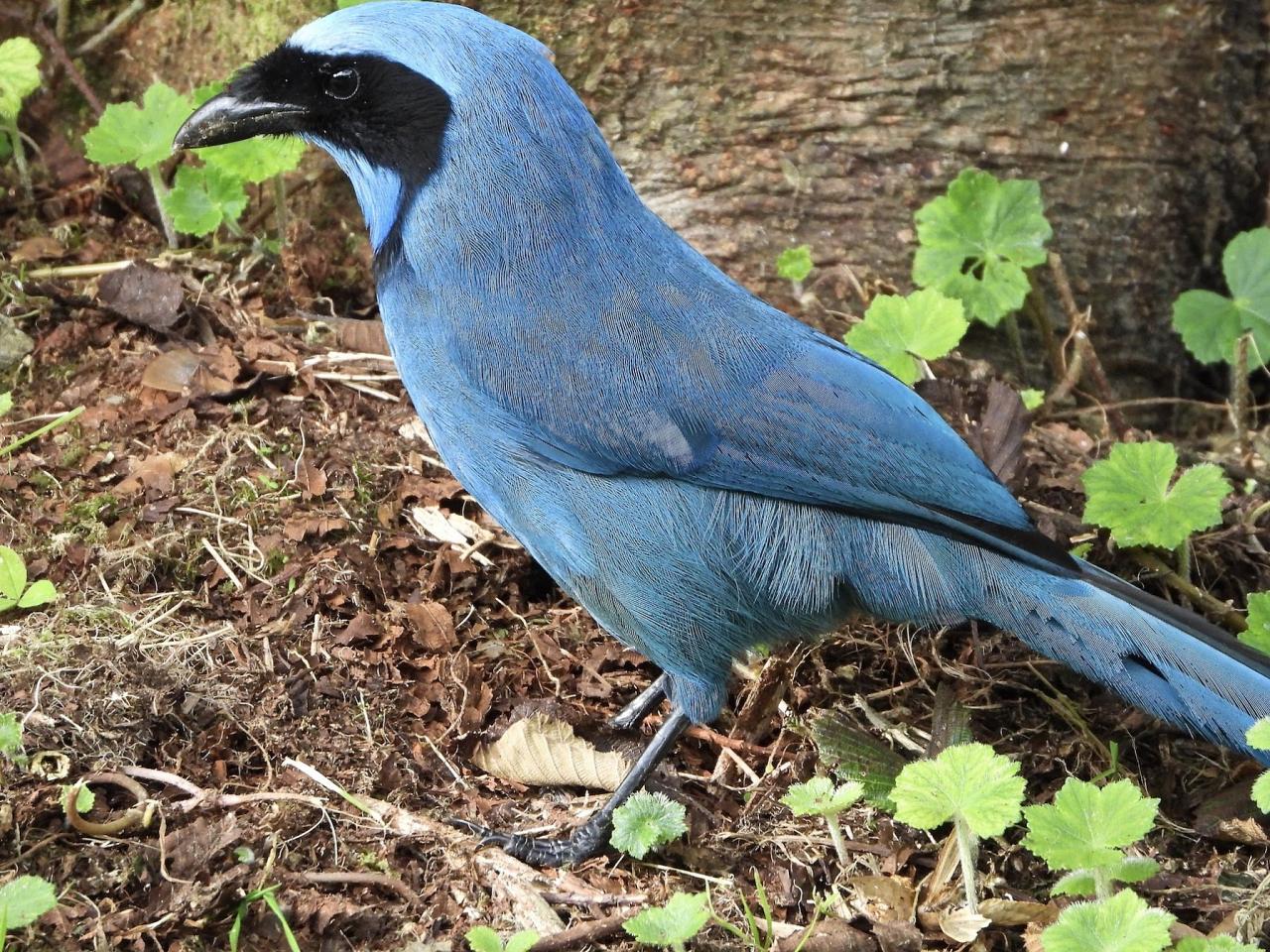
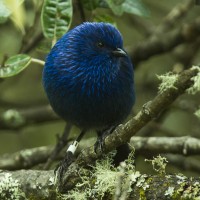
  • Turqoise Jay, Ecuador, Ecuador Birding Tour, Ecuador Nature Tour, Cuenca, Quito, Naturalist Journeys

    Turquoise Jay by Ruth Guillemette

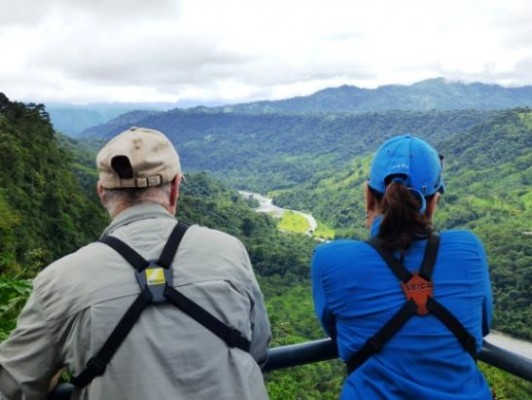
  • Ecuador, Ecuador Birding Tour, Ecuador Nature Tour, Ecuador Hummingbird Tour, Quito, Naturalist Journeys

    Naturalist Journeys Group by Rick Weiman

  • Shining Sunbeam, Ecuador, Ecuador Birding Tour, Ecuador Nature Tour, Ecuador Hummingbird Tour, Quito, Naturalist Journeys

    Shining Sunbeam by Philip Downey

Cost of the Journey

The cost of the tour is per person based on occupancy: $6290 DBL / $6990 SGL, from Quito, Ecuador.

Tour price includes: 11 nights’ accommodations, airport transfers, and professional guide services. It also includes land transportation within Ecuador, park and reserve entrance fees, pre-departure information and services, miscellaneous program expenses, accommodation and meals at all lodges, private transport, and private bilingual bird/naturalist guide.

NEW! all tips other than your NJ guide (optional) and local guide are included (this includes tips for your driver, lodge and staff, day activities, meals and other services).

Tour price does NOT include your international flights to and from Quito or items of a personal nature such as beverages from the bar, laundry, phone calls, or gift items. 


Travel Details

Please plan to make air travel plans only after the minimum group size has been met. We will send you a confirmation email as soon as the trip has been confirmed.

Arrival and Departure Airport: Mariscal Sucre International Airport (UIO), Quito Ecuador

Arrival Details: Plan flights to arrive August 5, 2026 at your leisure. Please plan to arrive by 5 PM if you wish to join the group for dinner.

Departure Details: Plan flights to depart August 16, 2026 after 8 PM. 

Travel Tip: If you would like to arrive early you can book an early night at our first night tour hotel, the GO Hotel Quito. This is a modern hotel located in the downtown area of Quito, approximately 45 minutes from the airport (pending traffic). There are many shops, restaurants, and attractions in this area.

There are also plenty of things to see in Quito! A visit to El Panecillo, a small volcanic hill located on the south side of Old Town, is worth it for the views of Quito and nearby volcanos on a clear day. Calle La Ronda, a cobbled pedestrian street in Old Town, is lined with galleries, traditional shops, and cafes. The Basilica del Voto Nacional is the largest neo-Gothic basilica in the Americas and one of many churches in Quito with stunning architecture. These sites and many others are a short taxi ride from the downtown area or walkable from the Old Town area. If staying downtown sounds appealing, we would recommend: La Casona de La Ronda  Mercure Alameda Quito.

Entry Requirements: See "Essential Information" section under the "Know Before You Go" tab.

Browse below for trip reports and species lists from past versions of this and other tours from this destination.

Ecuador

  • Andrea Molina

    Andrea is an Ecuadorian bird guide who has been guiding since 2006. She started as a local guide at the Bellavista Reserve cloud forest in Ecuador and then was recruited by Neblina Forest as a guide in 2010. Since then, Andrea has trained in Brazil, Peru, and other locations in Ecuador. Her good energy and kind touch with clients, as well as her good ears and great eye for birds, ensures her groups have an excellent experience. Andrea lives in Ecuador with her family.

    Guest Quote: *I’m writing to tell you how excellent our guide, Andrea Molina, was. She has an outstanding blend of knowledge, interpersonal skills, and professionalism, and is overall a cool person who is fun to be around. She really made the trip special.*

    Other trips with Andrea Molina

Map for The Hummingbird Series: Ecuador!

Essential Information +

This information is important for being prepared for your journey; we want you to have Read more

This information is important for being prepared for your journey; we want you to have the best experience possible. If you only read one section, this one is key!

Ahead of Your Tour

  • Make sure your passport will be valid at least six months after the date of your scheduled return to the U.S. See "Passports, Visas & Documentation" section below for details.
  • No Visas are required for U.S. citizens for stays of this length in Ecuador. If you are from another country, please contact the Embassy of Ecuador’s website for guidelines.
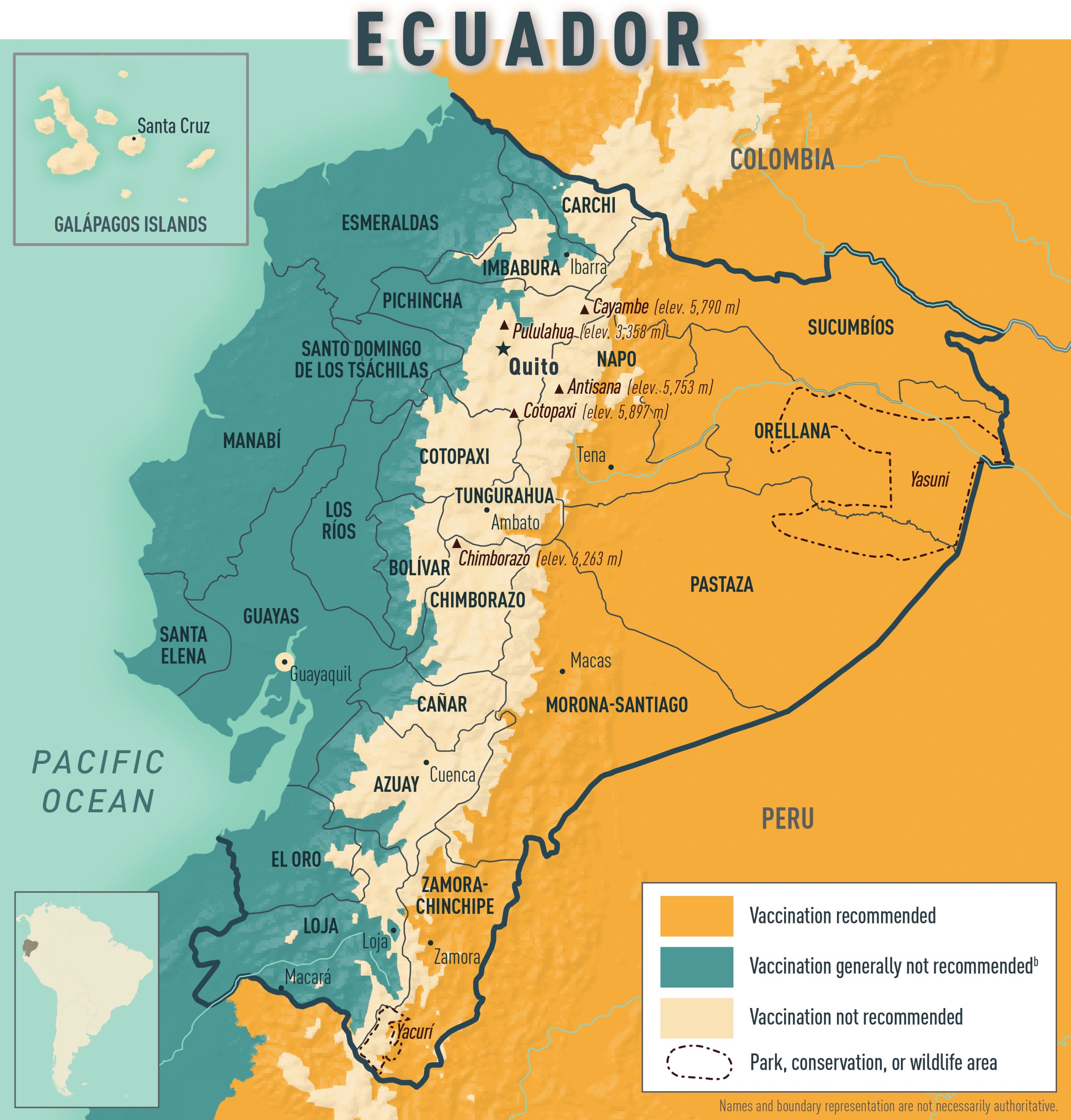
  • Please check current CDC recommendations for travel to Ecuador and consult with your doctor about general travel vaccinations you should have as precaution for travel. See the “General Health and Inoculations” section below.
  • Travel insurance in case of serious medical emergency is strongly recommended. Full health coverage and repatriation is available through Allianz Travel Insurance.
  • Plan your international flight reservations to Quito Mariscal Sucre International Airport (UIO). Send a copy of your itinerary to the Naturalist Journeys office please.
  • Soft sided luggage/duffel bags are easiest for packing the vans. Pack essential medications in your carry-on luggage, as well as one day of clothing and optics in case of luggage delay.

Arrival into Mariscal Sucre International Airport (UIO), Quito

When you arrive at the Mariscal Sucre International Airport (UIO), we will have your arrival time and will reconfirm with your guide. If you know you will be delayed and can email, text, or phone your guide or local operator, they would appreciate it. Both numbers can be found in your contact list.

You will fill out a tourist entry card for Ecuador on your flight. Visas are not needed in advance of travel. When you arrive in Quito you will first pass through immigration. You will be given a customs form on the plane to fill out. Also have your emergency contact sheet handy going through Immigration to show your destinations. Look for the shuttle or call the hotel once you exit to the main terminal area.

There is an ATM at the airport if needed (see MONEY below).

Please check the Travel Details tab of this tour for additional information and updates.

Departures from Mariscal Sucre International Airport (UIO), Quito

Your departing airport is in Quito at the Mariscal Sucre International Airport (UIO). There is an International Departure Tax, but this is normally now in your international ticket, and thus taken care of, just be aware that any time leaving a country, there could be notification of an increase or change. Plan your return flight at your leisure. You need to be at the airport about three hours ahead of your scheduled flight on this return. Most flights leave near midnight, so please watch the days/dates carefully.

Please check the Travel Details tab of this tour for additional information and updates.

Passports, Visas & Documents

Guidelines and regulations can change. It is always advisable to double-check the country’s documentation requirements 60-90 days ahead of traveling. Information for U.S. citizens can be found at: https://travel.state.gov/content/travel/en/international-travel/International-Travel-Country-Information-Pages/Ecuador.html. If you are from another country, please contact the Ecuador embassy website for guidelines. 

Passport: At the time of writing, you must have a passport that is in good condition and valid for at least six months from your scheduled return to the U.S. You should have at least one blank page per entry stamp. The blank pages need to say “Visas” at the top. Pages marked “Amendments and Endorsements” will not be accepted. 

Visa: At the time of writing, a tourist visa is not required for the duration of this tour. Your tourist card is part of your airline ticket and you will receive inbound forms to complete on your flight.  If you are issued a card at immigration, be sure to carry it with your passport at all times. You will need the card to exit the country.

The departure tax from Ecuador is now included in the cost of your flight, so you do not have to pay this separately at the International Airport before checking in for your flight.  

As a precaution for lost or misplaced documents you carry on your person during travel, we highly recommend you keep hard and digital backup copies on your phone (either photo or PDF scan), as well as a hard copy left with your emergency contact at home. The recommended important documents to copy include, but are not limited to; your passport ID page, travel visa, the front and back of your credit card(s), the airline barcode on your luggage. This will greatly expedite getting new ones if necessary – we hope everyone will always keep travel documents close so that losing them will not be an issue.

General Health & Inoculations Information - Be Prepared!

Health requirements for entry to any country can change. It is always advisable to double-check the country’s health requirements and recommendations 60-90 days ahead of traveling. A helpful website for planning is the Centers for Disease Control and Prevention (CDC) website for Ecuador or by phone (800) CDC-INFO or (800) 232-4636.

We will share your health information with your guide. This information will be kept confidential but is very important as we want to be best prepared in case of medical emergency.  

Vaccinations: Bring copies of your current vaccination records with you. At the time of writing there were no required vaccinations to enter Ecuador, however, the CDC recommends that all travelers be up to date with routine vaccinations and basic travel vaccines (such as Hepatitis A and Typhoid) before traveling to any destination. Please check with your doctor for recommendations at least 4-6 weeks before departing on your trip.

Prescriptions: It is a good idea to pack any meds you take regularly in your carry-on luggage.  Bring an extra pair of glasses or contact lenses. Bring an adequate supply of any prescription medications you use, a copy of the prescription and a list of generic names of your medicines as “back-up” in case it is necessary to purchase drugs while abroad. You’ll want to keep medications in their original, labeled containers. 

Allergies: To be prepared for environmental triggers to allergies or breathing difficulties, please bring your allergy and/or asthma medication(s).  If you have severe allergies talk to your doctor about carrying an EPI pen and notify your guides. It is also recommended to carry with you an up-to-date record of known allergies, chronic medical problems and Medic Alerts so that, if necessary, emergency treatment can be carried out without endangering your health.

Common Ailments: We recommend that you bring a travel-sized first aid kit and a supply of standard over-the-counter medications for prevention or treatment of common ailments (such as diarrhea, constipation, stomach upset, cough, congestion, head or body aches, insect bites and sunburn); as well as ointments, moisturizer, sunscreen, oral rehydration salts, band-aids, moleskin for blisters, cotton swabs, nail clippers, and tweezers, etc.

Altitude sickness: It can affect some and, if there is a concern, be prepared. The most general symptoms are headache and occasionally fatigue and dizziness. You’ll want to take it easy, particularly at first. These symptoms can be reduced by resting, drinking plenty of water and taking aspirin. If you have worries about the altitude, ask your physician about medications that may be right for you.

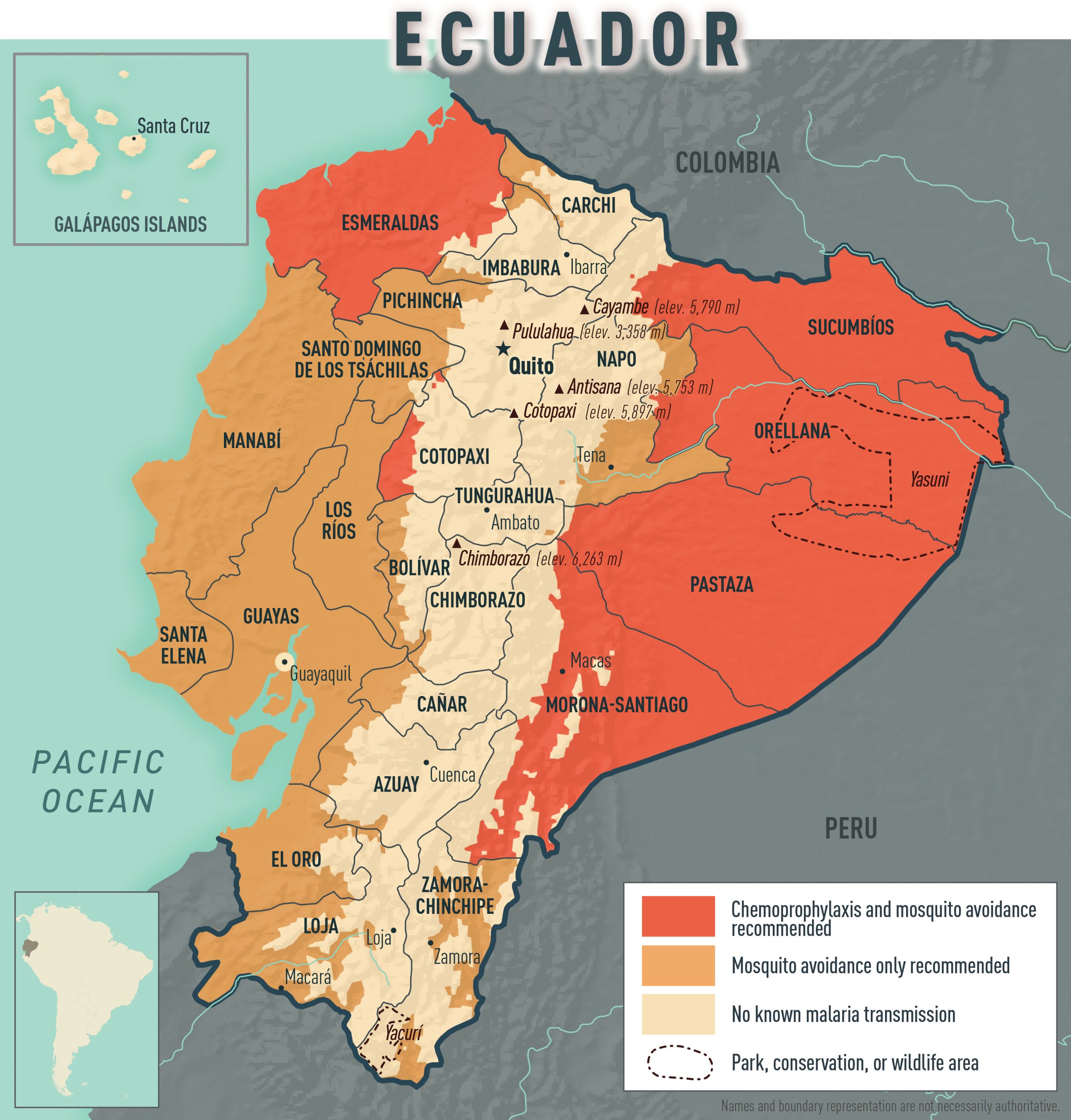
Anti-malarial drugs are not required for any area that you visit. There are occasional reports of Dengue Fever in lower elevation areas, for which there is no vaccine. Dengue fever, Zika, and other diseases are contacted by mosquito bites so be sure to use mosquito repellant containing DEET or Picaridin, though at this time of year there should be little mosquito activity.  Travelers can reduce their risk of disease by protecting themselves from mosquito bites by using protective clothing.

Daily Itinerary

We generally follow the published itinerary but do network with other guides and may make changes if we hear of great bird sightings or a new opportunity. The joy of our travel is tremendous flexibility, and we make every effort to do the things you particularly want to do. Your guide will keep you apprised of the next day’s schedule at each evening meal, noting what to bring and what to prepare for. Questions and/or concerns are welcome.

The pace of the trip is moderate, with some early morning departures, extensive field time and some options for hikes. It is also easy to take it at a vacation pace! You can pace yourself within our typically active schedule.

Weather & Climate

In general, weather where we travel in Ecuador is quite variable, and particularly dependent on the altitude in the different places we spend time.  We start in Quito at 9,350 feet of altitude. Temperatures should vary in the upper 40s°F to upper 60s°F. In the lower elevations, temperatures will be higher; expect mid 70s°F to upper 80s°F. Rain is likely, so do have good rain gear; shoes with good tread and support are essential. We recommend dressing in layers, with a good wind-breaking layer that can do double duty as raingear. Dressing in layers works perfectly for these conditions. Please bring warm enough clothing for the higher altitude, morning, and evening temperatures.

Annoyances & Hazards

Mosquitoes can occur, especially along the Napo River; therefore, a supply of insect repellent containing DEET is essential. At grassland or farm locations you may encounter chiggers, if so, spray your shoes with repellent, and tuck your pants into your socks; this helps a lot.  When back, be sure to shower and air out your clothing. Chiggers are a part of lowland and mid-elevation habitats throughout Central and South America. Your guide should have a good read on if it has been wet enough that they are active. There can also be poisonous snakes and insects, though encountering them is rare.  Do listen carefully to any advice given by your local guide. And remember the sun is strong and be prepared with proper protection.

Food & Drinks

Menus at lodges and restaurants are varied, sustainably based on the wonderful local ingredients available, and delightfully prepared in a sanitary environment. As with any case when traveling we urge you to consider what your body is used to before you eat something. Trust your common sense when consuming food and beverages. This is the best way to avoid any unwanted problems. Ask for recommendations from your hotel or refer to a guidebook such as Frommers. Meals reflect the contributions of American, European, Spanish, and local cuisines.

Bottled water will be available for field trips and drinking water is provided for you to refill a bottle. One of the many ways we strive to do our part for the environment is by trying to reduce our consumption of plastics; if convenient, we appreciate if you can bring reusable water bottles. Your guide will let you know when bottled water is preferable.

Packing, Clothing & Laundry

Dress is very informal and laundry services are available for a fee at our lodges. While some people will change for dinner, it is usually just to a drier or cleaner version of what they wore during the day.

Please, pack light.  We are serious about this – we move around a lot and you just do not need many changes at these elevations! Please do not bring anything more than you must. Lay out your hopeful things to take and then do a serious paring down.

TRAVEL TIP: Imagine NOT getting your suitcase. Wear your most important shoes for the field, have one day’s clothing change, and a change of underwear! And please do not pack any essential medications, original travel documents, or your vital optics, in your checked luggage!

Spending Money

Ecuador has adopted the US Dollar as their monetary unit, so there is no exchange rate. We advise you carry a mix of different types of payments, such as cash, an ATM card, and a credit card. Bring crisp, unsoiled U.S. dollars in good condition in SMALL denominations ($1, $5, $10, $20) for purchases and tipping. Bring large U.S. bills ($50 or $100) that will give you the better rate when exchanging to local currency.

When using the ATM to withdrawal cash, keep in mind it might only accept cards from local banks or not allow cash advances on credit cards. Many U.S. banks charge a fee of $1 - $5 each time you use a foreign ATM. Others may charge you a percentage of the amount you withdraw. Check with your bank before departure. You must become familiar with how to use your ATM card and PIN number ahead of the journey.

We suggest you have more than one card available, if possible. You may want to bring more than one brand of card (VISA and Mastercard are commonly accepted; American Express is less common). You can use credit cards at lodges to pay your bar and gift tabs. Not every shop will accept every card. Some smaller shops and restaurants or taxis require cash, so it is always a good idea to ask before making a purchase. Also, we recommend that you advise your bank or credit card company that you will be traveling abroad to avoid questions, card freezes, or charges. If you have a choice of cards, bring one with no foreign exchange fees.

Traveler’s checks are not widely accepted. They can be difficult to exchange. We do not advise you use them

Gratuities

Tipping is optional and completely at your discretion. If you would like to show your appreciation to your guides, lodge and hotel staff, or anyone associated with this tour, it is entirely appropriate. Know that they appreciate anything you care to give and of course you can do more if you wish! Lodges normally have a box for tips that the staff share, and at hotels you would just tip the maids as you do at home. We hope that you will be pleased with all professional services.

Here is a standard suggestion for tipping on birding trips:

  • Birding tour guide: US $10.00 - $15.00 per day per guest
    Note: If there is more than one guide, this can be split among them, so that is a total, per person, per day
  • Tour driver if different from guide: US $5.00 - $7.00 per person/day
  • Lodge staff: US $6.00 - $10.00 per day per guest
  • Transfer (airport shuttle) driver: US $2.00 - $3.00 per person
  • Hotel & international airport bellmen: US $1.00 per suitcase

You may wish to bring small gifts for local people that you meet and enjoy (this is totally optional!). T-shirts, school supplies like pens and small notebooks, inexpensive watches, and baseball caps are always popular.  Your guides can pass along school supplies to a local school if you bring them. They also love any nature books/coloring books.

Cell Phones & Internet Service

Your guide is well connected and can help if any urgent communication need arises. However, it is highly recommended that you travel with a cell phone, if only as a precaution for the unfortunate occurrence of a medical emergency during an outing and needing swift accessibility to critical personal or medical contacts. 

Please check with your wireless provider to see if your phone and service will work in your destination country. Options include activating international roaming, purchasing a local SIM card at the airport (newer phones may not accept SIM cards), or simply turning off cellular service and relying on Wi-Fi to make calls and access the internet. If your phone can connect to Wi-Fi, you may be able to make voice and video calls free of charge. Another option if you have access to Wi-Fi is to use smartphone apps like Skype, WhatsApp, or Viber to send text messages, and make voice calls, or video calls. Many smartphones, tablets, or laptops come with one of these apps pre-installed or you can download for free.

Your hotels and most local restaurants provide Wi-Fi at least in their common areas. Although it is generally a reliable service, it can be affected by adverse weather conditions due to the remote location.

Make sure if you do NOT want to use your cell phone that you turn off your cellular data. You could incur huge charges if you are not on Wi-Fi. Putting your phone in airplane mode if you mainly use it for photos will save the battery as well. 

Please refrain from taking or making cell phone calls in the vehicles when traveling with other passengers, unless it appears to be an emergency. This disrupts other guests, plan on cell phone call use on your own time.

Electricity

The standard in Ecuador is the same as in the United States: 110-120 volts AC (60 cycles). Plugs are set up in the same style. However, three-pronged outlets can be scarce, so it's helpful to bring along an adapter for a two-prong outlet. If your appliance plug has a different shape, you may need a plug adapter. More information can be found at https://www.power-plugs-sockets.com/ecuador/.

Time

Ecuador is on Ecuador Time, which is the same as U.S. Eastern Standard Time.  (Ecuador does not have Daylight Savings Time.) A great website for someone calling you to check the time in Ecuador is https://www.timeanddate.com/worldclock/ecuador/quito.

Questions?

Please contact Naturalist Journeys by email at clientservices@naturalistjourneys.com or telephone at our office: (520) 558-1146 or toll free: (866) 900-1146 if you have any questions. Many thanks for traveling with us and we hope you enjoy your journey!


Pace & Protocols +

Pace of the Tour & What to Expect You will receive a Schedule-at-a-Glance and list of Read more

Pace of the Tour & What to Expect

You will receive a Schedule-at-a-Glance and list of hotels (our eContact List) a few weeks before your departure. This will serve as an outline for each day and alert you to any recent changes made in the schedule or to our hotels, if needed.

Our journeys are set up to follow the rhythm of nature. Our focus is on birding and nature; we offer full, well-planned field days and often get up early for that magical time around dawn. We generally follow the published itinerary, but we stay flexible to the weather, wildlife opportunities and the interests of the group. Your guide will keep you apprised of the next day’s schedule at each evening meal, noting what to bring and what to prepare for. Questions and/or concerns are welcome.

The pace of our Naturalist Journeys tours is moderate; to fully participate you should be able to get in and out of vehicles several times a day, and walk 1-3 miles over uneven terrain. It is important to participate with a flexible attitude as adjustments may be made in our schedule to make the most of our time in the field or for other purposes at your guide's discretion. We are not a “listing” bird company that drills down on target species, but at times we do wait for those special species unique to the places we visit. During the day, we take time to stop for photos and for educational opportunities to learn about conservation projects, landscapes, and geology. We appreciate other taxa as well as birds, with mammals often the biggest draw but plants and butterflies are also very popular. Our clients often lend their own expertise to the mix.

We like to make meals a fun and memorable part of the experience, too. Breakfasts are often at hotels, and we carry snacks, fruit, and water in the vans each day. Lunches are a mix of picnics in the field (weather dependent) and a chance to dine with locals at small cafes and restaurants. For dinner, we pride ourselves in our homework to keep up with the best choices for dining, choosing restaurants with atmosphere that specialize in local foods. On occasion we keep dinner simple to go back out in the field for sunset wildlife viewing or night walks. In some remote locations, our choices are limited. If you are tired, room service for dinner may be an option you can choose.

Naturalist Journeys International Trips: Guide Role

Naturalist Journeys supports ecotourism and the development of excellent local guides. Once we know our international partners and guides well, we can send out small groups working directly with these trusted partners, adding a Naturalist Journeys guide to assist the local expert when we have a group of 6-7 or more. This helps us keep your costs down while retaining tour quality. The local guide is your main guide. You can expect your Naturalist Journeys guide to be well-researched and often they are experienced in the destination, but their role is not to be primary, it is to help to organize logistics, help you find birds, mammals, and interesting other species in the field, keep reports, help facilitate group interactions, and to keep the trip within Naturalist Journeys' style. Local guides live in the countries we travel to, know the destinations intimately, and are often the strongest force for conservation in their countries. They open many doors for us to have a rich experience.

Smoking

Smoking is not permitted in any vehicle or in any situation where the group is participating in an activity together, such as a vehicle excursion or a guided walk. Please respect all designated smoking areas at hotels and restaurants.

Transportation

As a courtesy to each other, we ask that all travelers please rotate seating. On international trips we may all be in one small bus, on some trips we are in vans, particularly the roomy Sprinter Vans when available. Some areas require us to be in smaller 4-wheel drive or safari vehicles. Rotation allows you to sit with different drivers and alternate front and back seating.

Photo Release & Sharing

We take many group photos and will share photos with the group. And after your tour, we will organize a chance to share photos via Dropbox or Google Photos. Please note that this is our policy and if you prefer to be excluded, we need to know ahead of your tour.

By registering for this tour, you agree to grant to Naturalist Journeys and its authorized representatives’ permission to record on photography film and/or video, pictures of my participation in the tour. You further agree that any or all of the material photographed may be used, in any form, as part of any future publications, brochure, or other printed materials used to promote Naturalist Journeys, and further that such use shall be without payment of fees, royalties, special credit or other compensation.

Travel Insurance

You are traveling in remote areas. Naturalist Journeys strongly recommends you have full medical and evacuation insurance from a company such as Allianz, for all international travel. If you do not have medical coverage or evacuation coverage on your existing travel insurance policy or for some reason elected not to take that out, we advise getting an evacuation plan with Global RescueWorld Nomads, Medjet, Allianz (they can do evacuation only) or a similar company. These plans are typically $300-$400 for a year for multiple destinations. This coverage may be a part of a larger Travel Insurance policy but can also be purchased on its own.

Questions?

Please contact Naturalist Journeys by email at clientservices@naturalistjourneys.com or telephone our office: (520) 558-1146 or toll free: (866) 900-1146 if you have any questions. Many thanks for traveling with us and we hope you enjoy your journey.


Packing List +

Please pack light! Soft luggage is much easier for us to pack than a more rigid Read more

Please pack light!

Soft luggage is much easier for us to pack than a more rigid hard sided piece, so if you have the choice, please use your soft luggage.  Be sure to have your name and address on the inside of the bag, as well as on the luggage tag on the handle.  It is our hope that you can pack in one checked suitcase that does not exceed 45 pounds.  If lighter, all the better! Be sure to pack your personal medication, airline tickets, passport, binoculars, camera, and other essential items in your carry-on bag. You will want a day pack for field trips, so this is an ideal carry-on. Please reconfirm your airline’s baggage weight and size restrictions about a week or so before departure.

Weather & General Guidelines

In general, weather where we travel in Ecuador is quite variable, and particularly dependent on the altitude in the different places we spend time.  We start in Quito at 9,350 feet of altitude. Temperatures should vary in the upper 40s to upper 60s. In the lower elevations, temperatures will be higher; expect mid 70s to upper 80s. Rain is likely.

Clothing & Gear

Dress is comfortable and informal throughout the trip. Pack clothing that is comfortable and easy. Dressing in layers is the best way to be comfortable in variable conditions and a good wind-breaking outer layer can do double duty as raingear. Loose clothing discourages insects and is very cool.   Lightweight long sleeve shirts and long pants make ideal field clothing as they are more protective from sun and vegetation, but if you like to wear shorts, by all means bring them.  Also, choose clothing you don’t mind getting dirty or muddy. Bring warm enough clothing for the higher altitude, morning, and evening temperatures, as well as light-weight, loose, protective clothing for lower elevations. Shoes with good tread and support are essential.

Note on clothing colors and insect repellent: We recommend muted colors of tan, brown, khaki, grey or green, as they are spotted less easily than white or bright colors.  Camouflage clothing is not recommended, and in some countries, not legal to wear. It is possible to purchase field clothing permeated with insect repellent, such as the Craghoppers Insect Shield Clothing collection.  Another approach is to purchase Permethrin spray (online or from REI) to treat your field clothing and socks before your departure.


  • Lightweight long pants, 2-3 pair
  • Lightweight long sleeve shirts, 2-3 (if open buttons, may be layered with short- sleeved or sleeveless t-shirt to keep cool in the lowlands). Loose fitting keeps you cool.
  • T-shirts, short-sleeved or equivalent (1-2)
  • Personal underclothing (consider what dries quickly if you plan to wash) and nightclothes
  • Socks – lightweight and easy to wash and dry, and long enough to tuck your pants to help protect from chiggers in the lowlands
  • Comfortable walking shoes (such as tennis shoes) and lightweight hiking boots – 2 pair. Please note that forest trails will be on uneven terrain and may be muddy – bring shoes with good support and firm grip tread.
  • Field vest (optional) a great source is Big Pockets
  • Good quality raincoat and pants (recommended) or poncho
  • Fleece jacket or sweater for highlands and Quito evenings
  • Comfortable clothes for evening (a cleaner version of your field clothes)
  • Comfortable sandals or light shoes for evenings, travel days
  • Hat with broad brim; warm hat for Papallacta Pass
  • Scarf, light gloves, light hat for cold evenings (you want to go owling!)
  • Bandana (optional, great for cooling off when hot and sweaty)
  • Bathing suit if you enjoy swimming

Equipment & Miscellaneous

  • Airline tickets or e-ticket verification
  • Passport, visa (if required), travel insurance info, money & credit cards.
  • A secure pouch to carry the items above on your person at all times (such as a secure, under-clothing document pouch)
  • As a backup: copies of all the above (phone and/or paper) packed in a separate location than on your person, plus a set given to your emergency contact at home as a backup. For passport, copy of the  ID and entry stamp pages.
  • Small daypack to carry gear while hiking and in vehicles
  • Cell phone and charger
  • Binoculars (a hotel shower cap is great to cover these when it is raining…)
  • Spotting scope and tripod (optional – guide will have them)
  • Camera and charger/extra batteries, memory cards/film, lens cleaning supplies and your instruction manual. Do a good check for all this before leaving, battery chargers may be hard to find! (optional)
  • Tablet/laptop for personal use and/or transferring photos, USB stick, USB cord and charger (optional). If bringing a laptop or tablet, bring a good dustcover to protect it at all times.
  • Adapters for three prong electronic equipment
  • Walking stick (optional but recommended if you have one)
  • Umbrella – compact and not brightly colored
  • Flashlight or headlamp with fresh batteries (important – cabins may be up the hill from our dining areas). Make sure this is in good working order. Extra batteries.
  • Alarm clock (yes, you’ll hopefully be inspired to get up early!) If you use your phone for this learn how to turn off data roaming.
  • Sunscreen/lip balm with SPF
  • Sunglasses with neck strap
  • Insect repellent (something containing DEET, and sulphur powder or equivalent for chiggers)
  • Toiletry articles: shampoo and conditioner, dental supplies, razor, emery boards, hairbrush/comb, tweezers, hand lotion, feminine hygiene, deodorant, pain reliever
  • Sink stopper, soap for hand laundry (the new detergent sheets are super handy!)
  • Water bottle (can easily be bought in the airport and refilled daily). We love the Life Steam bottles that have an internal filter, making it possible to fill from the tap and be safe – VERY handy!
  • Notebook or journal and pen (optional)
  • Field guides (optional)
  • Small bottle of antibacterial hand soap/hand sanitizer
  • Small bottle or bag of laundry soap (or the new detergent sheets, super handy!) sink stopper
  • Washcloth (optional)
  • Earplugs (optional)
  • Rechargeable power bank (optional)
  • Steri-Pen or other UV water treatment device to help cut down on the use of plastic bottles (optional)

WE DO NOT RECOMMEND TRAVELING WITH PRECIOUS OR VALUABLE JEWELRY – don’t tempt anyone and don’t bring things you’d regret losing - your mind will be at ease!

Medical & First Aid Items

  • Heath insurance and vaccination records (kept in personal pouch with other travel documents)
  • Medications (both prescription and over-the-counter) taken on a regular basis with their original containers (and copies of vital prescriptions, including glasses)
  • Motion sickness preventatives if likely to be needed on bus, van, drives, etc.
  • Personal first aid kit including over-the-counter medications for common ailments and digestive issues (Imodium or Lomotil, antihistamine cream or tablets, eye drops, aspirin, Band-aids etc.)
  • Foot powder, lotions, general “comfort” items
  • Extra pair of eyeglasses or contacts
  • Altitude sickness medication (optional)

Donations & Gifts

We enjoy interacting with local people. Why not bring a small photo album or load your tablet with some photos of your life to share? Or some small lightweight gifts – hair ties, costume jewelry, memory sticks or flash drives, etc.  Be creative here.  Also for kids, school supplies – marking pens, activity cards such as number cards, small notebooks, and pencils are a bit hit, we can surely find a home for these in the smaller rural villages. Children’s books are a treat, especially if they are in Spanish.

Guides at the lodges are often isolated. They always enjoy a current newspaper, nature magazine, and books. If you have an old USA field guide you are not using, these are great for them to see some of the migrants and birds from another area.


Suggested Reading List +

There are many titles of interest for Ecuador; the following are a few that we Read more

There are many titles of interest for Ecuador; the following are a few that we have enjoyed that can get you started.

Top Picks

Merlin App – Ecuador Pack. A phone-based birding app from Cornell University Laboratory of Ornithology. Before departing the U.S., download the app for free, then from within the app, download the “pack” for Ecuador.

Birds of Ecuador

Wildlife of Ecuador: A Photographic Field Guide to Birds, Mammals, Reptiles and Amphibians

 Field Guides

The Birds of Ecuador: Field Guide

Fieldbook of the Birds of Ecuador

Travelers’ Wildlife Guides Ecuador and the Galapagos

Natural History

Ecuador: Andes & Amazon

The New Neotropical Companion

Tropical Nature. Forsyth and Miyata

History & Culture

Insight Guide Ecuador and Galapagos

Portrait of a Nation: Culture and Progress in Ecuador 

Ecuador - Culture Smart! The Essential Guide to Customs & Culture

The Panama Hat Trail

Latin American Spanish: Phrasebook & Dictionary 

Ecuador and Galapagos Map

There is a good selection of books available for sale at visitors’ centers, and your guide will also have a selection of reference books and materials for participants to share. As an Amazon Associate, Naturalist Journeys earns from qualifying purchases, and may get commissions for purchases made through links on this page at no added cost to you.


Useful Links +

Learn more about your destination at these external websites, carefully researched for you. Read more

Bird Checklist – Avibase

Biodiversity of the Tropical Andes

Conservation

Discovery article Ecuador’s new approach for monitoring butterflies

Jocotoco Foundation and Reserves

Buenaventura Reserve

Tapichalaca Reserve

Copalinga

Cajas National Park

Podocarpus National Park

Manglares Churute Ecological Reserve

Antisana Ecological Reserve (opt. day trip)

Geology & Geography

National Geological Map

World Atlas of Ecuador

Geography of Ecuador

History & Culture

A Brief History of Ecuador

Culture of Ecuador

Cuisine of Ecuador

Speaking Spanish in Ecuador

Helpful Travel Websites

Mariscal Sucre International Airport (UIO)

National Passport Information Center

Homeland Security Real ID Act

U.S. Customs and Border Protection (CBP)

Transportation Security Administration (TSA)

Foreign Exchange Rates

Global ATM Locator

U.S. Department of State International Travel Information - Ecuador

Centers for Disease Control and Prevention (CDC) - Ecuador

Canada Travel Advice and Advisories - Ecuador

Travel Health Pro (UK) - Ecuador

Electricity and Plugs – Ecuador

Date, Time, and Holidays – Ecuador


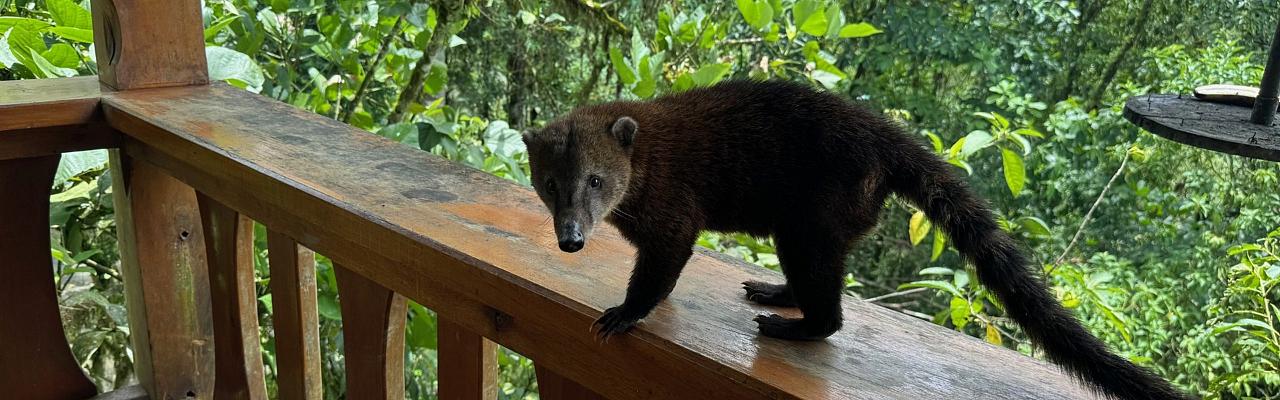
Photo credits: Banners: Green Thorntail by Jim Adamthwaite, Hooded Mountain Tanager by Philip Downey, Coati by Rick Weiman, Sapphire-vented Puffleg by Philip Downey, Spectacled Bear courtesy Neblina Forest. Thumbnails: Sparkling Violetear by Peg Abbott; Violet-tailed Sylph by Jim Adamthwaite; Fawn-breasted Brilliant by Jim Adamthwaite; Group at San Jose del Puembo by Carol Beidleman; Birding Ecuador by Woody Wheeler; Group by Francisco Javier; Green-crowned Brilliant by Jim Adamthwaite

×

Like what we do?

Sign up for our weekly eNews to stay up to date!

Get to know our favorite destinations each week. We promise no spam.

No Thanks