Trip Itinerary
Itineraries are guidelines; variations in itinerary may occur to account for weather, road conditions, closures, etc. and to maximize your experience.
Sat., June 5 Arrivals in Anchorage
Welcome to Anchorage! Our group arrives throughout the day, and those arriving by 6:00 PM are invited to join our first group dinner. If you arrive early, consider visiting the Anchorage Museum, browsing local shops, or stepping just outside the hotel for birding along Lake Spenard.
Accommodations at the Lakefront Anchorage, conveniently located near the airport (D)
Sun., June 6 Train to Denali
An early summer sunrise greets us as we begin our journey north toward Denali. Today we board the train in Anchorage for one of Alaska’s most scenic rail journeys, traveling through vast boreal forests where black spruce, ponds, and wetlands create excellent wildlife habitat. Along the way, we may encounter Trumpeter Swan, Moose, and other wildlife as the landscape gradually opens to dramatic mountain vistas.
Upon arrival at the Denali station near the park entrance, we transfer to our lodge for the evening. Staying just outside the park allows us to fully enjoy the train journey without rushing into the park late in the day. Our lodge sits in Denali Canyon on the banks of the Nenana River, just two miles from the entrance. If skies are clear, we may enjoy our first views of Denali, known to the Athabascan people as “The High One.” Dinner is served on-site this evening.
Accommodations at Holland American Denali Lodge (B,L,D)
Mon., June 7 Denali National Park | Camp Denali
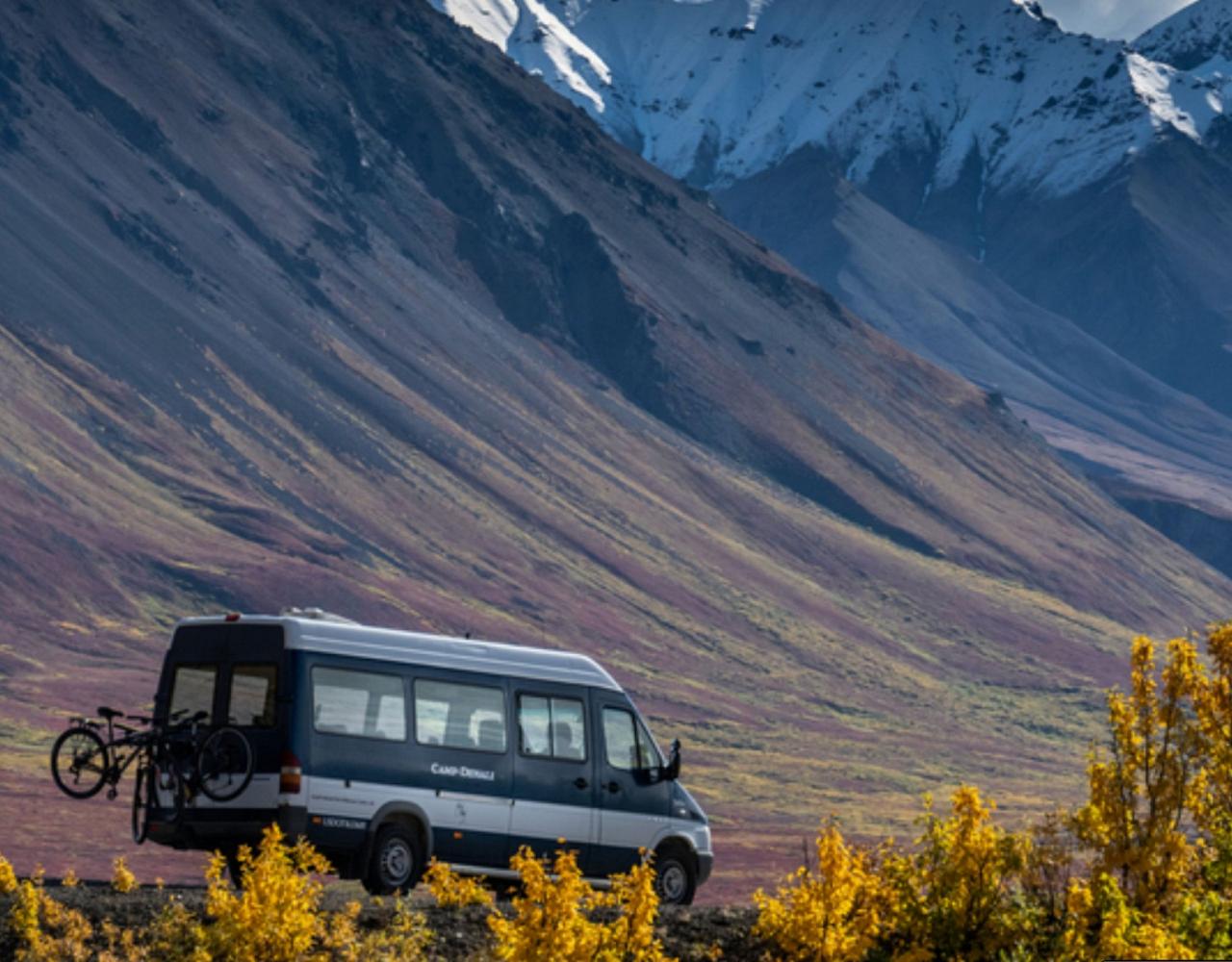
After breakfast, we enjoy a relaxed morning before transferring deeper into Denali National Park and onward to Camp Denali.
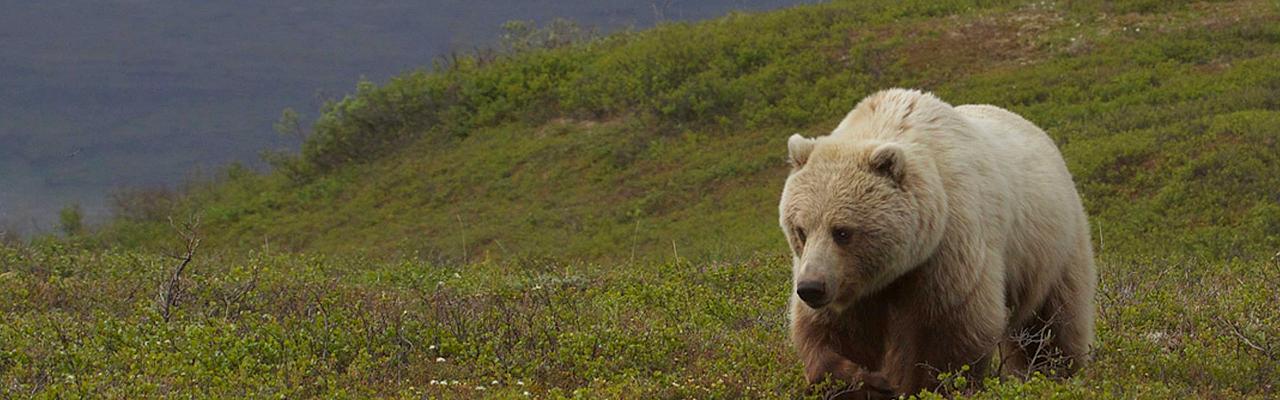
Today takes us into the wild heart of the park, where the scenic road leads to our remote wilderness lodge. Along the way, remarkable wildlife encounters are always possible, from Gyrfalcon to Grizzly Bear, Moose to Dall Sheep. We pause for a picnic meal featuring Alaskan specialties before continuing into the park.
We arrive at Camp Denali in time for orientation, dessert, and—weather permitting—spectacular views of the mountain.
Accommodations at Camp Denali, Denali National Park. (B,L,D)
Tues., June 8 – Sun., June 13 Camp Denali
Six full days at Camp Denali allow us to immerse ourselves in one of North America’s most spectacular wilderness settings. Comfortable accommodations, excellent meals, warm hospitality, and endless daylight create the perfect base for exploration and relaxation.
Each morning, expert naturalists present three guided hike options through tundra, mountain, and forest habitats. Choose from an easy-paced naturalist walk, a moderate hike, or a more strenuous outing that may follow ridgelines or river valleys. Every excursion offers opportunities to deepen your understanding of Denali’s fascinating ecology, geology, and natural history.
Wildlife viewing is a constant possibility. We scan tundra ponds and creeks for ducks and geese, while distant slopes may reveal larger mammals. This is an excellent time of year to look for Caribou, Red Fox, and Grizzly Bear. We may also encounter Hoary Marmot, Pine Marten, Rock and Willow Ptarmigans, songbirds, and a rich variety of tundra wildflowers.
Hike as much—or as little—as you wish. The lodge also offers a library, canoes, bicycles, fishing gear, and nearby trails for independent exploration. Evening programs by lodge staff and guest speakers highlight Denali’s natural and cultural history.
During our stay, we are delighted to share special time with renowned field guide author, artist and naturalist David Sibley. While group size limits full-group walks, Camp Denali ensures all participants have opportunities for smaller-group walks, informal conversations, and time learning from David’s exceptional field insights.
Accommodations at Camp Denali (B,L,D)
More About Camp Denali
Over 75 years ago, people with vision and a true love of the wilderness had the foresight to establish Camp Denali in one of the most pristine areas adjacent to Denali National Park. Since 1975, the Cole and Hamm family has extended this vision. With the expansion of Denali National Park and Preserve in 1980, this owner-operated facility now sits in the center of the most scenic and wild portion of Denali National Park. Guided hikes and programs conducted by expert naturalists, with a keen focus on geology and natural history, are the key to providing far more than just a backcountry stay. Combine wonderful views of Denali with an unparalleled educational and wildlife viewing opportunity and you have the Camp Denali experience.
With all this to their credit, they also provide incredible service, delicious meals with fresh foods from their own greenhouse and gardens, and well-appointed, comfortable rooms with private outhouses at the Camp. Canoes and bikes are available.
Camp Denali is a wilderness lodge that offers guests a true Alaskan adventure. It is situated near treeline, providing access to native tundra and boreal forest habitats right from your door. Each of the 19 guest cabins has a picture window view of Denali and offers privacy throughout your stay.
The cabins are hand-crafted, well-appointed, and authentic. Quilts made by staff adorn the beds, a wood stove provides cozy warmth. A short path leads to a private, meticulously maintained outhouse, a sink basin inside allows washing up. Drinking water comes from a spigot just outside and may be heated on your cabin's propane hot plate for a morning coffee or afternoon tea.
A three- to seven-minute walk uphill from your cabin leads you to the dining room, a modern shower facility, and our historic log lodge with an inviting wood stove, cozy seating, library, and unparalleled views.
Mon., June 14 Train to Anchorage
Our return through the park is filled with anticipation—we never know what surprises Denali may offer. We remain alert for rare sightings such as Gray Wolf or even Lynx—unlikely, but always possible. Past trips have yielded memorable encounters including Arctic Ground Squirrel, the blue morph of Red Fox, and, in some years, Northern Hawk Owl.
By midday we reach Denali Station and board the train back to Anchorage. We have upgraded to GoldStar Service, with lunch, dinner, and two beverages included. The approximately eight-hour journey offers dome-car seating, ideal for sightseeing, photography, journaling, reading, or simply reflecting on our time in Alaska. Dinner is served in the dining car at shared tables of four.
Accommodations at the Lakefront Hotel, Anchorage. (B,L,D)
Tues., June 15 Departures
Our flock disperses today. A convenient airport shuttle allows departures at leisure. If time permits, enjoy breakfast on the hotel’s outdoor patio overlooking the floatplane lake, or take the hotel shuttle downtown for a final visit to the Anchorage Museum or some last-minute shopping.
Travel Details
Please plan to make air travel plans only after the minimum group size has been met. We will send you a confirmation email as soon as the trip has been confirmed.
Arrival and Departure Airport: Ted Stevens Anchorage International Airport (ANC)
Arrival Details: Plan flights to arrive June 5, 2027 at your leisure.
Departure Details: Plan flights to depart June 15, 2027 at your leisure.
Travel Tips: If you arrive early to rest up from your travels, we suggest booking an early night at our first night tour hotel, the Lakefront Anchroage, which is conveniently located very close to the airport.
If you want to do some sight-seeing around Anchorage, there are plenty of things to do! Explore the downtown area, which is great for dining and shopping or walk the Coastal Trail, which is a paved trail along the Cook Inlet that is great for walking, biking, and wildlife viewing. It’s not uncommon to see eagles or moose from the trail. If you want to learn more about art, history, science, and culture in Alaska, then plan a visit to the Anchorage Museum. It’s located in the downtown area and has many fascinating exhibits. Transportation around Anchorage is easy with Uber and taxis.
Essential Information +
This information is important for being prepared for your journey; we want you to have Read more
This information is important for being prepared for your journey; we want you to have the best experience possible. If you only read one section, this one is key!
Ahead of your tour:
- Please talk with your doctor about general health needs and general vaccinations recommended for travel. See the “General Health Information” section.
- Please plan to make air travel plans only after the minimum group size has been met. We will send you a confirmation email as soon as the trip has been confirmed. After you make travel reservations, please enter your flight details into your client portal.
- Travel insurance in case of serious medical emergency is recommended. Full health coverage and repatriation is available through Allianz Travel Insurance.
- Soft sided luggage/duffel bags are easiest for packing the vans. Pack essential medications in your carry-on luggage, as well as one day of clothing and optics in case of luggage delay. See "Packing List" tab for more details.
General Health Information
We will share your health and emergency contact information with your guide. This information will be kept confidential but is very important as we want to be best prepared in case of medical emergency.
Do bring any prescription medications with you and it’s best if you have a copy of the prescription in case of loss.
We encourage you to assess your fitness to be able to participate and consult with your doctor if necessary. Our guided group journeys keep a moderate pace with full field days. You will need to get in and out of vehicles multiple times a day, and walk 1-3 miles over uneven terrain to fully participate.
Pace of the Tour & What to Expect
You will receive a Schedule-at-a-Glance and List of Hotels (our eContact List) a few weeks before your departure. This will serve as a framework for each day and alert you to any changes in the schedule or to our hotels if these were needed.
Our journeys are set up to follow the rhythm of nature. Our focus is on birding and nature; we offer full, well-planned field days and often get up early for that magical time around dawn. We generally follow the published itinerary, but we stay flexible to the weather, wildlife opportunities and the interests of the group. Your guide will keep you apprised of the next day’s schedule at each evening meal, noting what to bring and what to prepare for. Questions and/or concerns are welcome.
The pace of our Naturalist Journeys tours is moderate; to fully participate you should be able to get in and out of vehicles several times a day, walk 1-3 miles over uneven terrain. It is important to participate with a flexible attitude to adjustments that may be made in our schedule to make the most of our time in the field or for other purposes at your guide's discretion. We are not a listing bird company that drills down on target species, but at times we do want to wait for those special species unique to the places we visit. During the day, we take time for photo stops as well as educational stops to learn about conservation projects, landscapes, and geology. We appreciate other taxa as well as the birds, mammals being perhaps the biggest draw but plants and butterflies being close seconds in popularity. Our clients often lend their own expertise to the mix.
We like to make meals a fun and memorable part of the experience, too. Breakfasts are often at hotels, and we carry snacks, fruit, and water in the vans each day. Lunches are a mix of (weather dependent) picnics in the field and a chance to dine with locals at small cafes and restaurants. For dinners we pride ourselves in our homework to keep up with the best choices for dining, choosing restaurants with atmosphere that specialize in local foods. On occasions we keep dinner simple to go back out in the field for sunset wildlife viewing or night walks. In some remote locations, our choices are limited. If you are tired, in some locations room service for dinner may be an option you can choose.
Weather & Climate
June in Denali National Park brings cool to mild temperatures, nearly 21 hours of daylight, and rapidly changing conditions. According to data from Weather Spark, daily highs average around 60°F to 66°F (can get up to 75°F), while nights drop cooler. Check the National Park Service Denali National Park Weather for current conditions.
Weather Patterns and Variability (National Park Service):
Rainfall: June is part of the warmer months that begin the summer rain cycle, though early June tends to be drier than late summer.
Conditions: Weather changes fast. You can experience bright sun, wind, clouds, and quick rain showers all in one day. Snow can still fall at higher mountain elevations.
Annoyances & Hazards
There may be some Alaska-sized mosquitoes and other biting insect life along the way, so be prepared with a good insect repellent. If you do not want to carry it on the plane, you can purchase it upon your arrival. Also, the sun is intense, so plan on a good sunscreen and lip balm. It is daylight most hours of the day and night, so if you are a light sleeper, do bring something to cover your eyes at night – it takes some getting used to!
Food & Drinks
We will carry water and juices/cold drinks in the cooler each day, and sodas if people like them. Please also plan on bringing and filling your reusable water bottle for hiking each day. We try to use as few disposible plastics as possible! If you prefer, there are some reusable water filtering bottles on the market today that are great for travels (such as Lifestraw or GRAYL Ultrapress or SteriPen).
At all locations we choose restaurants that feature local foods and have a nice atmosphere. Alcohol and wine can be purchased ahead of time if you want to have drinks in your room. Beer and wine are available at restaurants we visit. We can make a stop at a local store if you wish to buy drinks or snacks for your stay.
Packing, Clothing & Laundry
Soft sided luggage/duffel bags are easiest for packing the vans. Please pack essential medications in your carry-on luggage, as well as one day of clothing and optics in case of luggage delay.
Dress is informal and is casual even at restaurants. Layering is a great way to stay comfortable during this trip. We suggest packing a medium/heavy jacket and lightweight layers. Lightweight long sleeve shirts and long pants make ideal field clothing, as they are more protective from sun and insects and are quicker to dry if when they are wet. You do need closed toe shoes, and we highly recommend good tread walking boots. These can be light but consider them great for hikes and good support among rocky terrain.
As laundry services are not always convenient the hotels, you may want to pack quick-drying clothing that is easy to handwash and dry in a pinch.
Spending Money
Many people ask how much money to plan to bring for spending money. Part of that depends on how much you want to shop. There is not a lot to buy out in the wilds of this part of Alaska, though where we do encounter them, shops will take VISA and MasterCard or American Express. Typical items people purchase include local souvenirs and T-shirts, caps, and natural history books. You may want to bring cash for drinks with dinner (if available) or smaller local purchases.
Gratuities
Expect the normal tipping protocol to apply for your hotel maids and bar service. If at the end of the tour, you would like to show your appreciation to your guides, tipping is entirely appropriate but at your discretion. We hope that you will be pleased with all professional services. Gratuities for group meals are included. For your birding tour guide, we suggest $10-$15 per day per guest. Note that if there is more than one guide, this can be split among them.
Cell Phones & Internet Service
Camp Denali does not have cell service or internet access, but has a courtesy telephone for outgoing calls. In case of emergency, incoming calls should be directed to our office at 907-683-2290. Do not plan to send or receive faxes or email. Mail days are Mondays and Fridays.
Please refrain from taking or making cell phone calls in the vehicles when traveling with other passengers, unless it appears to be an emergency. This disrupts other guests, plan on cell phone call use on your own time.
Transportation
For this tour, your guides will drive travelers in either full-size or mini-vans or a combination of those two. We ask that all attendees please rotate vans, so you sit with different drivers and alternate in front and back seating.
Smoking
Smoking is not permitted in any vehicle or in any situation where the group is participating in an activity together, such as a vehicle excursion or a guided walk. Please respect all designated smoking areas at hotels and restaurants.
Photo Release & Sharing
We take many group photos and share photos with the group. Please note that this is our policy, if you have an exception to it, we need to know ahead of your tour. And at the end of your tour, we will organize a chance to share photos via Dropbox or Google Photos.
By registering for this tour, you agree to grant to Naturalist Journeys and its authorized representative’s permission to record on photography film and/or video, pictures of your participation in the tour. You further agree that any or all of the material photographed may be used, in any form, as part of any future publications, brochure, or other printed materials used to promote Naturalist Journeys, and further that such use shall be without payment of fees, royalties, special credit or other compensation.
Questions?
Please feel free to contact our office at (520) 558-1146, toll-free (866) 900-1146, or email. Many thanks for traveling with us and we hope you enjoy your journey!
Packing List +
Please pack light!
Luggage: Soft-sided luggage is much easier for us to pack in vehicles or Read more
Please pack light!
Luggage: Soft-sided luggage is much easier for us to pack in vehicles or charter aircraft than a more rigid hard sided piece, so if you have the choice, please use your soft-sided luggage. Be sure to have your name and address on the inside of the bag, as well as on the luggage tag on the handle. It is our hope that you can pack in one checked bag that does not exceed 50 pounds. Please reconfirm your airline’s baggage weight and size restrictions about a week or so before departure.
Delayed Luggage: Imagine NOT getting your checked bags upon arrival! Therefore, DO NOT pack any essential medications, vital optics (binoculars, camera, eye-glasses), or essential travel documents in your checked luggage! Pack these and other essential items in your carry-on bag and on your person (i.e. under-garment pouch). You will want a day pack for field trips, so this makes an ideal carry-on. Another suggested tip is to travel wearing your most important shoes for the field and have one day’s clothing change (including a change of underwear!).
Weather: Pack clothing that is appropriate for the anticipated temperatures and conditions (See “Weather & Climate” section in Essential Information). You may check your favorite weather website, such as www.weather.com, closer to your departure to better predict what the weather will be upon arrival. You may also visit https://www.climatestotravel.com for more regional information by month. Check the National Park Service Denali National Park Weather for current conditions.
Dress: Plan to dress comfortably and informal throughout the trip. Dressing in lightweight layers is the best way to provide options to get you through a day of varying weather and temperatures comfortably. Lightweight long sleeve shirts and long pants make ideal field clothing as they are more protective from sun, vegetation and pests. Also, choose clothing you don’t mind getting dirty or muddy and things that are loose-fitting, comfortable, and easy to layer and launder. Quick-dry fabrics are ideal. A lightweight and waterproof outer layer is essential as well as comfortable hiking footwear. It is important to have a warm jacket if the tour includes higher elevations.
Treating your clothing to better protect you from insects: It is possible to purchase Permethrin spray (online or from REI) to treat your field clothing and socks before your departure. Another approach is to purchase field clothing permeated with insect repellent such as the Craghoppers Insect Shield collection.
Note on clothing colors: We recommend muted colors of tan, brown, khaki, grey or green, as they are spotted less easily than white or bright colors, though camouflage clothing is not recommended.
Valuables: WE DO NOT RECOMMEND TRAVELING WITH PRECIOUS OR VALUABLE JEWELRY – don’t tempt anyone and don’t bring things you’d regret losing, and your mind will be at ease!
Clothing and Gear
- Long pants, 2-3 pair. One of these might be rain pants or quick dry hiking pants.
- Long-sleeved lightweight shirts/turtlenecks, 1-2 – think layering
- T-shirts or equivalent, 4-5
- Long underwear, 1 pair lightweight (silk or polypro is nice) or thermal depending on your need for the varied weather. Alternatively fleece tights are a good option to layer under pant.
- Lightweight sweater or fleece shirt
- Medium weight zip jacket, sweater or equivalent
- Lined windbreaker
- Down or fleece vest (windproof, if possible; this is a great clothing item for this climate).
- Comfortable clothes for evening (a cleaner version of your field clothes is typical)
- Hat with broad brim
- Scarf or neck gaiter, warm and water-repellent gloves or mittens, warm hat
- Personal underclothing and pajamas
- Socks – several warm pairs (like Smartwool), and several pairs of a lightweight, easy to wash and dry material.
- Comfortable walking shoes (such as tennis shoes)
- Supportive hiking boots that can keep your feet dry.
- Comfortable shoes for evenings, travel days
- Bandana (optional)
Equipment & Miscellaneous
- Photo identification (Real ID is required as of May 2025 for U.S. citizens on domestic flights who are not carrying a valid passport)
- Airline tickets or E-ticket verification
- Passport (and visa or other travel authorizations when traveling internationally) - Note: To avoid issues with confirming your identity when two forms of ID are required, the name on your Drivers License (or other secondary forms of ID) should match your passport.
- Travel insurance info
- Money & credit cards
- A secure pouch to carry the items above on your person at all times (such as a secure, under-clothing document pouch)
- As a backup: copies of all the above (phone and/or paper) packed in a separate location than on your person, plus a set given to your emergency contact at home as a backup. When carrying a passport, a copy of the ID and entry stamp pages.
- Small backpack, daypack or fanny pack for carrying your field gear (this can double as your carry-on!). Consider waterproof if excessive rain is expected.
- Cell phone and charger
- Binoculars
- Camera and charger/extra batteries, memory cards/film, lens cleaning supplies and instruction manual (optional)
- Spotting scope and tripod (optional – guide will have them)
- Tablet/laptop for personal use and/or transferring photos, USB stick, USB cord and charger (optional)
- Rechargeable power bank (optional)
- Electricity converters and adapters for 2-to-3 prong electronics plugs if needed (See "Electricity" under "Essential Information")
- Reusable water bottle to avoid the use of disposible plastics (*with filters such as Lifestraw and UV sterilization system such as SteriPen for those who wish to drink filtered water - see "Food & Drink" section in Essential Information)
- Umbrella – compact and not brightly colored
- Walking stick – we find that many travelers appreciate a walking stick on trails, sporting goods stores carry collapsible models that pack easily in your suitcase (optional)
- Small flashlight with fresh batteries
- Alarm clock
- Travel Sewing Kit
- Sunscreen/lip balm
- Sunglasses with neck strap
- Toiletry articles
- Washcloth (available some places and not at others)
- Laundry soap (consider laundry soap "sheets" that pack flat, and are lightweight and environmentally friendly)
- Notebook or journal and pen (optional)
- Field guides (optional)
- Earplugs – in urban and even rural areas barking dogs and traffic noise can be annoying
- A collapsible airplane footrest (such as an inflatable, foldable, or hammock type) may help make longer flights more comfortable. Some airlines may have restrictions, so confirm with your airline which types are allowed and where they may be not allowed, i.e. bulkhead or exit rows (optional)
Medical & First Aid Items
- Health insurance
- Vaccination records
- Personal Rx medications (in their original labeled prescription packaging)
- Extra pair of eyeglasses or contacts (with plenty of wetting and cleaning solution)
- Copy of eyeglass prescription, medical prescriptions, and any medical alerts
- Epi-pen if needed for allergic reactions (include prescription label)
- Altitude illness meds (such as Diamox) if likely to be needed
- Common ailments: We recommend that you bring a travel-sized first aid kit and a supply of standard over-the-counter medications for prevention or treatment of common ailments (such as diarrhea, constipation, stomach upset, cough, congestion, head or body aches, motion sickness, insect bites and sunburn); as well as ointments, moisturizer, sunscreen, oral rehydration salts, band-aids, moleskin for blisters, cotton swabs, nail clippers, and tweezers, etc.
- Comfort remedies: Foot powder, lotions, etc.
- Hand sanitizer and/or hygienic cleansing wipes
Suggested Reading List +
There are many titles of interest for Alaska; the following are a few that we Read more
There are many titles of interest for Alaska; the following are a few that we have enjoyed that can get you started.
General Reading
The Alaska Almanac: Facts About Alaska
Interior and Northern Alaska: A Natural History
Alaska (Traveller’s Wildlife Guides)
The Great Alaska Nature Factbook: A Guide to the State's Remarkable Animals, Plants, and Natural Features. Susan Ewing
Alaska Wildlife: Through the Seasons
The Nature of Alaska: An Introduction to Familiar Plants and Animals and Natural Attractions
Field Guides
Guide to the Birds of Alaska
Sibley Birds West: Field Guide to the Birds of Western North America
Field Guide to the Birds of Western North America - National Geographic
A Guide to Alaskan Seabirds
A Birder’s Guide to Alaska
The Plants of the Pacific Northwest Coast: Washington, Oregon, British Columbia, & Alaska
Alaska Trees and Wildflowers: An Introduction to Familiar Plants (a Pocket Naturalist Guide)
Field Guide to Alaskan Wildflowers: Commonly Seen Along Highways and Byways
Guide to Marine Mammals of Alaska
A Naturalist’s Guide to the Arctic
Roadside Geology of Alaska
Natural History
Alaska Park Science: Scientific Studies on Climate Change in Alaska’s National Parks
Nature of Southeast Alaska: A Guide to Plants, Animals, and Habitats
Guardians of the Whales: The Quest to Study Whales
Salmon in the Trees: Life in Alaska's Tongass Rain Forest
History & Culture
Looking for Alaska
Alaska’s History: The People, Land and Events of the North Country
Where the Sea Breaks Its Back: The Epic Story of Early Naturalist Georg Steller and the Russian Exploration of Alaska
Denali: A Literary Anthology
The Living Edens: Denali - Alaska's Great Wilderness
Klondike: The Last Great Gold Rush
Memoir/Non-Fiction
Travels in Alaska by John Muir
The Only Kayak: A Journey into the Heart of Alaska
The Blue Bear
Coming into the Country by John McPhee
Passage to Juneau: A Sea and Its Meanings
Kayaking the Inside Passage: A Paddling Guide from Olympia, Washington to Muir Glacier, Alaska
Your guide will also have a selection of reference books and materials for participants to share. As an Amazon Associate, Naturalist Journeys earns from qualifying purchases, and may get commissions for purchases made through links on this page at no added cost to you.
Useful Links +
Learn more about your destination at these external websites, carefully researched for you. Read more