
- Overview
- Full Itinerary
- Extensions
- Photo Gallery
- Costing
- Travel Details
- Trip Reports
- Guides
- Know Before You Go
Join Naturalist Journeys on a NEW, spectacular 20-day exploration of some of the least-visited—and most rewarding—birding destinations in Asia and Australasia. We’ve selected the best of Indonesia’s North Moluccas, Sulawesi, and West Papua (the western half of the island shared with Papua New Guinea) to discover remarkable endemic species, unique bird families, and stunning tropical habitats. Following in the footsteps of renowned 19th-century naturalist and explorer Alfred Russel Wallace, a contemporary of Darwin and pioneering thinker in evolutionary science, we explore extensive rainforests, pristine beaches, healthy coral reefs, and sustainable agricultural landscapes that support more than 200 endemic bird species.
Our adventure begins on Ternate, the vibrant heart of Indonesia’s Spice Islands in the North Moluccas. Here, we jumpstart our journey with a search for endemic species, including two vividly colored pittas viewed at specially designed hides that offer intimate encounters.
We then fly to Sulawesi, exploring the fabled Tangkoko National Park from forest overlooks and along level trails. These outings introduce us to the tropical lowlands and the distinctive Asian bird species they harbor. Next, we travel to the small town of Tomohon, where we visit our first of several hides, offering close views of remarkable endemics such as Sulawesi Pitta, Sulawesi Blue Flycatcher, and Scaly-breasted Kingfisher.
The Wallace Line marks a fascinating faunal boundary where Asian and Australian biogeographic regions meet. Shaped by tectonic history and ancient sea-level changes, this boundary—and its several branches and mixing zones—helps explain the remarkable blend of Asian and Australasian wildlife we encounter along our route. In Sorong, we begin with mangrove birding, searching for Emperor Fairywren, White-bellied Cuckooshrike, and Blue-fronted Fig Parrot, among many others. We then travel into the forests of Malagafuk in search of our first spectacular birds-of-paradise. A boat ride to Waigeo Island brings us to even more extraordinary species, along with frogmouths, kingfishers, and the world’s largest black cockatoo. Specially positioned hides provide close views of Red Bird-of-Paradise and Wilson’s Bird-of-Paradise, while trail birding offers opportunities for Dusky Megapode and Golden Monarch.
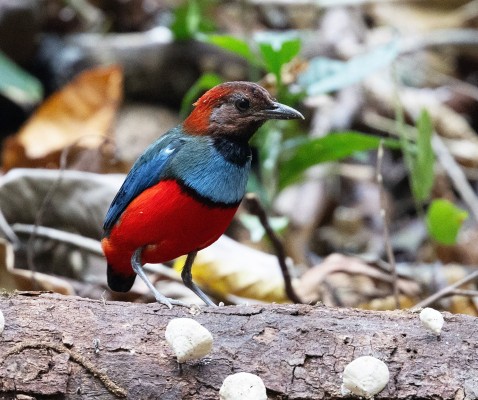
Tour Highlights
- Marvel at some of the most ecologically rich and biologically diverse regions on Earth, and one of the last great wilderness frontiers.
- Travel in the footsteps of Alfred Russel Wallace, famous for his work on the origin of species and processes of evolution, of equal importance to that of Charles Darwin
- Experience an incredible concentration of endemic bird species, found nowhere else on earth, set against a backdrop of striking volcanic landscapes, mountain ranges, vast mangroves, and lush tropical rainforests.
- Visit three key regions of the eastern portion of Indonesia, the North Moluccas, Sulawesi and West Papua. Internal flights are included in the tour pricing.
- Witness riches of two major avifauna regions, Asia and Australia, and cross multiple branches of the famous Wallace Line, particularly in Sulawesi showing distinct mixing, compared to the greater influence by Australian evolutionary forces on West Papua.
- Find stunning and unique birds-of-paradise, a large array of jewel-like kingfishers, and several secretive pittas, as well the impressive Northern Cassowary (although some luck will be needed to see it).
- Search for nocturnal owls, secretive owlet-nightjars and well-camouflaged frogmouths on night walks.
- Glide across turquoise waters between islands on fast ferries. Options for local snorkelling outings can be arranged.
- Delight in seeing secretive forest-dwelling pitta species. These and other spectacular birds come in to well-placed and managed bird hides reserved for your visit.
- On the post-tour extension, seek memorable species in the renowned Arfak Mountain's birding hot-spots, such as Vogelkop and Masked Bowerbirds, Western Parotia, Vogelkop Lophorina, and the Magnificent Bird-of-Paradise.
Trip Itinerary
Itineraries are guidelines; variations in itinerary may occur to account for weather, road conditions, closures, etc. and to maximize your experience.
Wed., Sept. 8 Welcome to Indonesia! | Arrival in Ternate | North Mol
Arrive today at Sultan Babullah Airport (TTE) in Ternate, an urban center in Indonesia’s North Molucca (Maluku) province. A driver meets you and takes you to our comfortable hotel to rest up from travel. We meet for a welcome dinner and a pre-trip briefing this evening.
The airport lies along the tropical northeast coastline; be sure to catch glimpses of other spice islands as you land. Ternate was once one of the world’s top producers of cloves and nutmeg, grown on fertile soils of this island stratovolcano. Once a hub of the Moluccan Spice Islands, today it serves as the transport, cultural, and business hub of the region with about 200,000 residents. A long history of wealth and power has woven native, Islamic, Ottomon, and colonial Portugese, Dutch, Spanish, and British elements into the intriguing history of this active seismic region.
Accommodations in Ternate (D)
Thurs., Sept. 9 Birding the North Moluccas | Pitta Blinds | Halmahara
After breakfast we make a very short drive to a local trailhead, which gives us access to a hide where we hope to see the stunning blue and red-bellied North Moluccan Pitta. The trail can be a little slippery if it has rained but it usually takes around 15 minutes of walking; we take our time and enjoy the walk. There should be a few other birds in attendance too, which hopefully includes Moluccan Dwarf-Kingfisher.
After this we take a fast boat across a stretch of the Molucca Sea to the larger island of Halmahera, a journey that takes about 50 minutes—we keep our eyes peeled for Great Crested Tern and Red-necked Phalarope. After landing on Halmahera we drive about 30 minutes to another hide where we hope to see the incredibly striking Ivory-breasted Pitta; what a day this would be if we see two species of pittas in one day!
After hopefully adding another pitta to our list, we journey across the island of Halmahera, making birding stops along the way with species such as Beach Kingfisher, Rufous-bellied Triller, and Moustached Treeswift to see. We also visit a forest location to look for a variety of birds including Sombre Kingfisher, Blue-capped Fruit-Dove, Gray-headed Fruit-Dove, and Moluccan Spectacled Monarch. We have much to explore on the heavily wooded island of Halmahera, the largest island in Indonesia outside of the five main islands. There are over 20 endemic bird species identified for Halmahera.
Halmahera is another volcanic island, uplifted by the northward migration of the continent of Australia and subduction of the Pacific Plate. The island is the site of several mining projects focused on nickel ore, particularly for electric car batteries. Either on Ternate or Halmahera itself, Alfred Russel Wallace came to the idea of natural selection via survival of the fittest. He wrote his ideas and sent an historical letter to Darwin as the forerunner of the theory of the evolution of species!
A two-hour drive then takes us to our accommodations at Wisma Kita, a family homestay that caters to birdwatchers, located in a small village. It has a strategic central location for our field sites and features basic but spacious rooms, air-conditioning, western toilets, and a restaurant on site.
Accommodations at Wisma Kita, Halmahara (B,L,D)
Fri., Sept. 10 & Sat., Sept. 11 Two Days of North Moluccas Birding | Halmahera
We have two full days for birding from our strategically located guesthouse, to which we can return for afternoon breaks. One day requires a very early departure to get ourselves in position to try for Standardwing Bird-of-Paradise; famous for its unique white plumes and its discovery by naturalist Alfred Russel Wallace. The males of this species are polygamous. To attract females, they gather and perform a spectacular aerial display, "parachuting" with wings and a vivid green breast shield spread, and long, delicate white wing feather "standards" fluttering above the back. It’s a little bit of an effort to get there but the distance is not great and we help you to get into position to witness this wonderful dance— one of our main reasons for visiting this area.
Much of our time here is spent birding along quiet roads and tracks with adjacent forest that host a good level of bird abundance and plenty of top-quality species to look for. Goliath Coucal lives up to its name, a giant among its peers, preying upon lizards and large insects while a colorful array of imperial pigeons and fruit doves await us in fruiting trees. There are a lot of regional specialties that we are likely to see in the forest here and their names divulge their restricted ranges; Halmahera Oriole, Moluccan Spectacled Monarch, Halmahera Paradise-crow, Halmahera Golden-Bulbul, Moluccan Myzomela, and Halmahera Cuckooshrike to mention a few. Birds in the parrot family are a feature here too, with Moluccan Eclectus being a shining beacon and the endangered White Cockatoo to look for too. Red-flanked Lorikeet can usually be found in small flocks in fruiting trees while we might have to look a bit harder for species such as Moluccan King-Parrot and Chattering Lory.
Species such as Sombre Kingfisher and Common Paradise-Kingfisher can be tricky to find so we have plenty of time to look for those and in the area there is another hide for Ivory-bellied Pitta so if we didn’t see it before, or we just want to see it again, we can make time for that.
Raptors such as Variable Goshawk or Gurney’s Eagle can turn up at any time so we need to be alert to them circling in the skies above us at all times.
After dark there is the potential for nocturnal birding with Moluccan Owlet-nightjar, Moluccan Scops-Owl, and Halmahera Boobook, all frequently seen. Few birding companies offer time in this important ecological region and we are thrilled to do so!
Accommodations at Wisma Kita (B,L,D)
Sun., Sept. 12 Halmahera | Return to Ternate
Today we check out early and drive to a regular site to search for the endemic Azure Roller. This can be an elusive species so we try to time things to arrive when it is at its most active. As we slowly travel back towards the coast ahead of our boat ride back to Ternate we have plenty more birds to look for in the area including Gray’s Grasshopper Warbler, Cinnamon-bellied Imperial-Pigeon, White-naped Monarch, Superb Fruit-Dove, Moluccan Flycatcher, Spectacled Imperial-Pigeon, and many more.
In the late afternoon we cross back to the island of Ternate and stay at Villa Ma’Rasai, a well-rated guesthouse with stunning views of the volcano, Mount Gamalama, and Tidore Island. Its tropical gardens are welcoming as is the infinity pool and lovely Indonesian furnishings and artifacts, artistic batiks. We dine tonight in the on-site traditional restaurant.
Accommodations at Villa Ma’Rasai, Ternate (B,L,D)
Mon., Sept. 13 Sulawesi | Manado & Surroundings
We take an early morning flight to the Sam Ratulangi International Airport in Manado, the capital city of Indonesia’s North Sulawesi. We are met by our local ground team to drive to the Grand Luley Resort. There is probably time to do a little birding in the gardens before lunch; species such as Sahul Sunbird, White-breasted Woodswallow, and White-rumped Cuckooshrike can usually be seen at any time of the day. The Grand Luley is a 4-star resort with typical resort amenities including a pool, spa, bar and restaurant, and lovely grounds.
Manado is the capital of North Sulawesi, situated on the Bay of Manado and surrounded by mountains. It is a city of about 450,000, a large city (with typical traffic) of some 60 square miles. It is famous as a dive spot, one of Indonesia’s top-five tourism destinations because it is close to clear water and splendid coral reefs. Birders prize Manado’s proximity to cooler, fascinating highland forests where a host of endemic and colorful species can be found. Manado is also known for its spicy food for those that wish to indulge in local specialties (but we do find dishes that please everyone in the group).
After lunch we can check in, take a break in our rooms, and gather again a bit later in the afternoon for several hours of birding. There are quite a few good species that can be seen on the grounds of the hotel with Barred Rail, Sulawesi Pygmy Woodpecker, and Black Sunbird all present but our main goals here are the impressive Great-billed Kingfisher in the mangroves and the hard-to-see Black-billed Koel which often perches out in the open in the very late afternoon here. This is a good place for some easy birding for an afternoon. If you prefer to arrange a snorkelling trip with the hotel this afternoon, this can be done.
Accommodations at the Grand Luley Resort (B,L,D)
Tues., Sept. 14 – Thurs., Sept. 16 Tangkoko Nature Reserve
We depart early from Grand Luley Resort in order to begin the first of three full days of birding at Tangkoko Nature Reserve. We have about an hour’s drive to the park, depending on traffic. On the first day we plan to arrive at a commanding viewpoint over the forest shortly after first light to make the most of peak bird activity with many species perched out in the open on nearby treetops and feeding in fruiting and flowering trees while we have breakfast in the field. In the early morning, flocks of Green Imperial-Pigeon are often to be seen here with smaller numbers of Gray-headed Imperial-Pigeon and Gray-cheeked Green-Pigeon. Our goal this morning is to see the magnificent Knobbed Hornbill, one of the most colorful of this amazing group of birds and we scan the forest canopy for the rarer and small Sulawesi Hornbill. Bare trees in this area often provide an early morning perch for Finch-billed Myna and Ivory-backed Woodswallow and if we’re lucky, Ashy Woodpecker feed on grubs within the decaying branches.
We can make a couple of visits to this and another forest outlooks and this method of birding usually turns up new birds on every session with other exciting specialities including Sulawesi Myna, Bay Coucal, Silver-tipped Imperial-Pigeon, White-bellied Imperial-Pigeon, Yellow-billed Malkoha, Sulawesi Hanging-Parrot, White-rumped Triller, Gray-sided Flowerpecker, Azure-rumped Parrot, Golden-mantled Racquet-tail, Black-naped Fruit-Dove, Pied Cuckooshrike, Sulawesi Crow, and White-necked Myna.
We also spend time within the Tangkoko Nature Reserve forest itself, one of the premier birding locations in Indonesia. On repeated visits we have time to fully explore the rolling hills and lush lowland forest, located at the foot of Dua Saudara Mountain. Entering early in the morning we start in a small forest clearing that is a great place to see Sulawesi Roller illuminated in the early morning light. Walking along level forest trails we quietly look for Philippine Megapode scratching around in the shadows of the forest floor while Green-backed Kingfisher sits silently in the forest looking for prey. We should also be able to find the lovely Sulawesi Lilac Kingfisher here, as well as the tiny Sulawesi Dwarf-Kingfisher, which hangs out close to damp patches; this area also gives us a good chance of finding Rusty-backed Thrush, an absolute gem of a bird.
On one of the afternoons at Tangkoko we spend some time birding at a nearby agricultural research centre that borders the forest where we hope to see White-faced Cuckoo-Dove active in the late afternoon and we can wait for Buff-banded Rail and Isabelline Bush-hen to emerge from damp vegetation to feed as the sun begins to set. If we did not see Great-billed Kingfisher at Grand Luley Resort we can take a boat trip to an area of mangroves for this. Among the varied mammals we look for a few special endemics, including critically endangered Celebes Crested Macaque, the nocturnal Spectral Tarsius, one of the world's smallest primates, and the Indonesian Bear Cuscus, a marsupial with a prehensile tail.
There are a couple of reliable spots at Tangkoko for night birding and those that wish can opt to venture out to hopefully see Sulawesi Nightjar, Sulawesi Scops-Owl, and Ochre-bellied Boobook. There is a decent chance of finding Sulawesi Masked-Owl, Minahasa Masked-Owl, and Great Eared-Nightjar too.
Our evening meals are at a local guesthouse, and we keep a daily species tally (plus eBird lists for those that wish). The food is varied and fresh and evening temperatures are lovely.
Accommodations for three additional nights at Tangkoko Lodge (B,L,D)
Fri., Sept. 17 Tangkoko Coastal Areas | Tomohon Highland Birding
After a last full morning in Tangkoko Nature Reserve, we check out of our resort accommodations and drive to Tomohon for several days of cool highland birding. Tomohon is a small highland town surrounded by mountains, forest, farmlands, lakes, and paddy fields. The high elevation forest is a beautiful destination on the foothills of Mount Mahawu. This site is only about an hour away, but a completely different world!
We have lunch at a garden restaurant with birding, and then go check in at our nearby hotel, enjoying the floral displays that attract several Sulawesi specialities; Black-capped White-eye and the stunning Sulawesi Myzomela. As these species feed on flowering plants, they give us exceptional views and great photographic opportunities along with some more widespread species including Chestnut Munia, Sahul Sunbird, and Scaly-breasted Munia. Views of Mt. Lokon are splendid here.
After check in and a short break, we can spend the afternoon on the slopes of Mount Mahawu in search of species such as Sulawesi Blue Flycatcher, Yellow-sided Flowerpecker, and brilliant Sulawesi Pitta. We stay out after sunset to search for Speckled Boobook. Then return to enjoy dinner at the resort.
Accommodations at Hotel Villa Emitta, Tomohon (B,L,D)
Sat., Sept. 18 Tomohon Highland Birding | Pittas & More
We have all day to bird Mount Mahawu and around Tomohon in order to search for as many endemics as possible. The early morning is a good time to locate Scaly-breasted Kingfisher lurking in the mid-story of the forest and if we did not see it the day before we can visit a hide for the distinctive (crimson-bellied) Sulawesi Pitta, an endemic here. We can have breakfast in the field in a ferny forest car park where flocks of small birds pass through in feeding flocks; species such as Sulawesi Heleia, Turquoise Flycatcher, and Sulphur-bellied Whistler usually form the core of these flocks but we should also keep an eye out for other Sulawesi endemics, including Pale-blue Monarch, Citrine Canary-Flycatcher, and Crimson-crowned Flowerpecker.
As we slowly walk along a very quiet road, birds like Sulawesi Babbler, Sulawesi Bush Warbler, and Mountain Tailorbird lurk in the undergrowth, while in the canopy we can look for the incredible Superb Fruit-Dove, Sultan’s Cuckoo-Dove, and Sulawesi Brush Cuckoo or perhaps Red-eared Fruit-Dove if we are lucky.
We return to the garden restaurant for lunch with the birds, time to enjoy watching the near-endemic honeyeater, Sulawesi Myzomela, on the beautiful blooms before taking a break, though our photographers likely stay with them!
In the late afternoon we spend our time looking for any of the key species we have not yet seen before the Sulawesi section of our tour draws to a close.
Accommodations at Hotel Villa Emitta (B,L,D)
Sun., Sept. 19 Tomohon | Return to Manado | On to West Papua | Sorong Mangroves
This morning, we leave Sulawesi for West Papua, after an early start to get to Manado airport for a 1.5-hour flight to Sorong. Landing in West Papua, after our scenic flight over water, we see again the influence of ecological blending across a faunal boundary line, one of several branches that define a transitional zone between Asia and Australia. We feel a stronger influence from Australian fauna on West Papua than our other two locations. It is hypothesized that the reason for this distinct set of lines is that when ocean levels were much lower, a deep-water gap remained on both sides of the Wallace Line, resulting in species differentiation on each side of that deep water. Studies continue to outline the complexity of the region.
After arrival we are taken to a comfortable hotel in Sorong that is our base for the next few days as we explore lowlands forests and the coast. Today we have lunch, check in to our rooms, and take a break.
In the afternoon we make a visit to Sorong Mangroves, about 25 minutes away from the hotel. Birding here can require a fair bit of patience but species such as Brown-backed Honeyeater, Shining Flycatcher, Willie-wagtail, and Torresian Crow can be seen at any time of the day. As things start cooling down, there should be more bird activity with species such as White-bellied Cuckooshrike becoming active in the tops of the mangroves and noisy Helmeted Friarbirds emerge. Mangrove forests are one of the most important ecosystems in coastal areas, and play an important role as ecological and economic resources for the people who live near them.
We hope to see Little Kingfisher perched on exposed mangrove roots in the late afternoon as well as the incredible Emperor Fairywren, which is like an illumination in the dark mangrove foliage. Other species to look for include Large-billed Gerygone, Black Thicket-Fantail, and Pacific Baza while our best chance of seeing Orange-fronted Fruit-Dove, Collared Imperial-Pigeon and Blue-fronted Fig-Parrot is late in the day as they perch in treetops before heading to their roosting site. Small flocks of Metallic Starling should be easily seen and another bird that often emerges in the late afternoon is Lesser Black Coucal.
Heading back to the hotel as the sun sets, we have dinner in the hotel restaurant and prepare ourselves for two big days to follow.
Accommodations at Swiss Belhotel, Sorong (B,L,D)
Mon., Sept. 20 & Tues., Sept. 21 Malagufuk Ecotourism Village
On these two full days, expect a very early start from our hotel to drive 1.5 hours to the trail head for our days of birding at this prime West Papua birding location; it is worth it, as our main focus here is a selection of some of West Papua’s most exciting birds! Set deep in the forest of the Klasow valley, almost all of the lowland endemic species of the region can be found here. Today we find our first stunning birds of paradise, along with Blyth’s Hornbill, possible Northern Cassowary, and a wide variety of kingfishers and doves.
The local community has championed rainforest conservation and helps to make the experience amazing—this site is known for its world-class birding. We arrive on foot, walking and birding our way on a boardwalk for 2 miles through primary lowland rainforest. This ultimately takes us to the tiny village of Malagafuk, set in a small forest clearing. The boardwalk is wide, sturdy with handrails and level, which makes for easy walking and a good platform for birding in the forest without trudging for long distances through mud. When it’s wet it can be slippery, so choose shoes with good tread.
On our first day we focus on seeing Twelve-wired Bird-of-Paradise calling from a tall, exposed perch in the early morning, a short walk off of the boardwalk, as well as finding the Magnificent Bird-of-Paradise which we hope is performing at a regular spot, observable from a blind. Most likely out of sight when doing its dance, the Twelve-wired performs an upside-down display, its twelve wiry tail feathers curve forward to stroke the female's face during courtship.
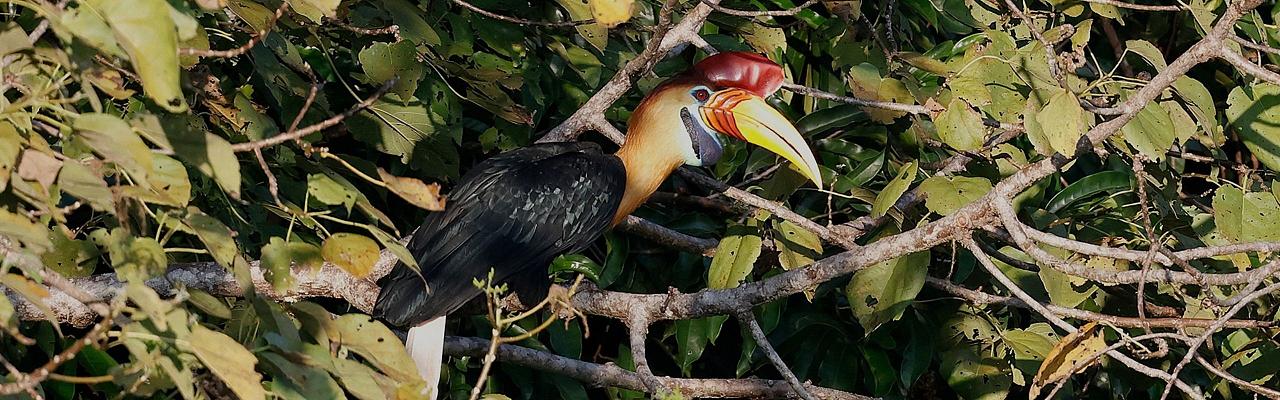
Birding along the boardwalk in the morning usually reveals birds such as Blyth’s Hornbill, Pinon’s Imperial-Pigeon, Papuan Babbler in small noisy groups, Sooty Thicket-Fantail and the splendid Frilled Monarch, which is quite sight in full display mode. Other key species along here include the local speciality of Red-breasted Paradise-Kingfisher and our first chance of finding the hard-to-spot Yellow-billed Kingfisher among many other more common birds such as Olive Flyrobin and Black-sided Robin. We can also look out for colorful birds such as Golden Cuckooshrike as well as keeping an eye open in the canopy for a variety of colorful doves such as Wompoo Fruit-Dove, Beautiful Fruit-Dove, the diminutive Orange-bellied Fruit-Dove and Pink-spotted Fruit-Dove. Along this trail, lucky observers sometimes see the impressive Northern Cassowary, skulking Blue Jewel-babbler and Red-billed Brushturkey—fingers crossed!
At Malagafuk Village we take our breaks; there are usually birds to see here too, particularly if there are trees in fruit/flower. Birds such as Large Fig-Parrot and Golden Myna come to feed on trees like this while Helmeted Friarbird is usually very obvious. From here a series of passable but muddy trails give us access to hides/stakeouts for more top-quality birds in King Bird-of-Paradise (smallest of its clan), Magnificent Riflebird, Lesser Bird-of-Paradise, and Eastern Hooded Pitta. With two days to visit this location we do not need to try to do too much all in one day but participants do need to be able to walk for much of the day. We do have helpers and have time to take breaks at the village (even a short snooze!) and although there is a fair bit of walking at Malagafuk, it is almost exclusively on flat land, with a few undulations on the trails from the village. We highly recommend bringing a portable camp stool, wonderful for viewing and breaks. We have had some guests bring a portable hammock.
Other birds to look for from the village as well as along the boardwalk and roadside include the stunning Papuan Pitta, Black Lory, Papuan Dwarf-Kingfisher, Black Butcherbird, Golden Monarch, and secretive species such as Hook-billed Kingfisher and beautifully long-tailed Common Paradise-Kingfisher.
Accommodations at Swiss Belhotel, Sorong (B,L,D)
Wed., Sept. 22 Sorong | Waigeo Island | Rajat Ampat Archipelago
This morning we make a second visit to nearby Sorong Mangroves, a time at which we should be able to find a wide variety of species. Early morning in an area of large trees on the edge of the mangroves should give us the chance to see Collared Imperial-Pigeon and Orange-fronted Fruit-Dove enjoying the early morning sunshine and if we are lucky, we might also spot the colorful Blue-fronted Fig-Parrot. It’s great to be out on the water and with two chances at various species and changing photo opportunities it is worthwhile to return.
We hope to spy species like Emperor Fairywren, Lesser Black Coucal, Pacific Baza, Little Kingfisher, Blue-black Kingfisher, Black Thicket-Fantail, and Rusty Pitohui. We have a short morning of birding before it gets really hot, then we head back to the hotel to shower and pack before we move on to our next destination that for birders rarely needs an introduction: Waigeo Island. Here two rare species of bird of paradise, Wilson’s and Red, reside in all their glory. Both carry brilliant crimson coloring, Wilson’s adding a turquoise crown and violet tail feathers—wow!
Waigeo Island is the largest of the four main islands in the Raja Ampat Islands archipelago, known for its rugged beauty, rainforest-covered mountain ranges, pristine beaches, off-shore vegetated karst islands, and extraordinary marine biodiversity in some of the healthiest coral reefs in the world. We explore for endemic birds and watch for marsupials, reptiles, and orchids. Alfred Russel Wallace spent time on the island, studying the flora and fauna during the 1850s while on his scientific exploration.
Our plan is to have a leisurely morning, pack up, have lunch and then take the boat to Waigeo Island. This is a two-hour journey in the air-conditioned part of the boat with comfortable seating. The more athletic of us can scramble out onto the deck in order to see if any seabirds can be seen; possibilities include Lesser Frigatebird, Great Crested Tern, and Streaked Shearwater.
On arrival at Waigeo Island we meet our field team and local experts for the next few days, then drive to our accommodation, stopping at a reliable spot for see Moustached Treeswift along the way and arriving at the accommodation in time to do a little birding around the gardens. Here the possibilities include Hooded Butcherbird, Claret-breasted Fruit-Dove, Beach Kingfisher, and Papuan Eclectus among many others. After dark we can look for both Papuan Boobook and Papuan Frogmouth.
Accommodations at Raflow Resort (B,L,D)
Thurs., Sept. 23 – Sat., Sept. 25 Waigeo Island: Rare Birds of Paradise
We have three full days to explore the birding sites within a short drive of our hotel, which is a nice place to relax in the middle of the day. We do some birding around the property in addition to our outings away, as this is good location for finding Papuan Frogmouth, Moustached Treeswift, Rufous-bellied Kookaburra, Pied Imperial-Pigeon, Glossy-mantled Manucode, Sulphur-crested Cockatoo and even the mighty Palm Cockatoo.
On each of the three morning we have some special birds to look for, with very early starts required, with two of these located at hides; Red Bird-of-Paradise and Wilson’s Bird-of-Paradise. Neither hide requires extensive walking to access, less than a mile in the case of the Red Bird-of-Paradise. The trails are not too demanding and within the capabilities of most mobile people, although a bit sweaty. At the first of these hides, we hope to see Red Bird-of-Paradise performing in the treetops from our elevated location (which is easily accessed by a ramp) while in the second of these hides the amazing Wilson’s Bird-of-Paradise is the big hope with the superb male displaying in front of curious females. The Red Bird-of-Paradise hide is a tower, but it is well-built and the access is not too steep. The Wilson’s Bird-of-Paradise hides are at ground level. There is also an easy-to-access hide for Papuan Pitta.
The stunning Papuan Pitta can usually be seen at another hide, just a short walk from the road, and on one of our morning sessions we drive up an abandoned dirt road to see if we can locate the impressive Western Crowned-Pigeon which is regularly seen here but is very shy.
Other birding require walking along a quiet road in the mornings and late afternoons. Blyth’s Hornbill, Papuan Eclectus, and Sulphur-crested Cockatoo are common, as is Pinon’s Imperial-Pigeon. Other birds to look for are Yellow-billed Kingfisher, Hook-billed Kingfisher, Superb Fruit-Dove, Wompoo Fruit-Dove, Pygmy Eagle, Lowland Peltops, Channel-billed Cuckoo, Spice Imperial-Pigeon, Coconut Lorikeet, Mimic Honeyeater, Yellow-faced Myna, Black Sunbird, Variable Goshawk, Moluccan King-Parrot, Great-billed Parrot, Long-tailed Honey-buzzard and a variety of other pigeons; the list of probable sightings is impressive, as are the birds themselves.
There is also some trail birding for us to try. This, inevitably, is more difficult but birds to look for include Golden Monarch, Black Berrypecker, Yellow-breasted Boatbill, Dusky Megapode, Ruby-throated Myzomela, Raja Ampat Pitohui, Green-backed Gerygone, and plenty more. We try to make these more strenuous efforts optional.
As we head back to our lodgings and lunch in the late mornings, we can make a stop at Airport Bay where, at low tide, some waders and kingfishers can be found. Mostly these are widespread birds such as Pacific Golden-Plover and Collared Kingfisher but it can also be a good spot to see Gray-tailed Tattler and Beach Kingfisher. If we are lucky, the striking Radjah Shelduck might put in an appearance here.
Night birds we hope to find are Papuan Frogmouth, Marbled Frogmouth, Papuan Nightjar, and Papuan Boobook.
For those who are interested, snorkelling trips in the afternoon are possible to arrange with our hotel, and we can work these into the schedule as options most days. We do often plan to bird in the afternoon, but some of the group may prefer to enjoy the water and reefs here while in Indonesia.
Accommodations at the Raflow Resort (B,L,D)
Sun., Sept. 26 Waigeo Island | Boat to Sorong
Our last morning of birding is leader's choice, based on your interests. We spend time looking for missed species or returning for specialties. After lunch at the hotel, we return to Sorong by boat. We check in, have time to organize and pack before our farewell dinner at this lovely four-star International hotel. Tonight it’s time to review our many highlights, toasting the remarkable birds and habitats of Indonesia!
Accommodations at Swiss Belhotel, Sorong (B,L,D)
Mon., Sept. 27 Sorong | Departures
For those participants not joining the extension to the Arfak Mountains, today is departure day. There are direct flights from Sorong to Jakarta and Bali for international connections.
For those joining the extension, we head on to the Arfak Mountains.
Arfak Mountains Post-Tour Extension
Itineraries are guidelines; variations in itinerary may occur to account for weather, road conditions, closures, etc. and to maximize your experience.
This optional extension covers one of West Papua’s top birding hotspot; although it has some of the best birding rewards and is featured regularly on tours, it requires more rigorous hikes, and has simpler accommodations (with shared bath facilities) compared to the rest of our journey. The massive Arfak range has been one of the most explored and best-known regions of West Papua for birding. Largely untouched foothill, hill and mountain forests support a wonderfully diverse avifauna, making it one of West Papua's premier birding destinations. We recommend you take part if you are comfortable with a true adventure!
Mon., Sept. 27 : Arfak Mountains & Bird's Head Peninsula
We catch a short one-hour flight from Sorong to Manokwari, capital city of West Papua, where we meet our team for our Arfak Mountains extension. From here we head into the mountains, making a series of birding stops along the way. The Arfak Mountains are a rugged mountain range known for spectacular biodiversity, located on the northeastern side of the Bird's Head Peninsula in the province of West Papua, Indonesia. There are 15 bird species endemic to just this peninsula, plus others that are endemic to the West Papua region, and more that are range-restricted within the island of New Guinea—wow!
Our drive lets us see some of the more common birds such the lovely Fairy Lorikeet, the intriguingly-named Rusty Mouse-Warbler, Papuan Mountain-Pigeon, Wallace’s Fairywren, Long-billed Honeyeater, and Gray Crow just to mention a few, before getting to our accommodation where we have lunch. We use 4-wheel drive vehicles to access the reserve.
Our afternoon birding visits various spots around the Arfak Mountains, perhaps visiting our first hide to get close-up views of one of our key birds.
Accommodations at Papua Lorikeet Guesthouse (shared toilet/shower) (B,L,D)
Tues., Sept. 28 & Wed., Sept. 29: Amazing Birds of Paradise | Arfak Mountains
We have two full days for birding around the Arfak Mountains. Expect some steep terrain, humid conditions, and rain or mist in the cloud forest. We take it slow and help each other, particularly if trails are wet. We concentrate on seeing a select number of truly memorable birds, many of which we hope to see at permanently-placed hides. Key species are Vogelkop Bowerbird, Masked Bowerbird, Western Parotia, Feline Owlet-nightjar, Vogelkop Lophorina, Black-billed Sicklebill and Magnificent Bird-of-Paradise. Perhaps best known is the lophorina, featured in David Attenborough’s documentary, doing its dance. Its electric blue breast color is shaped like a smile as it struts about, strongly contrasting an otherwise jet-black body—incredible!
There are very many other species of course, but the plan is to focus on these highlights and then enjoy other birds that come to us along the way, including the fabulous White-breasted Fruit-Dove, White-shouldered Fairywren, Arfak Honeyeater, Capped White-eye, and Red-collared Myzomela.
Accommodations at Papua Lorikeet Guesthouse (B,L,D)
Thurs., Sept. 30: Morning Birding | Coastal City of Manokwari
We can spend most of the morning birding at Arfak, looking for any more species we think we might see or taking another look at any of the stars of the show at a hide before an afternoon drive to the coastal town of Manokwari where we stay in a very comfortable hotel to conclude the extension and let us get well-prepared for International flights home.
Accommodations at the Swiss Belhotel, Manokwari (B,L,D)
Fri., Oct. 1: Departures
Depart today at your leisure. There are flights from Manokwari to Sorong then onto Jakarta or Manokwari to Makassar then onto Jakarta.
-
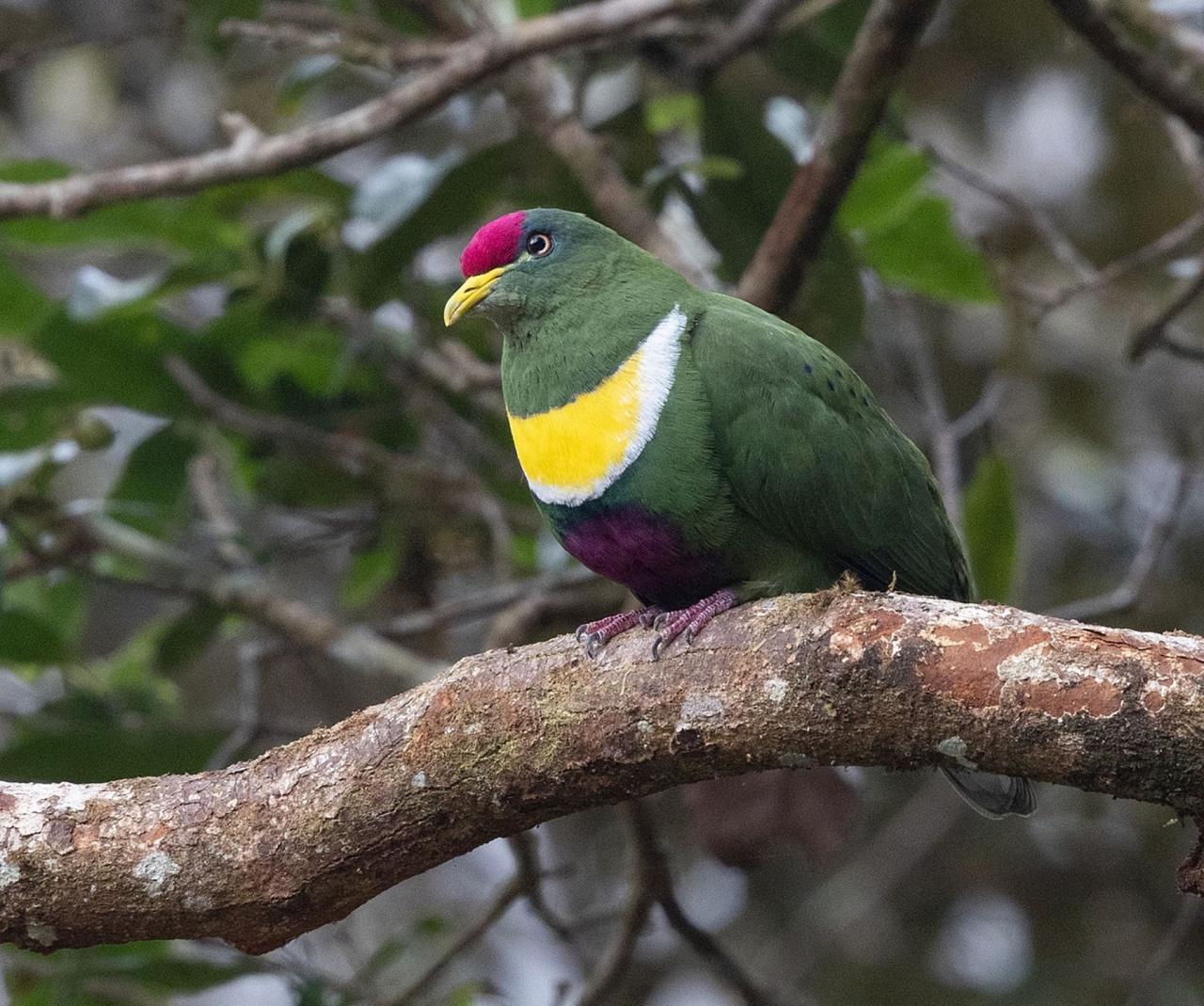
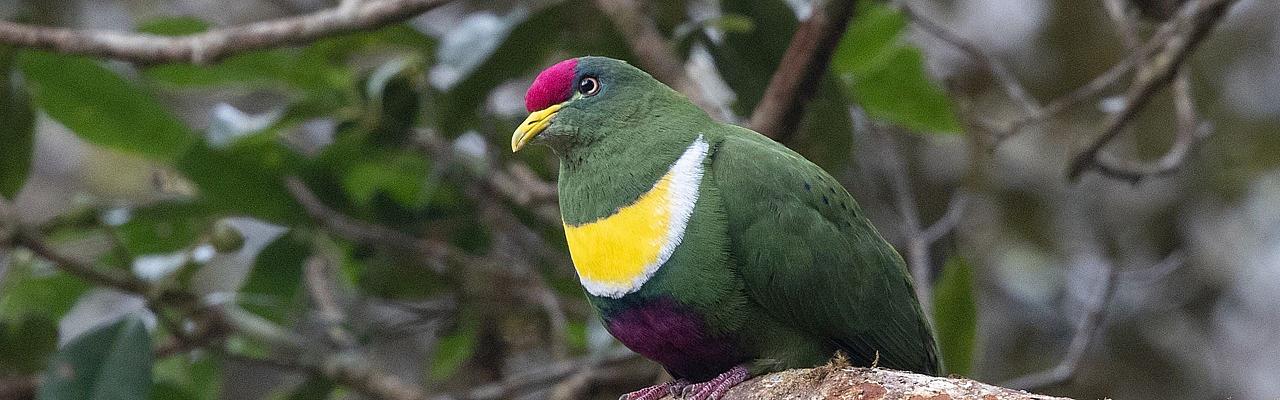
White-bibbed Fruit Dove by Nick Upton
-
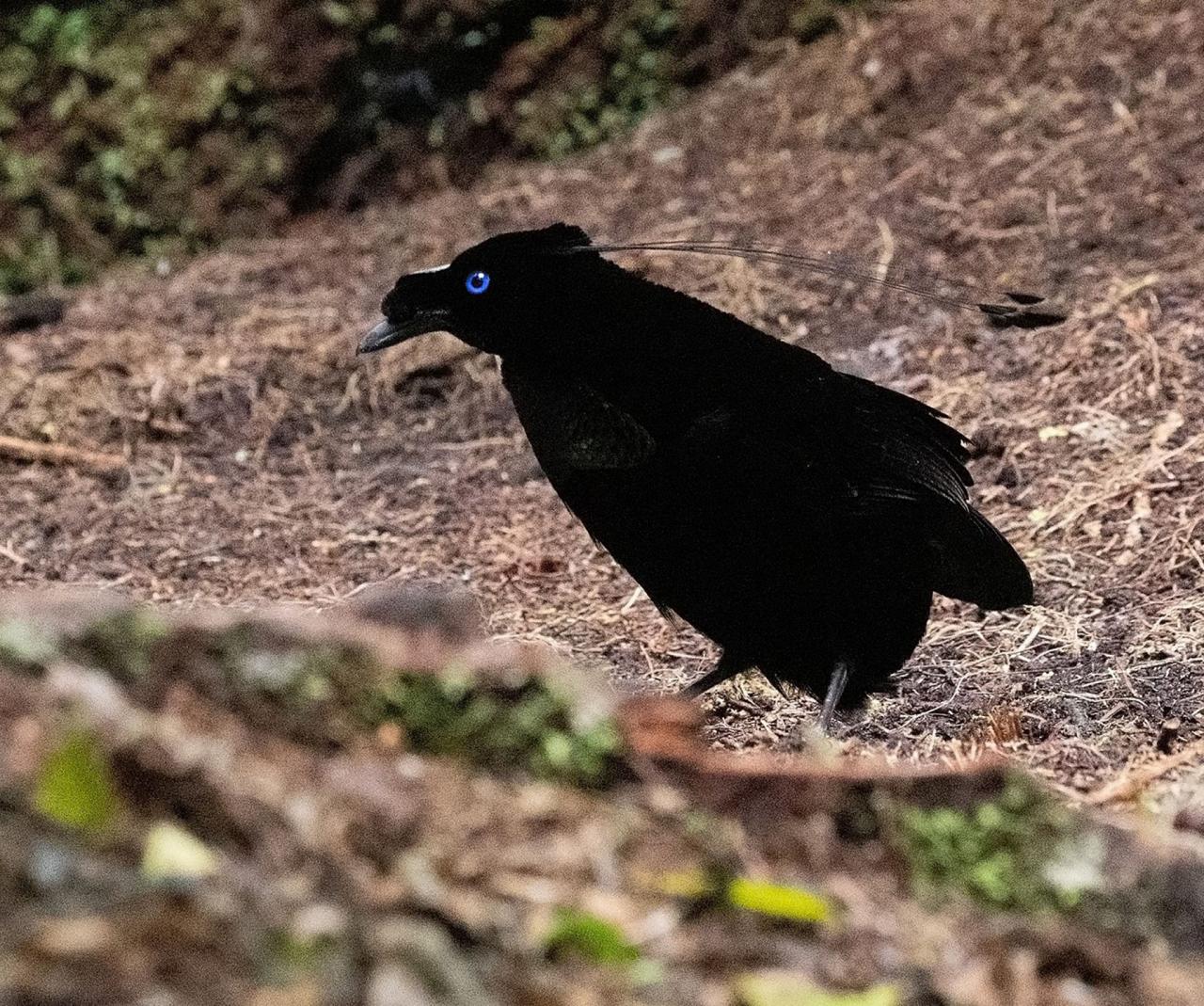
Western Parotia by Nick Upton
-
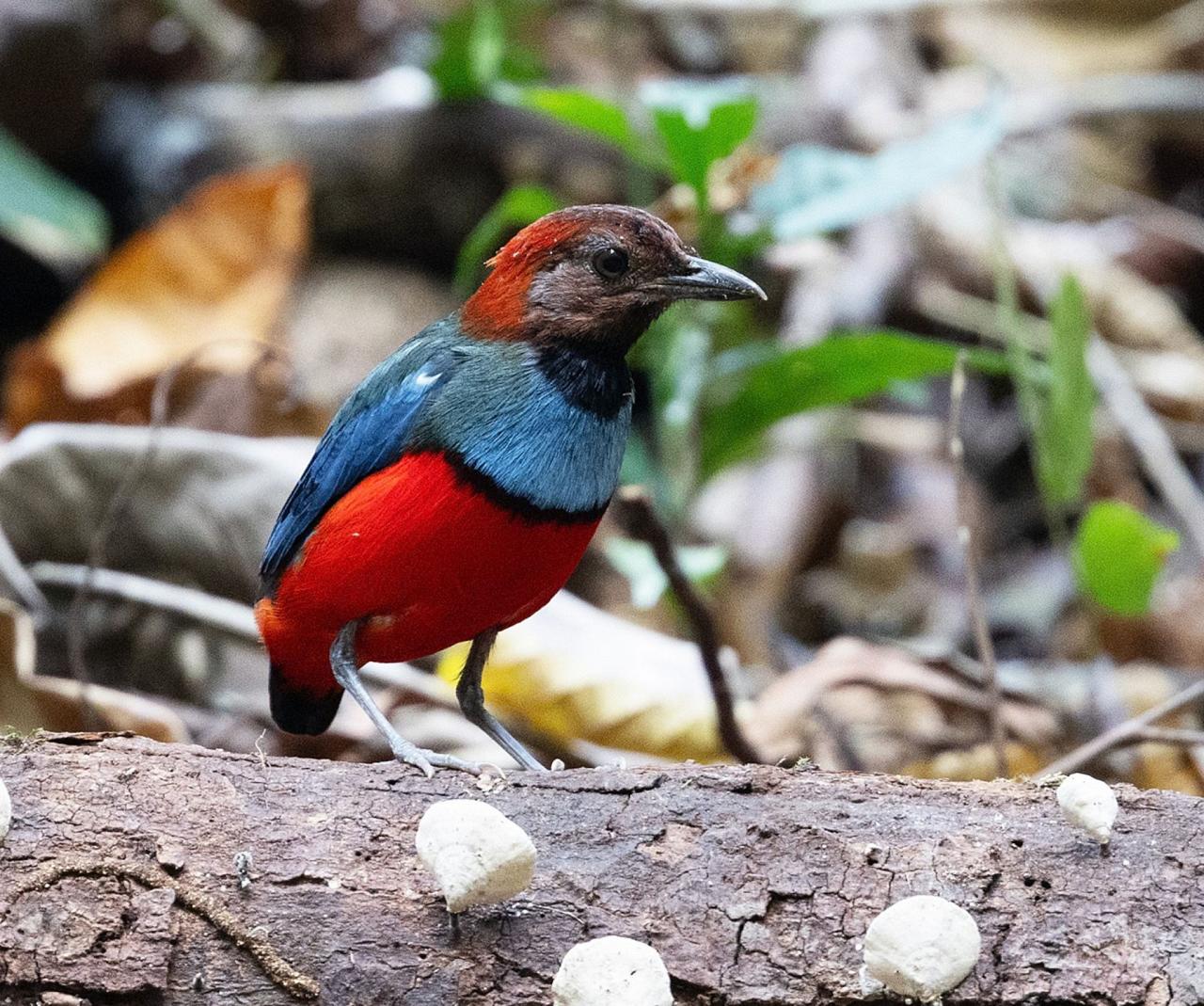
Pupuan Pitta by Nick Upton
-
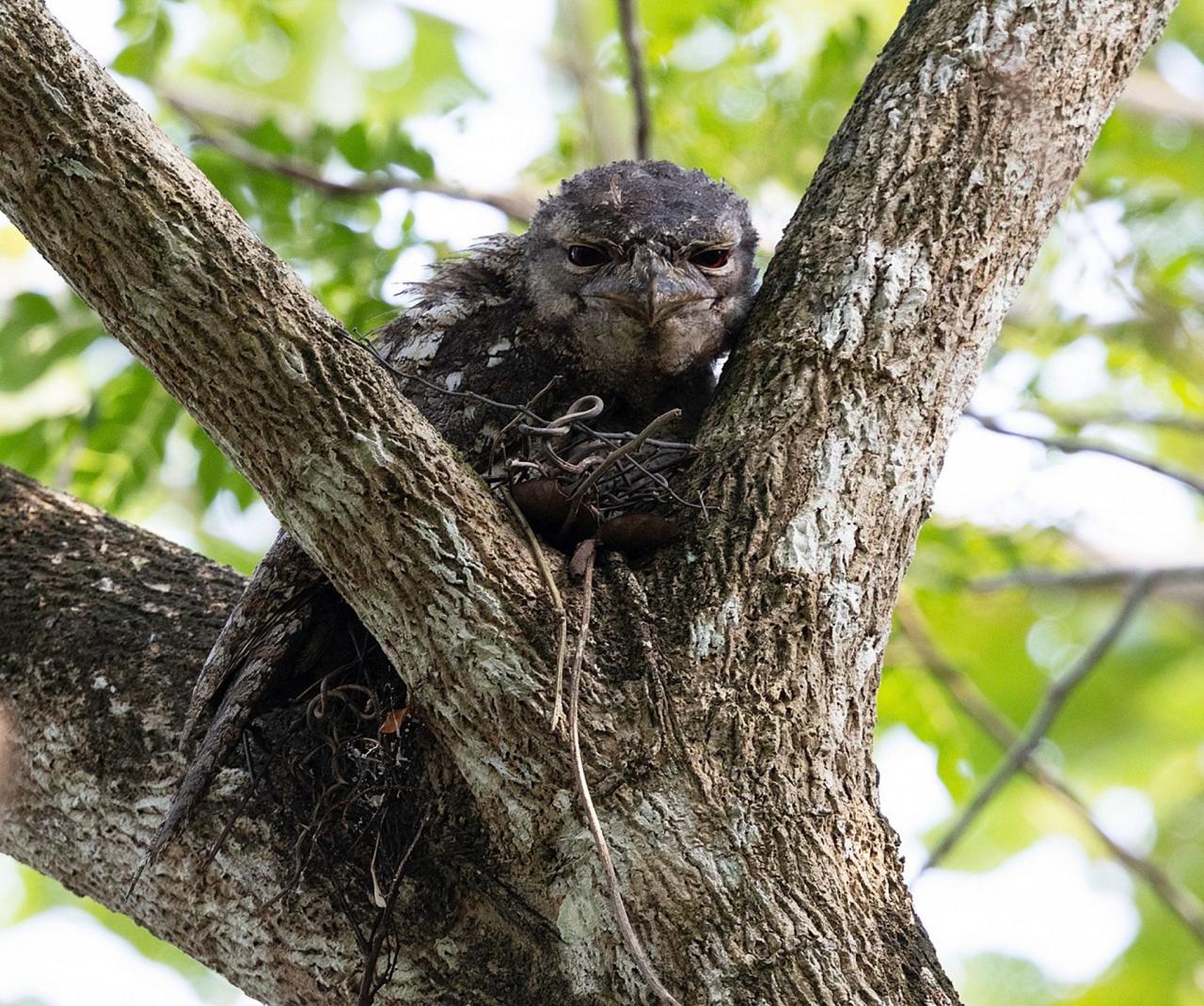
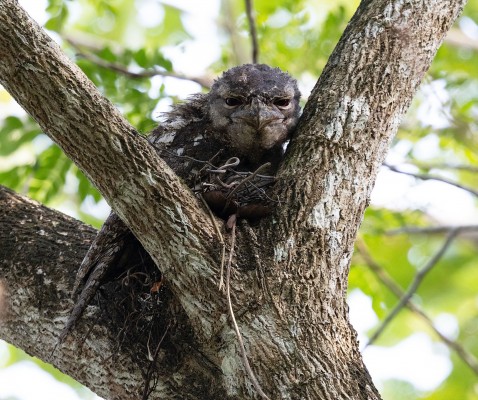
Papuan Frogmouth by Nick Upton
-
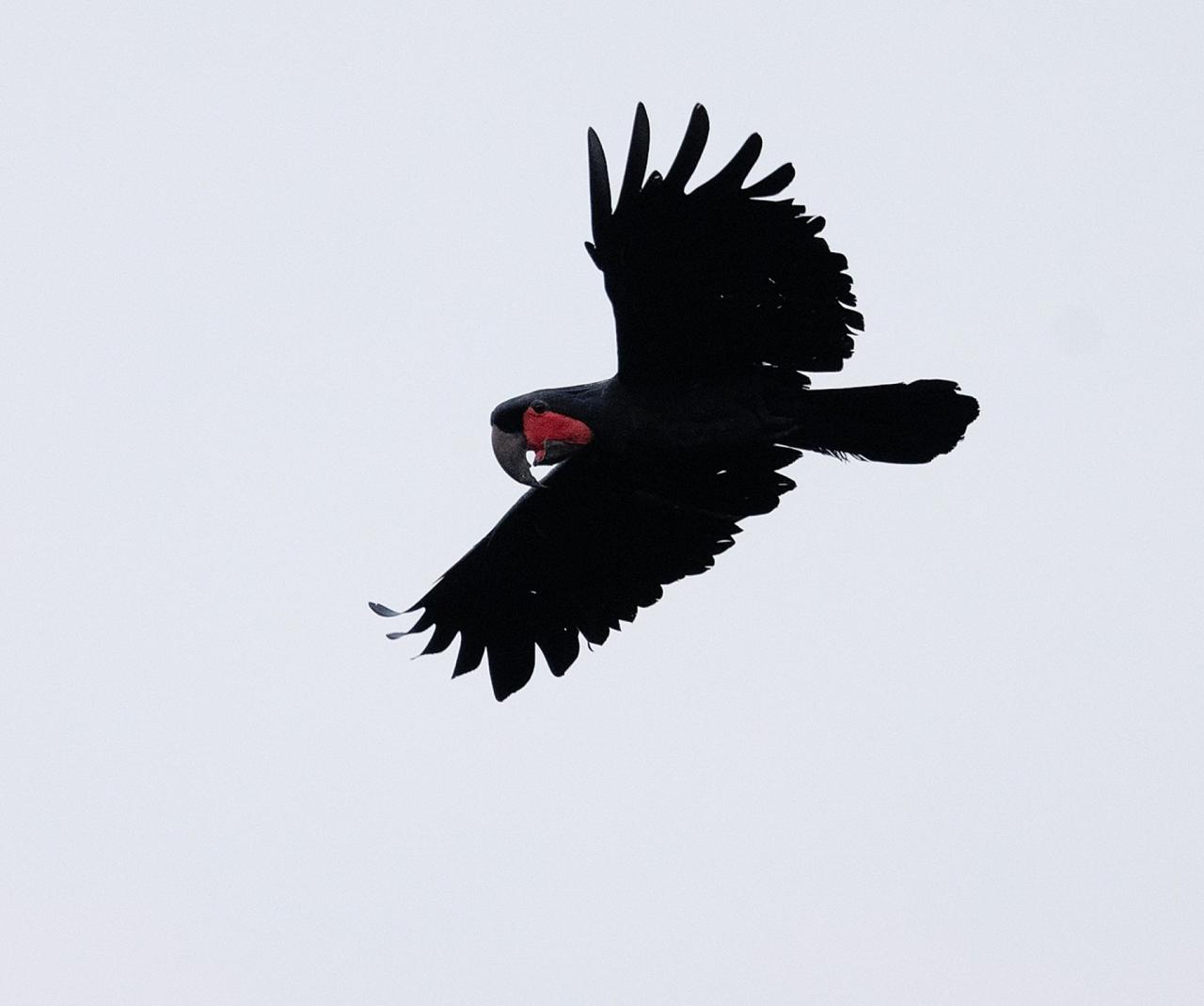
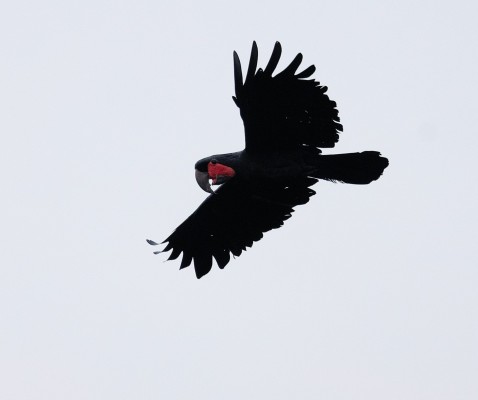
Palm Cockatoo by Nick Upton
-
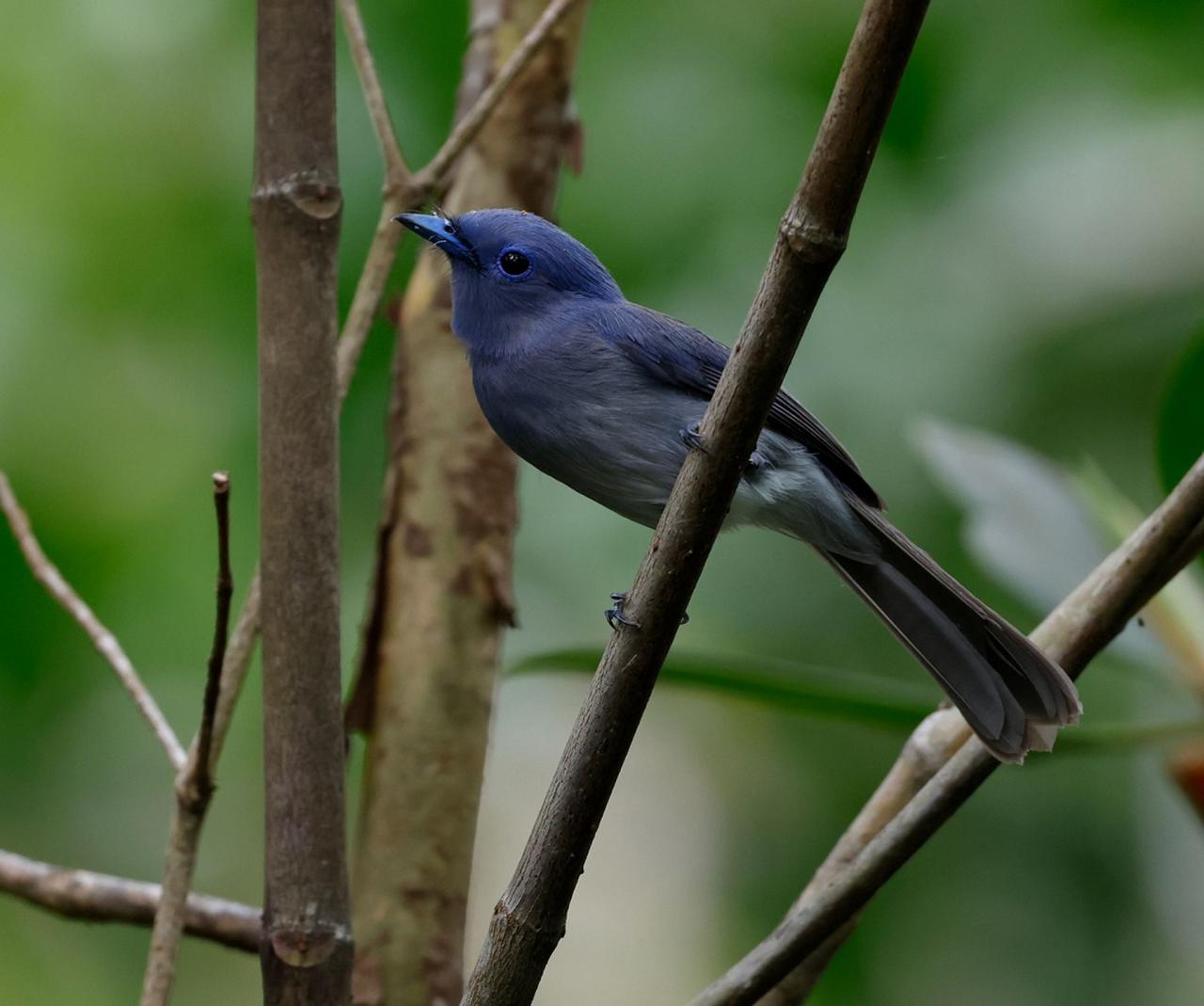
Pale Blue Monarch by Nick Upton
-
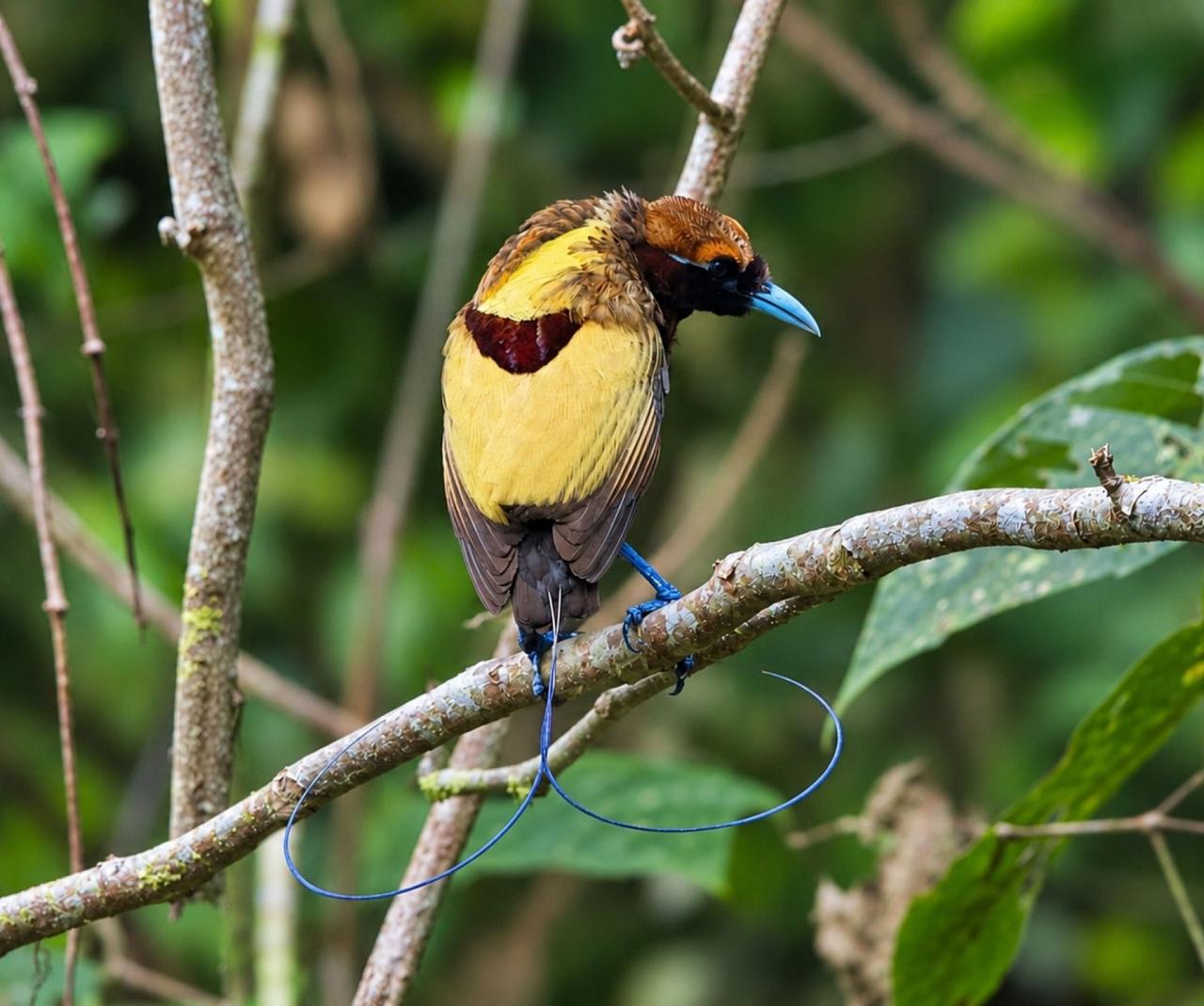
Magnificent Bird-of-Paradise by Nick Upton
-
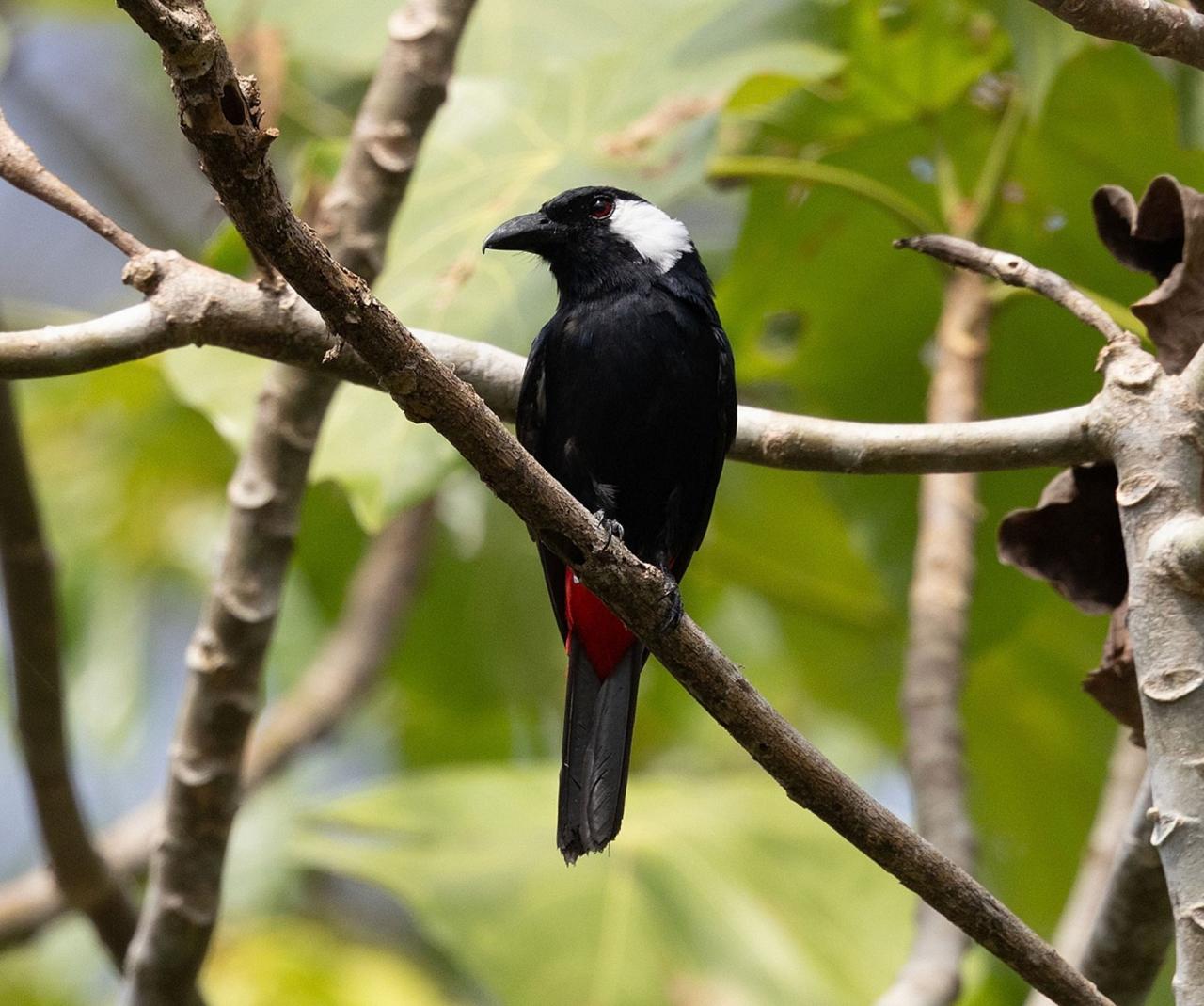
Lowland Peltops by Nick Upton
-
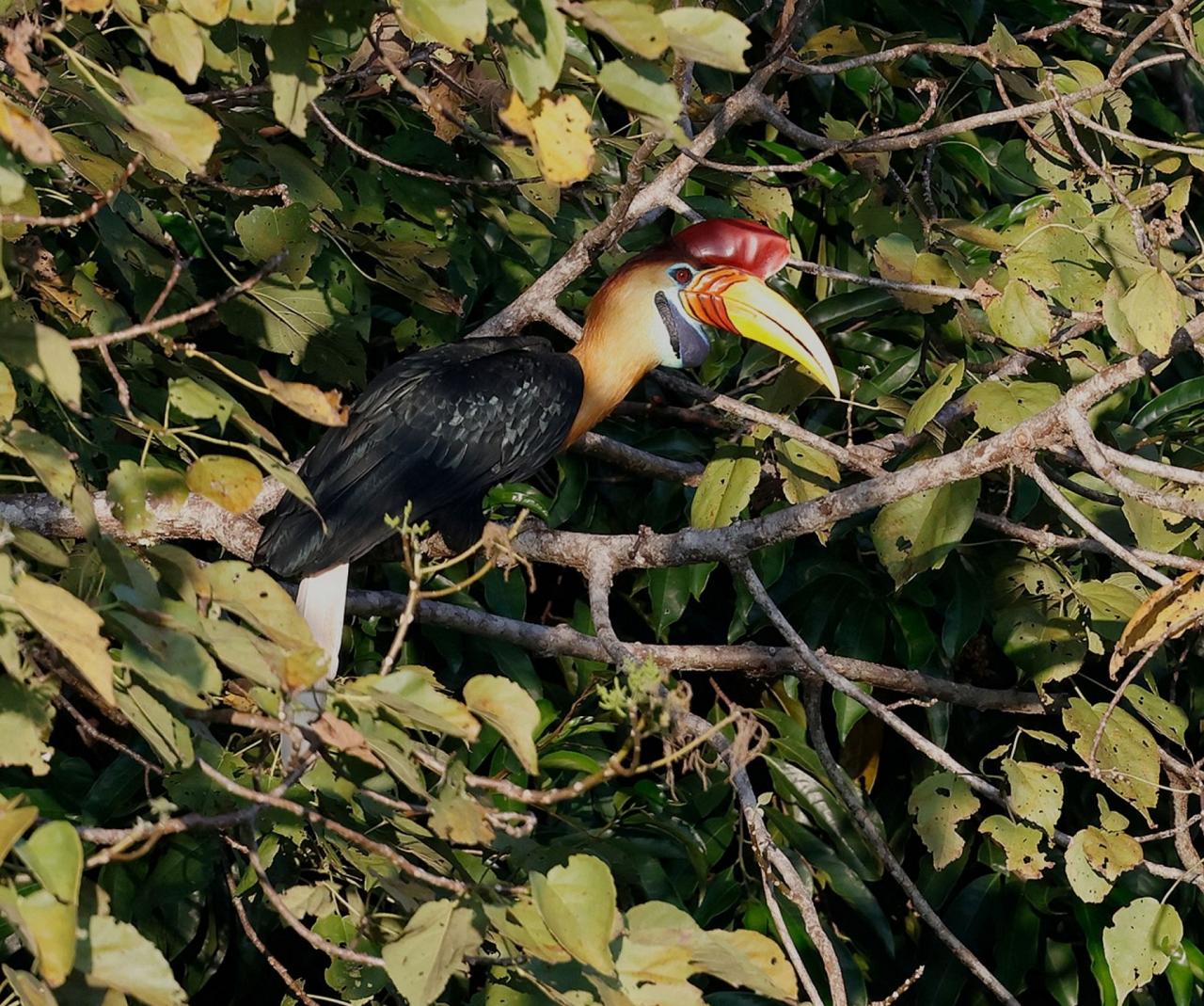
Knobbed Hornbill by Nick Upton
-
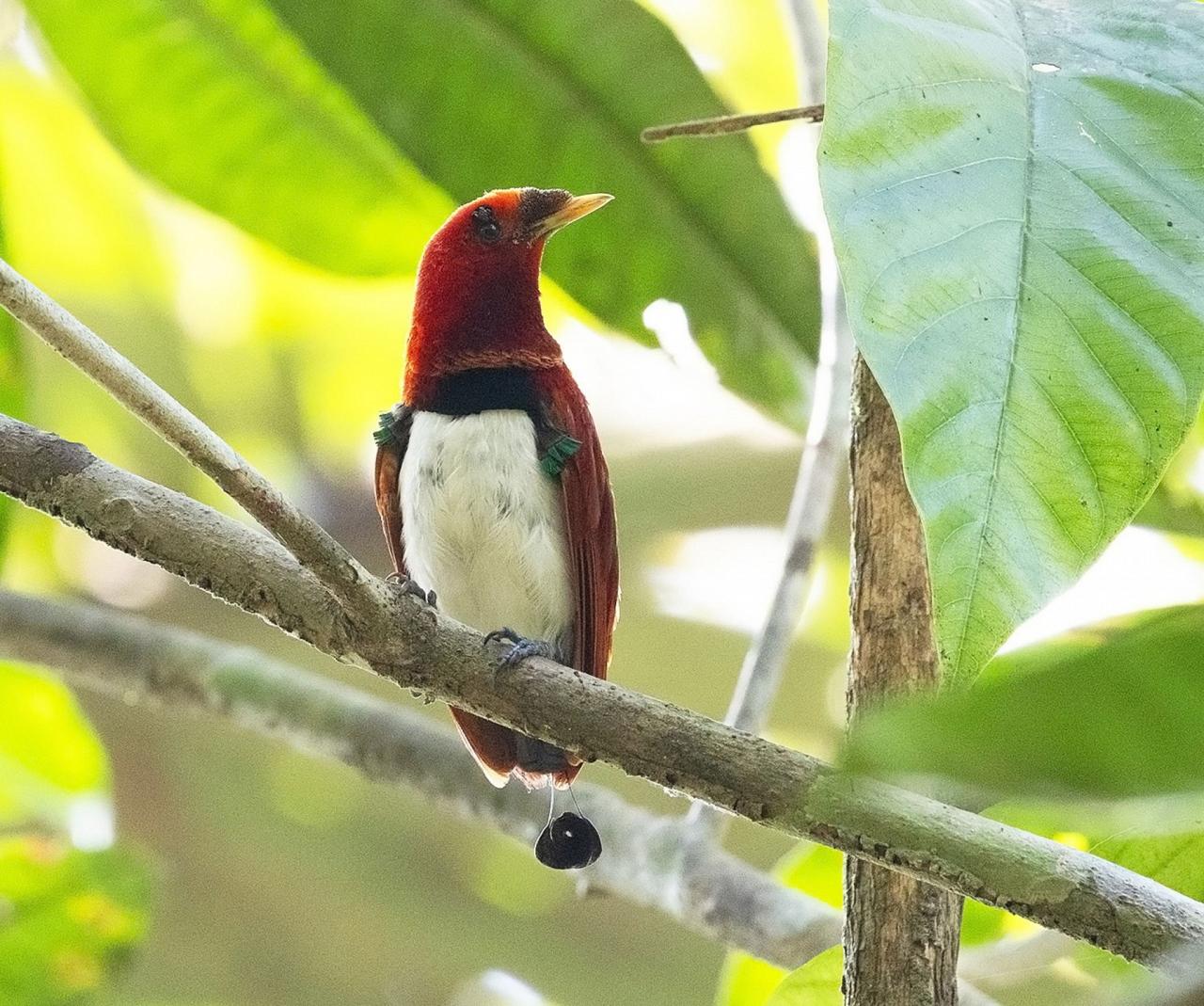
King Bird-of-Paradise by Nick Upton
-
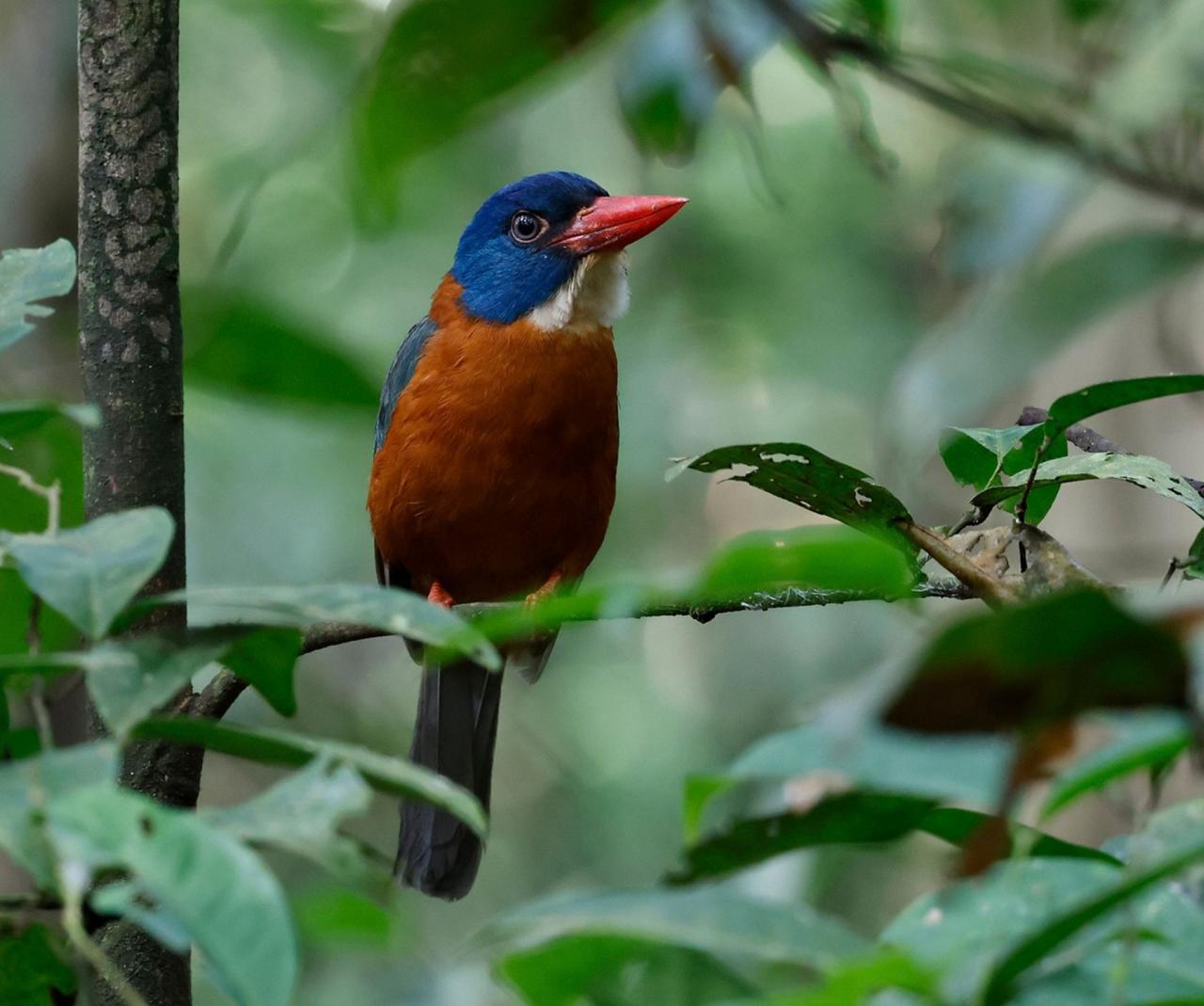
Green-backed Kingfisher by Nick Upton
-
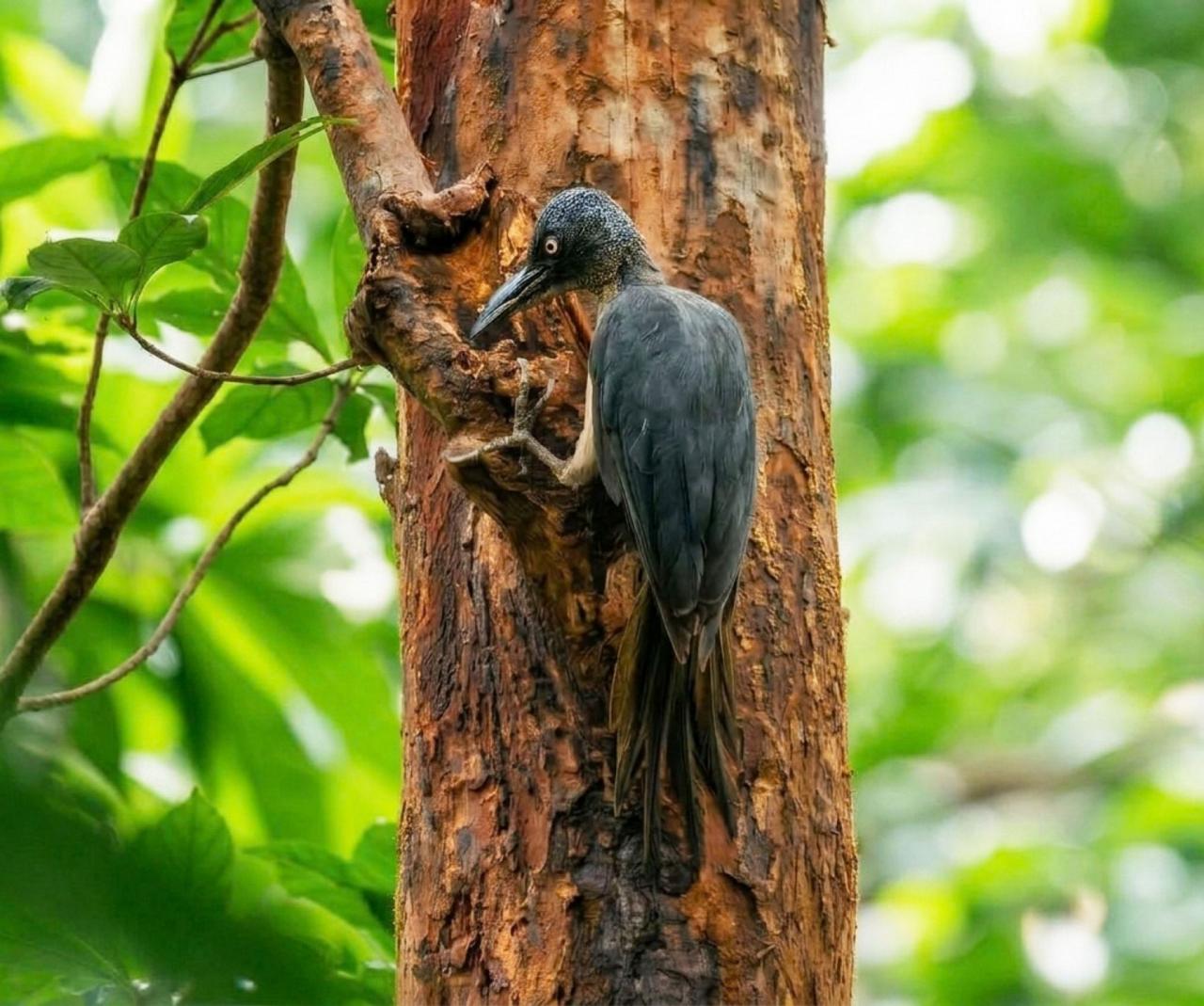
Ashy Woodpecker by Nick Upton
Cost of the Journey
Cost of the journey is per person, based on occupancy: $12,990 DBL / $13,840 SGL, from Ternate, departing Sorong.
The cost includes 19 nights’ accommodations; all meals as stated in the itinerary; group airport transfers; internal flights; ground transportation; professional guide services; park, preserve, and other activity fees; and miscellaneous program expenses. All tips other than your NJ guide (optional) and local guide are included (this includes tips for your driver, lodge and staff, day activities, meals and other services).
The cost of the Arfak Mountains extension is $3490 DBL / $3570 SGL and includes internal flight.
Cost does not include round-trip airfare to Ternate and from Sorong (or Manokwari if you opt for the extension), or personal expenses such as laundry, telephone, or drinks from the bar.
Travel Details
Please plan to make air travel plans only after the minimum group size has been met. We will send you a confirmation email as soon as the trip has been confirmed.
Arrival Airport: Sultan Babullah Airport (TTE) on the island of Ternate
Arrival Details: Please plan flights to arrive September 8, 2027, at your leisure. For those who want to join the group for dinner, please plan to arrive by 5 PM. Note that this is a remote part of the world and you may need to depart the US on September 5 to arrive in time.
Departure Airport: Domine Eduard Osok (SOQ) in Sorong
Departure Details: Plan flights to depart at your leisure on September 27, 2027
Extension Departure Airport: Rendani Airport (MKW) in Manokwari
Extension Departure Details: Plan flights to depart October 1, 2027, at your leisure.
Travel Tips: This is a remote part of the world that will take several flights to get to. You should consider arriving a day early to avoid issues with flight delays or cancellations. We can book you an early night at the Villa Ma'Rai Guesthouse on Ternate. You will need to taxi to the hotel on arrival.
Browse below for trip reports and species lists from past versions of this and other tours from this destination.
Indonesia
- September 2024
-
Nick Upton - Thailand and Asia Expert

Nick has been pursuing birds since the age of six after being shown a Dartford Warbler by his father on a family holiday. After traveling and birding in the Pacifica and Southeast Asia, Nick settled in Thailand over twenty years ago and now has over a decade of experience in leading bird tours throughout Asia. Widely recognized as the leading guide for Thailand, he can find difficult species and interpret the ecology of the bird, as well as the conservation issues many species face.
Other trips with Nick Upton - Thailand and Asia Expert
-
 Birding the Silk Road Uzbekistan, Kazakhstan & KyrgyzstanMay 6 - 23, 2027
-
-
Peg Abbott

Peg Abbott is the owner and lead guide of Naturalist Journeys, LLC. She has been designing, guiding, and organizing natural history tours for more than 25 years, working for the National Audubon Society and other organizations before launching Naturalist Journeys, LLC in 1998. Her work has taken her from Alaska to Africa and Argentina, as well as many other locations around the world. She has conducted research on several bird and mammal species and keeps a close interest in Yellowstone and Mexican wolf reintroduction projects. Her interests include all aspects of natural history and geology. After 20 years in and around the Yellowstone area, Peg relocated in 2003 to the birding mecca of Portal, AZ.
Photo credit: Carol Simon
Other trips with Peg Abbott
-
 Peru: Cusco to Manú National Park A private tour for Tucson Bird Alliance - FULL!October 2 - 17, 2026, w/Machu Picchu extension
 -
 Biodiverse Bhutan: Birds, Mammals & Beyond Closed. See our April departure!November 6 - 21, 2026, w/Panna Tiger Reserve extension
 -
 Arizona: New Year’s Birding Blitz FULL - Check out New Year at Tranquilo Bay!December 29, 2026 - January 4, 2027
 -
 Panama: Birds & MammalsFebruary 5 - 13, 2027
 -
 Eastern South Africa Birding From the Drakensberg Mountains to the Indian Ocean Coastal Plains - Only one room left!February 28 - March 12, 2027, w/Madikwe Game Reserve extension
 -
 In-Depth & Incredible: South Africa’s Specialty Mammals & BirdsJuly 20 - 31, 2027, w/Zambia's Kafue National Park extension
 -
 Brazil’s Pantanal: Jaguars! And More… FULL - Look for our 2028 departures!August 14 - 24, 2027, w/Amazônia extension
 -
 India's Red Pandas, Rhinos, Tigers & MoreNovember 4 - 20, 2027, w/Amur Falcon extension
-
Pace & Protocols +
Photo credits coming soon.