Tropical environments and ecosystems hold amazing wonders and are extremely diverse compared to their temperate counterparts. When you first step into a tropical forest, you may be overwhelmed by the sights, sounds, and smells around you. In Panama, with very little driving, we are within close reach of many distinct biomes and ecosystems teeming with plant and animal life. Location, elevation, and climate influence these environments and the plants and animals within and are all part of an intricate and delicate web of interactions. From the towering canopy above to the soil beneath your feet, there is life lurking around every nook and cranny.

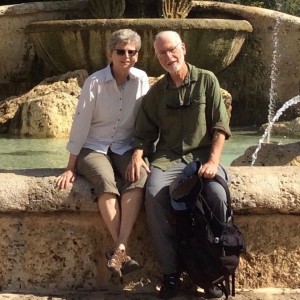
Naturalist Journeys teams up with our colleagues at The Canopy Family to once again offer a special Tropical Rainforest Biodiversity tour, featuring guest scientists Dr. Howard Topoff and Dr. Carol Simon, formerly of the City University of New York and the American Museum of Natural History, as they share their expertise on tropical environments and biodiversity. Howard and Carol reside in our home office town of Portal, Arizona, and have led a number of past tours for us including to Trinidad and the Galapagos. They are knowledgeable, fun, and dedicated to helping you see this incredible environment in a whole new way.

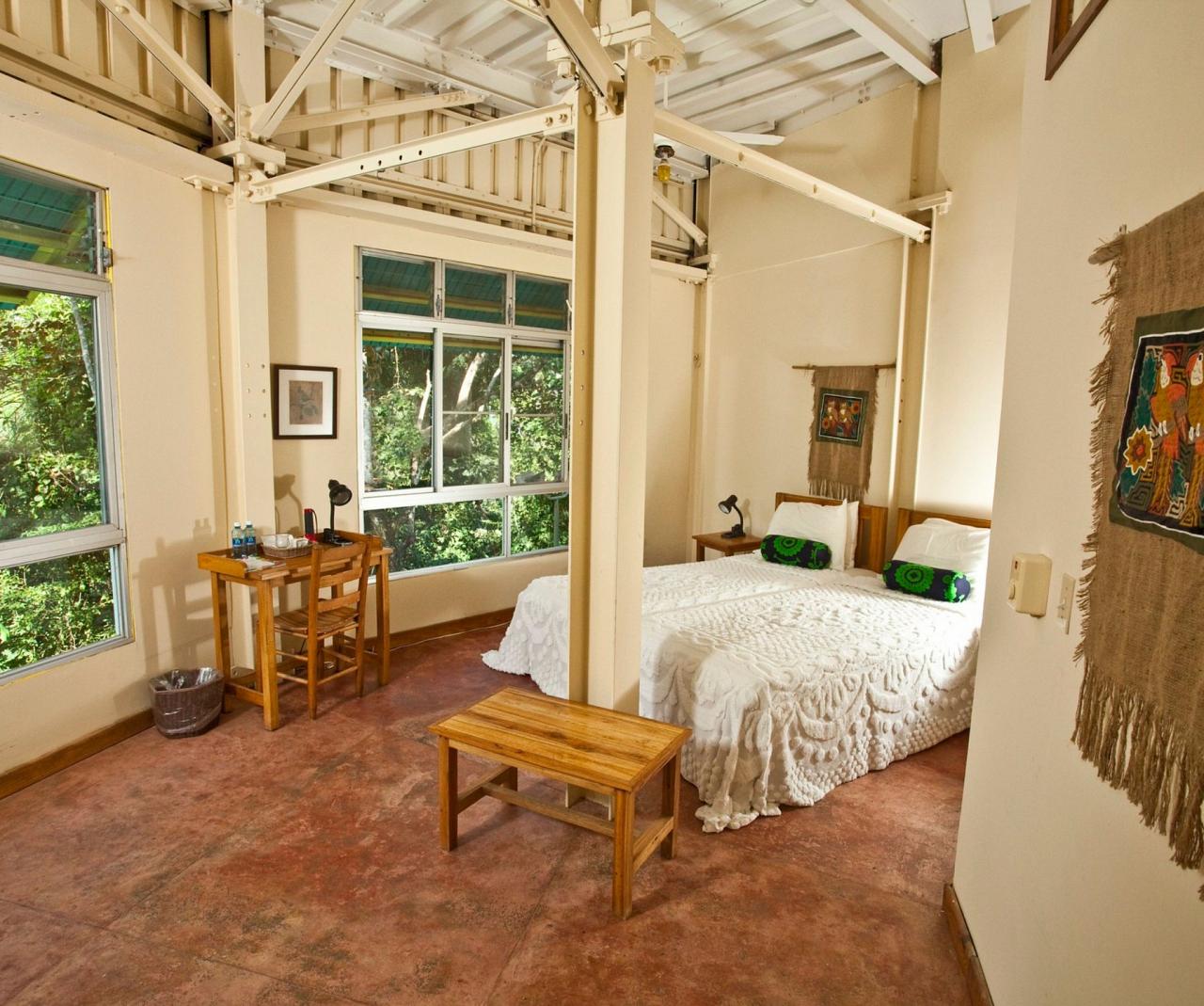
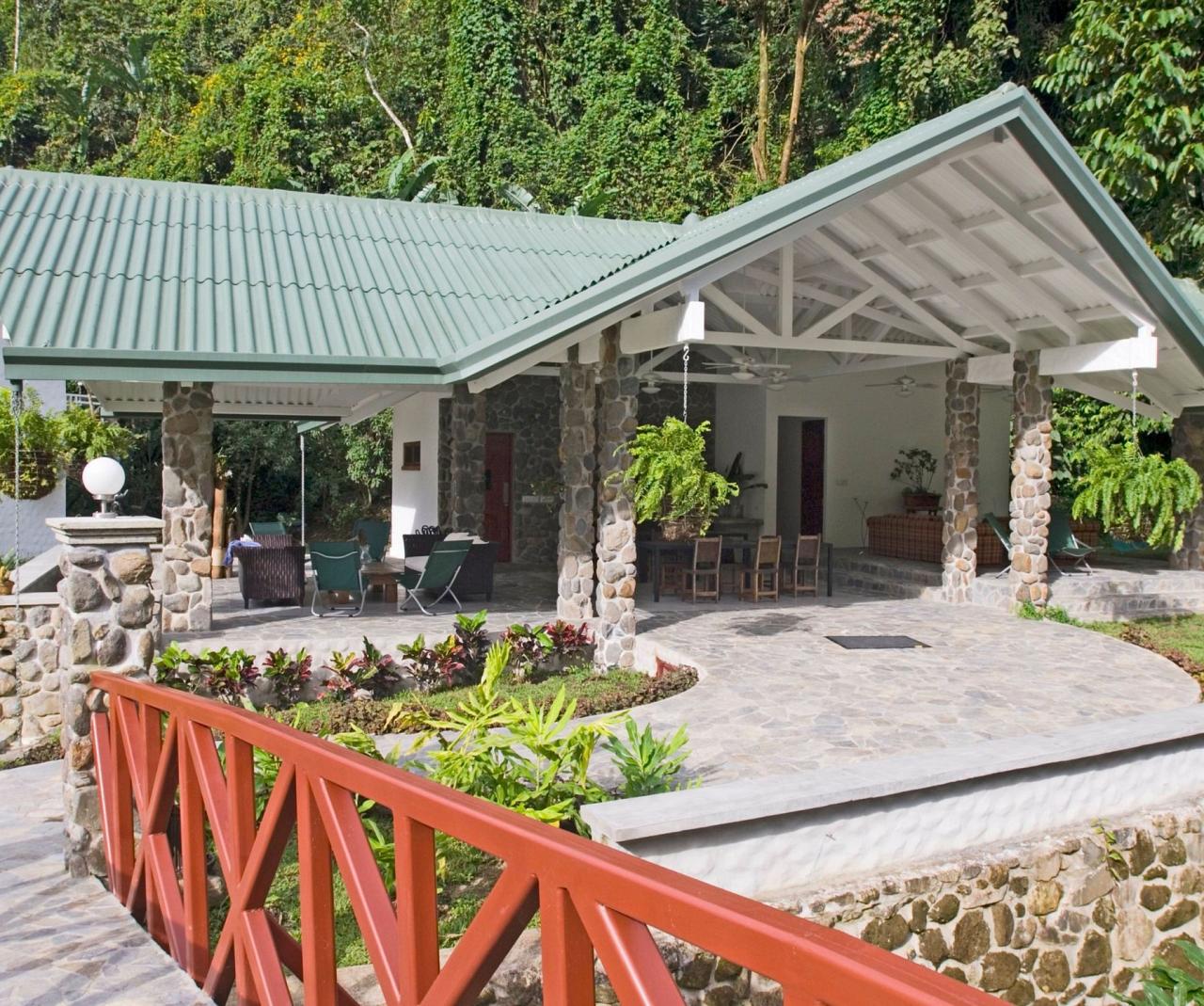
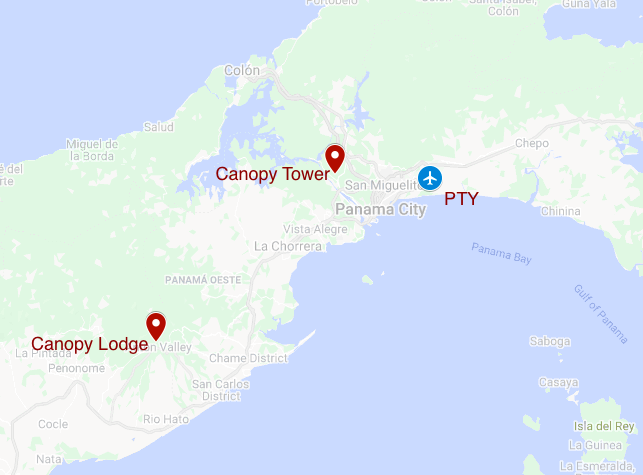
Spend time exploring the forests in search of birds, mammals, frogs, insects, and fascinating trees and plants. Almost every day there is an informative and entertaining presentation on a wide variety of tropical biodiversity topics. Top birding guides from the Canopy staff join Howard and Carol on outings. Lodging is at the world-famous Canopy Tower, surrounded by the lowland tropical forests of Soberania National Park, and the fabulous Canopy Lodge, in the picturesque foothills of El Valle de Anton, both perfect locations for exploring tropical ecosystems.
Tour Highlights

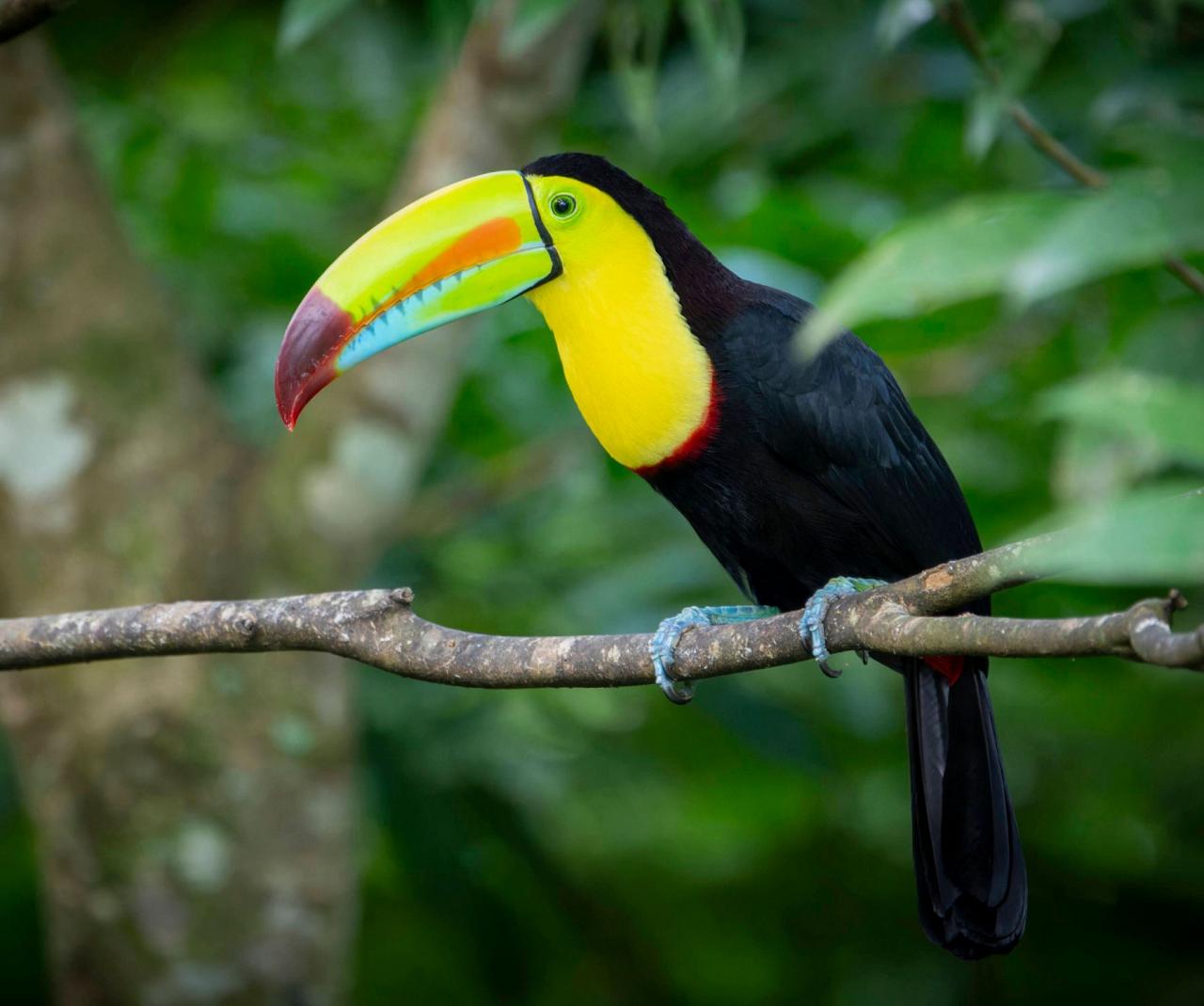
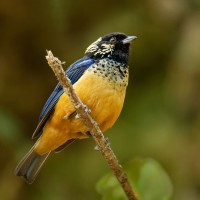
  • See Red-lored Parrot, Keel-billed Toucan, and Palm and Golden-hooded Tanagers right from Canopy Tower
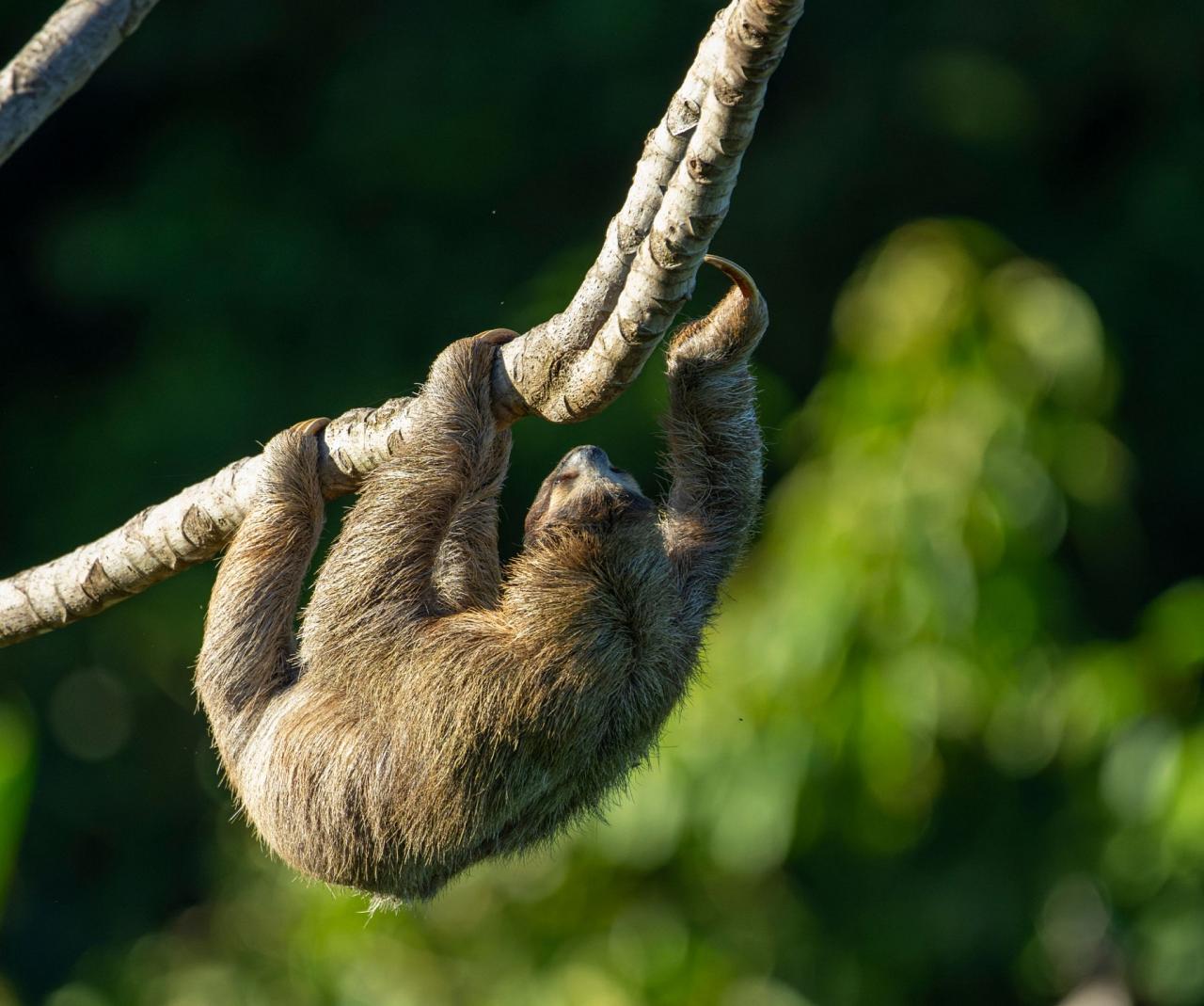
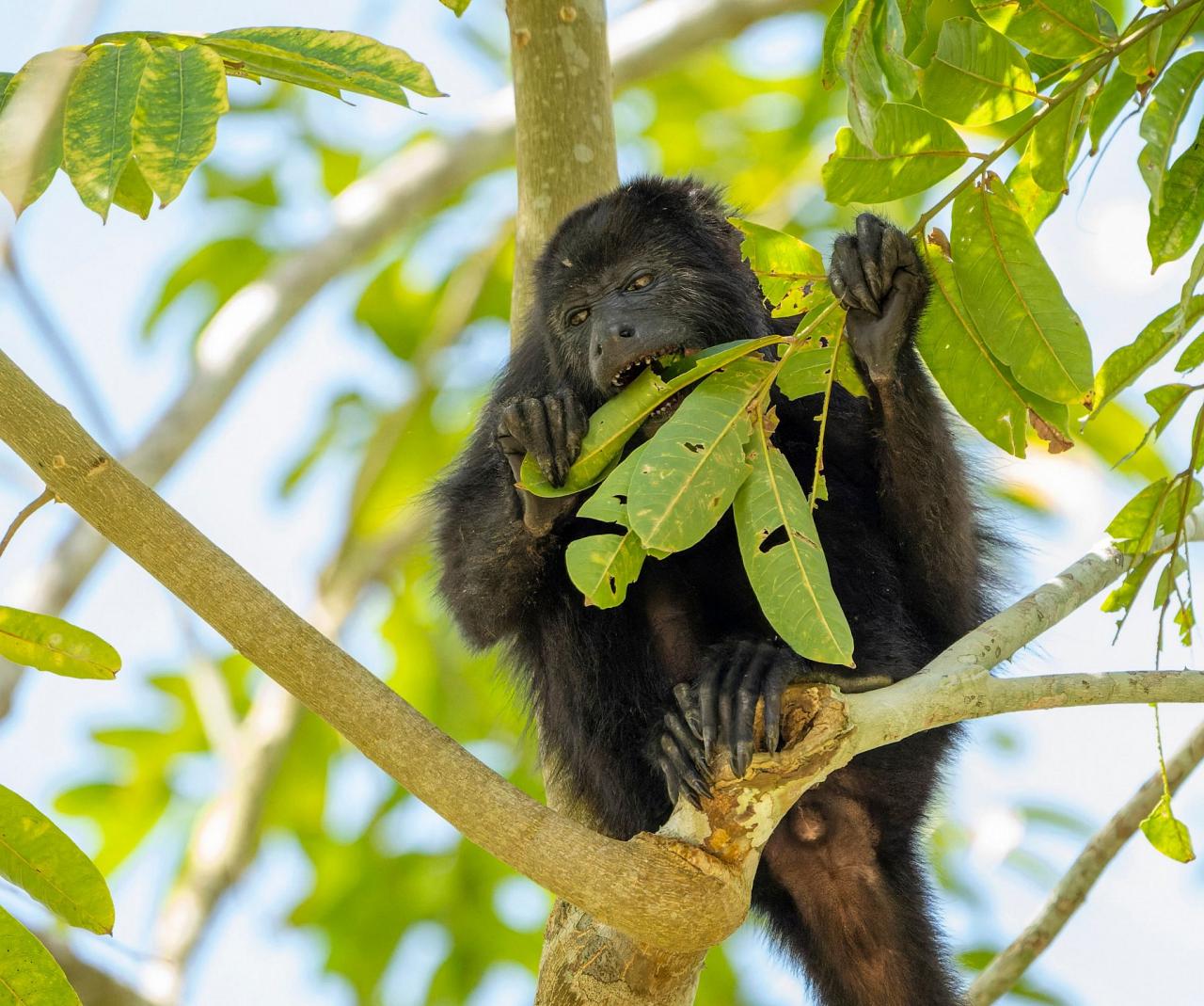
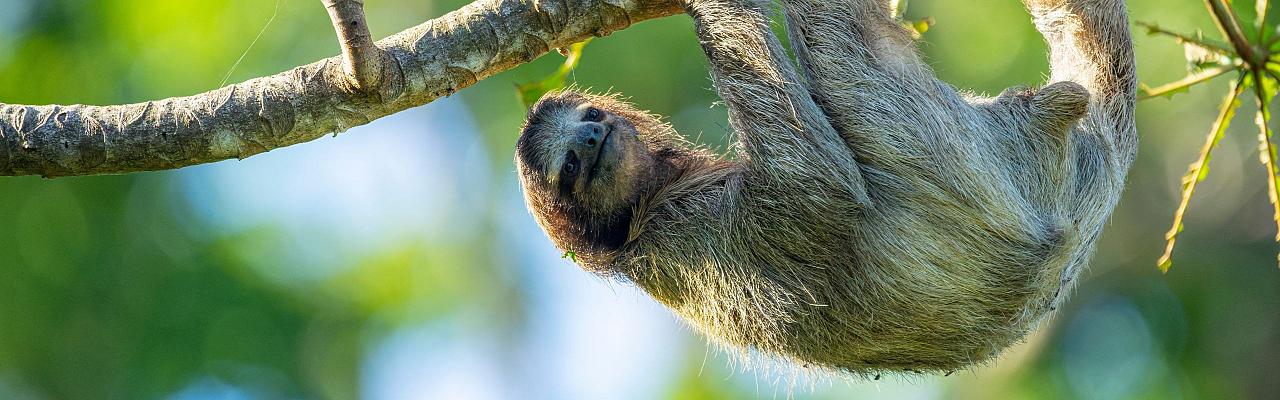
  • Watch Geoffroy’s Tamarin, Mantled Howler, and Brown-throated Three-toed Sloth in the surrounding forests
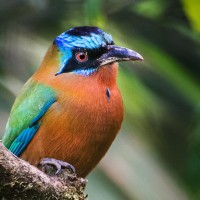
  • Search for Broad-billed Motmot, White-whiskered Puffbird, Gartered Trogon, South American Common Toad, Northern Tamandua, and more along Plantation Road
  • Spend time at the Summit Botanical Gardens, which houses more than 100 non-releasable animals — a great way to study many species difficult to see in the wild
  • Walk the famous Pipeline Road, which boasts over 500 species of birds, as well as hundreds of mammals, reptiles and amphibians, and even more insects and trees and plants
  • Visit the BioMuseo along the Amador Causeway in Panama City, and explore its several halls that focus on the biodiversity of the isthmus of Panama
  • Explore by boat on Gatun Lake, looking for Lesser Capybara, West Indian Manatee, and more
  • Enjoy an afternoon at the Panama Canal, learning its history and watching cargo ships go through the locks
  • Enjoy time at the Canopy Lodge, with cool mountain breezes and incredible birds on feeders and trails
  • Learn about the herps that live in Panama's forests during a presentation by guide Carol Simon called “Poisonous Reptiles and Amphibians of the Rain Forest”
  • Visit Cerro Gaital to learn more about the butterflies of the region, from the large Blue Morpho to the pretty little Passion Vine butterflies

Trip Itinerary

Itineraries are guidelines; variations in itinerary may occur to account for weather, road conditions, closures, etc. and to maximize your experience.

Thurs.,  Sept. 24       Arrivals in Panama City
Welcome to your Panama rainforest biodiversity workshop! You are met at the airport and transferred to the Canopy Tower Eco-lodge, just a 45-minute drive through Panama City to the lush lowland rainforests along the Panama Canal. After you enjoy a cold drink, we suggest you make your way up to the observation deck overlooking the vast forest canopy of Soberania National Park. The great raptor migration is underway, consisting of mainly Turkey Vulture and Swainson’s Hawk, with a mix of at least twenty other species. On a single day in 2014, it was estimated that two-million raptors passed over the narrow Isthmus of Panama. Raptors conserve energy during their long migrations by riding warm columns of air that form only over land. Thus the migrating birds are forced together over the isthmus and easily seen.

From the canopy observation deck you can view many stunning tropical birds but mammals and reptiles are present too. It’s common to see Geoffroy’s Tamarin, Mantled Howler Monkey, Brown-throated Three-toed Sloth, and Green Iguana in the rainforest canopy. Green-and-Black Dart Poison Frog have been seen just outside the front doors of the Tower, along with mating Turnip-tailed Gecko. Tungara Frog call loudly there and you can often find their foam nests nearby. It is an exciting place to stay.

Before dinner you meet your Canopy guide and guest scientists. During cocktails you can enjoy the first of Carol and Howard’s many multimedia presentations, entitled “Introduction to Tropical Rainforests.” Get ready for a great week!
Accommodations at Canopy Tower (D)

Fri., Sept. 25       Plantation Road | Summit Gardens & Harpy Eagle Exhibit
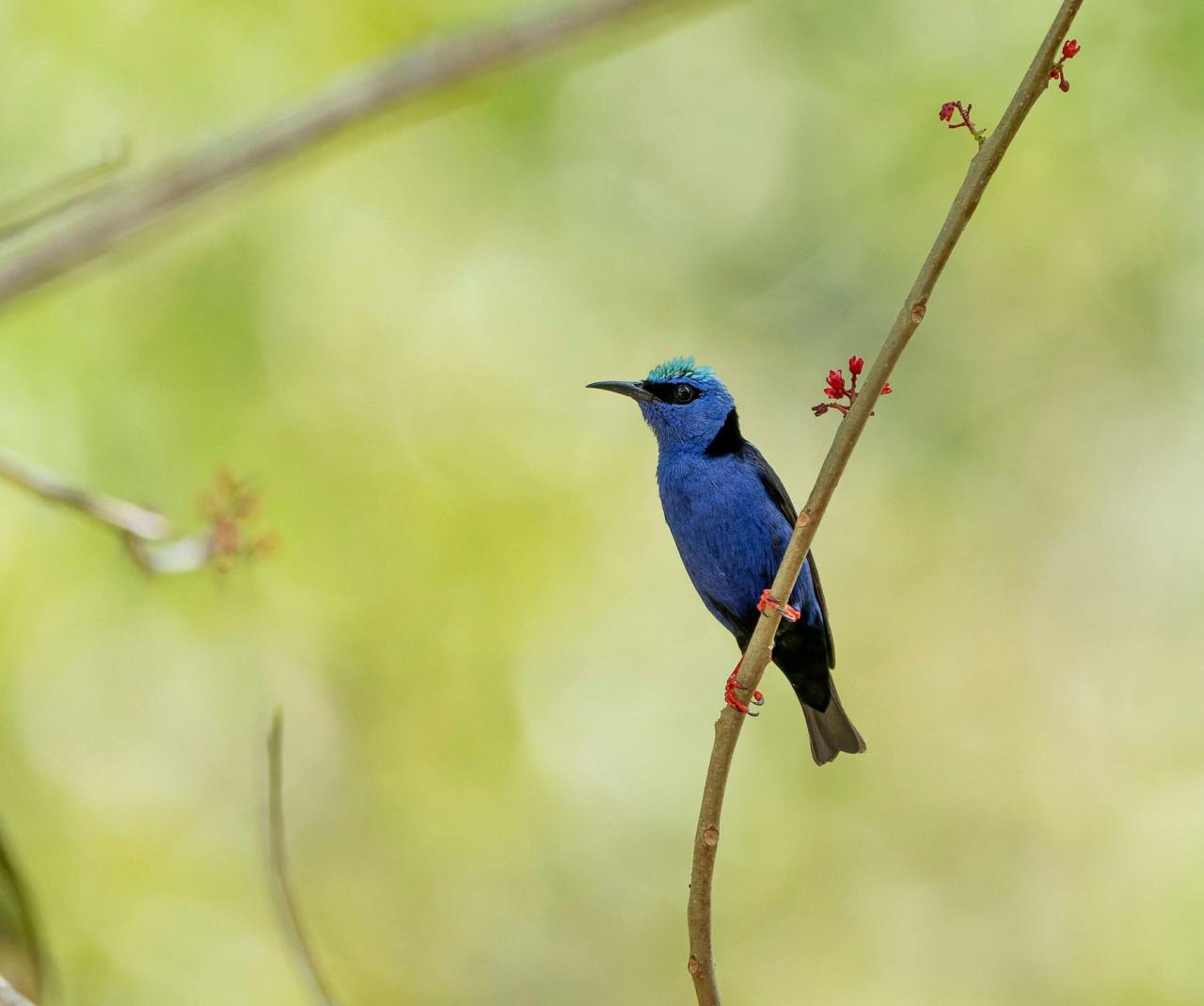
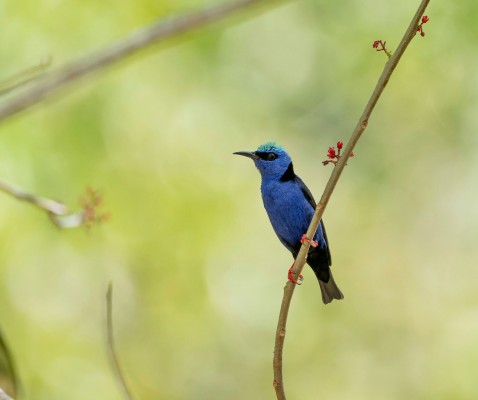
As we awaken to the roars of Mantled Howler Monkey in the distance, breathe in the fresh air and make your way up to the observation deck at dawn. This is the best time of day to observe the canopy, not only for the beautiful sunrise but also as bird activity is at its peak. With warm coffee or tea in hand, we watch for Red-lored and Mealy Parrots, Keel-billed Toucan, Black-cheeked Woodpecker, Masked Tityra, Green Honeycreeper, and dozens of other species of birds as they actively communicate and feed in the treetops. 

After breakfast, we board one of the Canopy Tower’s specialized nature-watching vehicles and head slowly down Semaphore Hill Road, scanning the understory of the forest for animals such as the Central American Agouti and White-nosed Coati.

The Canopy Tower is surrounded by 22,000 hectares of lowland tropical rainforest of Soberania National Park, adjacent to the Panama Canal and mighty Chagres River. It is the perfect setting for our first morning. Just a five-minute drive away, enjoy an introductory walk along Plantation Road, one of the trails of Soberania National Park. 

Walking through the forest with its towering forest giants (Ceiba and Cuipo trees), we spend the morning searching for animals, from tiny leafcutter ants on the ground to large raptors in the treetops. Broad-billed Motmot, White-whiskered Puffbird, Gartered Trogon, South American Common Toad, Northern Tamandua, and much more can be found along this trail. The rainforest is so full of life! After our morning walk we return to the Canopy Tower in time for lunch.  

In the afternoon we visit the Summit Municipal Park and Botanical Gardens. Here are both wild and enclosed animals. Roaming freely we can find Central American Agouti, Central American Ameiva, Laughing Falcon, Tropical Mockingbird, and Crimson-backed Tanager, plus hundreds of species of other birds.

We visit some of the enclosures that house Panama’s native fauna. In the 1960s, Summit Botanical Gardens started receiving injured and non-releasable animals from all over Panama. Now, this facility houses over 100 animals, including macaws, spider monkey, Tapir, Jaguar, Puma, and Panama’s national bird, the Harpy Eagle. We stop to visit a non-releasable Harpy Eagle living at this wildlife refuge. It is a great opportunity to see some species that are rather difficult to encounter in the wild in Panama.

Back at the Canopy Tower, we meet at the cocktail hour for Howard and Carol’s early evening presentation. Almost every day our guest scientists choose a talk that fits the day, depending upon what was seen and participant interests. Possible topics include primates, social insects, reptiles and amphibians, tropical botany, animal coloration, animal communication, butterflies, the Panama Canal, and bird brains. Our scientists wish they could give them all (it is their goal to give eight!) but after all we do want to spend significant amounts of time in the field! Carol and Howard are with us ALL the time, however, and a lot of information is transmitted informally. For dinner we can expect an enjoyable blend of Panamanian and international fare. 

After dinner we take a short night excursion, riding in one of the open vehicles and walking on a trail in the national forest. We listen for owls and potoos and scan the trees with a spotlight for Western Night Monkey, Kinkajou, Olingo, and other nocturnal wildlife. Frogs are abundant and we spot an occasional snake. If the weather doesn’t cooperate, we reschedule for another evening.
Accommodations at Canopy Tower (B,L,D)

Sat., Sept. 26        Pipeline Road | BioMuseo
After optional early time on the observation deck, head down to a hot breakfast at the Canopy Tower’s third floor dining room, surrounded by the forest canopy just outside the open windows. Then, we board our vehicle once again and head out to the world famous Pipeline Road—once an access road built during WWII to serve a pipeline installed as a precautionary measure for the Panama Canal. It was never used. About a 20-minute drive, this area is surrounded by mature secondary lowland forest and protected within the boundaries of Soberania National Park. 

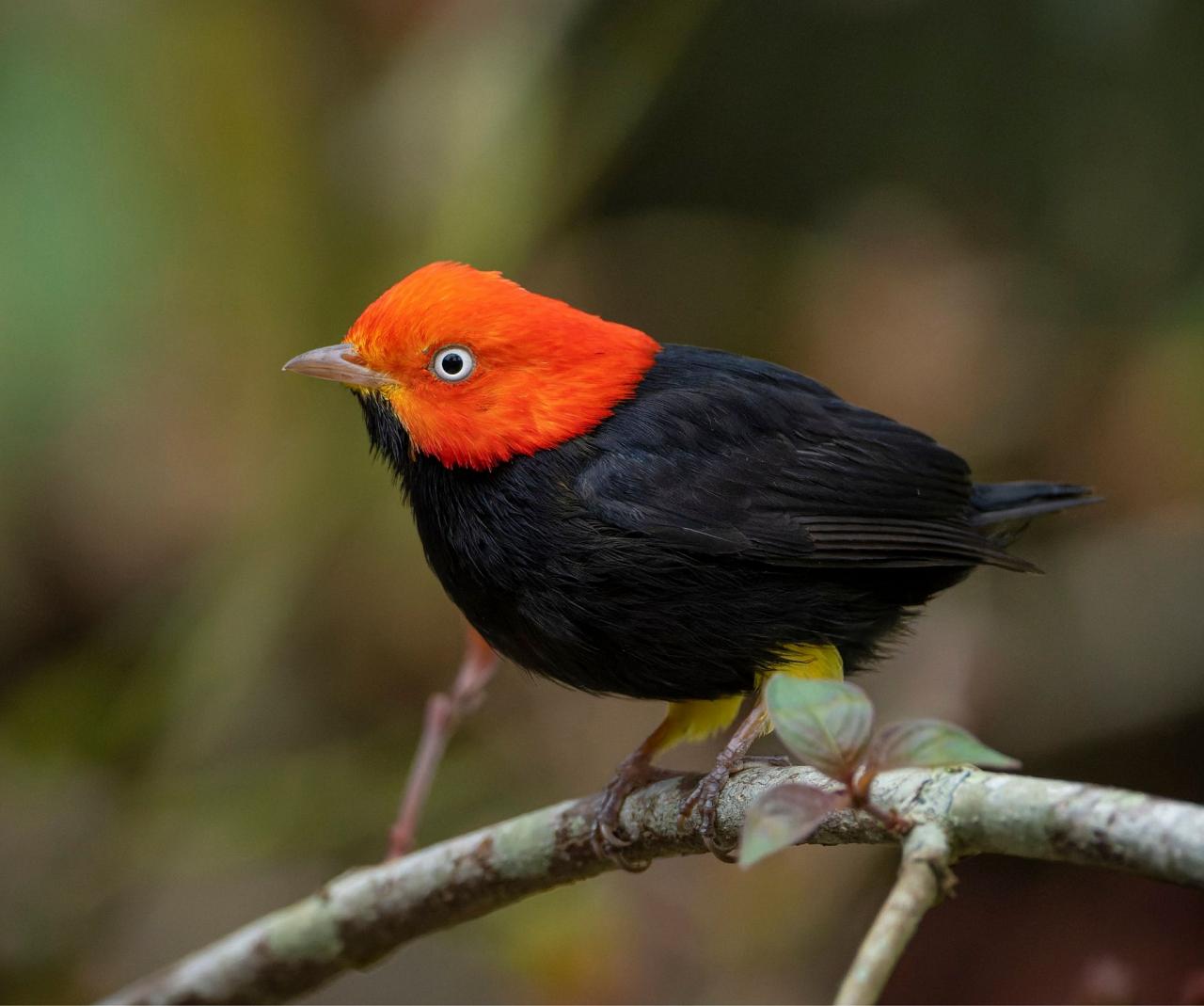
Pipeline Road boasts incredible biodiversity—over 500 species of birds have been recorded in these Caribbean slope forests, as well as hundreds of mammals, reptiles and amphibians, and even more insects, trees, and other plants. As we walk the first part of the gravel road, we watch for five species of trogons, Whooping and Rufous Motmots, Cinnamon and Crimson-crested Woodpeckers, three species of manakins, hummingbirds, raptors, peccaries, lizards, frogs, butterflies, insects, and more. It’s hard to decide whether to look up or down!

We hope to come across a swarm of army ants, where many species of birds attend the feeding frenzy! Howard is an army ant specialist, and we can look forward to his very entertaining talk on social insects. Central American Whiptails and Striped Rocket Frogs may be seen along the road. Our list from the morning alone will no doubt be extensive! After a full morning in this superb forest, we make our way back to the Canopy Tower for lunch.

This afternoon we visit the impressive BioMuseo, situated along the scenic Amador Causeway in Panama City. This spectacular and unique building, designed by renowned architect Frank Gehry, features several halls focusing on the biodiversity of the isthmus of Panama—from its geological beginnings through to modern day culture, the great faunal interchange over the land bridge and other fascinating exhibits. Our visit no doubt opens our eyes further to the incredible biodiversity of Panama. And don’t forget your binoculars; we may see Brown Pelican and Magnificent Frigatebird flying over the Pacific entrance to the Panama Canal.

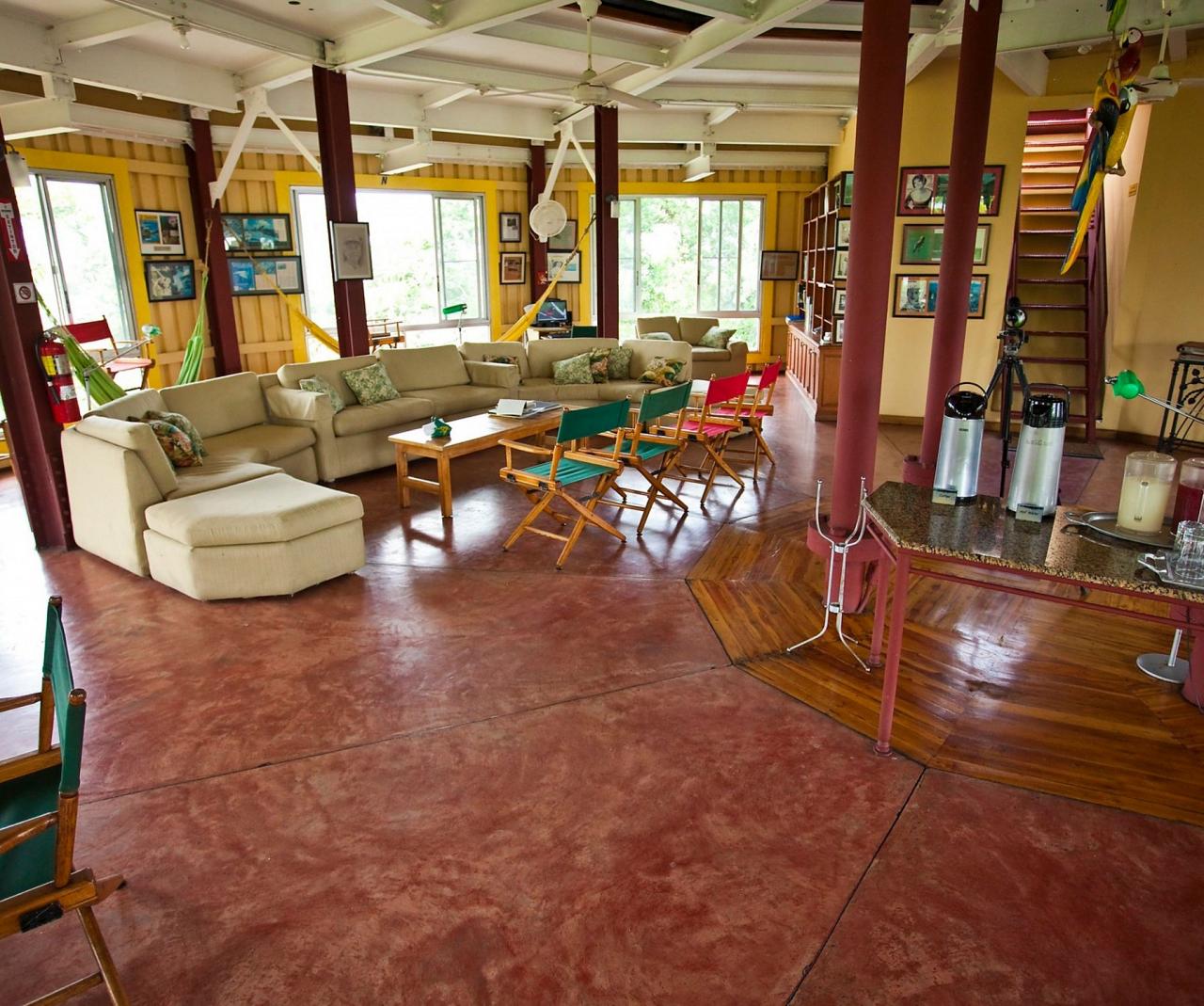
Back at the Canopy Tower, we meet in the lounge for cocktails and appetizers before dinner and if time permits, Howard and Carol choose a talk from their extensive repertoire.
Accommodations at Canopy Tower (B,L,D)

Sun., Sept. 27      Summit Ponds & Old Gamboa Road | Old Gamboa Resort Grounds
We start our morning once again on the observation deck before breakfast and as the mist lifts from the valley we watch for Crane Hawk, Golden-hooded Tanager and Blue Dacnis in the treetops. Howler monkeys are sometimes seen here in the mornings also. After breakfast we visit one of the best sites down the road from the Canopy Tower. Our first stop is at the two forest lagoons. Here we can find Boat-billed Heron, Capped Heron, five different kingfishers, American Crocodile, Spectacled Caiman, Black River Turtle, Common Basilisk and so much more. We have even seen a Boa Constrictor here. Moving down the Old Gamboa Road we scan the grassy edges and emerging roadside trees for arriving migrants, as many species of raptors, warblers and flycatchers are passing through Panama on their way to South America. Leafcutter Ant highways cross the path several times. Variegated Squirrel and White-nosed Coati are just some of the mammals we may find. We are sure to have a great morning. We return to the Tower for lunch.

In the afternoon we visit the Old Gamboa Resort Grounds. The Chagres River is the main tributary for the Panama Canal. Here Embera Indian Trails lead from the river, and we often see individuals fishing from their canoes. The birding along the banks and forest edges of Gamboa Resort can be spectacular, and so is the tropical vegetation. Here you may be kissed” by Psychotria, commonly known as Hot Lips. And if you are fond of Panama hats, you may interested to see the Toquilla Palm, whose leaves are woven to make your hat. There is a butterfly house and the Verbena shrubs around it attract dozens of species of butterflies, including Erato Longwing, Apricot Sulphur, Banded Peacock, and Banded Orange. There is also a sloth recovery center and a dart poison frog display. We may even find some bats, hiding out in the daytime. After a pleasant afternoon we make our way back to Canopy Tower for our evening talk.
Accommodations at the Canopy Tower (B,L,D)

Mon., Sept. 28       Boat Tour on Gatun Lake | Miraflores Locks | Canopy Lodge
As always, we can enjoy early morning hours on the observation deck where we find one of Canopy’s great bird guides scanning the forest surroundings with a scope. After breakfast, we board a small, covered boat for a spectacular outing on the Panama Canal. Most of the Canal is actually an artificial lake, Gatun Lake, and our tour takes you from Gamboa—just 15 minutes from the Canopy Tower—to the edges and inlets of this large lake. 

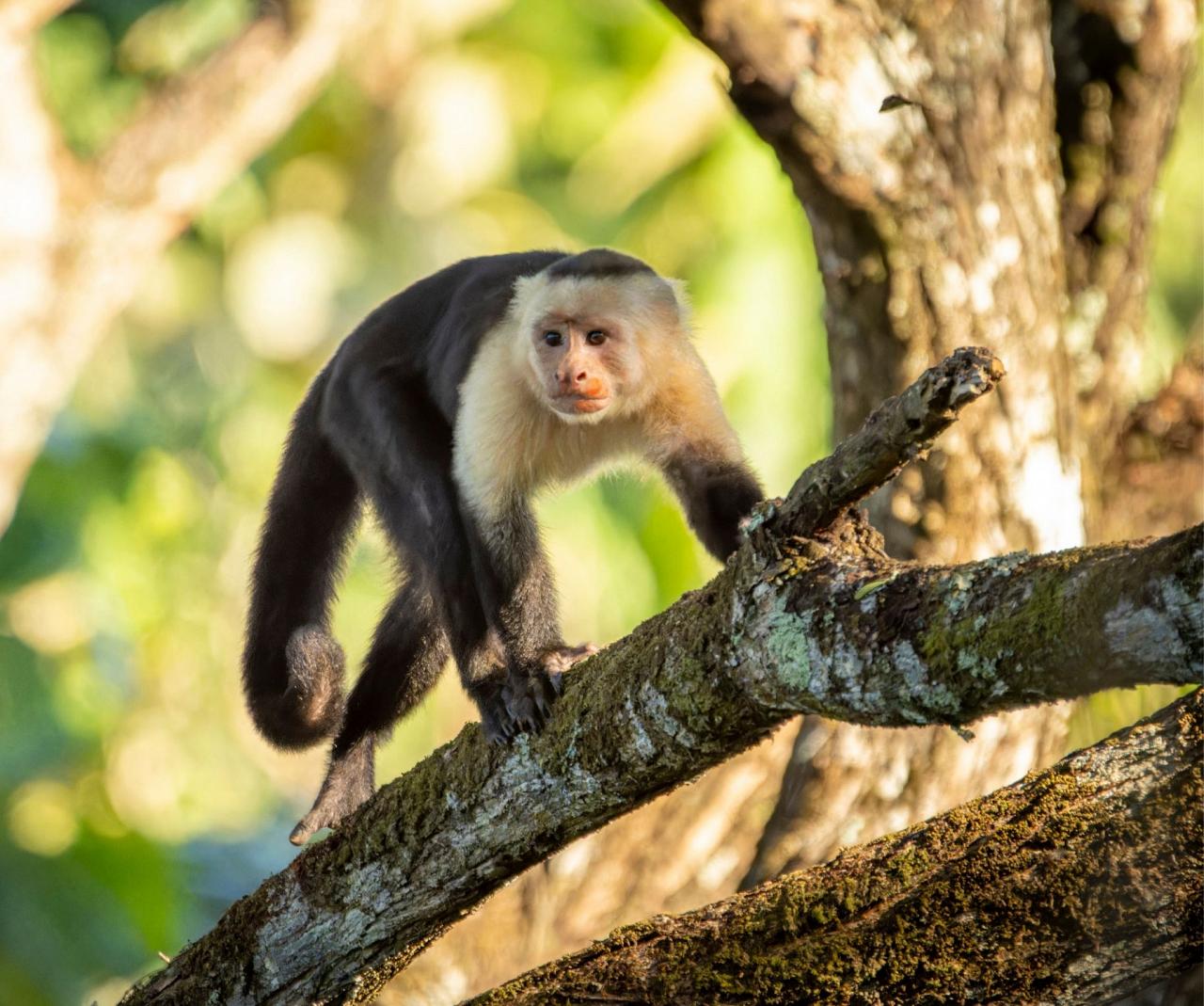
We first start exploring the edges of the mighty Chagres River, where Common and Purple Gallinules, Rufescent Tiger-Heron, Amazon Kingfisher, and Spectacled Caiman may be found. Along the way to Gatun Lake along the Panama Canal we pass huge cargo ships and ocean liners; American Crocodile are seen basking along the beaches and we should spot Common Basilisk, also known as Jesus Christ Lizard (for their ability to run across the water). We visit hidden coves and beautiful inlets with fascinating fauna and flora, and search for White-faced Capuchin and Mantled Howler Monkey along the water’s edge.

Before lunch at the Tower, Carol and Howard present their very informative talk about the building and running of the Panama Canal. You won’t want to miss this one!  

After lunch, we take our bags and bid farewell to the Canopy Tower, heading for the Miraflores Locks of the Panama Canal. The canal is truly one of the wonders of the modern world. The Miraflores Locks are the first set of locks on the Pacific side of the canal. They operate 24-hours a day and have changed very little since 1914 when the Panama Canal opened. The Panama Canal is an engineering marvel, and opened up a new route for shipping ocean-to-ocean. Over 14,000 ships and boats pass through the Canal annually. At the Miraflores Visitor Center we visit the four-floor museum and watch large container ships pass through the locks from an observation deck. We also visit the new i-Max movie theater to learn more about the Panama Canal.

After our visit to the locks, we continue to drive west along the Pan-American Highway, passing by Pacific dry forest and scrub fields, at times with great views of the Pacific Ocean. Along the way, we keep our eyes open for Crested Caracara and other roadside birds. We arrive at the Canopy Lodge just in time for dinner, noting the cool, fresh air and the moist tropical forests around us.
Accommodations at the Canopy Lodge (B,L,D)

Tues., Sept. 29      Walking Las Minas Road | Canopy Adventure | Visit to Mario Urriolla’s Reptile Facility
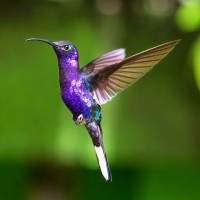
Early risers can enjoy the feeders near the outdoor dining area. There is an abundance of hummingbirds, including Long-billed Starthroat, Violet-headed Hummingbird, Snowy-bellied Hummingbird, Bronze-tailed Plumeleteer, Garden Emerald, and Black-throated Mango feeding among the verbena in the gardens. Thick-billed Euphonia, Rufous-capped Warbler, and Flame-rumped Tanager are common on the property. Central American Agouti also forage in the garden. A stream flows near the building and Common Basilisk bask on the rocks there every day. With a little patience you may see one run across the water.

After breakfast at the lodge, we continue our biodiversity tour along several roads, searching mainly for birds and insects. Las Minas Road follows a ridgeline, with sweeping vistas of forested mountains, speckled with grasslands and small fincas. The views from the higher elevations are fantastic, and on a clear day near the summit, both the Atlantic and Pacific Oceans can be seen! The road is lined with sensitive Mimosa, a plant that closes up quickly when touched. It is a great place to see some of the most beautiful tanagers, including Black-and-yellow, Bay-headed, and Emerald, as well many other birds. With luck we may encounter a group of feeding Northern Emerald Toucanet. It is also a great place for butterflies, as many skipperlings, satyrs, ticlears, hairstreaks, and clearwings flutter along the roadsides. 

Next we visit the Canopy Adventure, a property right next to the Canopy Lodge. This area sports a zip-line and a swimming pool. We walk the heavily forested trails looking for Stream Anole, Brilliant Forest Frog, Turnip-tailed Gecko—and birds, of course. There is a very nice waterfall along the way. We get back in time for lunch on the lodge’s open-air patio, with a rushing stream beside.

After lunch we head out to meet Mario Urriola, a native of El Valle who has extensive experience and knowledge of the reptiles of the area. Mario is the owner of “El Serpentario Maravillas Tropicales,” a reptile facility in El Valle, which houses various species of snakes and lizards that can be found in the area. Up-close looks at some of these difficult-to-find creatures is paired with an informative narrative about local species. Mario is an important figure in the area for both education and conservation. Carol also has a strong interest in reptiles and amphibians and one of the presentations examines those that are poisonous or venomous.
Accommodations at Canopy Lodge (B,L,D)

Wed., Sept. 30         Exploring the Highlands at Altos del Maria
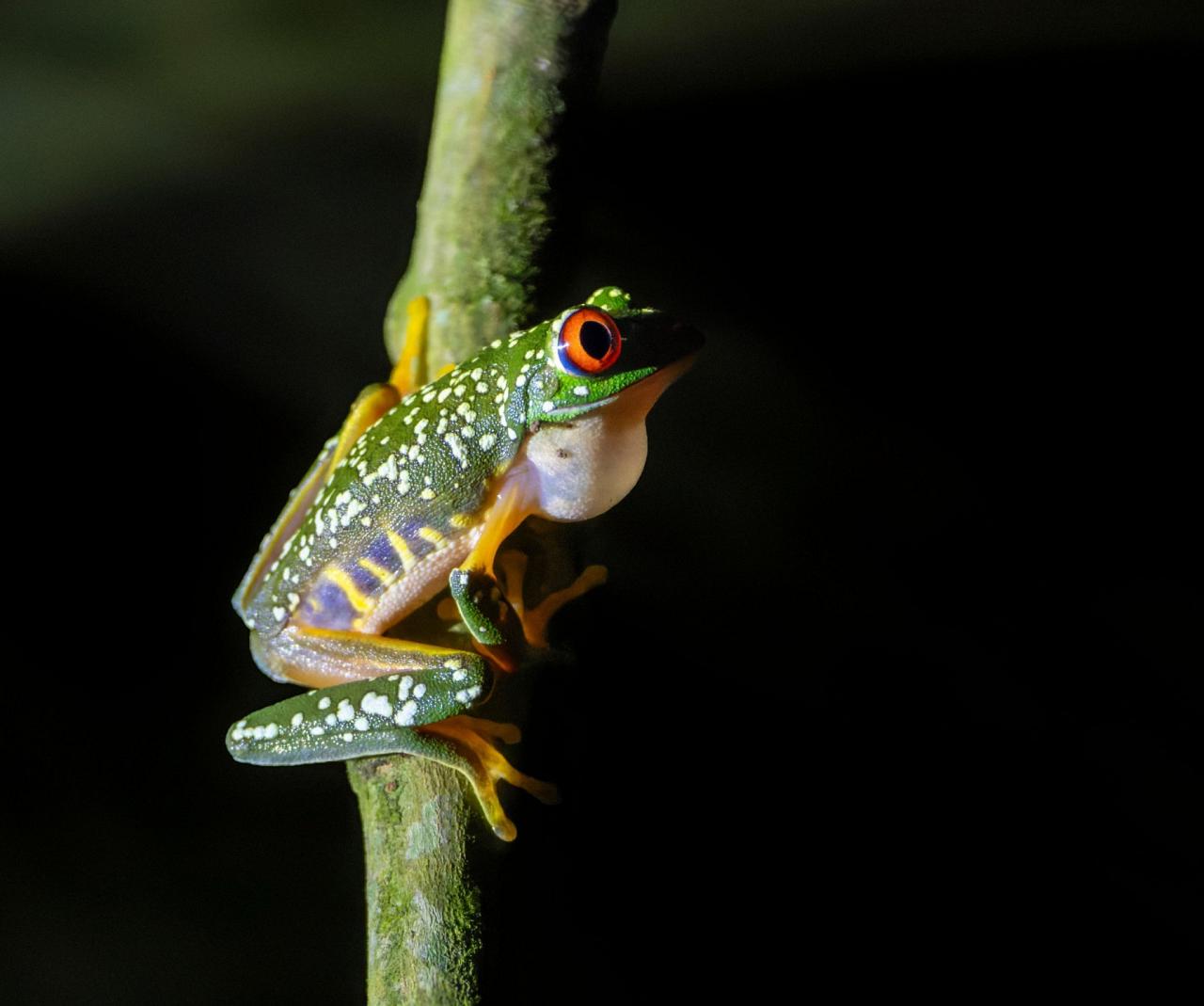
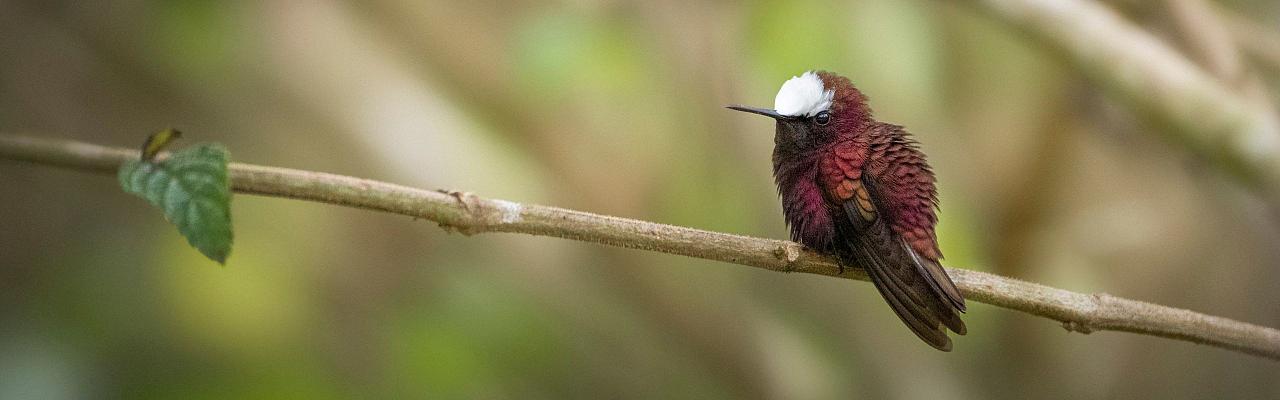
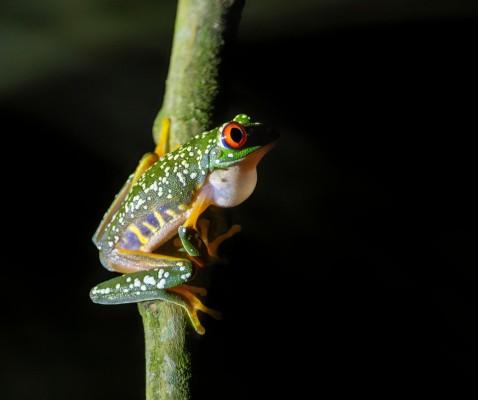
Departing after an early breakfast at the lodge, we’re off into the highlands of Altos del Maria. With the sunrise ahead of us, we climb into the mountains along the Continental Divide east of El Valle. Often engulfed by cloud forest mist, Altos del Maria sits at an altitude of 3,600 feet. Today we can find highland forest birds, including Black-crowned and Streak-chested Antpittas, White Hawk, Barred Forest-Falcon, Spotted Barbtail, Tufted and Sulphur-rumped Flycatcher, Rufous-browed Tyrannulet, Orange-bellied Trogon, and the tiny yet stunning Snowcap. We hope to see a tiny Western Pygmy Squirrel working away in the treetops, too. Plants are not to be ignored and this is a good place to see the large white Sobralia orchid. This was the last site where the Panama Golden Frog, actually a toad, was seen in the wild. Many other amphibians live here such as Brilliant Forest Frog, Red-eyed Tree Frog, and the huge Marine or Cane Toad.

Carol’s favorite walk is here, on a paved path along a narrow, riparian canyon through a lush-forested realm. One Naturalist Journeys group spied a Tayra here! After a picnic lunch in the field, we return back to the Canopy Lodge by mid-afternoon. It should be a good evening for one of our presentations during the cocktail hour.
Accommodations at Canopy Lodge (B,L,D)

Thurs., Oct. 1      Butterflies & Birds of Cerro Gaital | Artisan & Fruit Market | El Valle Amphibian Conservation Center
This morning, while birding (there is always a Canopy bird guide with us) and searching for other animals in the forest, such as the deep forest Dunn’s Spiny Lizard, we take a close look at the fascinating world of butterflies and insects in Central America. The biodiversity of butterflies (and moths, their nocturnal counterparts) is incredible in tropical regions around the world, and Panama alone has over 1500 species! From the beautiful metallic blue of the large Blue Morpho, to the pretty little Passion Vine butterflies (Heliconius spp.), tropical butterflies always get noticed. We look for eye-catching species like Mimosa Yellow, Deep-blue Eyed-Metalmark, Sara Longwing, Orange Mapwing, Togarna Hairstreak, Puerta Satyr, Red-headed Firetip, and the crepuscular Yellow-bordered and Giant owl-butterflies roosting along the trails. Insight into the lives of butterflies—their life cycles, how they eat, and various methods to evade predation—are just a few of the interesting topics we explore. We return for lunch at the Lodge.

This afternoon, it’s on to El Valle Amphibian Conservation Center (EVACC), which began in 2006 in response to massive chytridiomycosis (fungus) related amphibian declines in the area. Here we can still see the Panamanian Golden Frog, which is extirpated in the field. This facility has not only successfully bred the Panamanian Golden Frog, but over 40 other amphibian species, too. Their main objective is to preserve and protect some of the most endangered amphibian species in Panama.

Next we visit the artisan and fruit market in the heart of El Valle de Anton. The market is run by Panamanian artisans from Guna Yala who sell beautiful “molas”—handmade panels sewn by combining layers of fabric and showing geometric and animal designs, hand-painted wooden decorations, paintings, and jewelry. The market in El Valle is very colorful, and a great place to take photos and purchase souvenirs before returning home. 

Tonight is our celebratory farewell dinner, which allows us to reflect upon our days together. We have seen and heard a lot!
Accommodations at the Canopy Lodge (B,L,D)

Fri., Oct. 2   Departures
This morning participants are scheduled to leave in small groups so everyone gets to the airport in time for their flights. It takes about 2 1/2 hours to get to the airport from the Lodge and you are scheduled to leave in plenty of time to catch your flight. We can also drop you at a nearby airport hotel if you prefer to start early tomorrow.

One last look around the grounds of the beautiful Canopy Lodge stays with us for a very long time! (B)

Cost of the Journey

The cost of this journey is $3990 per person, based on occupancy, from Panama City. This all-inclusive rainforest tour includes lodging and meals at the Canopy Tower and Canopy Lodge, bilingual professional guides, wine with dinner, group airport transfers to and from Panama City and all tours and presentations as per the itinerary.

This cost does not include flights to and from Panama City, tips and alcoholic beverages (apart from dinner).

Travel Details

Please plan to make air travel plans only after the minimum group size has been met. We will send you a confirmation email as soon as the trip has been confirmed.

Arrival Airport and Departure Airport: Tocumen International (PTY)

Arrival: Plan flights to arrive September 24, 2026, no later than 2:30 PM as this is when the shuttle to the lodge will leave

Departure: Plan flights to depart October 2, 2026, after 12:00 PM

Travel Tips: If your flight comes in late, we suggest you arrive a day early to rest up from your travels. There are a few hotels quite close to the international airport. The Riande Airport Hotel and the Crowne Plaza. It is about 35 - 40 minutes into the city, pending traffic. If you have time to explore, we recommend the Radisson Panama Canal, which has rooms with balconies overlooking the entrance to the Canal and is located within walking distance of the Biomuseo Museum of Biodiversity.

Casco Viejo is now a trendy area having been totally refurbished in the last 25 years. There are shops, restaurants, quite a few boutique hotels, the Cathedral, an excellent museum on the Panama Canal, and a terrific view back on the modern city. The Canal location and Casco Viejo require taking a taxi. The Canopy Tower and Lodge have set times for transfers to their facilities included with your stay and private transfers can be arranged outside of these times at additional cost. Once we have all of the group member's information on arrivals, we can let you know the pickup times at the hotels.

Entry Requirements: See "Essential Information" section under the "Know Before You Go" tab.


Browse below for trip reports and species lists from past versions of this and other tours from this destination.

Panama

Birds & Mammals

Darién

Green Season

Intro to Biodiversity

Tranquilo Bay

  • Drs. Howard Topoff & Carol Simon

    Drs. Howard Topoff and Carol Simon have been study leaders on natural history trips for over 30 years. Both are formerly professors at the City University of New York and Research Associates at the American Museum of Natural History. Howard Topoff has spent 40+ years researching the social behavior of animals. His field research has been conducted in Central and South America, Africa, and in the deserts and mountains of Arizona. In addition to his publications in scientific journals, his more popular articles have appeared in magazines such as Scientific American and Natural History. His research has been featured on National Geographic Television, and Scientific American Frontiers. Carol Simon is broadly trained in ecology, behavior and evolution. Her research on the social behavior of reptiles has taken her to many areas of North and Central America. Her current field research on reptile behavior is based in the Chiricahua Mountains of Arizona. As an added bonus, Carol and Howard provide multimedia presentations that provide in-depth insights into the natural history of the regions visited.

    Other trips with Drs. Howard Topoff & Carol Simon

Map for Panama: Intro to Tropical Biodiversity

Essential Information +

This information is important for being prepared for your journey; we want you to have Read more

This information is important for being prepared for your journey; we want you to have the best experience possible. If you only read one section, this one is key!

Ahead of your tour:

  • Make sure your passport will be valid at least three (3) months after the date of your scheduled return to the U.S. See "Passports, Visas & Documents" section below for details.
  • No Visas are required for U.S. citizens for stays of this duration. If you are from another country, please contact the Embassy of Panama’s website for guidelines.
  • Please check current CDC recommendations for travel to Panama and consult with your doctor about general travel vaccinations you should have as precaution for travel. See the “General Health and Inoculations” section below.
  • Travel insurance in case of serious medical emergency is strongly recommended. Full health coverage and repatriation is available through Allianz Travel Insurance.
  • Soft sided luggage/duffel bags are easiest for packing the vans. Pack essential medications in your carry-on luggage, as well as one day of clothing and optics in case of luggage delay.

Passports, Visas & Documents

Guidelines and regulations can change and compliance is the traveler's responsibility. It is always advisable to double-check the country’s documentation requirements 60-90 days ahead of traveling in case passport requirements change. Information for U.S. citizens can be found at https://travel.state.gov/content/travel/en/international-travel/International-Travel-Country-Information-Pages/Panama.html#/. If you are from another country, please contact the tour destination’s embassy website for guidelines.

Passport: You must have a passport that is in good condition and is valid for three (3) months BEYOND your scheduled return to the U.S.. Please check that expiration date!  You should have at least one blank page per stamp. The blank pages need to say “Visas” at the top. Pages marked “Amendments and Endorsements” will not be accepted. 

Visa: At the time of writing, a tourist visa is not required for U.S. citizens for tours of this length.  You should be prepared to show proof of a return ticket and a contact list of hotels for entry points where that information is requested. 

Backups for documentation: As a precaution for lost or misplaced documents you carry on your person during travel, we highly recommend you keep hard and digital backup copies on your phone (either photo or PDF scan), as well as a hard copy left with your emergency contact at home. The recommended important documents to copy include, but are not limited to; your passport ID page, travel visa or ETA, the front and back of your credit card(s), the airline barcode on your luggage. This will greatly expedite getting new ones if necessary – we hope everyone will always keep travel documents close so that losing them will not be an issue.  

Travel Insurance

We strongly recommend you have medical evacuation insurance, especially if you are traveling in remote areas. Full health coverage and repatriation is available through Allianz Travel Insurance.

General Health & Inoculations Information – Be Prepared!

Health requirements for entry to any country can change. It is always advisable to double-check the country’s health requirements and recommendations 60-90 days ahead of traveling. Helpful websites for planning is the Centers for Disease Control and Prevention (CDC) website, the CDC Yellow Book: Health Information for International Travel website, or you may contact CDC by phone at (800) CDC-INFO or (800) 232-4636. 

We will share your health information with your guide. This information will be kept confidential but is very important as we want to be best prepared in case of a medical emergency.

Vaccinations: Please bring your up-to-date vaccination records with you. The CDC recommends that all travelers be up to date with routine and basic travel vaccines (such as Hepatitis A, Typhoid, etc.).  Consult with your doctor for recommendations at least 6-8 weeks before departing on your trip, as some vaccines may require more than one dose and time to become effective prior to your departure. 

Mosquito and tick-borne illness: The CDC will have updated information regarding recent disease outbreaks, such as Malaria or other mosquito or tick-borne diseases, such as Yellow Fever, as well as extra precautions to take depending on the area(s) you will be traveling through. Travelers should reduce their risk of mosquito and/or tick-borne diseases by protecting themselves from bites using protective clothing, insect repellant (containing DEET, Picaridin, OLE, etc.) and prophylactics where applicable. Check the CDC and with your doctor to see whether your trip destination is currently at risk for malaria transmission and whether you should consider anti-malarial medication. For repellent permeated clothing, see Packing List for our recommendations.  See the CDC Yellow Book: Health Information for International Travel website for more information.

Yellow fever: A yellow fever is only required if you are arriving from a country endemic with yellow fever, in which case you should be prepared to show a yellow fever vaccine certificate. When yellow fever vaccine is recommended, such as for travel to forested areas (even if it is not a required vaccination to enter a country), if travelers choose to be vaccinated as a precaution, they should do so before travel. To be effective, the yellow fever vaccine must be administered 10 days prior to travel. If you do choose to get the vaccine, be sure to include the certification record with your other vaccination records you bring. 

Preventing Malaria: Prevention is essential no matter what level of risk, but for areas with a high risk of malarial transmission we recommend you do not take any chances. While consulting with your doctor about travel vaccinations, be sure to ask about taking anti-malarial medication if you will be in an area where the risk for malarial transmission is high. If you do opt for preventative medication (see choosing a drug to prevent malaria), you will need to start taking this medicine multiple days before your trip, as well as during and after your trip. Consult with your doctor what is best for you. In addition to taking anti-malarial medication, during your outings, be sure to apply insect repellent) on any exposed skin as directed! For clothing, see Packing List for our recommendations.  Information about Malaria can be found at https://wwwnc.cdc.gov/travel/yellowbook/2024/infections-diseases/malaria.

Prescriptions: It is a good idea to pack any meds you take regularly in your carry-on luggage.  Bring an extra pair of your prescription glasses or contact lenses. Bring an adequate supply of any prescription medications you use, a copy of the prescription(s) and a list of generic names of your medicines as “back-up” in case it is necessary to purchase drugs while abroad. Your doctor may also recommend some prescription medications to bring with you to treat possible illnesses that might occur, depending on your destination, such as an anti-malarial medication or an antibiotic. You’ll want to keep all medications in their original, labeled containers.

Allergies: To be prepared for environmental triggers to allergies or breathing difficulties, please bring your allergy and/or asthma medication(s).  If you have severe allergies talk to your doctor about carrying an EPI pen and notify your guides. It is also recommended to carry with you an up-to-date record of known allergies, chronic medical problems and Medic Alerts so that, if necessary, emergency treatment can be carried out without endangering your health.

Common Ailments: We recommend that you bring a travel-sized first aid kit and a supply of standard over-the-counter medications for prevention or treatment of common ailments (such as diarrhea, constipation, stomach upset, cough, congestion, head or body aches, motion sickness, insect bites and sunburn); as well as ointments, moisturizer, sunscreen, oral rehydration salts, band-aids, moleskin for blisters, cotton swabs, nail clippers, and tweezers, etc.

Altitude Illness: According to the CDC's website, day trips to high-elevation destinations less than 8000 ft. with an evening return to a lower elevation are much less stressful on the body, depending on the time provided for your body to adjust. However, overnights at higher altitudes may have more adverse effects on your body and you should be informed about altitude illness and Acute Mountain Sickness (AMS) (see CDC's information for Altitude Illness). The most general symptoms are headache and occasionally fatigue and dizziness. You’ll want to take it easy, particularly at first. The likelihood of these symptoms can be reduced by resting, drinking plenty of water, avoiding alcohol, and taking aspirin.  In addition, we will optimize acclimatization by adjusting itineraries to avoid going “too high too fast." If you have worries about the altitude, ask your physician about medications (such as Diamox) that may be right for you. 

Weather & Climate

Expect the weather to be wet and warm with highs in the upper 70s and 80s°F, lows in the 70s°F, and the possibility of rain every day. Rain occurs in the form of heavy downpours or thunderstorms (called aguaceros), usually in the afternoon or evening, but can continue even in the early hours of the night. The humidity is often very high, so remember to drink plenty of water and in general just pace yourself not to get overheated. There is much variation in the weather patterns these days, so count on some rain as well as brilliant sunny days and you’ll be well prepared. You may want to bring one of those gel-filled bandanas that cool your neck–a great new invention. 

Annoyances & Hazards

Always listen carefully to any advice given by your local guide regarding pests and other biting insects or reptiles you may encounter, especially those that may be poisonous, though this may be rare.

Mosquitos, ticks and other insects: Even if you are traveling in the dry season, mosquitos, ticks and other insects can always be encountered in your travels, so don't risk illness. See the “General Health and Inoculations” section above regarding recommended preventative measures from mosquito and tick-borne bites and illness.

Chiggers are a part of lowland and mid-elevation habitats. You may encounter them at grassland or farm locations. Your guide should have a good read on whether chiggers are a concern. It is helpful to spray your shoes with repellent and tuck your pants into your socks .  When back, be sure to shower and air out your clothing.

Remember, sunburn can occur at any altitude and can be both an annoyance and a hazard, so be prepared with sufficient protection from the equatorial sun.

On particularly hot days be sure to increase your intake of fluids.

Food & Drinks

Menus at lodges and restaurants offer a delicious variety of regional flavors, sustainably based on the wonderful local ingredients available, and delightfully prepared in a sanitary environment. As with any case when traveling, we urge you to consider what your body is used to before you eat something. Trust your common sense when consuming food and beverages. This is the best way to avoid any unwanted problems. If you plan to eat out on your own, ask for recommendations from your hotel or refer to a guidebook such as Frommers.

One of the many ways we strive to do our part for the environment is by intentionally reducing our consumption of single use plastics (such as bottled water), so we appreciate you bringing a reusable water bottle.  Purified drinking water will be made available to refill your bottle, however, bottled water will be available for field trips where refilling your personal bottle is not an option. 

There are some great reusable water filtering bottles on the market today that are great for travels abroad. We encourage you to invest in one (such as Lifestraw or GRAYL Ultrapress or SteriPen). A little research will be well worth the effort to reduce the reliance on single-use plastics in the case that purified water refills are not readily available.

Packing, Clothing & Laundry

See “Packing List” tab for more detailed information and checklists, but in summary, we emphasize that you pack light in soft-sided luggage (easier to load in vans and charter planes), plan for dressing comfortably in layers (for managing varying conditions in any given day), and please pack your personal medication, travel documents, optics, and other essential items in your CARRY-ON, not in your checked luggage. Laundry services are available at most lodgings for an additional fee, but be prepared to hand launder if you need to. 

Spending Money

We advise you carry a mix of different types of payments, such as cash, an ATM card, and a credit card. U.S. currency is legal tender in Panama. This makes it quite easy for you as you can readily spend U.S. dollars. The Panamanian balboa (B) or 1 USD = 100 centesimos. Coin denominations are: B1 and B10; 50, 25, 10, 5 and 1 centesimos. Coins are of identical size, denomination, and metal as U.S. coins, and the coins of both nations are used throughout Panama interchangeably.

If you have U.S. dollars, then there is no need to exchange currency since it is legal tender. If you do want to change currencies, try to take only crisp and new notes, as wrinkled and soiled notes are likely to be refused. Panama’s ATMs are widely available in large cities. Smaller towns may not have any international ATMs that accept American cards. When using the ATM to withdrawal cash, keep in mind it might only accept cards from local banks or not allow cash advances on credit cards. Many U.S. banks charge a fee of $1 - $5 each time you use a foreign ATM. Others may charge you a percentage of the amount you withdraw. Check with your bank before departure. You must become familiar with how to use your ATM card and PIN number ahead of the journey.

We suggest you have more than one card available, if possible. You may want to bring more than one brand of card (VISA and Mastercard are commonly accepted; American Express is less common). You can use credit cards at lodges to pay your bar and gift tabs. Not every shop will accept every card. Some smaller shops and restaurants, or taxis require cash, so it is always a good idea to ask before making a purchase. Also, we recommend that you advise your bank or credit card company that you will be traveling abroad to avoid questions, card freezes, or charges. If you have a choice of cards, bring one with no foreign exchange fees.

Traveler’s checks are not widely accepted. They can be difficult to exchange. We do not advise you use them.

Gratuities

We hope that you will be pleased with all professional services offered on this tour. Gratuities for group meals are already included. Your Naturalist Journeys host will take care of smaller tips such field trip services by boat drivers, night drive outings, single activities. Tipping to show your appreciation to anyone associated with this tour is entirely at your discretion and should reflect your level of satisfaction for the service provided. Your additional tip is encouraged for birding tour guides and drivers who are with you for several days or the full trip. If you wish to offer a tip, know that anything you care to give will be greatly appreciated.

Here is a standard suggestion for tipping on birding trips, though, you are welcome to give more in recognition of exceptional service:

  • Birding tour guide(s): US $10.00 - $15.00 per day per guest (if more than one guide, they will share this tip)
  • Tour driver, if different from guide: US $5.00 - $7.00 per person/day
  • Lodge staff (Lodges normally have a box for tips that the staff share): US $6.00 - $10.00 per day, per guest
  • Hotel: you would just tip the maids as you do at home
  • Hotel & international airport bellmen: US $1.00 per suitcase
  • Transfer (airport shuttle) driver: US $2.00 - $3.00 per person

*Please note that these suggested tips are quoted in U.S. Dollars. You will want to convert and tip in local currency. 

Cell Phones & Internet Service

If you plan on using your cell phone on this trip, please check with your wireless provider to see if your phone and service will work in your destination country. Ask for “international roaming” to be turn on your phone. Or you can buy a local SIM card at the airport and insert this in your mobile phone (just make certain your phone can accept one). Renting an international phone may also be an option.

If your phone can connect to Wi-Fi, you may be able to make voice and video calls free of charge. Please contact your cell phone provider for further details. Another option if you have access to Wi-Fi, is to use smartphone apps like Skype, WhatsApp, or Viber to send text messages, and make voice calls, or video calls. Many smartphones, tablets, or laptops come with one of these apps pre-installed or you can download for free. If bringing a laptop or tablet, get a good dustcover to protect it at all times.

Make sure if you do NOT want to use your cell phone that you turn off your cellular data. You could incur huge charges if you are not on Wi-Fi. Putting your phone in airplane mode if you mainly use it for photos will save the battery as well.

Wi-Fi is provided at Canopy Family facilities but is sometimes unreliable in remote locations. It is of slow capacity, so large files and sending or receiving them are discouraged. There is a computer available at all Canopy Family lodges for guest use.

Please refrain from taking or making cell phone calls in the vehicles when traveling with other passengers, unless it appears to be an emergency. This disrupts other guests, plan on cell phone call use on your own time.

Electricity

Panama uses 110 volt, 60 cycle electricity, same as the US. Plugs are typically the 2-pronged flat type so US travelers will not need a converter or adapter. It is recommended you to pack a 3 to 2 prong adapter in case type B sockets are not available. Additional information can be found at www.power-plugs-sockets.com.

Time

Panama is in the Eastern Standard Time Zone, which is one hour behind New York (Eastern Daylight Time). Panama does not observe Summertime (or Daylight Savings Time). Check www.timeanddate.com before leaving home for you conversion.

Questions?

Please contact Naturalist Journeys by email at clientservices@naturalistjourneys or telephone at our office: (520) 558-1146 or toll free: (866) 900-1146 if you have any questions. Many thanks for traveling with us and we hope you enjoy your journey!


Pace & Protocols +

Pace of the Tour & What to Expect You will receive a Schedule-at-a-Glance and list of Read more

Pace of the Tour & What to Expect

You will receive a Schedule-at-a-Glance and list of hotels (our eContact List) a few weeks before your departure. This will serve as an outline for each day and alert you to any recent changes made in the schedule or to our hotels, if needed.

Our journeys are set up to follow the rhythm of nature. Our focus is on birding and nature; we offer full, well-planned field days and often get up early for that magical time around dawn. We generally follow the published itinerary, but we stay flexible to the weather, wildlife opportunities and the interests of the group. Your guide will keep you apprised of the next day’s schedule at each evening meal, noting what to bring and what to prepare for. Questions and/or concerns are welcome.

The pace of our Naturalist Journeys tours is moderate; to fully participate you should be able to get in and out of vehicles several times a day, and walk 1-3 miles over uneven terrain. It is important to participate with a flexible attitude as adjustments may be made in our schedule to make the most of our time in the field or for other purposes at your guide's discretion. We are not a “listing” bird company that drills down on target species, but at times we do wait for those special species unique to the places we visit. During the day, we take time to stop for photos and for educational opportunities to learn about conservation projects, landscapes, and geology. We appreciate other taxa as well as birds, with mammals often the biggest draw but plants and butterflies are also very popular. Our clients often lend their own expertise to the mix.

We like to make meals a fun and memorable part of the experience, too. Breakfasts are often at hotels, and we carry snacks, fruit, and water in the vans each day. Lunches are a mix of picnics in the field (weather dependent) and a chance to dine with locals at small cafes and restaurants. For dinner, we pride ourselves in our homework to keep up with the best choices for dining, choosing restaurants with atmosphere that specialize in local foods. On occasion we keep dinner simple to go back out in the field for sunset wildlife viewing or night walks. In some remote locations, our choices are limited. If you are tired, room service for dinner may be an option you can choose.

Naturalist Journeys International Trips: Guide Role

Naturalist Journeys supports ecotourism and the development of excellent local guides. Once we know our international partners and guides well, we can send out small groups working directly with these trusted partners, adding a Naturalist Journeys guide to assist the local expert when we have a group of 6-7 or more. This helps us keep your costs down while retaining tour quality. The local guide is your main guide. You can expect your Naturalist Journeys guide to be well-researched and often they are experienced in the destination, but their role is not to be primary, it is to help to organize logistics, help you find birds, mammals, and interesting other species in the field, keep reports, help facilitate group interactions, and to keep the trip within Naturalist Journeys' style. Local guides live in the countries we travel to, know the destinations intimately, and are often the strongest force for conservation in their countries. They open many doors for us to have a rich experience.

Smoking

Smoking is not permitted in any vehicle or in any situation where the group is participating in an activity together, such as a vehicle excursion or a guided walk. Please respect all designated smoking areas at hotels and restaurants.

Transportation

As a courtesy to each other, we ask that all travelers please rotate seating. On international trips we may all be in one small bus, on some trips we are in vans, particularly the roomy Sprinter Vans when available. Some areas require us to be in smaller 4-wheel drive or safari vehicles. Rotation allows you to sit with different drivers and alternate front and back seating.

Photo Release & Sharing

We take many group photos and will share photos with the group. And after your tour, we will organize a chance to share photos via Dropbox or Google Photos. Please note that this is our policy and if you prefer to be excluded, we need to know ahead of your tour.

By registering for this tour, you agree to grant to Naturalist Journeys and its authorized representatives’ permission to record on photography film and/or video, pictures of my participation in the tour. You further agree that any or all of the material photographed may be used, in any form, as part of any future publications, brochure, or other printed materials used to promote Naturalist Journeys, and further that such use shall be without payment of fees, royalties, special credit or other compensation.

Travel Insurance

You are traveling in remote areas. Naturalist Journeys strongly recommends you have full medical and evacuation insurance from a company such as Allianz, for all international travel. If you do not have medical coverage or evacuation coverage on your existing travel insurance policy or for some reason elected not to take that out, we advise getting an evacuation plan with Global RescueWorld Nomads, Medjet, Allianz (they can do evacuation only) or a similar company. These plans are typically $300-$400 for a year for multiple destinations. This coverage may be a part of a larger Travel Insurance policy but can also be purchased on its own.

Questions?

Please contact Naturalist Journeys by email at clientservices@naturalistjourneys.com or telephone our office: (520) 558-1146 or toll free: (866) 900-1146 if you have any questions. Many thanks for traveling with us and we hope you enjoy your journey.


Packing List +

Please Pack Light! Luggage: Soft-sided luggage is much easier for us to pack in vehicles or Read more

Please Pack Light!

Luggage: Soft-sided luggage is much easier for us to pack in vehicles or charter aircraft than a more rigid hard sided piece, so if you have the choice, please use your soft-sided luggage. Be sure to have your name and address on the inside of the bag, as well as on the luggage tag on the handle. It is our hope that you can pack in one checked bag that does not exceed 45 pounds. Please reconfirm your airline’s baggage weight and size restrictions about a week or so before departure.

Delayed Luggage:  Imagine NOT getting your checked bags upon arrival! Therefore, DO NOT pack any essential medications, vital optics (binoculars, camera, eye-glasses), or essential travel documents in your checked luggage! Pack these and other essential items in your carry-on bag and on your person (i.e. under-garment pouch). You will want a day pack for field trips, so this makes an ideal carry-on. Another suggested tip is to travel wearing your most important shoes for the field and have one day’s clothing change (including a change of underwear!).

Weather: Pack clothing that is appropriate for the anticipated temperatures and conditions (See “Weather & Climate” section in Essential Information). You may check your favorite weather website, such as www.weather.com, closer to your departure to better predict what the weather will be upon arrival. You may also visit https://www.climatestotravel.com for more regional information by month.

Dress: Plan to dress comfortably and informal throughout the trip. Dressing in lightweight layers is the best way to provide options to get you through a day of varying weather and temperatures comfortably. Lightweight long sleeve shirts and long pants make ideal field clothing as they are more protective from sun, vegetation and pests. Also, choose clothing you don’t mind getting dirty or muddy and things that are loose-fitting, comfortable, and easy to layer and launder. Quick-dry fabrics are ideal.  A lightweight and waterproof outer layer is essential as well as comfortable hiking footwear. Fabrics like fleece, as well as rain gear, will protect you from rain and wind and keep you warm. It is important to have a warm jacket when the tour includes cooler temps and/or higher elevations.

Laundry: Several of our lodges and camps provide laundry service. Consider packing laundry soap sheets in case you need to hand launder in a pinch.

Treating your clothing to better protect you from insects: It is possible to purchase Permethrin spray (online or from REI) to treat your field clothing and socks before your departure. Another approach is to purchase field clothing permeated with insect repellent such as the Craghoppers Insect Shield collection.

Note on clothing colors: We recommend muted colors of tan, brown, khaki, grey or green, as they are spotted less easily than white or bright colors, though camouflage clothing is not recommended.

Valuables: WE DO NOT RECOMMEND TRAVELING WITH PRECIOUS OR VALUABLE JEWELRY – don’t tempt anyone and don’t bring things you’d regret losing, and your mind will be at ease!

Clothing & Gear

  • Lightweight long pants, 2 pair
  • Lightweight long sleeve shirts
  • Shorts (optional)
  • T-shirts or equivalent (1 per day recommended – remember you may be buying some there)
  • Personal underclothing
  • Socks – lightweight, long enough to tuck your pants into, and easy to wash and dry
  • Comfortable clothes for evening (a cleaner version of your field clothes or a skirt, sundress, etc.)
  • Hat with broad brim
  • Bandana, gel bandanas work well to keep cool
  • Comfortable walking shoes and lightweight hiking boots – (good tread and support is essential!)
  • Sandals for evenings, travel days (optional)
  • Lightweight raincoat, poncho, or small umbrella
  • Lightweight jacket, fleece fabric is ideal
  • Bathing suit (optional, hotel in Panama City)
  • Field vest (optional), a great source is Big Pockets

Equipment & Miscellaneous

  • Photo identification 
  • Passport (and visa or other travel authorizations when traveling internationally) - Note: To avoid issues with confirming your identity when two forms of ID are required, the name on your Drivers License (or other secondary forms of ID) should match your passport.
  • Airline tickets or E-ticket verification
  • Travel insurance info
  • Money & credit cards
  • A secure pouch to carry the items above on your person at all times (such as a secure, under-clothing document pouch)
  • As a backup: copies of all the above (phone and/or paper) packed in a separate location than on your person, plus a set given to your emergency contact at home as a backup. When carrying a passport, a copy of the ID and entry stamp pages.
  • Small backpack, daypack or fanny pack for carrying your field gear (this can double as your carry-on!). Consider waterproof if excessive rain is expected.
  • Cell phone and charger
  • Binoculars with safety strap (a shower cap is great to cover these when raining)
  • Camera and charger/extra batteries, memory cards/film, lens cleaning supplies and instruction manual (optional)
  • Spotting scope and tripod (optional – guide will have them)
  • Tablet/laptop for personal use and/or transferring photos, USB stick, USB cord and charger (optional)
  • Rechargeable power bank (optional)
  • Electricity converters and adapters for 2-to-3 prong electronics plugs if needed (See "Electricity" under "Essential Information")
  • Reusable water bottle to avoid the use of disposible plastics. If you prefer to drink filtered water, we encourage you to invest in a bottle filter (such as Lifestraw or GRAYL Ultrapress or SteriPen). A little research will be well worth the effort to reduce the reliance on single-use plastics in the case that purified water refills are not readily available.
  • Umbrella – compact and not brightly colored
  • Walking stick – we find that many travelers appreciate a walking stick on trails, sporting goods stores carry collapsible models that pack easily in your suitcase (optional)
  • Small flashlight with fresh batteries
  • Alarm clock
  • Travel Sewing Kit
  • Sunscreen/lip balm
  • Sunglasses with neck strap
  • Toiletry articles
  • Washcloth (available some places and not at others)
  • Laundry soap (consider laundry soap "sheets" that pack flat, and are lightweight and environmentally friendly)
  • Notebook or journal and pen (optional)
  • Field guides (optional)
  • Earplugs – in urban and even rural areas barking dogs and traffic noise can be annoying
  • A collapsible airplane footrest (such as an inflatable, foldable, or hammock type) may help make longer flights more comfortable. Some airlines may have restrictions, so confirm with your airline which types are allowed and where they may be not allowed, i.e. bulkhead or exit rows (optional)

Medical & First Aid Items

  • Health insurance
  • Vaccination records
  • Personal Rx medications (in their original labeled prescription packaging)
  • Extra pair of eyeglasses or contacts (with plenty of wetting and cleaning solution)
  • Copy of eyeglass prescription, medical prescriptions, and any medical alerts
  • Epi-pen if needed for allergic reactions (include prescription label)
  • Altitude illness meds (such as Diamox) if likely to be needed
  • Motion sickness preventatives if likely to be needed on bus, van, boats, etc.
  • Personal first aid kit and medications for general ailments, colds and stomach ailments, etc. (Imodium or Lomotil, antihistamine cream or tablets, eye drops, antibiotic ointment, Band-Aids, moleskin to protect against blisters, etc.)
  • Foot powder, lotions, general “comfort” items
  • Hydrocortisone cream to ease itching from insect bites
  • Hand sanitizer and/or hygienic cleansing wipes
  • For Malaria risk areas Anti-malarial prophylactics and antibiotic prescription in case of infection, prescribed by your physician


Suggested Reading List +

There are many titles of interest for Panama; the following are a few that we Read more

There are many titles of interest for Panama; the following are a few that we have enjoyed that can get you started.

Top Picks

Merlin App – Panama Pack. A phone-based birding app from Cornell University Laboratory of Ornithology. Before departing the U.S., download the app for free, then from within the app, download the “pack” for Panama.

The Birds of Panama: A Field Guide

Field Guides

A Guide to the Birds of Panama: with Costa Rica, Nicaragua and Honduras

Field Book of Birds of the Panama Canal Zone: A Description of the Habits, Call Notes and Songs of the Birds of the Panama Canal Zone

Birds of Mexico and Central America

Birds of Central America

Neotropical Rainforest Mammals: A Field Guide

A Field Guide to the Mammals of Central America and Southeast Mexico

A Swift Guide to the Butterflies of Mexico and Central America

The Butterflies of Central America is no longer in print, but the PDFs can be purchased from the Neotropical Butterflies website: www.neotropicalbutterflies.com/Site%20Revision/Pages/Books/Index_books.html

Collin’s Guide to Tropical Plants

Panama Adventure Map by National Geographic

Costa Rica: the Traveller’s Wildlife Guide

The Wildlife of Costa Rica: A Field Guide

Natural History

Birds of Tropical America

The New Neotropical Companion

Life Above the Jungle Floor

Tropical Nature

The High Frontier: Exploring the Tropical Rainforest Canopy

The Monkey's Bridge: Mysteries of Evolution in Central America

History & Culture

The Path Between the Seas: The Creation of the Panama Canal, 1870-1914

Portrait of the Panama Canal: Celebrating Its History and Expansion

Chilies to Chocolate: Foods the Americas Gave the World

National Geographic Traveler: Panama

Memoir/Non-Fiction

The Darien Gap: Travels in the Rainforest of Panama

The Tapir’s Morning Bath, Solving the Mysteries of the Tropical Rainforest

There is a good selection of books available for sale at visitors’ centers, and your guide will also have a selection of reference books and materials for participants to share. As an Amazon Associate, Naturalist Journeys earns from qualifying purchases, and may get commissions for purchases made through links on this page at no added cost to you.


Useful Links +

Learn more about your destination at these external websites, carefully researched for you. Read more

General

Panama - Encyclopedic Overview

Panama Country Overview – BBC News

El Valle de Antón

Miraflores Locks (One of three locks that form part of the Panama Canal)

Nature, Wildlife & Biology

Birds of Panama - Encyclopedic Overview

Birds of Panama - iNaturalist

Harpy Eagle

Kinkajou

Mammals - iNaturalist

Amphibians - iNaturalist

Reptiles - iNaturalist

Butterflies - iNaturalist

Endemics of Panama

Overview of the Rainforests of Panama

Conservation, Parks & Reserves

Canopy Tower Eco-Lodge and Nature Observatory

El Valle Amphibian Conservation Center (EVACC Foundation)

BioMUSEO

Soberania National Park

Pipeline Road

Summit Botanical Garden – Municipal Park

Gatun Lake

Audubon Society’s Work in Panama

Panama Wildlife Conservation

Satellite Image of Panama’s Rainforest

Smithsonian Tropical Research Institute in Panama

Association for the Conservation of Nature (ANCON) - a private non-profit

Birdlife International

Geology & Geography

Geography of Panama

“Panama: Isthmus that Changed the World”

“New Data of Panama Formation Throws Cold Water on Ice Age Origin Ideas” - A Scientific American Article

“Geology and Paleontology of Canal Zone and Adjoining Parts of Panama” - A US Department of the Interior Geological Survey

Article - “The Isthmus of Panama: Out of the Deep Earth” by Kevin Krajick

History & Culture

Brief History of Panama

History - Encyclopedic Overview

A Cultural Overview

Native peoples

Panamanian Cuisine

Holidays - Panama

Helpful Travel Websites

Homeland Security Real ID Act

Transportation Security Administration (TSA)

Visa ATM Locator

Mastercard ATM Locator

U. S. National Passport Information Center

U.S. Customs and Border Protection (CBP)

Foreign Exchange Rates

U.S. Department of State, Panama International Travel Information - Panama

Center for Disease Control (CDC) - Panama

Canada Travel Advice and Advisories - Panama

Travel Health Pro (UK) - Panama

Electricity and Plugs – Panama

Time and Date - Panama


Photo credits: Banners: Collared Aracari, Three-toed Sloth (Peg Abbott), Orange-collared Manakin (Bob Hill), Red-eyed Tree frog (Daniel Arias Barakat) Thumbnails: Geoffrey’s Tamarin, Blue Morpho Butterfly, Keel-billed Toucan, Golden-hooded Tanager, White-whiskered Puffbird, Red-lored Parrot, Northern Tamandua, Broad-billed Motmot

×

Like what we do?

Sign up for our weekly eNews to stay up to date!

Get to know our favorite destinations each week. We promise no spam.

No Thanks